Proof, not promises
The lab report.
Saffron is one of the most adulterated foods in the world. The honest answer to "is this real?" is not a louder claim — it is a number from a laboratory that has no stake in the answer.
This page carries the ISO 3632 results for the lot currently in our bottles. When a new harvest arrives, the numbers here change with it.
- Harvest
- 2025 · Herat, Afghanistan
- Origin
- Herat highlands, Afghanistan
- Standard
- ISO 3632-1
| Measured | This lot | Category I minimum | What it tells you |
|---|---|---|---|
| Crocin colouring strength | See COA | 200 | How much colour the saffron will actually give up. This is the number that decides how many threads you need — a high crocin reading means fewer threads for the same gold. |
| Picrocrocin flavour | See COA | 70 | The compound behind saffron's distinctive slightly bitter, hay-and-honey taste. Low picrocrocin is the usual sign that yellow style has been left on to pad the weight. |
| Safranal aroma | See COA | 20 | What you smell when the seal breaks. Safranal builds as saffron dries and then slowly fades with age, so it is also the clearest chemical fingerprint of how fresh a lot really is. |
| Artificial colouring adulteration screen | See COA | None permitted | The test for the most common fraud — dyeing cheap plant material to imitate saffron. This should read as none detected, and if it ever does not, we will say so. |
Our current lot is with the laboratory now. The full certificate will be published on this page the moment it returns — including anything we would rather it did not say.
How to read a saffron lab report.
Why we publish this at all
Peer-reviewed studies put the share of adulterated saffron on the world market at 20–30%. Almost every brand you can buy says "100% pure" on the label. Almost none of them will show you a number.
A claim is free to make. A laboratory result is not. That is the entire reason this page exists.
What Category I actually means
ISO 3632 sorts saffron into three categories by measured strength, not by opinion. Category I is the top band and begins at a crocin reading of 200. Plenty of saffron sold as "premium" sits in Category II or III.
The category is a floor, not a score — there is a large difference between a lot that scrapes in at 201 and one well above it, which is why we publish the figure rather than just the band.
Why the harvest year is on the bottle
Saffron ages from the day it is harvested, not the day you buy it. Crocin and safranal degrade steadily, and light accelerates it sharply.
Stored properly — sealed, in its box, in a cool cupboard — saffron holds full strength for roughly 24 months. Nobody in this category dates their product, which makes it impossible for you to know whether the tin on the shelf is nine months old or four years old. Ours tells you.
Three tests you can run yourself
The water test. Drop a few threads into warm water. Real saffron releases gold slowly over several minutes and the threads stay red. Dyed material bleeds colour instantly and goes pale.
The rub test. Rub a thread between wet fingers. Real saffron stains your skin yellow-orange, never red.
The smell test. Sweet hay, honey, a little metallic. If it smells of nothing, it is old. If it smells sweet like vanilla, it has been treated.
ISO 3632-1 is the international standard for saffron. Crocin, picrocrocin and safranal are measured by UV-visible spectrophotometry and reported as absorbance values on a dry-weight basis. Category I is the highest of the three bands the standard defines.
About the testing
Fair questions about this page.
Why is there no certificate on this page yet?
Because we have not had this lot tested yet, and we would rather have an empty table than a borrowed number.
Testing is booked. When the certificate arrives it goes here in full, with the lot number, the sampling date and the name of the laboratory — so you can check it rather than trust us.
Isn't "Super Negin" already a guarantee of quality?
Not in the way most shoppers assume. Super Negin is a trade description of the thread's appearance — long, all-red stigmas with the yellow style removed. It is a real and meaningful distinction, and it is what we buy.
But it is a visual grade, assigned by the seller. It is not a laboratory measurement, and nobody audits it. That is why appearance and assay are two different sections on this page.
Who does the testing?
An independent laboratory with no commercial interest in the result. We publish the laboratory's name and the report number alongside the figures so the certificate can be verified rather than simply believed.
What happens if a lot tests badly?
We publish it, and we price or withdraw the lot accordingly. A brand that only publishes its good results is not publishing results — it is advertising.
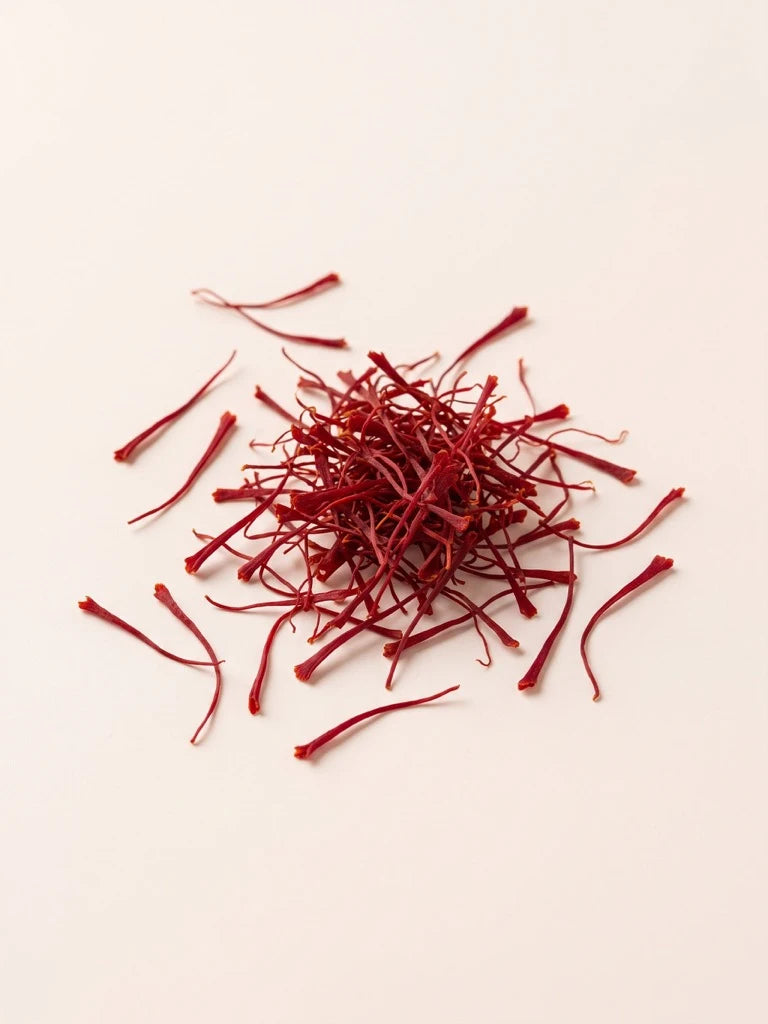
Authentic Afghan Saffron
Judge it in your own cup.
Bloom ten threads in warm water. If it does not turn deep gold, send it back — thirty days, no argument.