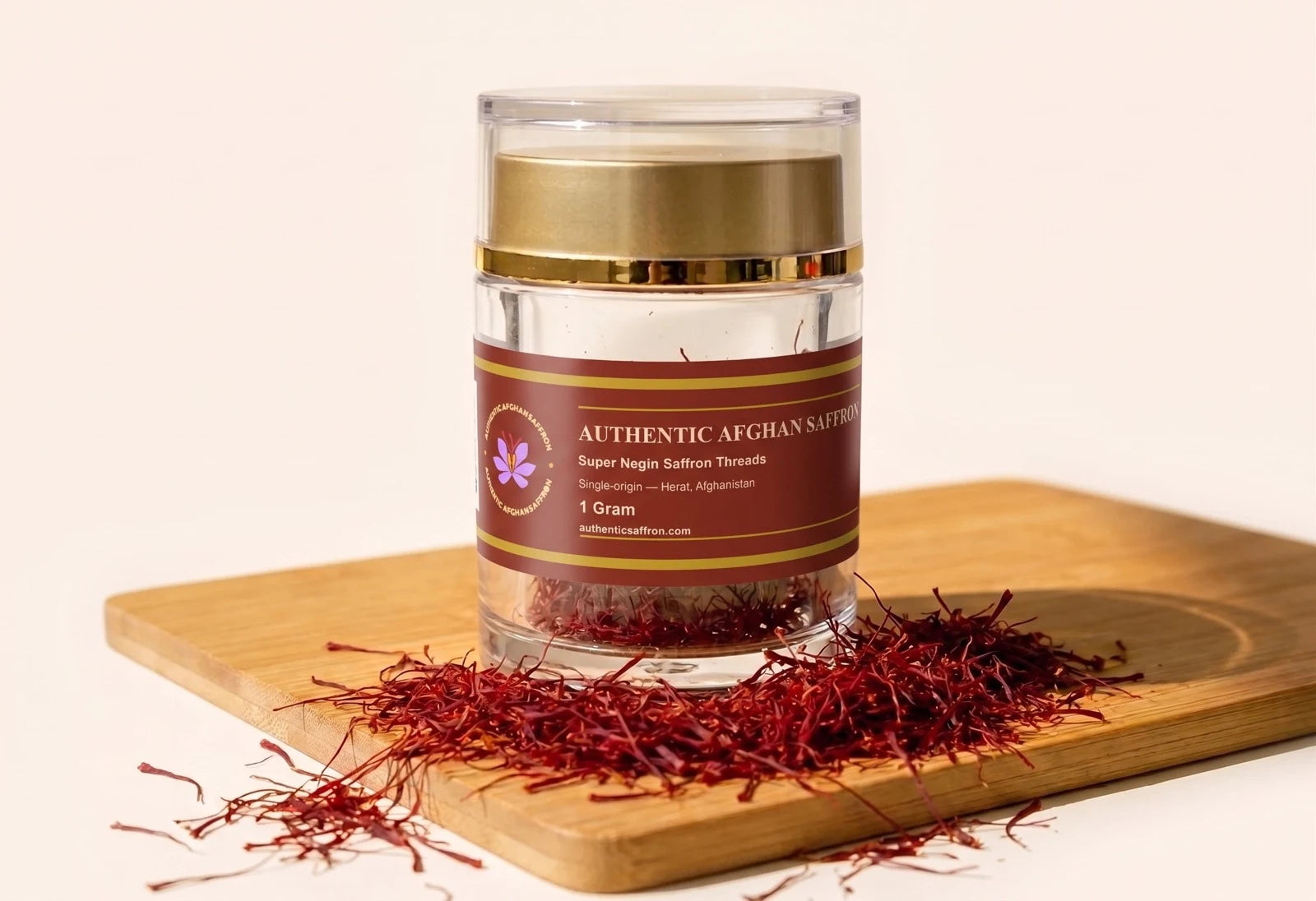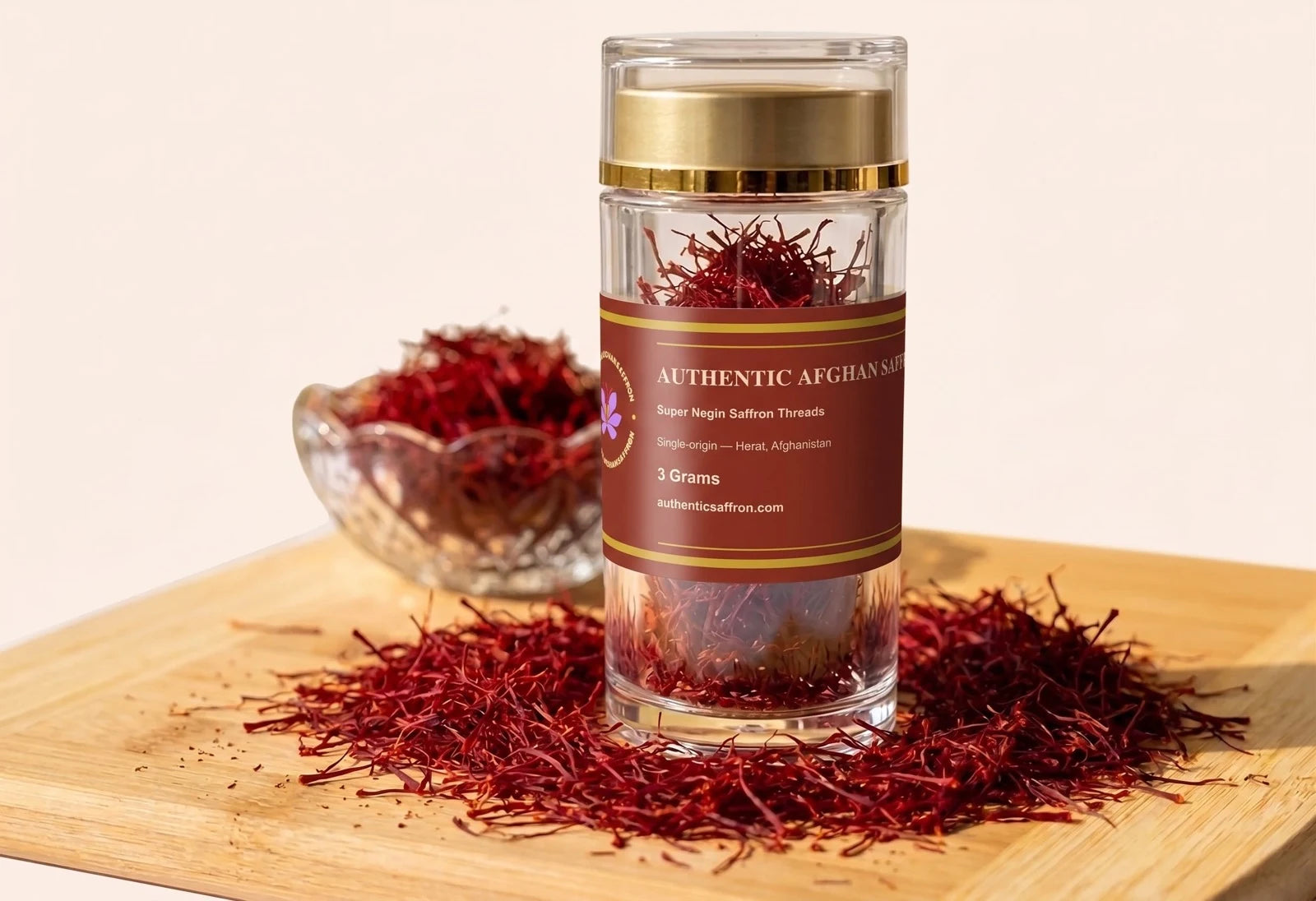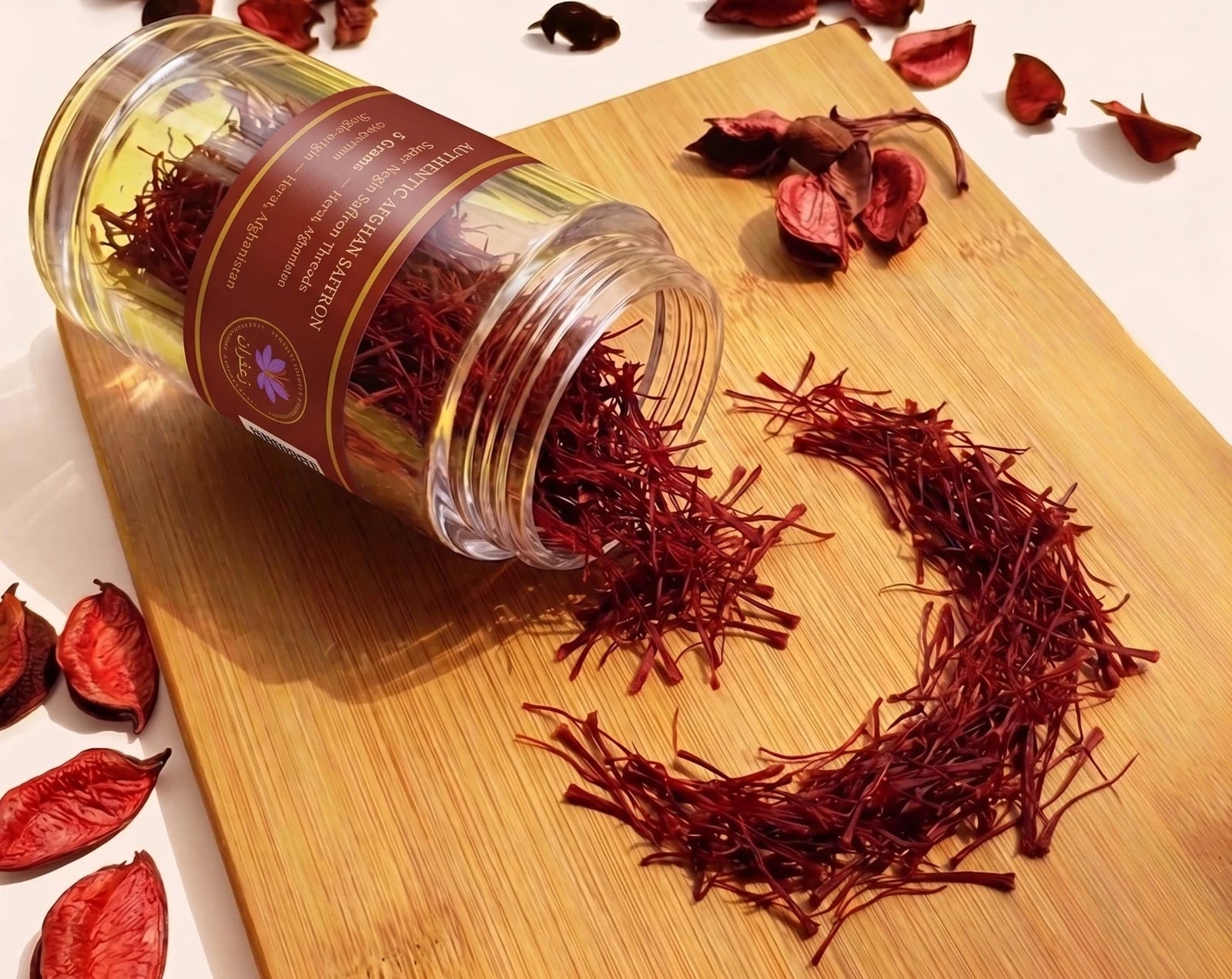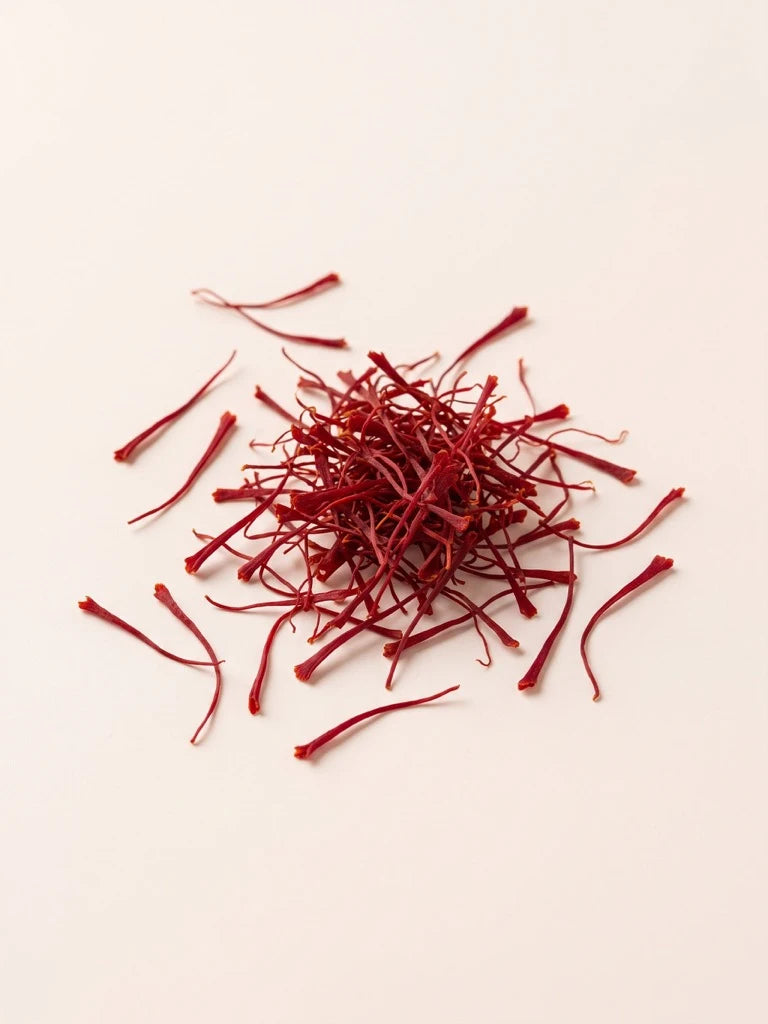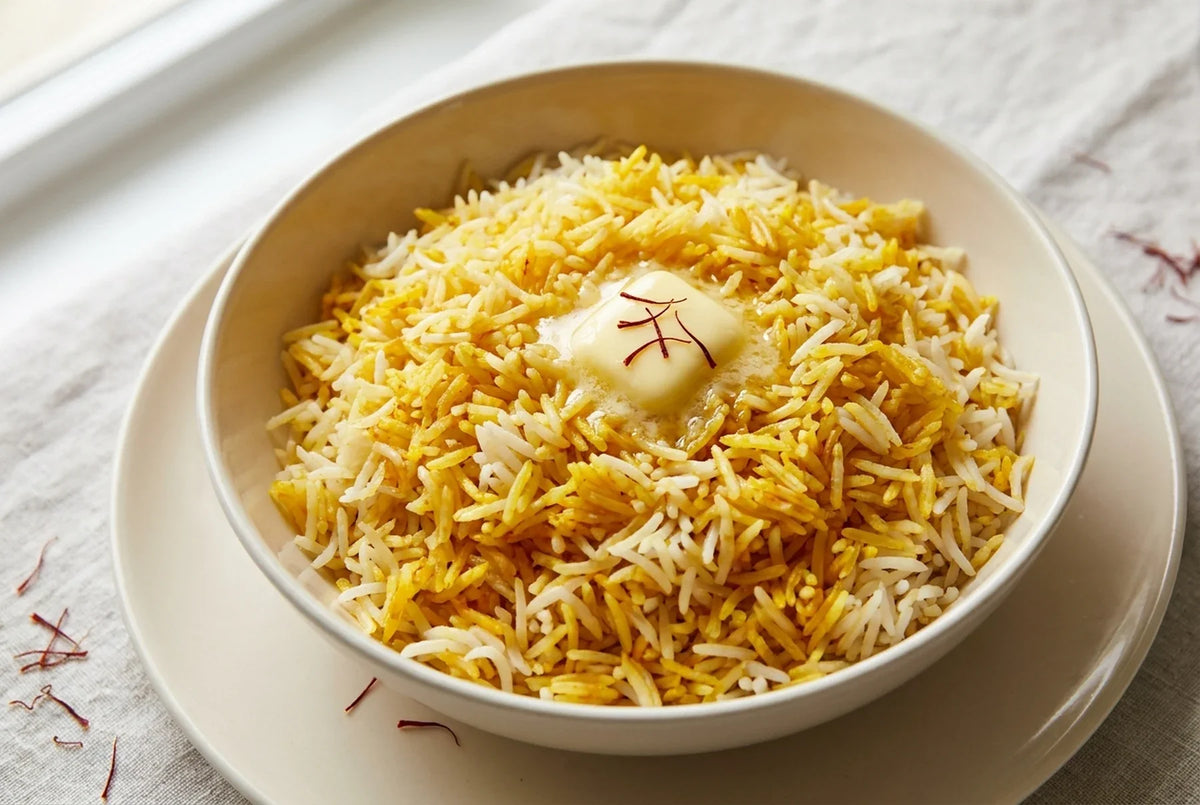
A good saffron rice recipe needs three things: rice rinsed until the water runs clear, saffron bloomed in warm water instead of dropped in dry, and a covered rest off the heat. Twenty threads, about 0.08 g, will colour four cups of cooked rice all the way through. The rest is seasoning.
Why does this method work?
Rice cooked badly with saffron fails in one of two ways. Either the colour sits in streaks because the threads went into the pot whole and dry, or the grains clump because surface starch was never rinsed off. This method fixes both before the pan ever gets hot.
Rinsing pulls away the loose starch that makes basmati gummy. Blooming dissolves the crocin, the pigment that carries saffron’s colour, into a liquid you can distribute evenly through 2¼ cups of cooking water. Once the pigment is in solution it goes everywhere the water goes.
The final rest matters more than most recipes admit. Rice finishes cooking on residual steam, and the ten minutes with the burner off is when the last of the moisture redistributes from the wet bottom layer to the drier top. Fork it too early and you get one wet layer and one chalky one.
What is the right amount of saffron?
Twenty threads, which is roughly 0.08 g, for four servings. That works out to about fifteen threads per cup of dry rice. Push it to thirty threads if you want the rice to read as a centrepiece rather than a side; go much beyond that and the flavour turns medicinal rather than floral.
To bloom: crush the dry threads between your fingertips or in a small mortar, tip them into a cup, and add three tablespoons of water at about 150°F (65°C). That is hot tap water, or water off the boil that has stood for four or five minutes. Leave it 15 minutes. Boiling water drives off the volatile aroma compounds and leaves you with colour and not much else.
You are looking for a liquid the colour of strong marigold tea, with the spent threads sitting pale at the bottom. If the water is still weak yellow after 15 minutes, the saffron is either old or padded out with something else — our notes on how to spot fake saffron cover what that looks like. Good Super Negin threads give up their colour fast and keep giving it for a second steep.
What is in it?
Serves four as a side. A 3-quart saucepan with a lid that actually seals is the only piece of equipment that matters.
- 1½ cups (300 g) long-grain basmati rice
- 20 saffron threads (about 0.08 g)
- 3 tablespoons warm water, about 150°F (65°C)
- 2¼ cups (530 ml) water or light chicken stock
- 2 tablespoons unsalted butter
- 1 teaspoon fine sea salt
- 1 bay leaf (optional)
- 1 tablespoon slivered pistachios, to finish (optional)
How do you cook it?
- Bloom the saffron. Crush the threads between dry fingertips into a small cup. Pour over the 3 tablespoons of warm water and leave for 15 minutes, stirring once. The liquid should end up deep orange-gold.
- Rinse the rice. Put the rice in a bowl, cover with cold water, swirl it with your hand, and pour off the cloudy water. Repeat four or five times, until the water runs almost clear. Drain in a sieve for 5 minutes.
- Toast the grains. Melt the butter in a 3-quart saucepan over medium heat. Add the drained rice and stir for 2 minutes, until the grains look glossy and smell faintly nutty. Do not let them brown.
- Add the liquid. Pour in the water or stock, then the salt and bay leaf. Stir in all of the saffron liquid, threads included, and bring to a bare boil.
- Cover and drop the heat. Turn the burner to its lowest setting, cover with a tight lid, and cook undisturbed for 12 minutes. Do not lift the lid to look.
- Rest, then fork. Slide the pan off the heat. Lift the lid, lay a clean tea towel across the pan, replace the lid over it and leave for 10 minutes. Fork the rice through from the edge inwards, scatter over the pistachios and serve.
What goes wrong most often?
Four failures account for almost everything:
- Threads added dry. They rehydrate in the pot, but unevenly, and you get orange freckles on white rice rather than an even gold.
- Water too hot at the bloom. Boiling water gives you colour without aroma. Aim for water you could hold a finger in for a second.
- Lid lifted during the 12 minutes. Every peek costs steam, and steam is the cooking medium. If you must check, do it at minute 11.
- Too much liquid. Rinsed rice carries water. The 2¼ cups here already accounts for that; adding the usual 1:2 ratio on top gives you porridge.
One more, less obvious: salting at the end. Salt added to finished rice sits on the outside of the grain and tastes sharp. It belongs in the cooking water, where it seasons from within.
If the bottom layer catches slightly, do not stir it up. Lift the good rice off the top, then decide whether the crust underneath is a mistake or a bonus.
Frequently asked questions
Can I use saffron powder instead of threads?
You can, but you cannot check it. Powder hides the mix, and a great deal of what sells as saffron powder is largely turmeric or safflower with a small amount of real saffron for scent. Threads let you see the trumpet-shaped flare at the top of each stigma. If you already own powder, use about half as much by weight and bloom it the same way.
Does the rice need soaking as well as rinsing?
Not for this method. Soaking for 30 minutes lengthens the grains and shortens the cook, which is worth doing for a layered pilaf, but it also makes the rice fragile. For a straightforward covered pot, rinsing alone is enough. If you do soak, cut the cooking liquid to 2 cups and the covered time to 10 minutes.
Why did my rice come out pale?
Usually the bloom was too short or the water was boiling. Fifteen minutes at around 150°F (65°C) is the window. Colour that never develops at all, even after 20 minutes, points at the saffron itself rather than your technique.
Can I make this in a rice cooker?
Yes. Rinse and drain as described, add the bloomed saffron liquid as part of the total water, and use the ratio your cooker recommends rather than the one here. Skip the butter toast, or brown the rice in a pan first and transfer it. The rest is still worth doing with the lid down.
Read next
- How to bloom saffron properly — the timings and temperatures, tested.
- Chalow, Afghan saffron buttered rice — the parboil-and-steam version of the same idea.
- How much saffron do you need — thread counts by dish and serving size.
- Cooking with saffron — the hub page, if you want the whole picture.