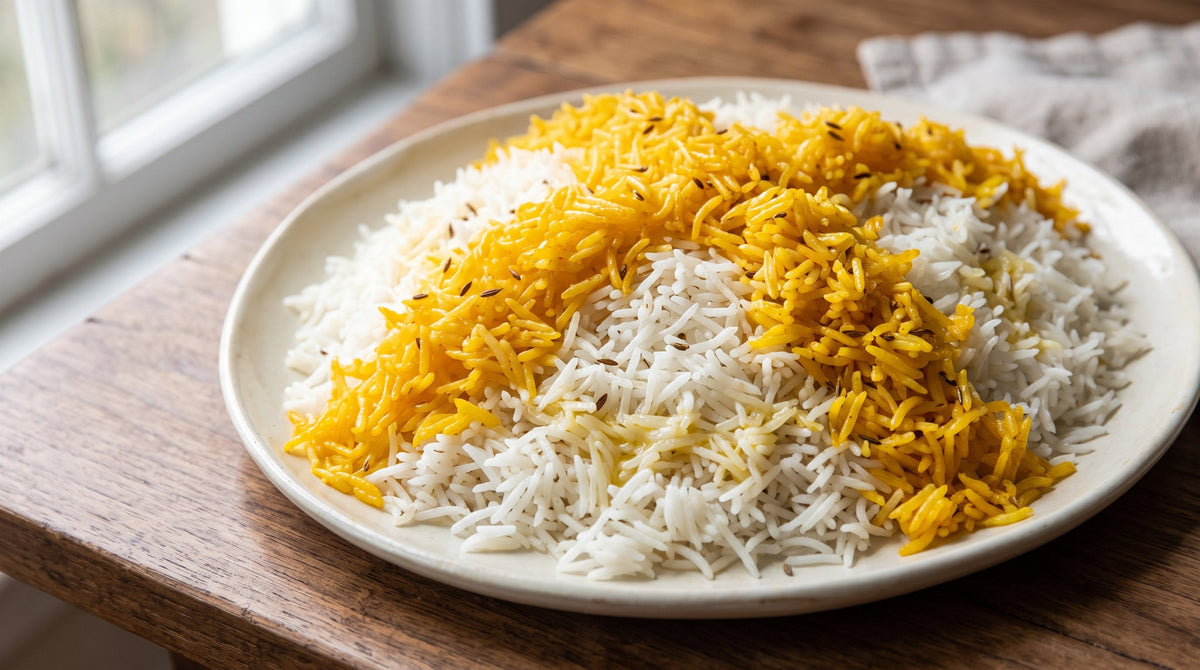
Chalow is Afghan white rice: soaked, boiled briefly, drained, then steamed with butter until every grain stands apart. A traditional chalow recipe uses no saffron at all. What follows keeps the rice white and colours one cupful with 25 bloomed threads, about 0.10 g, to fold back over the top.
Why boil and drain instead of absorbing?
Absorption cooking, where the rice takes up a measured volume of water in a covered pot, is efficient but it traps starch. Every bit of surface starch the grain sheds stays in the pot and glues the grains together. Chalow avoids that by boiling the rice loose in a large volume of salted water, then throwing the starchy water away.
The grains come out of the colander half-cooked and slightly chalky at the core. They finish on steam alone, under a lid lined with a cloth that catches condensation before it can drip back down. The result is dry, long, distinct rice — the correct texture for eating with a wet stew like qorma or shorwa.
The other reason to do it this way is the crust. Rice steamed over butter forms a thin golden layer at the base of the pot, which gets lifted out in shards at the end. It is not the point of the dish, but nobody has ever left it in the pan.
How many saffron threads, and bloomed in what?
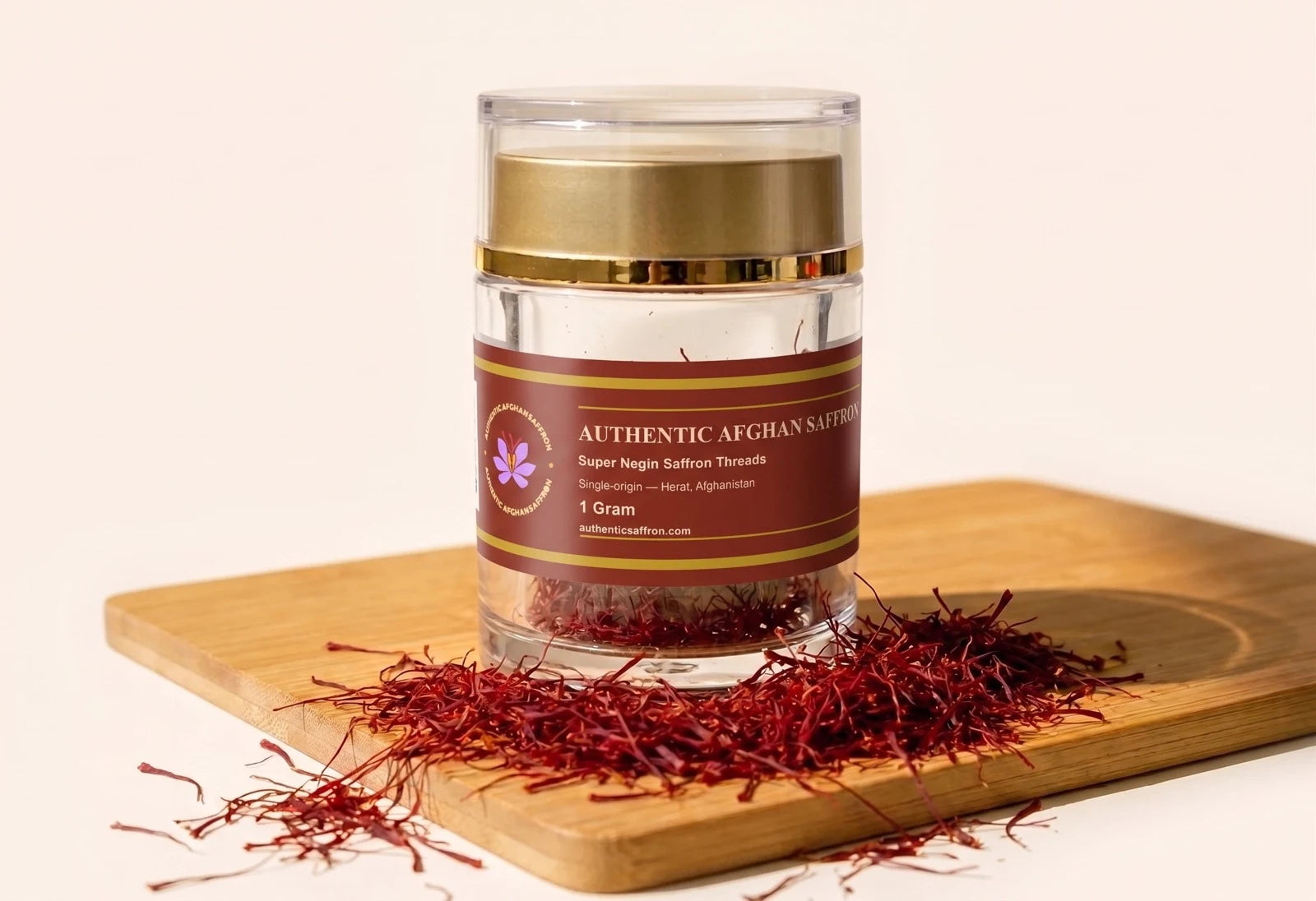
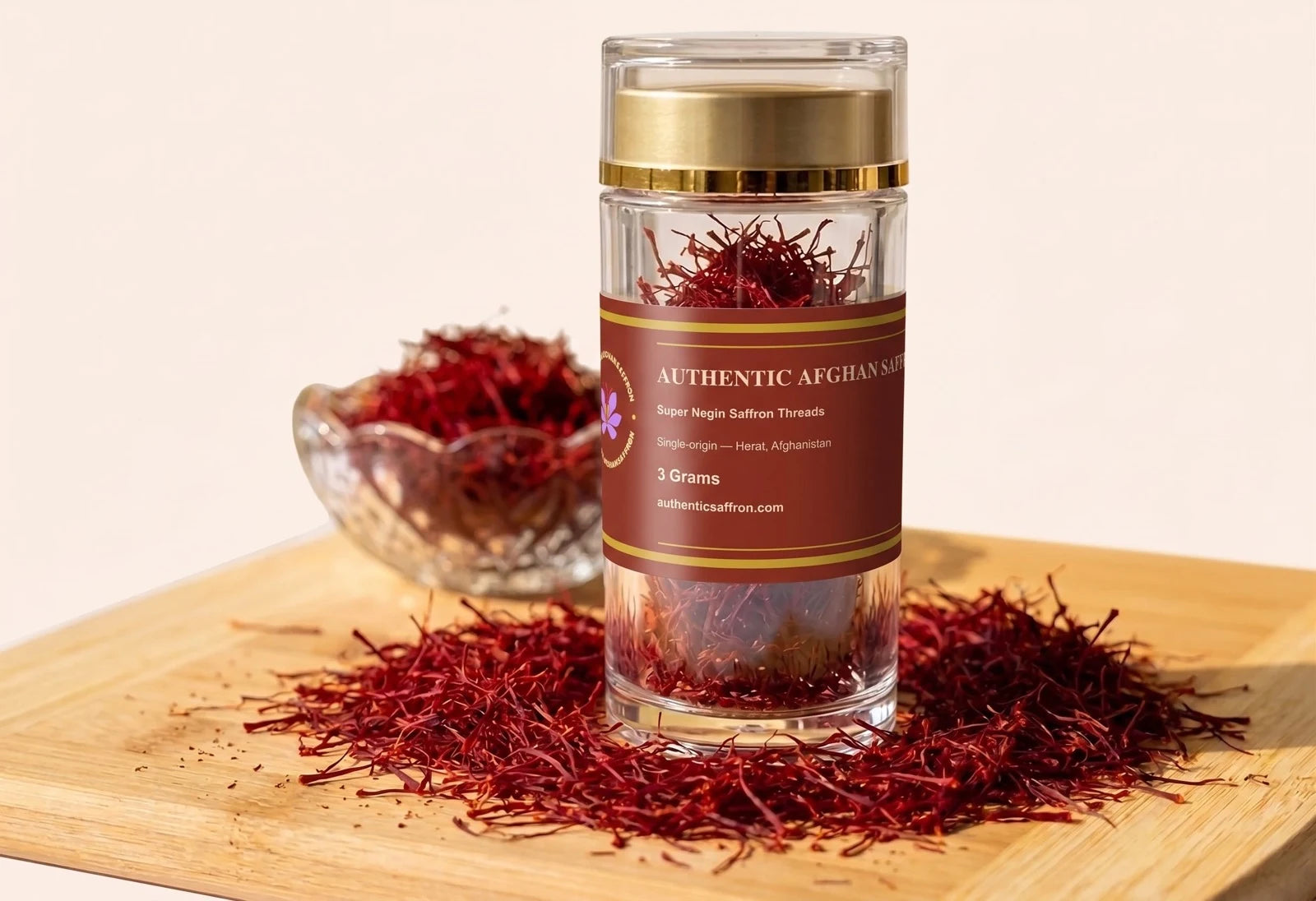
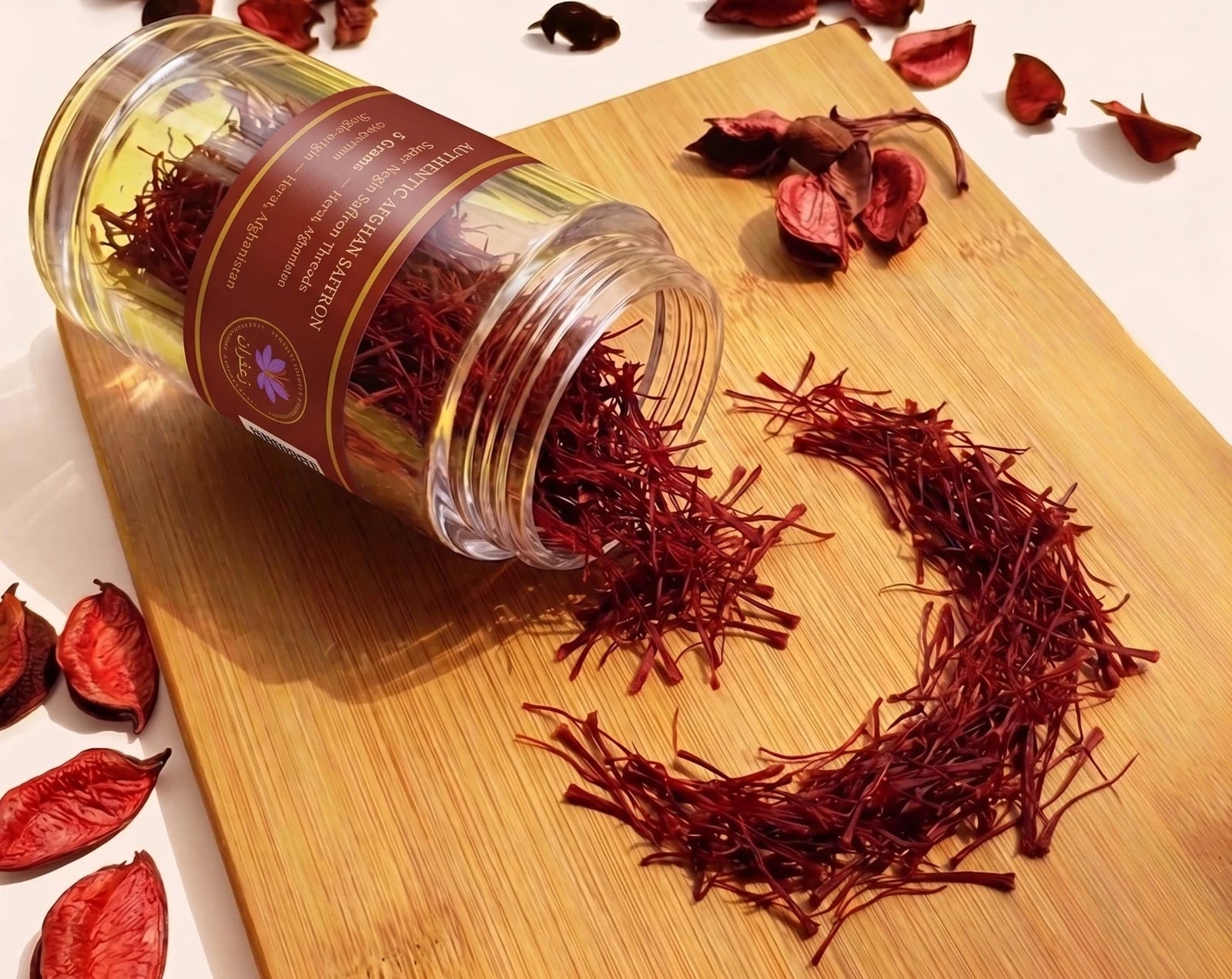
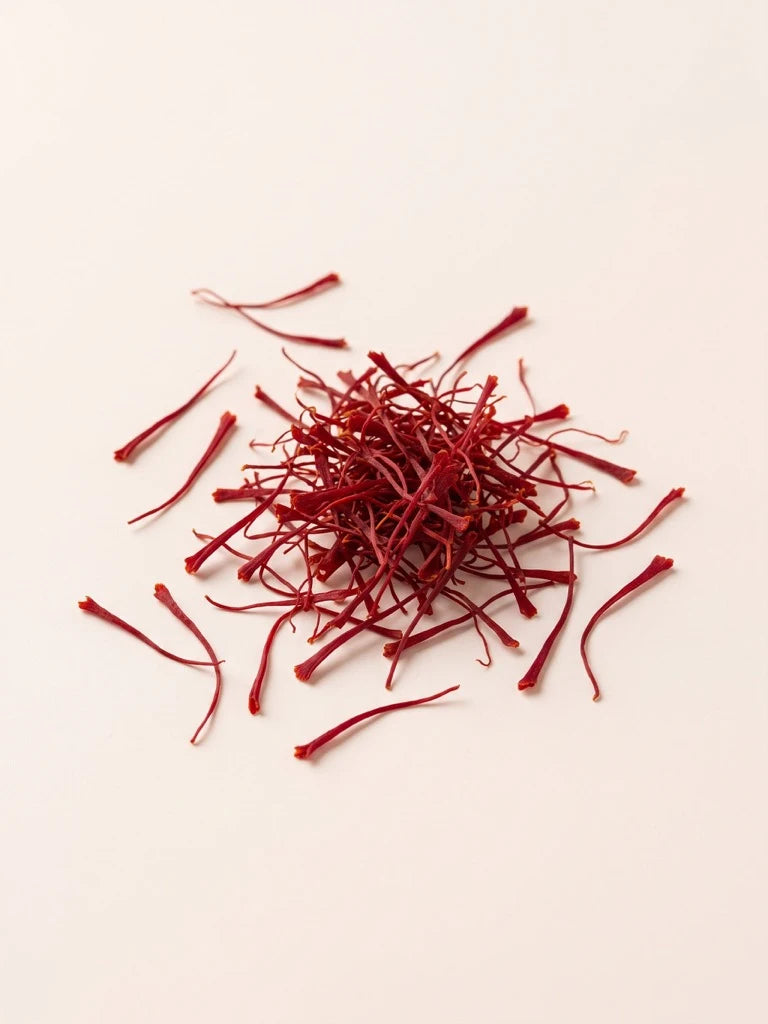
Twenty-five threads, about 0.10 g, for six servings. Note that this is not spread through the whole pot. You lift out roughly one cup of the finished white rice, stir the saffron liquid into that, and then scatter it back over the surface. That way you get gold against white rather than a uniform pale yellow, and the saffron reads as a garnish with intent.
Bloom in warm water: crush the threads, add 2 tablespoons of water at about 150°F (65°C), and leave 15 minutes. If you want a richer effect, use the melted butter from the pot instead, warmed to the same temperature. Never bloom in boiling liquid. Above roughly 175°F the aromatic fraction starts leaving and you are left with dye.
Fifteen minutes should give you a liquid deep enough that you cannot see the bottom of the cup through it. If yours stays thin and lemon-coloured, the problem is the saffron, not the timing. Our note on weak or poorly stored saffron explains what usually sits behind that, and the cooking guide covers blooming across other liquids.
What is in it?
Serves six as a side. A wide 5-quart pot, a large colander, and a clean tea towel. Nothing else.
- 3 cups (600 g) long-grain basmati rice
- 25 saffron threads (about 0.10 g)
- 2 tablespoons warm water, about 150°F (65°C)
- 4 tablespoons (55 g) unsalted butter
- 2 tablespoons neutral oil
- 2 tablespoons fine sea salt, for the boiling water
- 4 quarts (3.8 litres) water, for boiling
- ¼ teaspoon ground cardamom (optional)
How is it cooked?
- Soak the rice. Rinse the rice in cold water five or six times, until the water runs clear rather than milky. Cover with fresh cold water and leave to soak for 1 hour, then drain in a colander.
- Bloom the saffron. Crush the threads into a small cup, add the 2 tablespoons of warm water, and set aside for 15 minutes.
- Boil hard and briefly. Bring the 4 quarts of water to a rolling boil with the 2 tablespoons of salt. Add the drained rice and stir once so nothing sticks. Boil uncovered for 5 minutes. Test a grain: it should bend and squash at the ends but still have a firm white core.
- Drain and rinse. Pour the rice straight into the colander and rinse briefly under warm water to stop the cooking. Let it drain for 5 minutes, shaking the colander twice.
- Set the base. Return the pot to low heat with the oil and 2 tablespoons of the butter. Once the butter foams, add 2 tablespoons of water and swirl to cover the base.
- Mound and vent. Tip the rice back in, heaping it into a dome rather than levelling it. Poke four holes down to the base with the handle of a wooden spoon so steam can escape from below. Dot the remaining butter over the top and sprinkle over the cardamom if using.
- Steam under a cloth. Wrap the lid in a clean tea towel, tucking the corners up over the handle so they stay clear of the flame. Clamp it on and steam over the lowest possible heat for 35 minutes.
- Saffron the top. Lift out about 1 cup of rice into a bowl and stir the saffron liquid through it until evenly gold. Fluff the white rice in the pot with a fork, tip it onto a platter, and scatter the saffron rice over the surface. Scrape up the crust from the base and lay it on top.
What separates good chalow from sticky rice?
Almost all of it happens in the first ten minutes. Under-rinsed rice will clump no matter how carefully you steam it, and rice boiled a minute too long is already lost by the time it reaches the colander.
- Skipping the soak. An hour in cold water lets the grain hydrate evenly, so it elongates rather than splitting during the boil. Thirty minutes is the absolute minimum.
- Under-salting the boiling water. Two tablespoons in four quarts sounds like a lot; most of it goes down the drain. Salt the water like pasta water and the rice seasons itself.
- A damp lid. Without the tea towel, condensation drips back onto the rice and you get a wet top layer. Check the towel is not hanging near a gas flame.
- Stirring during the steam. Leave it alone for the full 35 minutes. There is nothing to check and everything to lose.
If the base sticks hard rather than releasing as a crust, set the covered pot on a damp cloth for two minutes. The temperature drop usually loosens it.
Frequently asked questions
What is the difference between chalow and palaw?
Chalow is plain white steamed rice, served alongside a stew that supplies the flavour. Palaw is cooked with the meat stock, seasoning and often caramelised sugar folded through the grains themselves. Same technique for the rice, entirely different intent.
Can I use a rice other than basmati?
You want a long-grain aged rice that elongates rather than swells. Aged basmati is the standard choice and sella basmati is more forgiving of over-boiling. Short-grain and jasmine both release too much starch for this method and will turn sticky.
Do I have to rinse the rice after boiling?
It is not strictly required, but a quick rinse under warm water washes off the last of the loose starch and halts the cooking instantly, which buys you a little margin if the boil ran long. Use warm water rather than cold so you are not chilling the grains before they steam.
What do you serve chalow with?
Anything with sauce. Lamb or chicken qorma, a bean stew, or a brothy shorwa. The rice is deliberately plain so it can absorb what is spooned over it, which is also why the saffron stays on top rather than being stirred through.
Read next
- Kabuli palaw with lamb shank — where the same rice technique meets caramel and lamb stock.
- Afghan shorwa with saffron — the brothy stew chalow was made to soak up.
- How to bloom saffron properly — temperatures, liquids and timings.
- Our saffron — single-origin threads from the Herat valley.