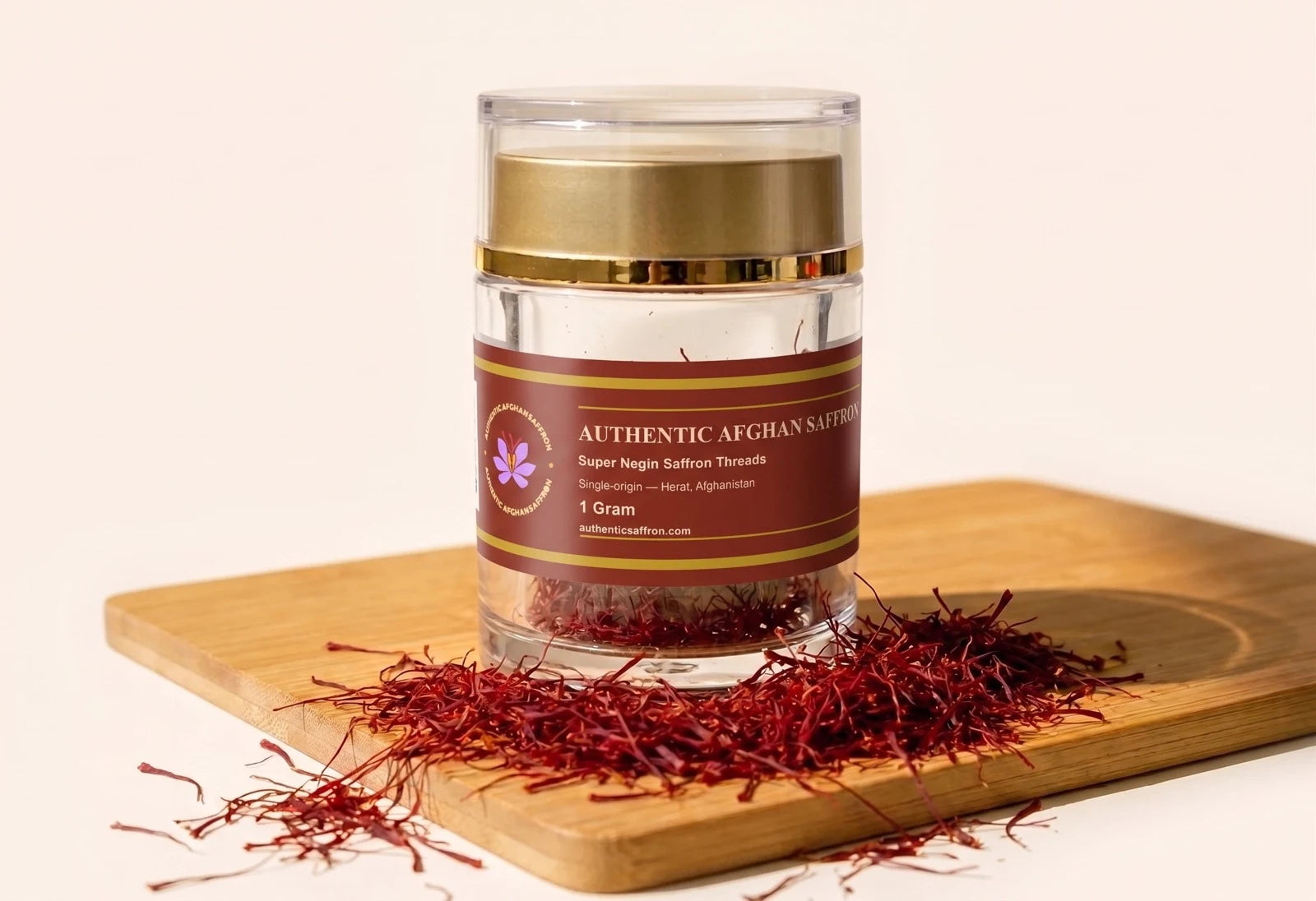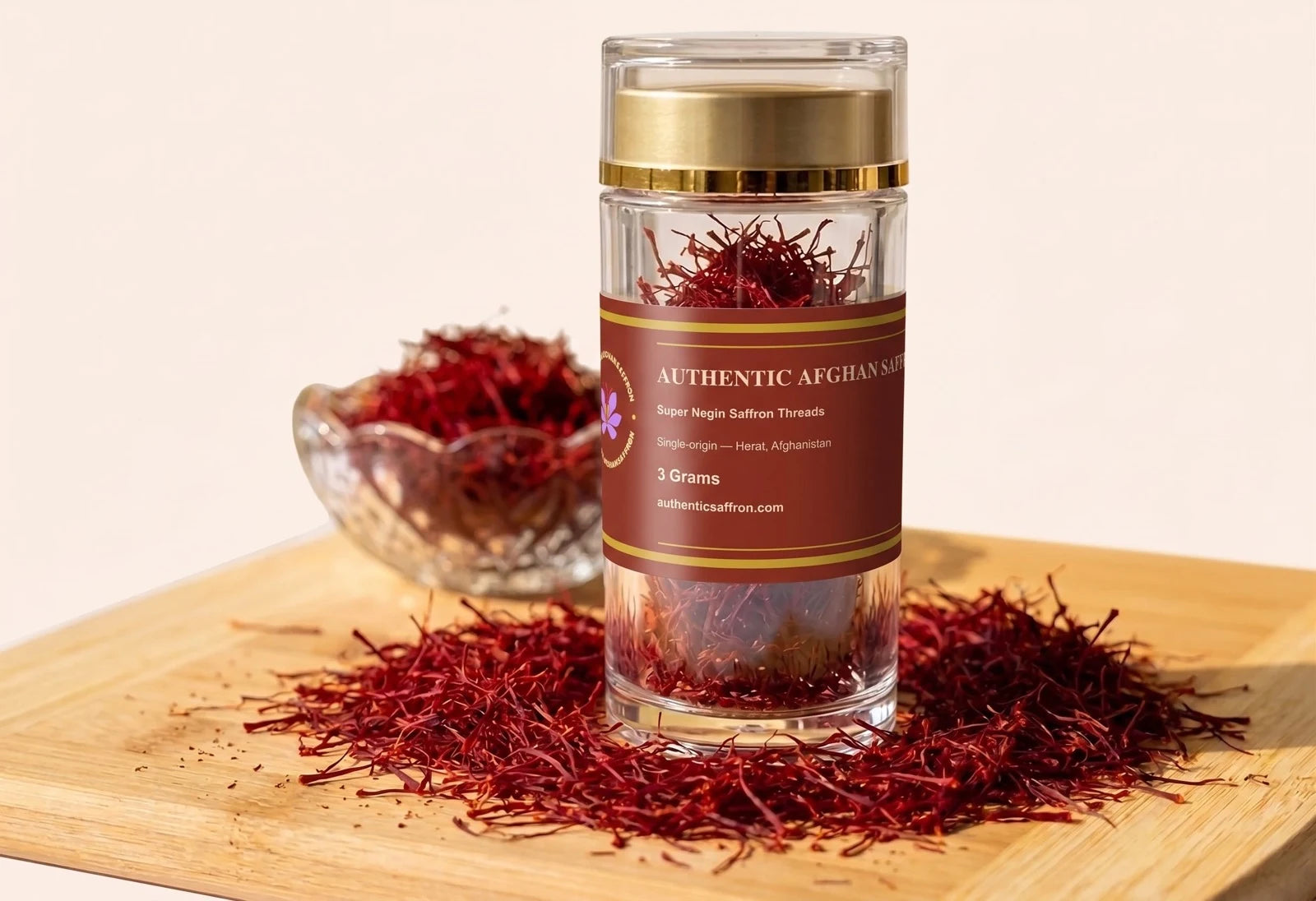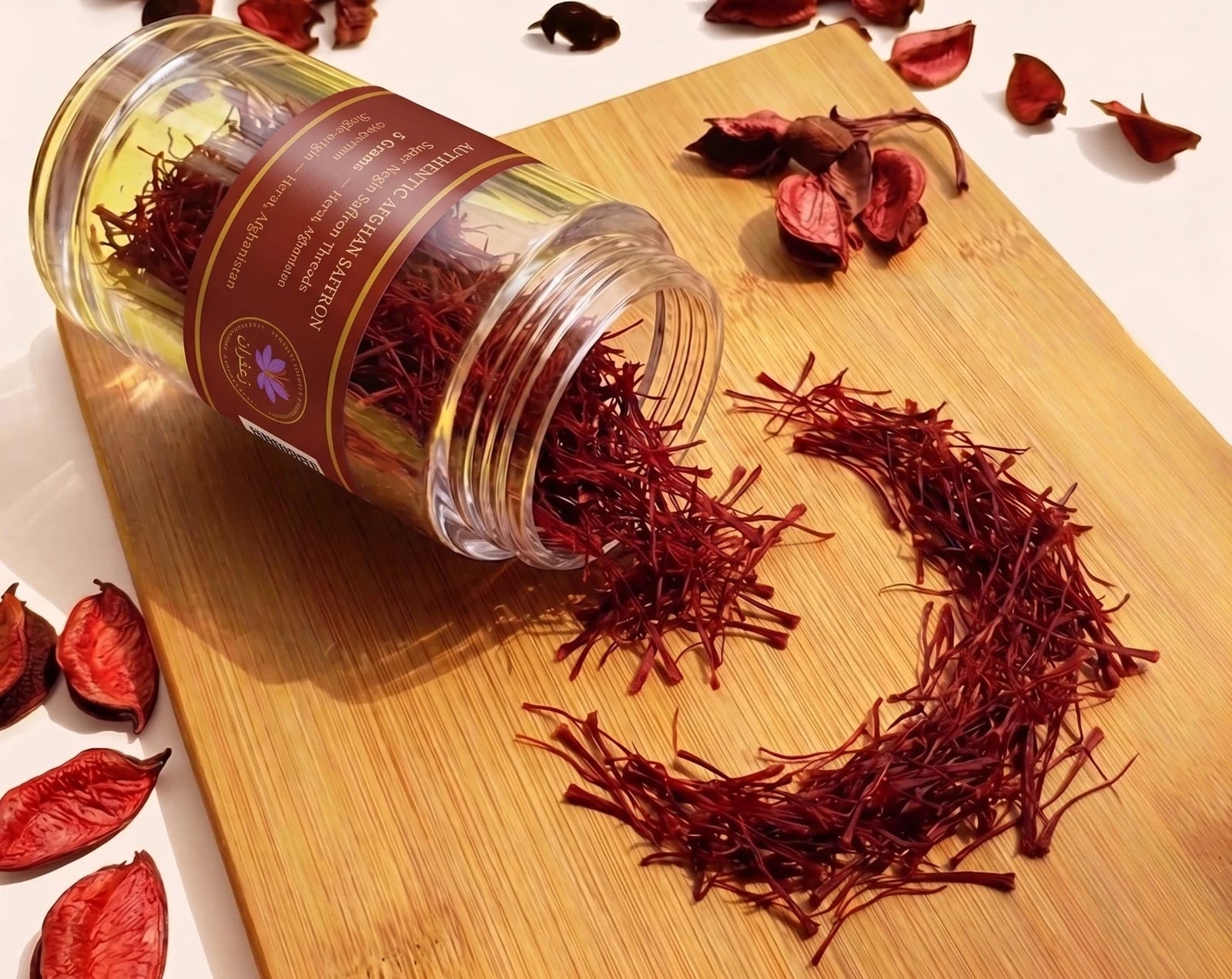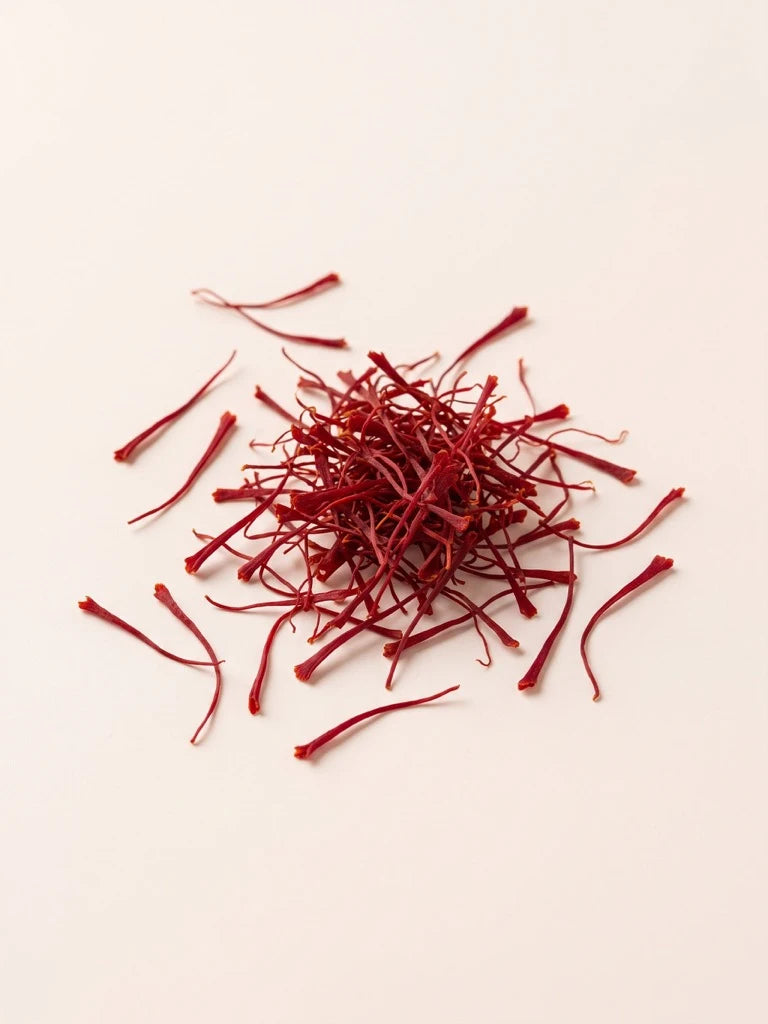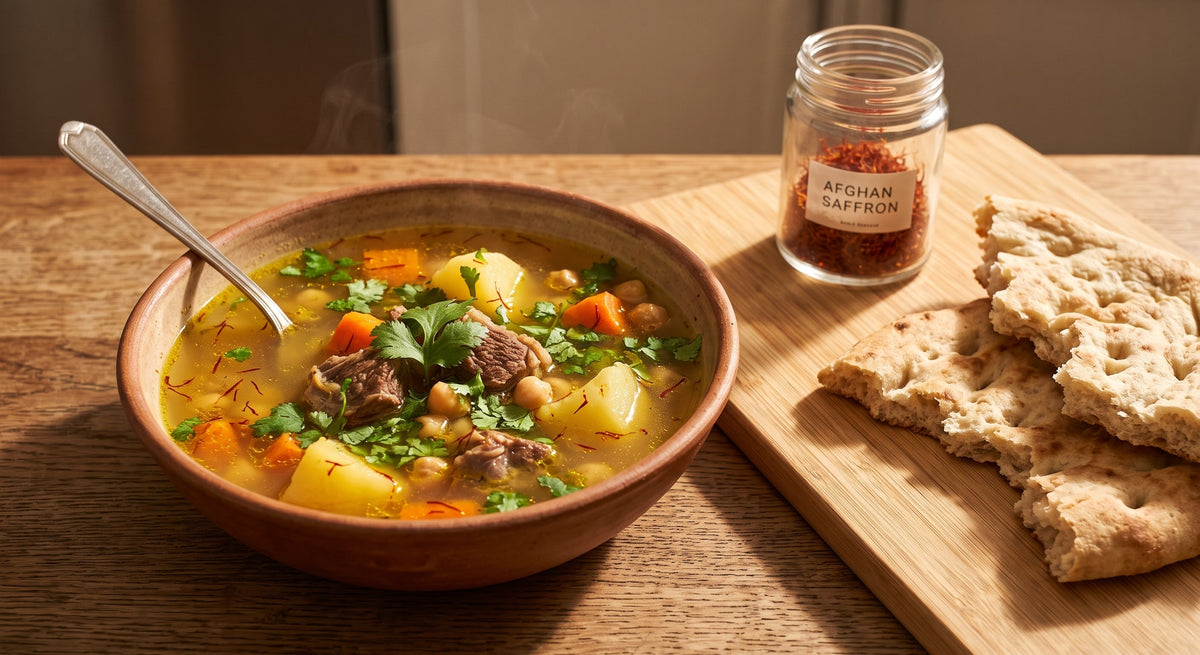
This Afghan shorwa recipe uses about 30 saffron threads, roughly 0.12 g, bloomed in warm water and stirred in during the last ten minutes. Lamb on the bone simmers with chickpeas, potatoes and carrots for two and a half hours until the broth runs clear and gold. You eat it over torn flatbread.
Shorwa is the everyday soup of Afghan home cooking: meat, water, whatever roots are in the house, and bread underneath to catch it. The saffron is optional. It appears when there are guests.
Why does shorwa suit saffron so well?
Shorwa is built on a very short list. Lamb, onion, tomato, water. There is no roux, no cream, no stock cube standing in for depth, so the broth tastes exactly as good as the meat you started with and the patience you gave it.
That plainness is what makes saffron legible. In a heavily spiced curry it would be lost; in a clear lamb broth you can taste the pot with saffron against the pot without from one spoonful. It lands as a faint honey-and-hay note behind the fat, and it pulls the liquid from muddy brown towards amber.
Be honest about the tradition, though. A weekday shorwa in Herat is coloured with turmeric, because turmeric costs almost nothing and saffron does not. Saffron shorwa is a guest dish. Nobody will call it inauthentic; they will notice you went to some trouble.
How many saffron threads, and bloomed in what?
Thirty threads, or 0.12 g on a scale that reads to a hundredth of a gram, is right for a pot serving six. Soup is unforgiving in both directions: too little vanishes into eight cups of liquid, too much turns slightly medicinal against the lamb fat.
Bloom them in 1/3 cup of water held around 150°F (65°C). The practical test is steam with no bubbles — boiling water poured into a cold cup and left ninety seconds lands about there. Give it fifteen to twenty minutes. Water at a rolling boil drives off safranal, the compound behind the aroma, and leaves you holding dye.
Add the bloomed liquid near the end rather than at the start. Two and a half hours of simmering will scrub the smell out of anything. How far thirty threads go depends on what you bought: short, deep red, all-red stigmas of Super Negin grade carry far more pigment than pale style-heavy threads, and our quantity guide covers scaling the pot up or down.
What goes into the pot?
- 2.5 lb (1.1 kg) bone-in lamb shoulder or shanks, cut into large pieces
- About 30 saffron threads (0.12 g)
- 3 tbsp neutral oil
- 2 large yellow onions, halved and sliced thin
- 4 garlic cloves, crushed
- 1 tbsp tomato paste
- 2 medium tomatoes, coarsely chopped
- 1 cup (200 g) dried chickpeas, soaked overnight, or 2 cups cooked
- 1 tsp ground coriander
- 1/2 tsp ground turmeric
- 1/4 tsp black pepper
- 3 medium waxy potatoes, peeled and quartered
- 2 carrots, cut into thick coins
- 8 cups (2 L) water
- Fine sea salt
- Flatbread and a handful of coriander leaves, to serve
How is it made?
- Soak the chickpeas. Cover the dried chickpeas with cold water by three inches and leave them overnight. Drain. If you are using cooked chickpeas instead, hold them back until step eight.
- Bloom the saffron. Heat 1/3 cup of water to about 150°F (65°C) — steaming, no bubbles — and pour it over the threads in a small cup. Cover with a saucer and leave it while the soup cooks.
- Brown the lamb. Pat the lamb dry and salt it. Heat the oil in a 6-quart heavy pot over medium-high and brown the pieces in two batches, about 5 minutes a side, until they are properly bronzed. A crowded pot steams the meat grey and costs you most of the broth.
- Soften the onions. Lift the lamb out. Drop to medium heat, add the onions with a pinch of salt and cook 12 to 15 minutes, scraping the browned crust off the base as it loosens. You want them collapsed and the colour of wet sand.
- Cook out the paste. Add garlic, tomato paste, coriander, turmeric and pepper. Stir for 2 minutes until the paste darkens from red to rust and smells toasted rather than raw, then add the tomatoes and cook 5 minutes more until they slump.
- Add water and chickpeas. Return the lamb with any juices, pour in the 8 cups of water and tip in the drained chickpeas. Bring it up slowly over about ten minutes and skim the grey foam as it gathers at the edge.
- Simmer, barely. Set the heat so one or two bubbles break the surface a second, no more. Part-cover and cook 2 hours, until the lamb slides off the bone and the chickpeas are soft to the centre. A hard boil emulsifies the fat and turns the broth cloudy.
- Add the vegetables. Add the potatoes and carrots and cook 25 minutes, until a knife meets no resistance. Salt properly now rather than earlier — dried chickpeas salted from the start can stay stubbornly firm.
- Stir in the saffron. Pour in the bloomed liquid with its threads and simmer uncovered for a final 10 minutes. The broth should shift to a clear amber and smell faintly of honey behind the lamb.
- Rest and serve. Off the heat, leave it 15 minutes so the fat rises and can be spooned off if you want it leaner. Tear flatbread into wide bowls, ladle the broth over it, pile the meat and vegetables on top and scatter coriander.
Where does shorwa usually go wrong?
A cloudy grey broth almost always means the pot boiled. Once fat and protein have been beaten into the water they do not separate out again. Keep it lazy for the whole two hours, and skim in the first ten minutes while the foam is still easy to catch.
Thin flavour is nearly always a browning problem. Lamb that went into a crowded pan and steamed will give pale broth no matter how long it cooks. Dry meat, hot pan, two batches.
Potatoes added too early is the third one. Twenty-five minutes is plenty for a waxy potato. Floury ones dropped in with the lamb dissolve and thicken the liquid into something closer to a stew.
Last, leave the spice rack alone. Coriander, turmeric and pepper are the whole cabinet here. Cumin, cinnamon and chilli all shout over saffron, and at that point you may as well not have bought any. The same restraint is worth applying elsewhere, which is the theme of our notes on cooking with saffron.
Frequently asked questions
Is shorwa traditionally made with saffron?
Not usually. An everyday pot is tinted with turmeric, and that is the version most households eat most of the week. Saffron shorwa belongs to guest meals, where part of the point is that you spent something. Adding it is a step up, not a correction.
Can I make this with beef?
Yes, using shin or oxtail rather than a lean cut, and add roughly an hour. Bone and connective tissue give shorwa its body, so the cut matters more than the animal. Chicken thighs work too but need only about 45 minutes and give a much lighter broth.
Do the chickpeas have to be dried?
No. Two cups of cooked chickpeas added with the potatoes are fine. Dried ones simmered in the broth give a slightly thicker, starchier liquid because they release into it, which is the argument for planning ahead.
How long does it keep?
Three days covered in the fridge, and it is better on the second day once the fat has set and been lifted off. Reheat to a bare simmer. If you want longer, freeze it before the potatoes go in, since they turn grainy after thawing.
Read next
- Saffron chalow, the steamed rice that usually sits next to a pot like this.
- Naan-e roghani if you would rather bake the bread than buy it.
- Why blooming water should be warm and not hot, with the temperatures spelled out.
- What sets Herat saffron apart from the rest of the market.