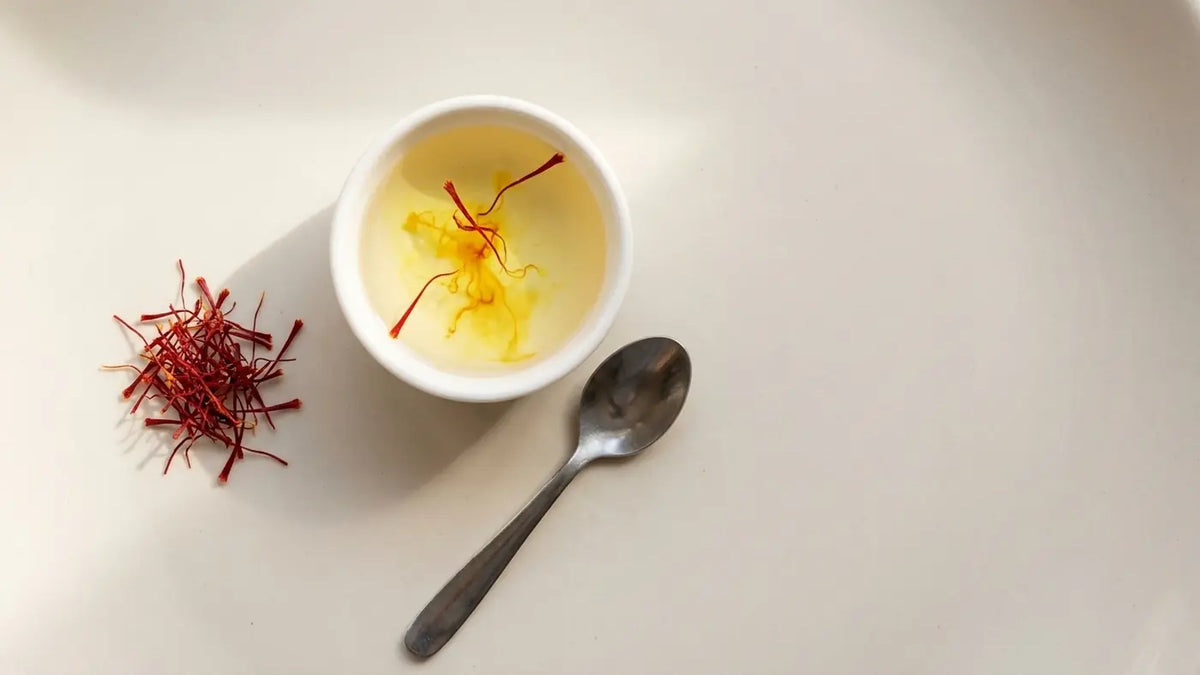
The right bloom saffron water temperature is about 150°F (65°C): hot to the touch, well below a simmer. Warm water pulls out the colour almost as completely as boiling water does, and it keeps the aroma compounds in the cup instead of losing them to the steam. Ten to twenty minutes is enough.
What temperature should the water be?
Aim for 150°F (65°C). If you do not want to use a thermometer, there are two reliable ways to hit it. Run the hot tap until it is as hot as it goes and use that. Or boil a kettle, pour, and let the cup stand for five minutes before the saffron goes in.
The tolerance is wide. Anywhere from 120°F to 170°F (49°C to 77°C) will do the job. What you are avoiding is the top of the range, not hunting a precise figure. The rule is easier to remember as a sentence than a number: warm enough to be uncomfortable to hold, never hot enough to steam vigorously.
Why does boiling water cost you aroma?
Saffron carries three things you care about, and they do not respond to heat the same way. Crocin gives colour and is fairly robust. Picrocrocin gives the bitter taste and is water-soluble and stable. Safranal gives the aroma and is volatile, which means heat pushes it into the air.
Pour boiling water on saffron and the kitchen fills with a wonderful smell. That smell is the product leaving. Steam strips volatile compounds and carries them out of the cup, so the bloom that goes into your rice is the part that stayed behind. Prolonged high heat also begins to degrade the colour pigment itself, though that matters less over the timescale of a bloom.
The trade is bad in both directions. You gain a few minutes on colour extraction and you lose aroma you paid roughly 150 flowers a gram for. The compounds are covered in more depth in our pieces on safranal and crocin; thermal degradation of saffron compounds is a well-studied area in the food chemistry literature indexed on PubMed.
Temperature by temperature
| Water temperature | Colour release | Aroma retained | Verdict |
|---|---|---|---|
| Room temperature, 70°F (21°C) | Complete, but needs an hour or more | Highest | Excellent if you plan ahead |
| Warm, 150°F (65°C) | Near-complete in 10 to 20 minutes | High | The working default |
| Hot, 185°F (85°C) | Fast, within a few minutes | Noticeably reduced | Acceptable when rushed |
| Boiling, 212°F (100°C) | Fastest | Lowest — much of it leaves as steam | Avoid |
Note what the table does not show: a large difference in colour. Between warm and boiling, the colour outcome is close. The gap is almost entirely in the smell, which is the part of saffron people find hardest to describe and easiest to lose.
How long should saffron steep?
Ten minutes gets you most of the way. Twenty is better. Beyond about thirty minutes at warm temperatures you are gaining very little, and an uncovered cup starts losing aroma to the room.
You can judge it by eye. The liquid should go from pale straw to a deep amber, and the threads should look bleached and limp. If the water is still barely tinted after five minutes at 150°F, something is wrong — either the saffron is very old, or it is not saffron.
Always cover the cup. A saucer over the top costs nothing and returns condensed aroma to the liquid instead of the extractor fan.
Does the same rule apply to milk, stock and alcohol?
Yes, with small adjustments. The pigment is water-soluble, so any liquid that is mostly water behaves like water. Fat is the exception: oil and melted butter extract poorly on their own, so bloom in a spoonful of warm water first and combine afterwards.
- Milk or cream. Same temperature, same timing. Warm it gently and do not let it catch on the bottom of the pan.
- Stock or broth. Ladle some out of the pot, let it cool to warm, bloom there, then return the whole lot.
- Wine or spirits. Use them at room temperature. Alcohol extracts well cold and heating it drives off both the alcohol and the aroma.
- Yoghurt or a marinade. Bloom in warm water first, then stir the coloured liquid through.
What if a recipe tells you to boil the saffron?
Plenty do, and they are not wrong so much as imprecise. A recipe written before anyone measured volatile loss will say “add a pinch of saffron to the boiling stock” because that is where the liquid was. It still produces a golden dish.
The fix is simple and changes nothing else. Take the saffron out of the boiling step. Bloom it separately in warm water and add the bloom later — near the end of a braise, into the cooking water for rice, into the warm dairy for a custard. You get the same colour and a good deal more smell.
The same applies to dishes where the saffron traditionally goes in dry, such as some paella methods. Blooming is a modern convenience, not a betrayal of the dish, and it makes a small quantity go further. Our cooking guide works through the common cases.
What does the method look like in practice?
- Measure the threads. Roughly one per person for most dishes; see how much saffron you need for specifics.
- Crush them lightly between clean, dry fingertips, or in a small dry mortar with a pinch of salt or sugar as an abrasive.
- Tip them into a small cup and add two to three tablespoons of water at about 150°F (65°C).
- Cover with a saucer and leave for ten to twenty minutes, undisturbed.
- Stir once, then add the liquid and the spent threads together at the point in the recipe where they can circulate.
Do not wet the mortar, do not grind to powder, and do not discard the threads. There is a longer walkthrough in our recipe note on how to bloom saffron properly.
Frequently asked questions
Can I use hot tap water to bloom saffron?
In most kitchens, yes. Hot tap water usually runs between 120 and 140°F (49 to 60°C), which is close enough. If you prefer boiled water, pour it and let it stand for five minutes before the saffron goes in.
Is it a problem if the bloom cools down?
No. Extraction slows as the cup cools but it does not stop, and a bloom that sits for half an hour on the counter is perfectly good. Cover it so the aroma stays in the cup rather than leaving through the top.
Can I bloom saffron the night before?
Yes. Use room-temperature water, cover the cup, and leave it in the fridge overnight. Cold extraction is slow but thorough, and it loses less aroma than any hot method. Bring it back to room temperature before you use it.
Does the water temperature change how much saffron I need?
Not meaningfully. Temperature changes how much of each thread you actually get out, not how many threads the dish wants. Blooming properly may make a given dose taste stronger, so start at the low end and adjust.