Saffron Authenticity
A kitchen test can flag obvious dye, but it cannot certify saffron. Inspect whole-thread shape and colour, confirm the origin and harvest information, and look for a laboratory report tied to the lot.
Use the water test as a screen
Genuine threads normally release gold colour gradually while the thread remains visibly red. Instant, unnaturally bright bleeding or a thread that turns pale can indicate dye. The test is useful for screening, not proof.
Inspect the thread itself
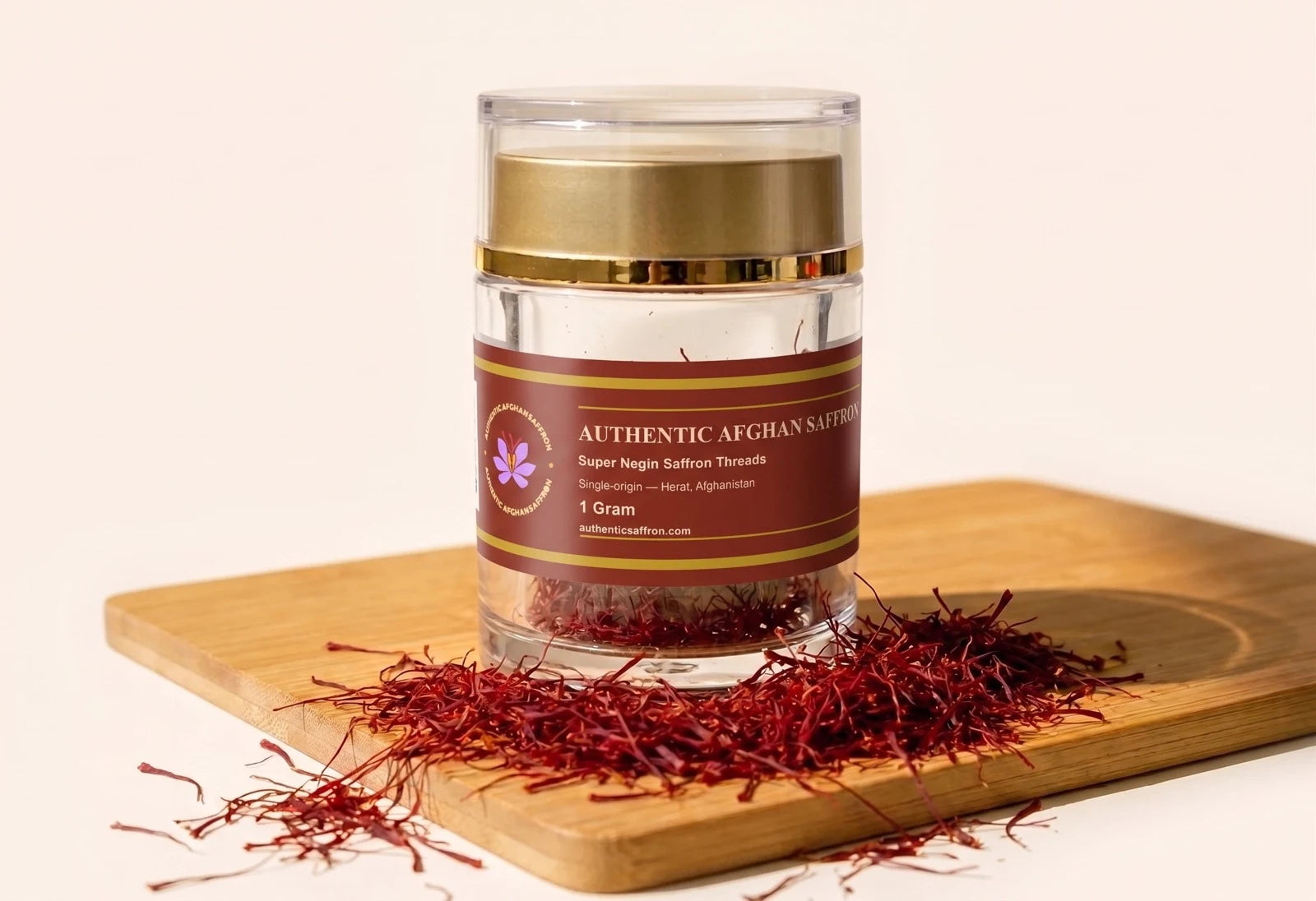
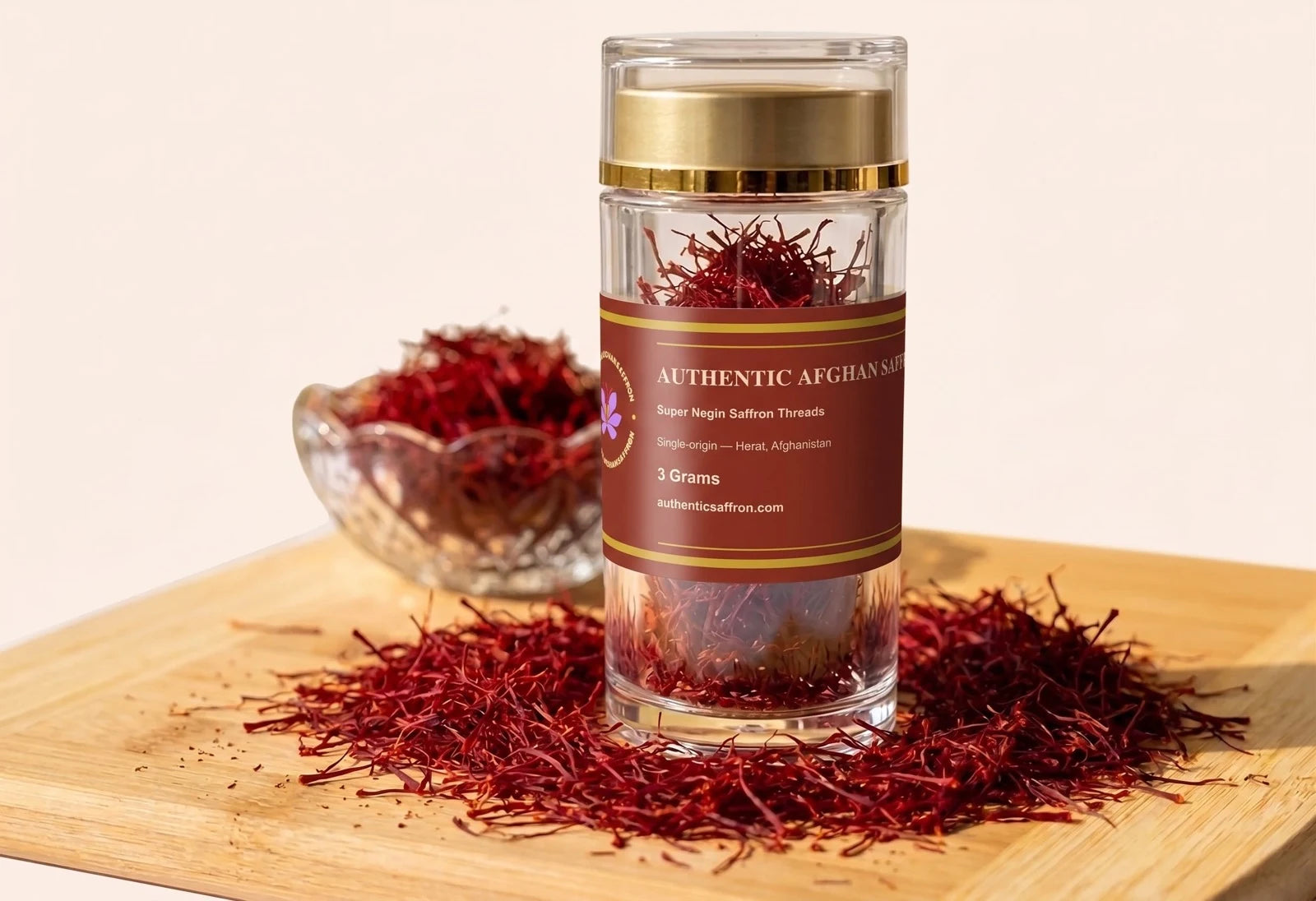
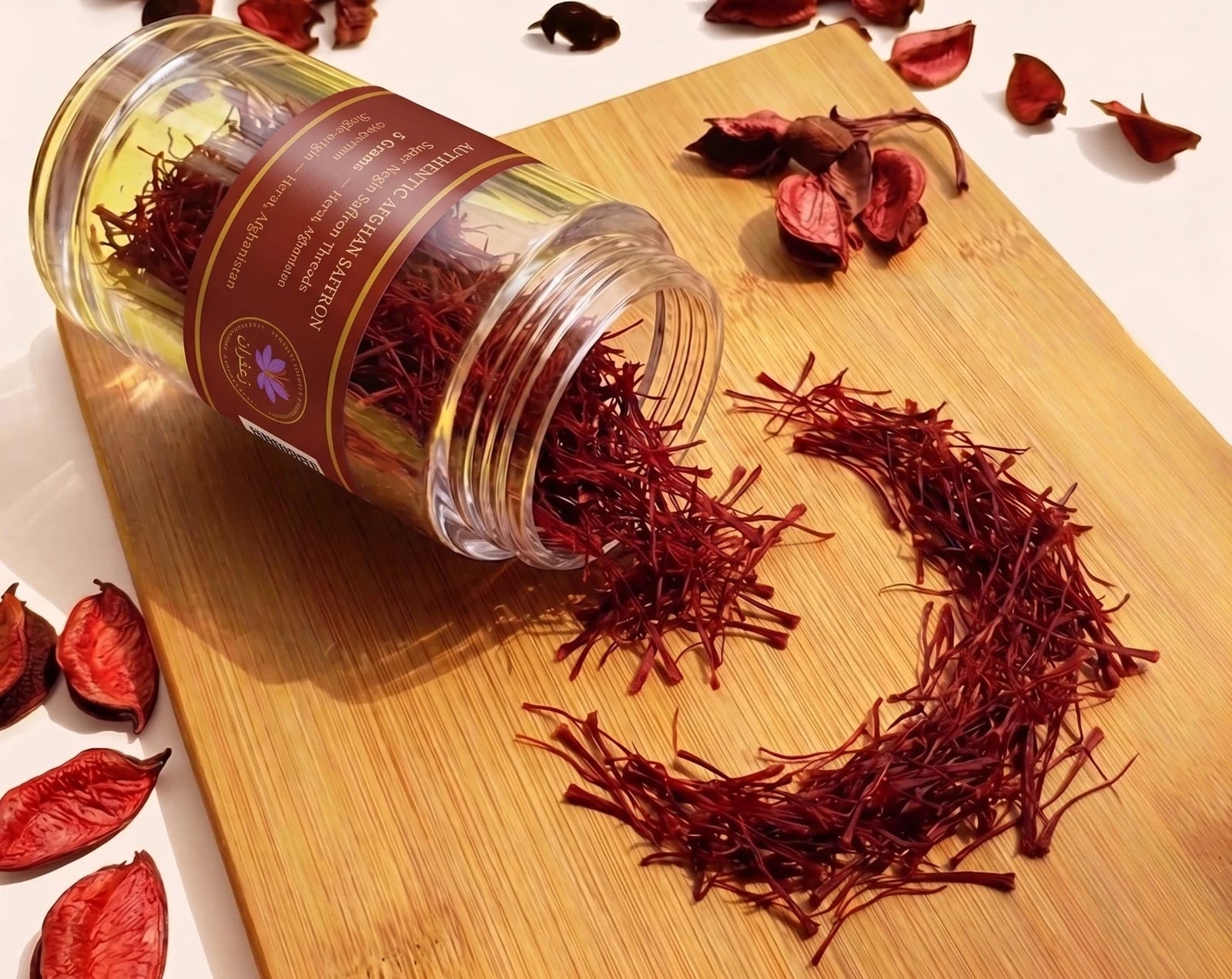
Buy whole stigmas rather than powder. Look for deep-red, trumpet-shaped threads with natural variation rather than uniformly cut fibres.
Ask for specific sourcing
A seller should be able to name the growing region, harvest period and lot. Our saffron is single-lot from Herat, Afghanistan, and is harvest-dated on the jar.
Check the laboratory status
Independent ISO 3632 testing for the current lot is pending. The complete certificate will be published on our Lab Report page when it is issued. Until then, we do not claim a documented ISO category.