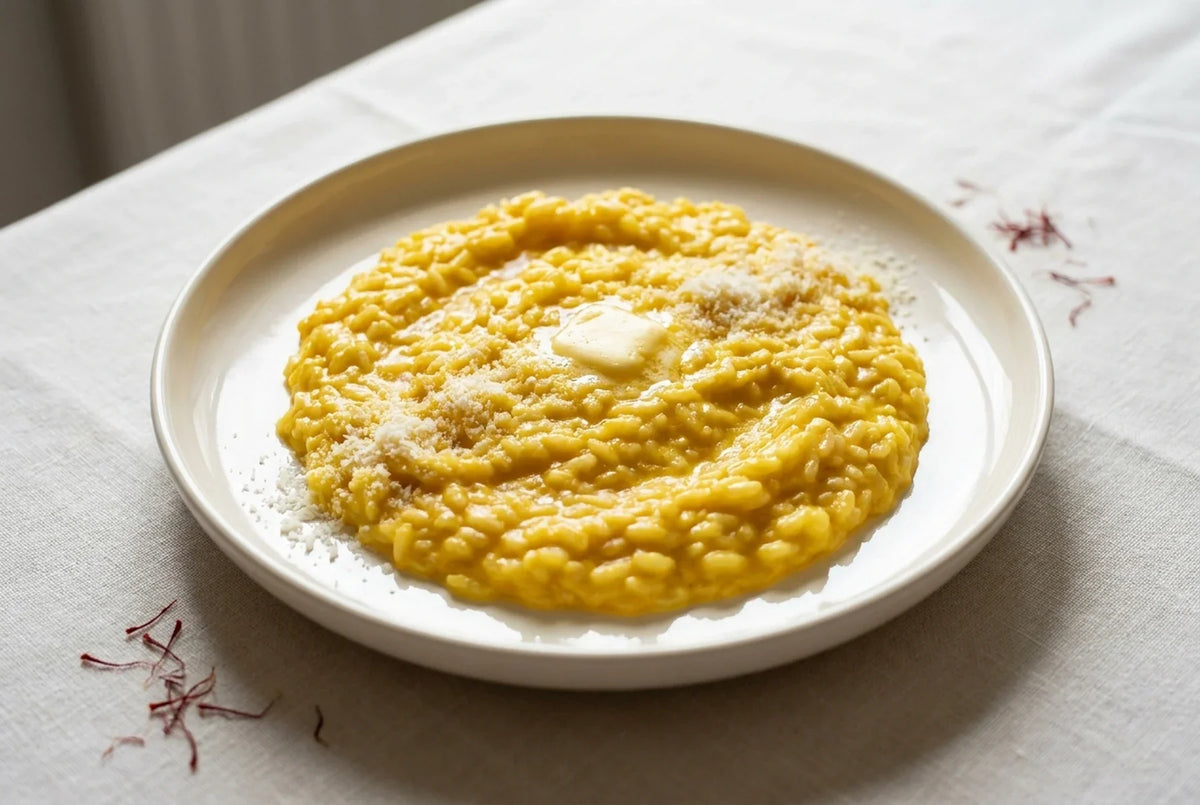
A good saffron risotto recipe needs about 50 threads (0.20 g) bloomed in warm broth, Carnaroli rice, and roughly 18 minutes of steady stirring in a wide pan. The rice should ripple when you shake the plate, not stand in mounds. Everything else is patience and the last piece of cold butter.
Risotto alla Milanese is one of the few dishes where saffron is not a flourish. Take it out and you have risotto bianco — pleasant, but a different plate of food. The colour, the faint hay-and-honey smell, the slight bitterness that keeps the cheese in check: all of that is saffron doing structural work.
Why does saffron work so well in risotto?
Three things line up. Crocin, the pigment that carries the colour, is water-soluble, so once you bloom it the colour goes into the broth and the broth goes into every grain. You get an even gold rather than streaks.
Then there is fat. Safranal and the other aroma compounds are far more at home in butter and cheese than in water, so the mantecatura at the end — the hard beating in of cold butter and Grana Padano — is also what carries the smell up out of the bowl. Risotto is one of the best delivery systems saffron has.
Last, picrocrocin gives saffron a mild bitterness. Against 70 grams of aged cheese and a spoonful of marrow, that bitterness stops the dish from turning cloying. Milan tells a story about a glassworker tinting a wedding risotto with the pigment he used on the Duomo windows in 1574. It is folklore, not history, but it does explain why the city treats the colour as the point.
What is the right amount of saffron?
For four servings, use about 50 threads, which is roughly 0.20 g on a jeweller’s scale. That is a generous hand by most standards and deliberately so — this is a saffron dish, not a dish with saffron in it. Cut it to 30 threads if you are serving it as a side next to osso buco.
Bloom it properly. Take 1/4 cup of your broth, bring it to about 150°F (65°C) — hot enough to steam, not to bubble — and pour it over the threads. Give it 15 minutes, 20 if you have them. Boiling water drives off the aromatics you paid for and leaves you with colour and not much else.
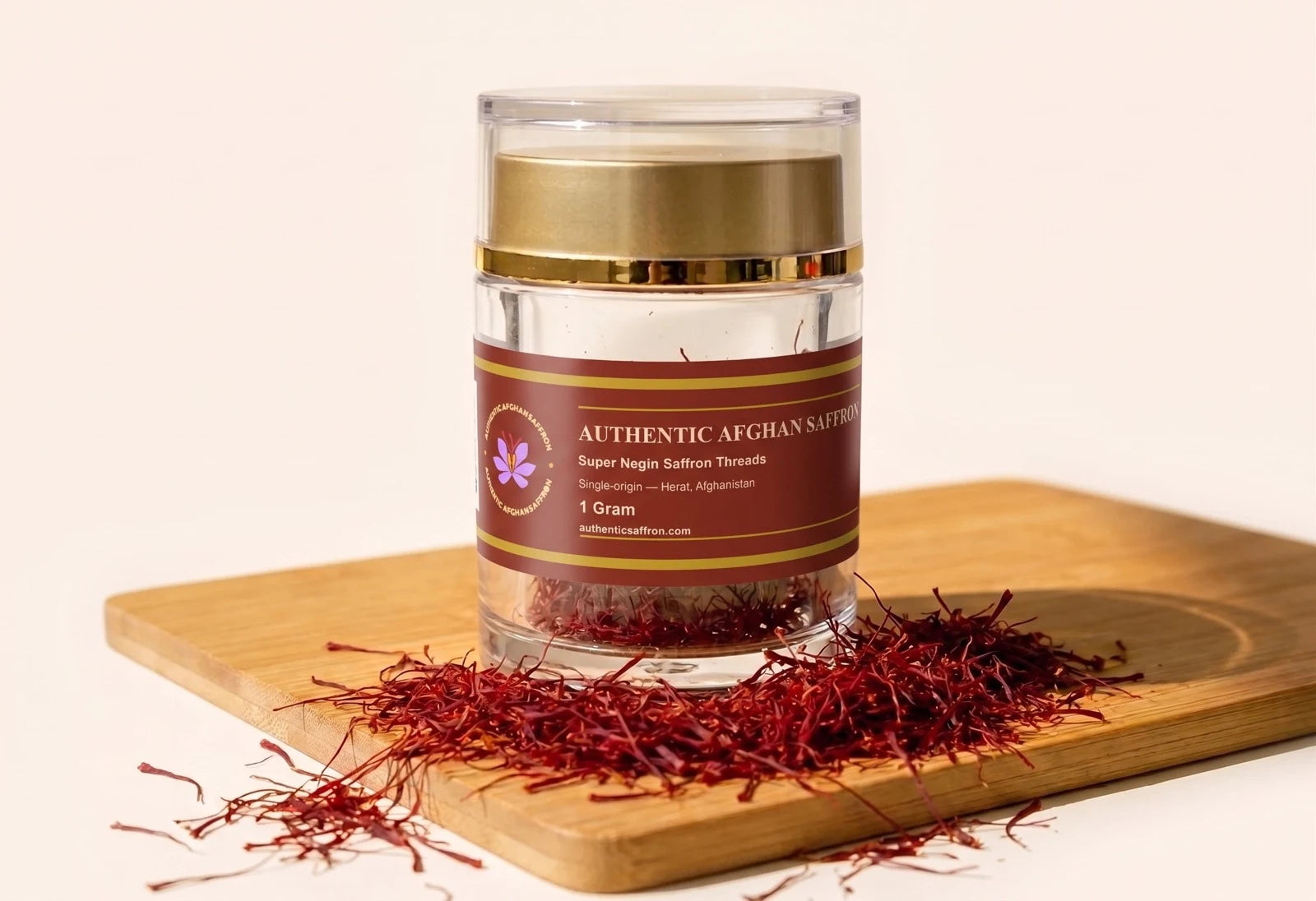
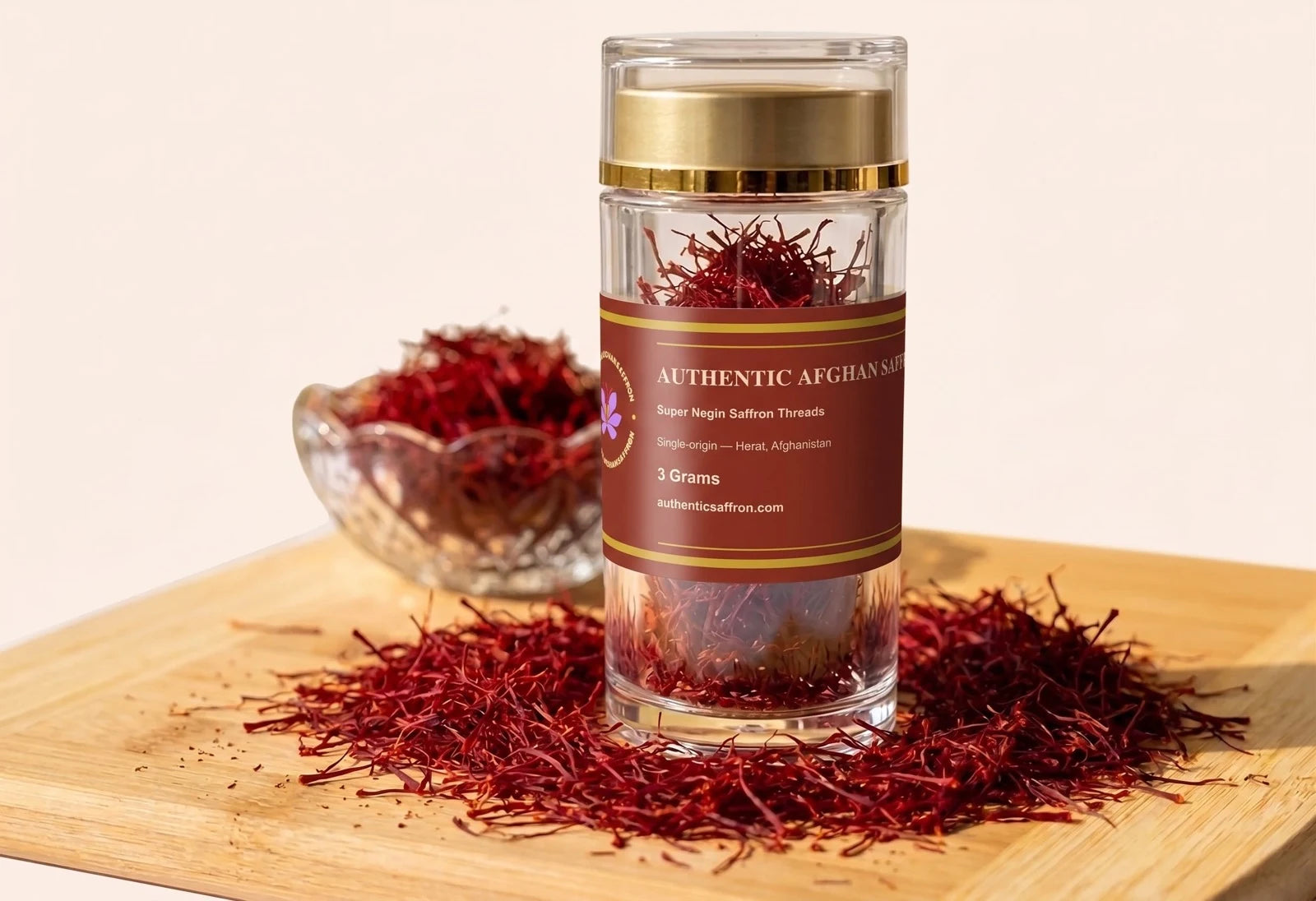
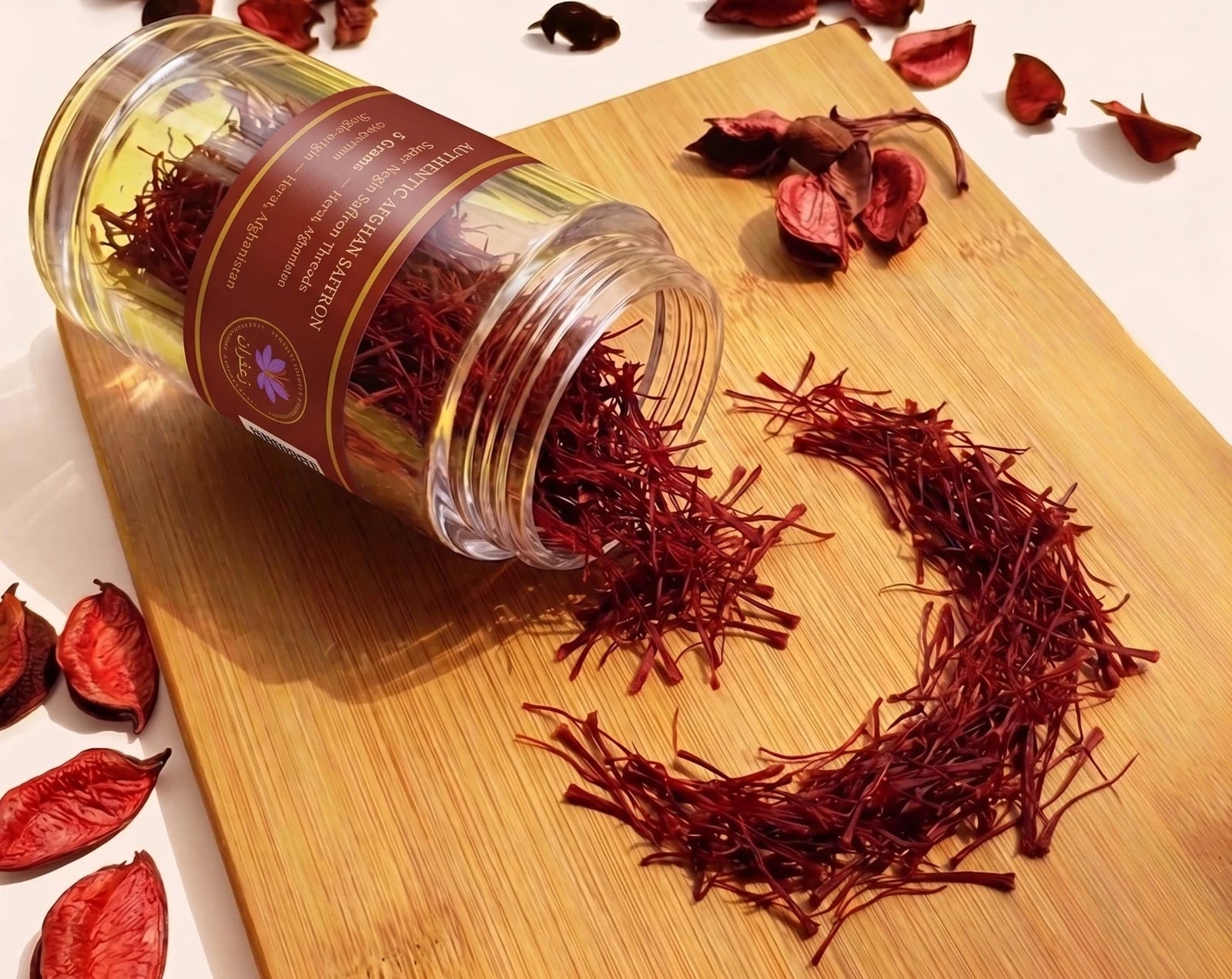
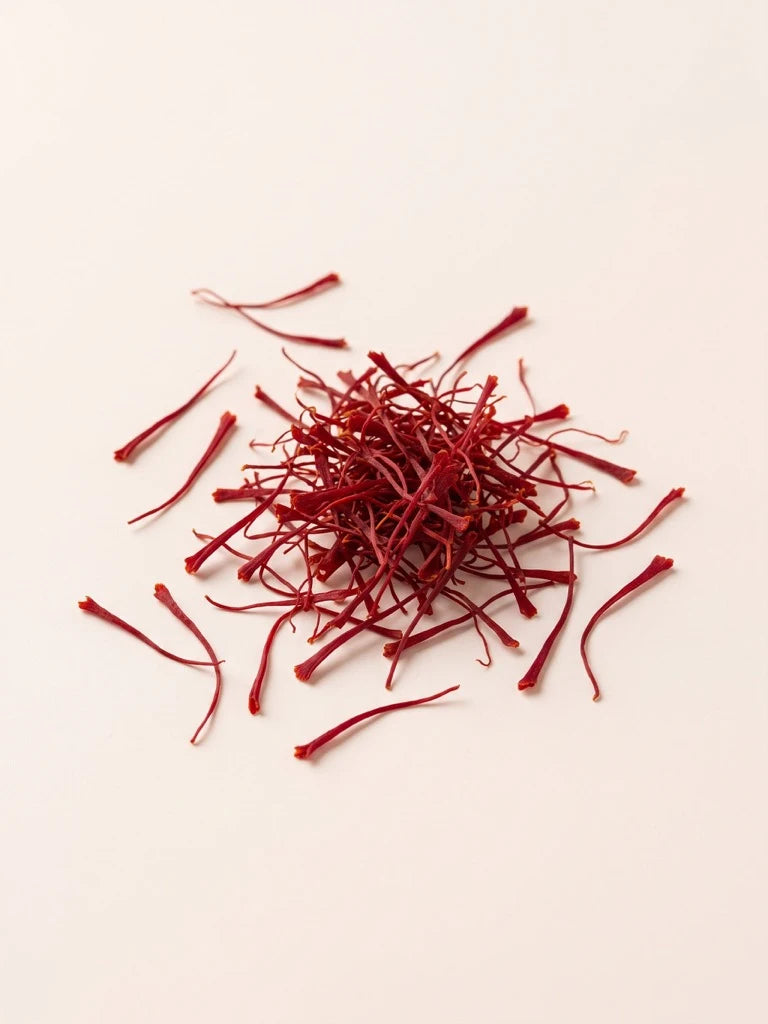
Thread quality matters more than quantity. Deep red, all-red threads with no yellow style attached will take a small amount much further; our Super Negin grade is cut that way. If you are unsure how much your own threads weigh, the quantities guide has thread-to-gram counts for common dishes.
What do you need to have ready?
- 1.5 quarts (1.4 L) beef or veal broth, kept at a bare simmer
- About 50 saffron threads (0.20 g)
- 3 tbsp unsalted butter, plus 2 tbsp more kept very cold
- 2 oz (55 g) beef bone marrow, finely chopped (optional but traditional)
- 1 small yellow onion, minced fine, about 1/2 cup
- 1.5 cups (300 g) Carnaroli rice
- 1/2 cup (120 ml) dry white wine, at room temperature
- 2.5 oz (70 g) Grana Padano, finely grated, plus more to serve
- Fine sea salt
How do you make it?
- Bloom the saffron. Warm 1/4 cup of the broth to about 150°F (65°C), just under a simmer, and pour it over the saffron threads in a small bowl. Leave it for 15 minutes. The liquid should turn deep amber, not pale yellow.
- Hold the broth hot. Bring the rest of the broth to a bare simmer in a saucepan set next to your risotto pan and keep it there. Cold broth stalls the rice every time you ladle it in.
- Soften the onion. Melt 2 tablespoons of the butter with the marrow in a 10 to 11 inch heavy sauté pan over medium-low heat. Add the onion and a pinch of salt and cook for 6 to 8 minutes until translucent, with no colour at all.
- Toast the rice. Raise the heat to medium, add the rice, and stir for 2 minutes until the grains are hot to the touch and their edges look glassy while the centres stay chalk white.
- Add the wine. Pour in the wine and stir until the pan smells of wine rather than alcohol and the liquid has almost gone, about 1 minute.
- Add broth a ladle at a time. Add a ladle of hot broth, enough to just cover the rice, and stir steadily. When the spoon leaves a clear track across the pan bottom for a beat, add the next ladle. Keep this going for about 16 minutes.
- Stir in the saffron. Add the bloomed saffron with its liquid, threads and all, and stir it through. Cook for 2 minutes more, then bite a grain: tender to the middle with one firm point at the core, no chalk.
- Finish off the heat. Pull the pan off the burner, add the cold butter and the Grana Padano, and beat hard with a wooden spoon for 30 seconds until the risotto turns glossy and loosens. Taste and season with salt.
- Serve at once. Spoon onto warm plates and knock each plate down once so the risotto settles flat. It should spread slowly and hold a faint ripple at the edge.
What usually goes wrong?
The saffron goes in too late. If you add threads dry in the final minute you get flecks of colour and a pale background. Bloomed liquid stirred in at around the sixteen-minute mark gives you an even gold with the aroma still intact.
The pan is too small. A tall narrow saucepan holds the rice in a deep column, so the bottom overcooks while the top waits. You want a shallow layer, an inch or so deep, in a pan 10 to 11 inches across.
The butter is warm. Mantecatura works because cold butter emulsifies into the starch rather than melting straight into oil. Warm butter gives you a greasy sheen and a risotto that separates on the plate within a minute.
And the risotto sits. It keeps cooking in its own heat, tightens, and goes stodgy. Have the plates warm and the eaters seated before you start the last two minutes. More kitchen-side failure modes are collected in our notes on cooking with saffron.
Frequently asked questions
Can I use powdered saffron instead of threads?
You can, but you lose the one thing threads give you here: control. Powder dissolves instantly and often carries filler you cannot see, so the colour arrives before the aroma does. Threads bloom slowly and let you judge the strength of the liquid by eye before it goes into the pan.
Do I really need bone marrow?
No. The risotto works without it and plenty of Milanese cooks skip it now. Marrow adds a soft, rounded richness that butter alone does not quite reach, and it helps the saffron read as savoury rather than floral. If you leave it out, use one extra tablespoon of butter at the start.
Why is my risotto grainy in the middle?
Almost always heat. If the pan runs too hot the outside of each grain releases its starch and collapses before the centre has taken on water. Keep the surface at a lively but unhurried bubble, add broth in small amounts, and give it the full 18 minutes.
Can I make saffron risotto ahead of time?
Not properly, but you can stage it. Cook it to about 12 minutes, spread it thin on a cold sheet pan so it stops cooking, and refrigerate for up to a day. Finish with hot broth, the saffron and the butter when you are ready to eat.
Read next
- How to bloom saffron properly — the step most recipes rush.
- The basic saffron rice method if you want something simpler on a weeknight.
- What saffron loves and what it fights, including why cheese works and vinegar rarely does.
- Storing saffron so the second half of the jar tastes like the first.