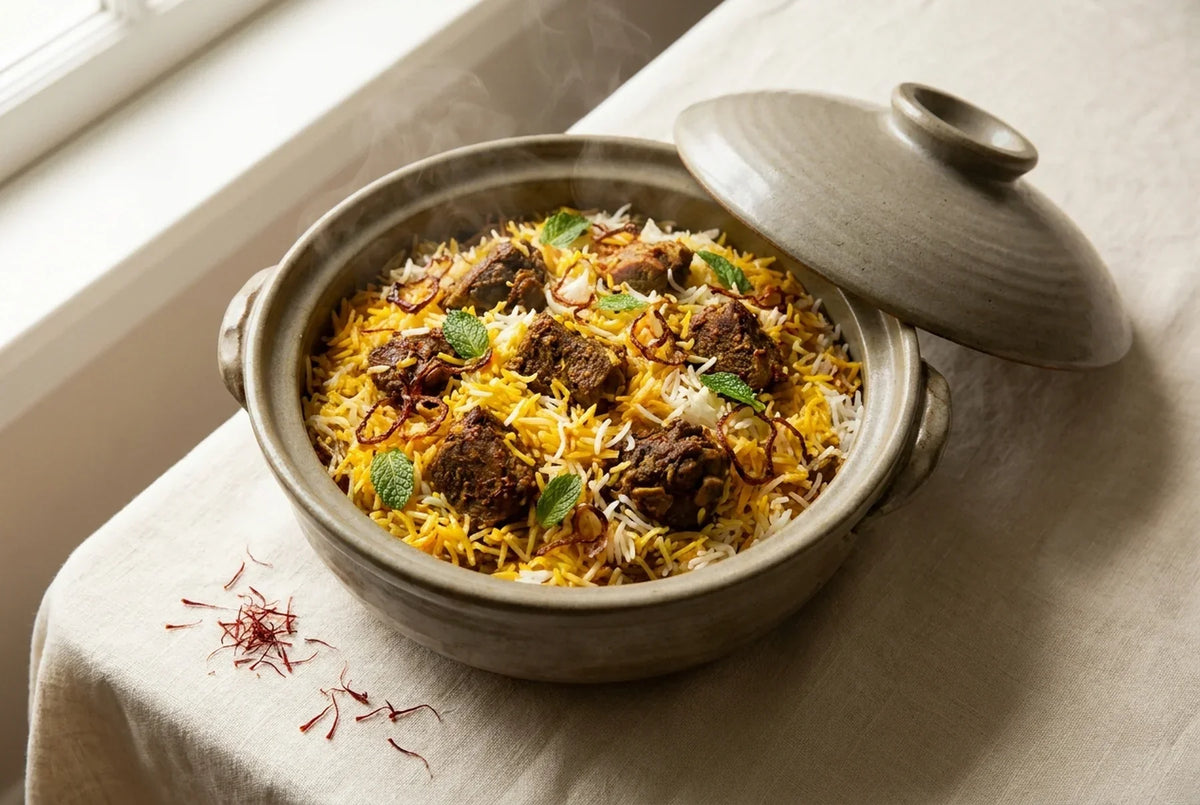
A saffron biryani recipe wants roughly 30 threads, about 0.12 g, bloomed in a quarter cup of warm milk and poured over the layered rice in stripes just before the pot is sealed. Cook on the lowest heat for 25 minutes. The finished grains should be mottled gold, white and brown.
Biryani is a layered rice dish, not a mixed one, and saffron is part of how the layers stay legible. Hyderabadi and Awadhi kitchens have used it for a very long time, though plenty of home versions now reach for orange colouring instead. The difference shows up in the smell more than the look.
Why does the saffron go on top instead of through the rice?
Because uneven colour is the point. A good biryani has white grains, gold grains and grains stained brown by the gravy underneath, all in the same spoonful. Stir the saffron through and you get a flat yellow that looks more like turmeric rice.
There is a practical reason too. Saffron aroma is volatile and survives best when it is added late and then trapped. Sealing the pot lets the steam carry that scent down through the rice for 25 minutes instead of boiling it off.
Milk also does something water cannot. Saffron’s aroma compounds are fat-friendly, so dairy fat holds them and releases them slowly. That is why the ghee goes on at the same moment.
How many saffron threads, and bloomed in what?
Use about 30 threads for a pot serving six, which weighs about 0.12 g. That is less than a risotto of the same size needs: cardamom, cloves and mint are already competing, and you want the saffron just above them, not shouting.
Bloom the threads in 1/4 cup of whole milk warmed to roughly 150°F (65°C). Steam at the surface, no bubbles. Fifteen minutes is the minimum, twenty is better. Boil the milk and you still get colour, but the top note that makes people ask what is in it disappears.
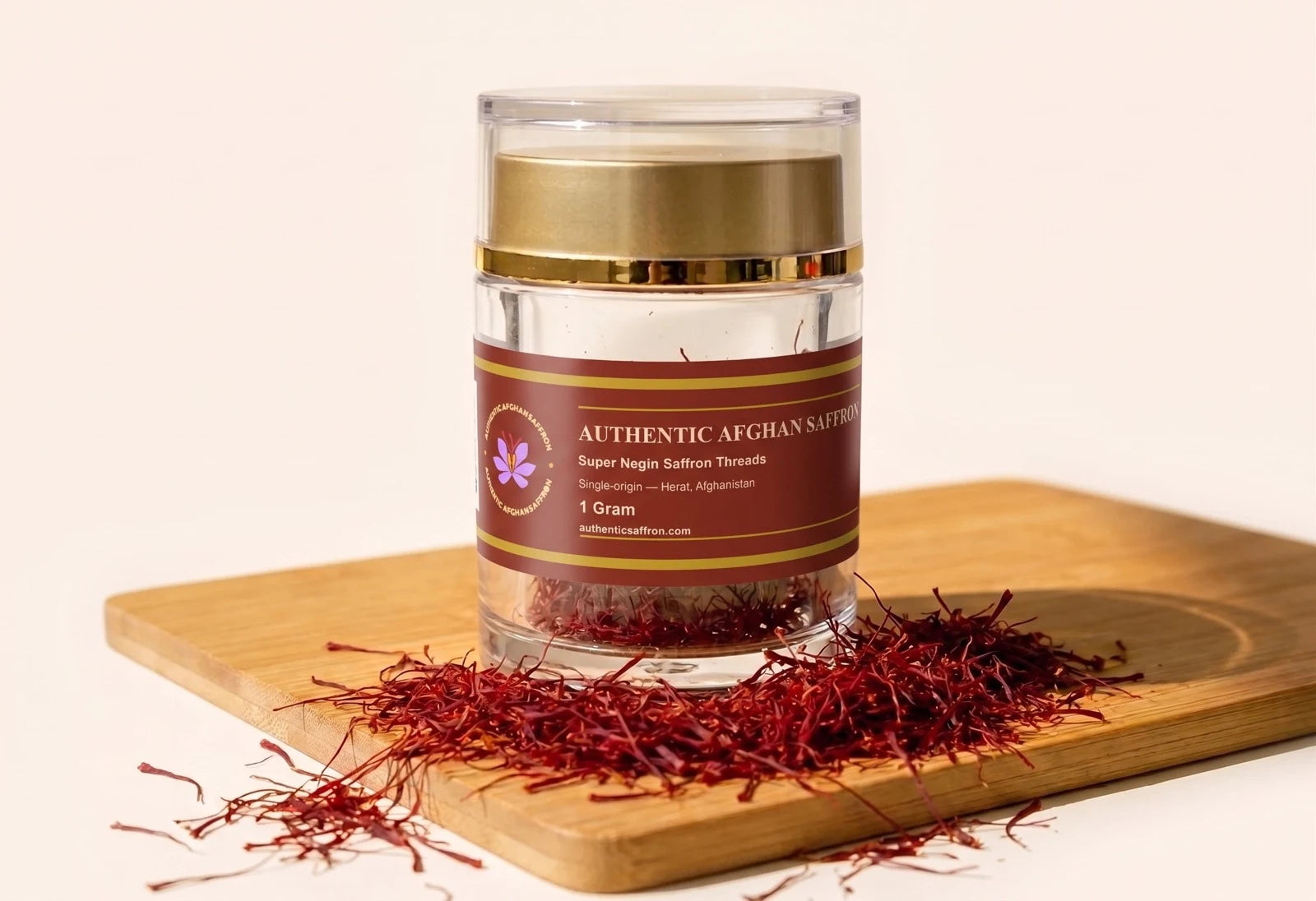
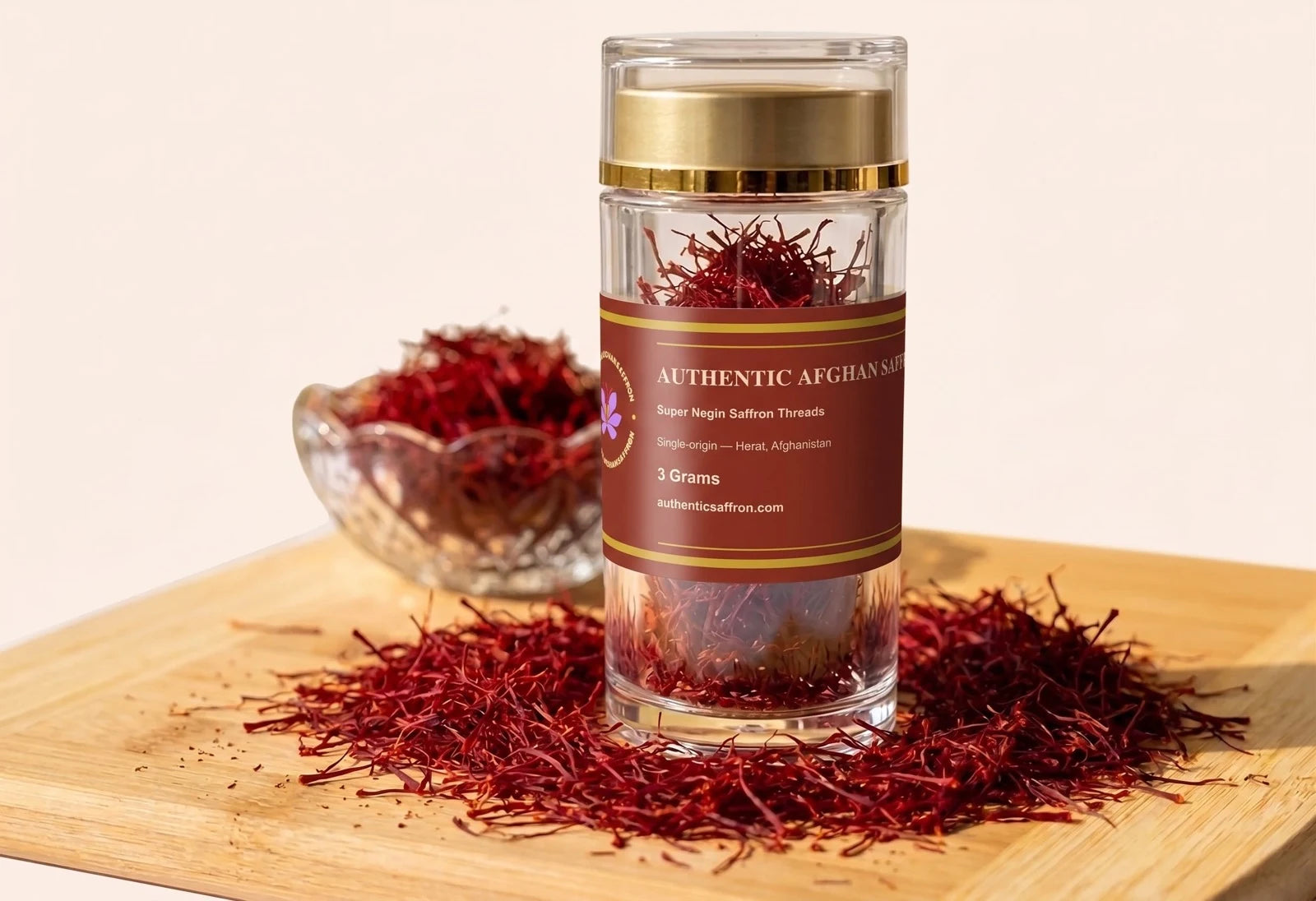
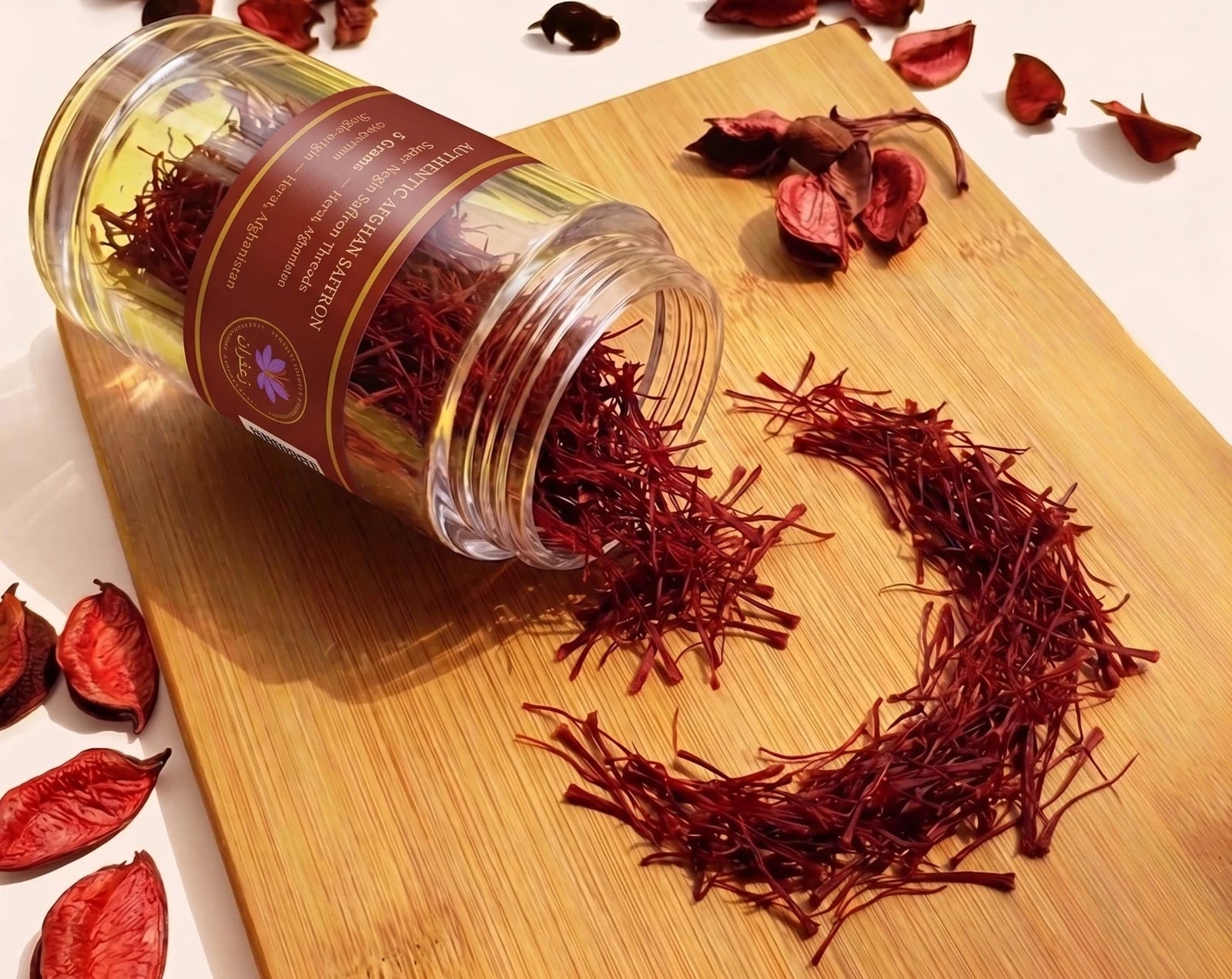
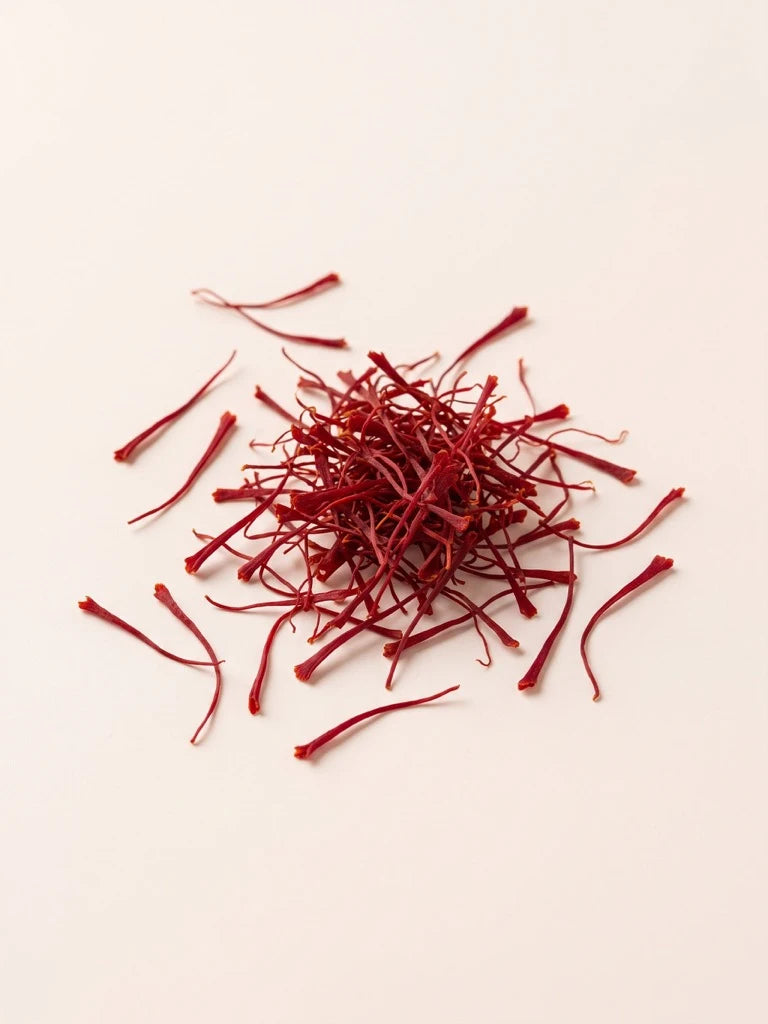
All-red threads matter more here than almost anywhere else, because you are working with a small quantity and no second chance to adjust. Our Herat saffron is cut to remove the pale style, so the whole thread is pigment. For a larger pot, scale the milk and threads in the same ratio as the rice and keep the same late-pour method.
What will you need on hand?
- 2 lb (900 g) bone-in chicken thighs and drumsticks, skin removed
- 1 cup (250 g) thick whole-milk yogurt, drained for 30 minutes
- 2 tbsp ginger and garlic paste
- 2 tsp red chilli powder
- 1/2 tsp ground turmeric
- 1.5 tsp garam masala
- 3 green chillies, slit lengthways
- 1/2 cup chopped mint leaves, divided
- 1/2 cup chopped coriander leaves, divided
- 2 tbsp lime juice
- 2 tsp fine sea salt, for the marinade
- 2 cups (400 g) aged basmati rice
- 4 green cardamom pods, 1 black cardamom, 1 bay leaf, 1 inch cinnamon stick, 4 cloves
- 2 tbsp fine sea salt, for the rice water
- 3 medium onions, sliced thin and fried golden brown
- About 30 saffron threads (0.12 g)
- 1/4 cup (60 ml) whole milk
- 4 tbsp ghee, melted, divided
- Stiff dough made from 1 cup flour and water, or heavy foil, to seal the pot
How do you build and cook it?
- Marinate the chicken. Whisk the yogurt with the ginger and garlic paste, chilli powder, turmeric, garam masala, green chillies, half the mint, half the coriander, the lime juice and 2 teaspoons of salt. Fold the chicken through it and refrigerate for at least 4 hours, ideally overnight. Under two hours the yogurt has not done anything useful.
- Rinse and soak the rice. Rinse the basmati in four or five changes of water until the water runs clear, then soak it for 30 minutes and drain it well. Skipping the soak gives you grains that break during the dum.
- Bloom the saffron. Warm the milk to about 150°F (65°C), hot enough to steam but never bubbling, and pour it over the threads. Leave it 15 to 20 minutes, until the milk is the colour of a marigold.
- Start the base. Spread the marinated chicken in an even layer in a heavy 5-quart pot with 2 tablespoons of the ghee and a third of the fried onions. Cook uncovered over medium heat for 10 minutes, until the yogurt loosens and bubbles rather than sits in a solid mass.
- Parboil the rice. Bring 4 quarts of water to a rolling boil with the whole spices and 2 tablespoons of salt; it should taste like seawater. Add the drained rice and cook 4 to 5 minutes, until a grain snaps into three when pressed but is still hard at the centre. Drain at once.
- Layer the pot. Tip the rice over the chicken in one loose, even layer and do not press it down. Scatter over the remaining onions, mint and coriander.
- Pour the saffron on in stripes. Drizzle the saffron milk across the surface in three or four stripes rather than one pool, then spoon the remaining ghee over the top. You are after mottled grains, not a uniform yellow.
- Seal the pot. Roll the dough into a rope, press it around the rim and clamp the lid down onto it. Two layers of heavy foil crimped tightly under the rim, with the lid on top, do the same job.
- Cook on dum. Set the pot over high heat for 3 to 4 minutes to raise steam, then move it onto a tawa or cast iron pan over your lowest flame for 25 minutes. Do not lift the lid.
- Rest, then serve from the bottom. Take the pot off the heat and leave it sealed for 10 more minutes. Break the seal, run a large spoon down the side to the base, and lift portions from the bottom up so each plate gets rice, meat and gravy. Never stir it.
Where does biryani usually go wrong?
The rice is overcooked before it is layered. Four to five minutes in furiously boiling water is genuinely enough. The grains finish in the steam, and if they are soft when they go into the pot they will be paste when they come out.
The yogurt splits. Cold yogurt straight into a hot pot curdles into grains. Let the marinade sit out for 20 minutes first, and drain the yogurt so it is thick.
Too little fried onion. Birista is not a garnish here; it is a third of the sweetness and most of the depth. Three onions sounds like a lot until they fry down to a cupful.
And the lid comes off early. Every look costs steam and heat, and the dum never recovers. Set a timer and trust the seal. Our page on cooking with saffron covers when heat helps and when it costs you.
Frequently asked questions
Should the saffron go in the rice water or over the top?
Over the top. Saffron dropped into four quarts of boiling salted water is diluted past the point of usefulness and most of it goes down the drain when you strain the rice. Bloomed in a quarter cup of milk and poured over the pot, the same 30 threads scent everything.
Does the basmati really need to be aged?
It helps a great deal. Aged basmati has lost moisture, so the grains absorb liquid slowly and elongate instead of swelling and splitting. New-crop rice works if you shorten the parboil to three minutes and the soak to twenty.
How do I stop the bottom layer from catching?
Put something between the pot and the flame. A tawa, a cast iron skillet or a heat diffuser spreads the heat and is the traditional fix. If you can smell toast at any point during the dum, take the pot off the heat immediately and let the residual steam finish it.
Is the dough seal actually necessary?
The seal is doing real work, not theatre. Dum relies on trapped steam circulating through the rice; a loose lid lets it escape and leaves the top layer dry and the bottom wet. Foil crimped under the rim substitutes fine.
Read next
- One-pot saffron chicken and rice for a weeknight version without the layering.
- Kabuli palaw with lamb shank, another layered rice dish built on steam.
- Water, milk, broth or alcohol compared as blooming liquids.
- Saffron and turmeric are not interchangeable — what changes if you swap them.