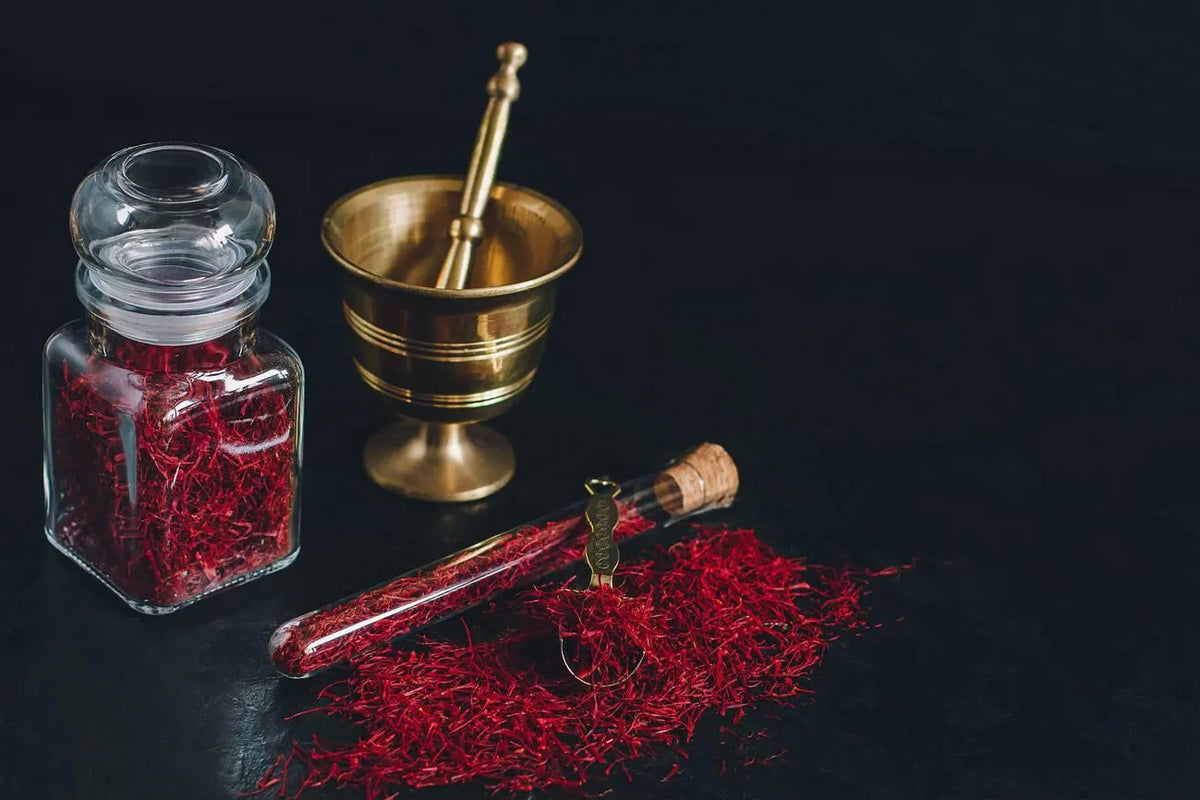
The short answer on saffron vs turmeric: they are unrelated plants that happen to both turn food yellow. Saffron is a flower stigma with a floral, honeyed aroma. Turmeric is a rhizome with an earthy, slightly bitter bite. One will not stand in for the other, and swapping them changes the dish.
People put these two spices side by side for one reason: colour. Both make rice golden, both are sold as small quantities of intense pigment, and both get called the same thing in shorthand — turmeric has been nicknamed the poor cook’s saffron for well over a century. The nickname is where the resemblance stops.
Are saffron and turmeric related?
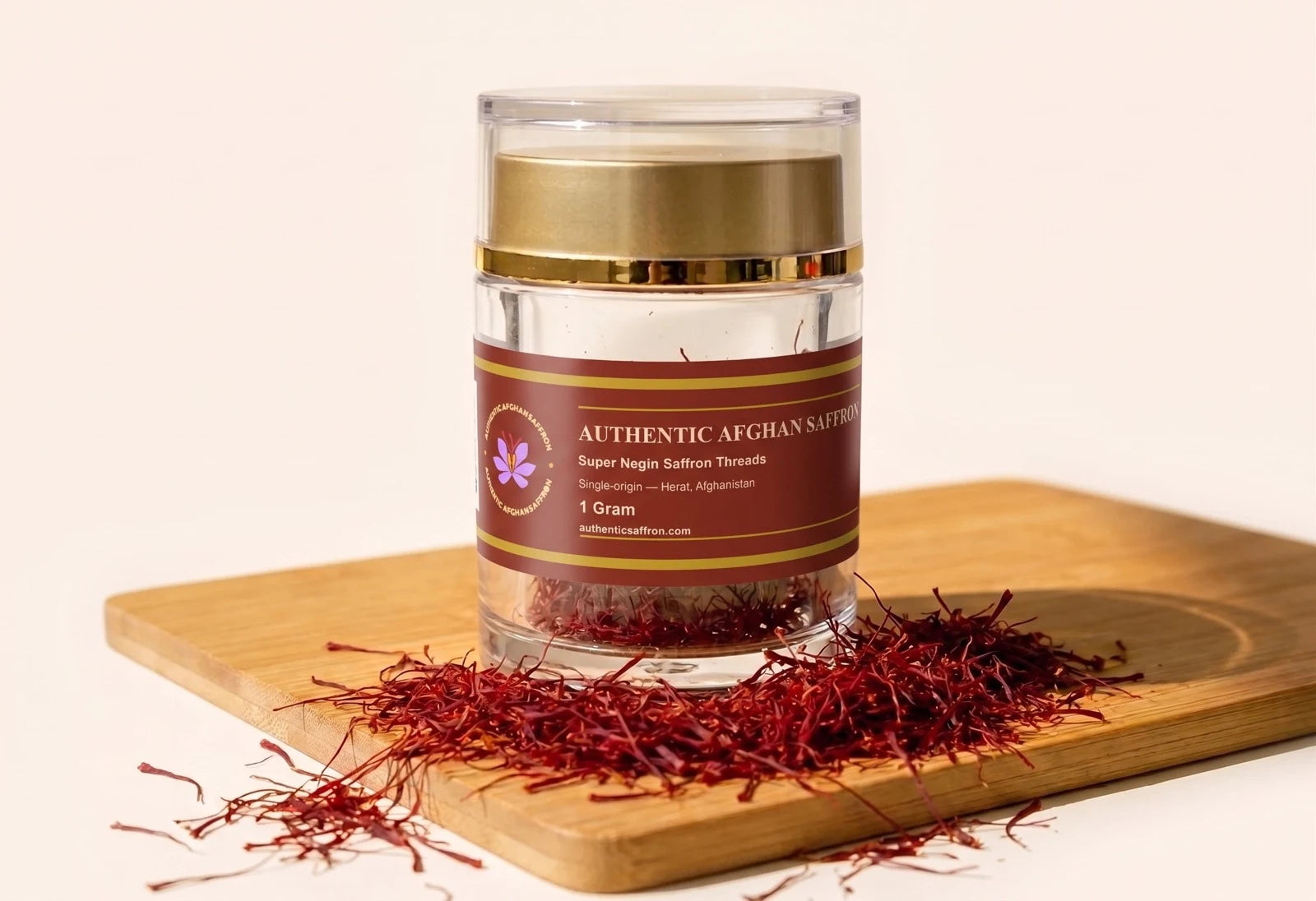
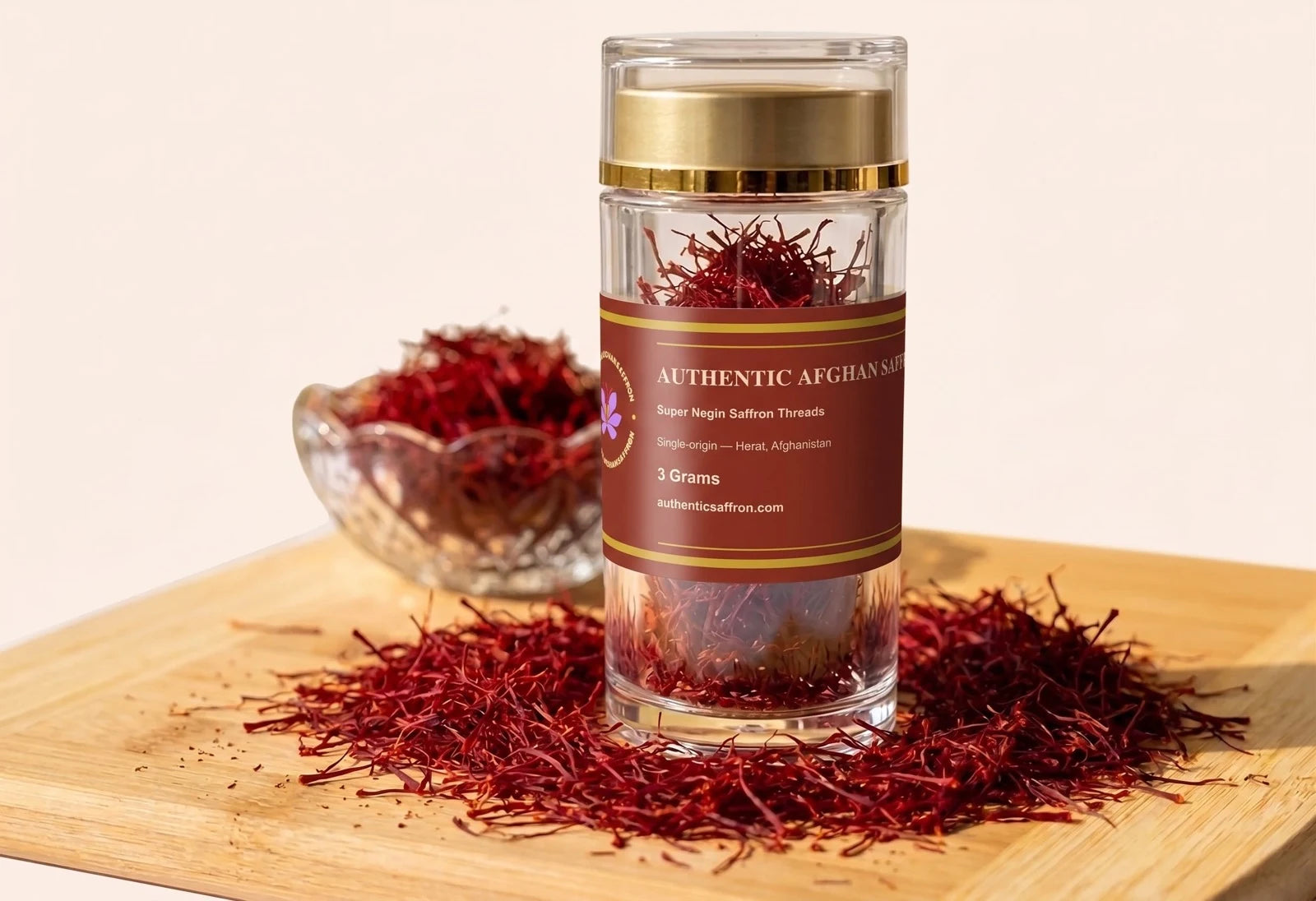
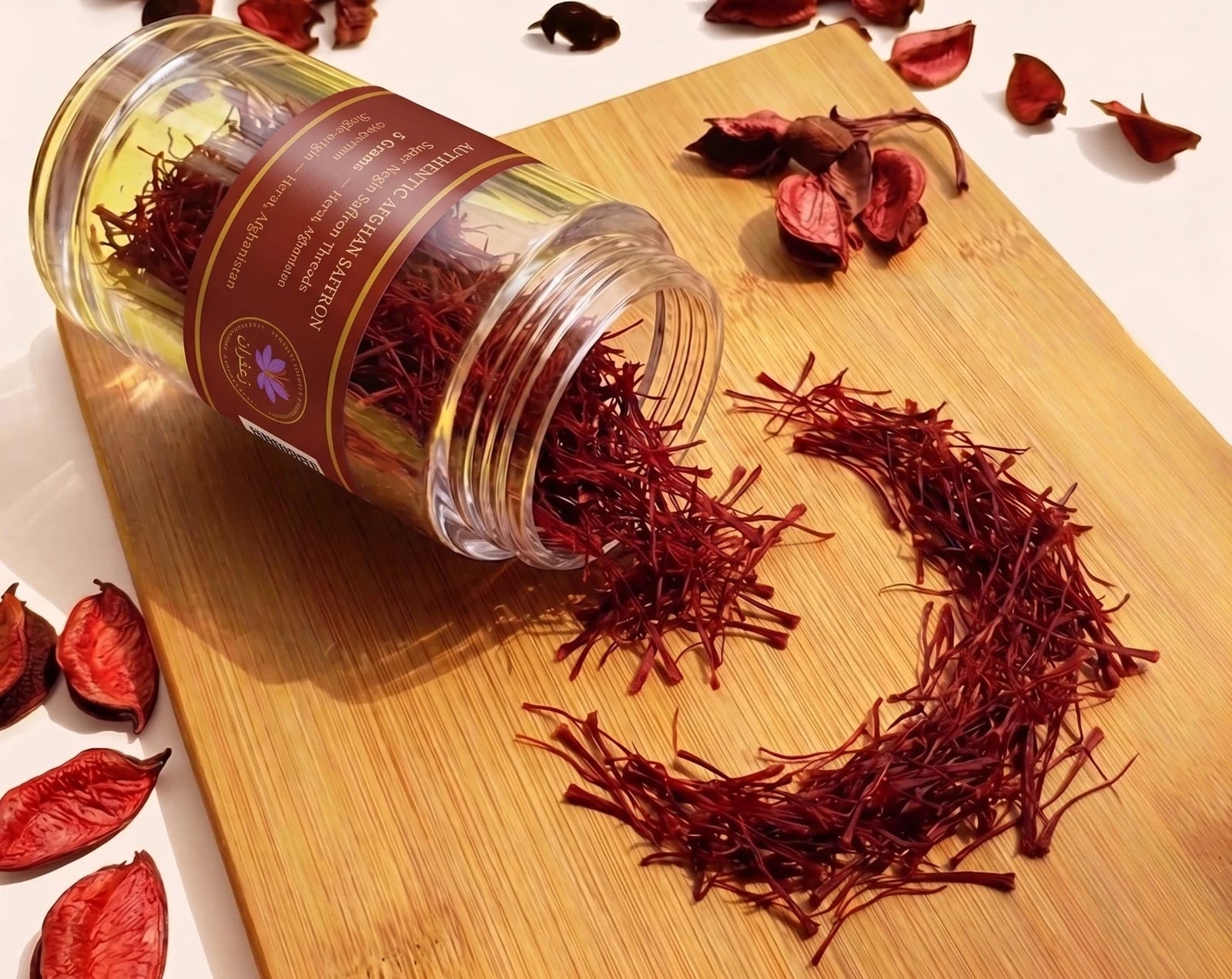
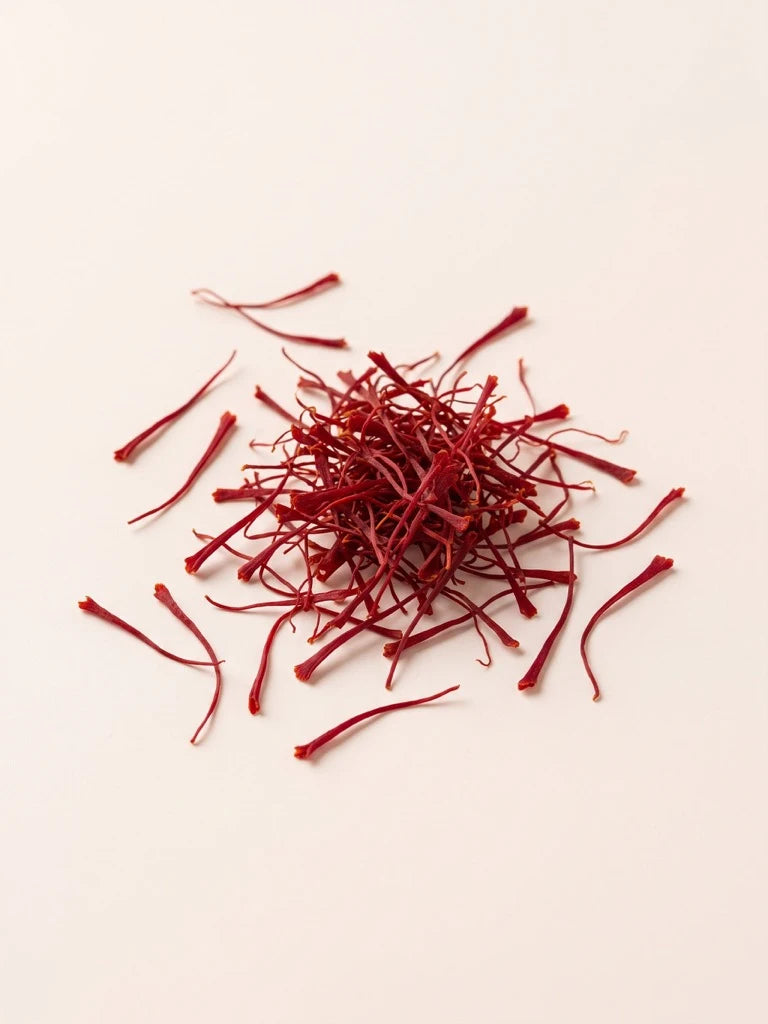
Not remotely. Saffron is the dried stigma of Crocus sativus, a small autumn-flowering crocus in the iris family. Three stigmas per flower, picked by hand, roughly 150 flowers to the gram.
Turmeric is the boiled, dried and ground rhizome of Curcuma longa, a ginger relative grown as a field crop and harvested by the tonne. Different family, different part of the plant, different pigment, different economics entirely.
That economic gap is the whole reason substitution is even a conversation. Saffron is labour-intensive at every stage; turmeric is not.
How do saffron and turmeric compare in the kitchen?
Here is the comparison in the form that actually helps when you are standing at the stove.
| Attribute | Saffron | Turmeric |
|---|---|---|
| Plant part | Flower stigma, hand-picked | Underground rhizome, field-harvested |
| Main pigment | Crocin, a carotenoid ester | Curcumin, a polyphenol |
| Solubility | Water-soluble; blooms in warm liquid | Poorly water-soluble; disperses better in fat |
| Colour delivered | Clear golden yellow to amber | Opaque mustard yellow to orange |
| Aroma | Floral, hay, honey, faintly metallic | Earthy, woody, slightly resinous |
| Taste | Bittersweet, lingering, subtle | Bitter, peppery, assertive |
| Typical amount for four people | A generous pinch, about 20–30 threads | Half to one teaspoon of ground powder |
| Relative cost per gram | Among the highest of any spice | Among the lowest |
| Stains fabric and plastic | Rinses out of most surfaces | Stains stubbornly |
The two rows that matter most for cooking are solubility and aroma. Everything downstream follows from them.
Why does the colour behave so differently?
Crocin is unusual among carotenoids because it is water-soluble. That is why you can bloom saffron in warm water, milk or stock and get a translucent, glowing liquid that carries colour evenly through rice or a broth. The pigment travels with the liquid, so the finished dish looks lit from within rather than painted.
Curcumin does the opposite. It barely dissolves in water and prefers oil, which is why turmeric is usually bloomed in hot fat at the start of a curry. The colour it gives is dense and opaque, sitting on the food rather than through it. It is a beautiful colour. It is simply not the same colour.
If you want the pigment chemistry in more detail, our piece on what crocin is and how it behaves goes further.
Can you substitute turmeric for saffron?
You can produce a yellow dish. You cannot produce a saffron dish. That distinction is worth keeping honest, because most substitution advice online quietly blurs it.
- In a paella or a saffron rice, turmeric will colour the grains and add an earthy note that reads as curry rather than saffron. It is a different meal, not a near miss.
- In a delicate broth or a cream sauce, turmeric tends to dominate and to cloud the liquid. This is the worst case for a swap.
- In a sweet dish — a rice pudding, an ice cream, a syrup — turmeric is generally a poor idea. Its bitterness has nowhere to hide.
- In a heavily spiced stew where saffron was a background note anyway, turmeric can pass unnoticed. This is the one honest case for the swap.
If you are looking for something closer to the real thing, we have compared the realistic options in saffron substitutes that actually work. The short version: nothing replaces saffron, but some things fail more gracefully than turmeric.
Does saffron work as a turmeric substitute?
Even less well, and it is an expensive experiment. Turmeric is usually doing structural work in a dish — body, earthiness, a bitter backbone that supports cumin, coriander and chilli. Saffron cannot carry that weight. Used in the quantity it would take to try, it becomes medicinal and harsh.
Saffron rewards restraint. Turmeric rewards a confident hand. They are not on the same axis.
Can you use both in the same dish?
Yes, and plenty of cooks do, but with a light touch on the saffron. In a biryani or a rich pilaf, turmeric can go into the oil at the start while a bloomed saffron infusion is added at the very end, over the top, where its aroma is not cooked away. Layered that way, each spice does the job it is good at.
Do not bloom them together. Saffron wants warm water at around 150F or 65C for ten to twenty minutes; turmeric wants hot fat. Give them separate treatment and combine late. Our guide to cooking with saffron covers the blooming method in full.
What has research looked at for each spice?
Both are studied, and both attract a great deal of exaggeration in the retail space. Curcumin has been examined in a large number of human trials, many of them small; crocin and saffron extract have been studied in smaller trials, most often for mood and eye function. Study quality varies widely and results are frequently mixed. The literature for both is searchable through PubMed, and supplement labelling rules in the United States are set out by the FDA.
This is research, not medical advice. Speak to a doctor before using saffron therapeutically.
Is there a fraud angle here?
There is, and it is old. Turmeric and safflower have both been used to bulk out or fake saffron, because a yellow powder is very hard to inspect. This is one of several reasons never to buy ground saffron: powdered spice hides everything a whole thread would reveal. If you are checking a batch, how to spot fake saffron walks through the tests worth doing.
Frequently asked questions
Is turmeric a good saffron substitute?
It is a colour substitute only. Turmeric will make a dish yellow, but it brings an earthy, bitter flavour that saffron does not have, and it disperses in fat rather than water. In delicate or sweet dishes the swap is obvious.
Does turmeric taste like saffron?
No. Saffron is floral, honeyed and bittersweet with a long finish. Turmeric is earthy, woody and directly bitter. They are recognisably different in a side-by-side tasting, even in a spoonful of plain rice.
Why is saffron so much more expensive than turmeric?
Because of how it is harvested. Saffron is three hand-picked stigmas per flower, with roughly 150 flowers needed for a single gram, all gathered in a short autumn window. Turmeric is a root crop lifted mechanically and dried in bulk.
Can turmeric be used to fake saffron?
Yes, and it has been for a long time, usually in ground form where nothing can be inspected. Buying whole threads from a seller who will show you the batch and its testing is the practical defence.