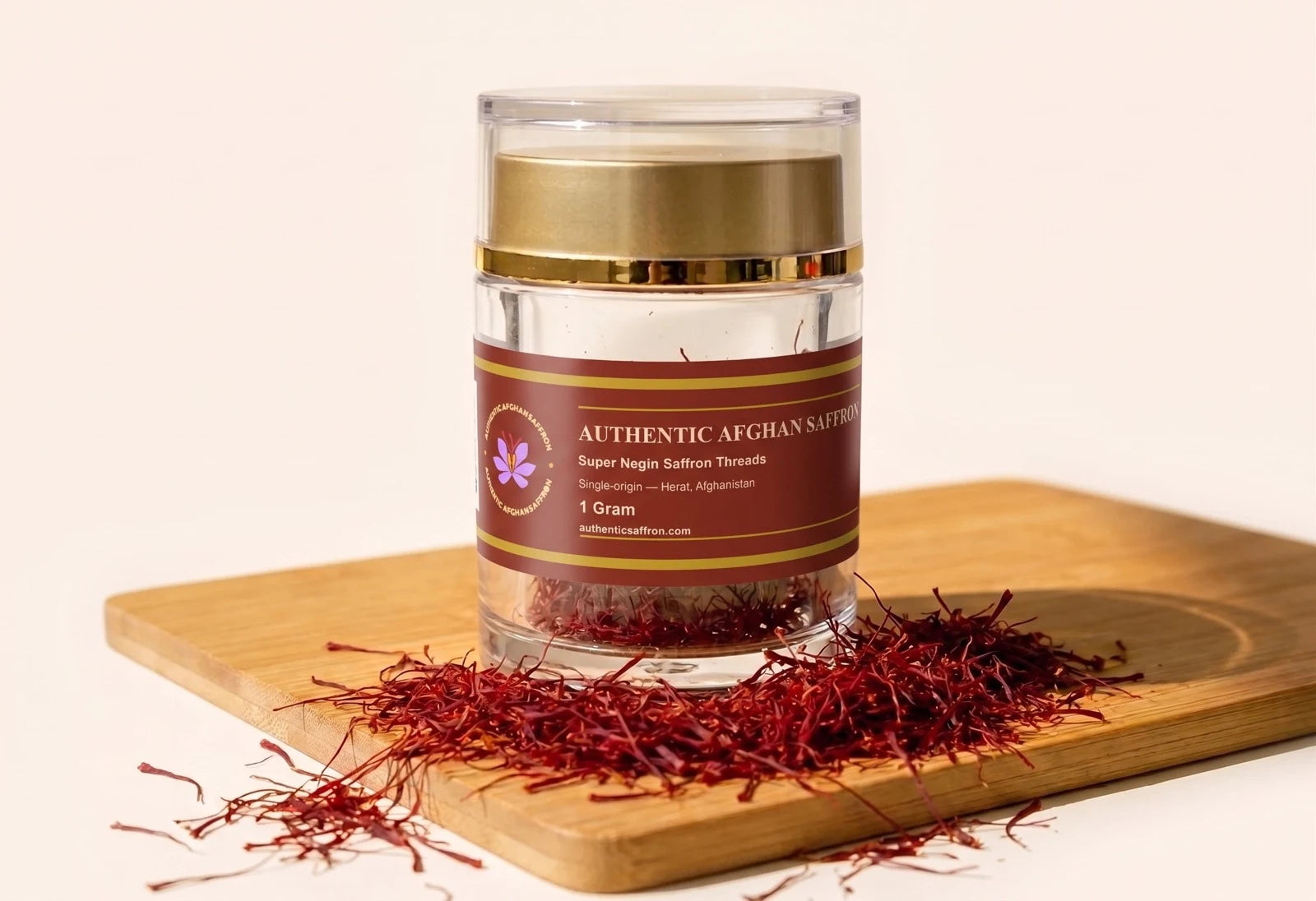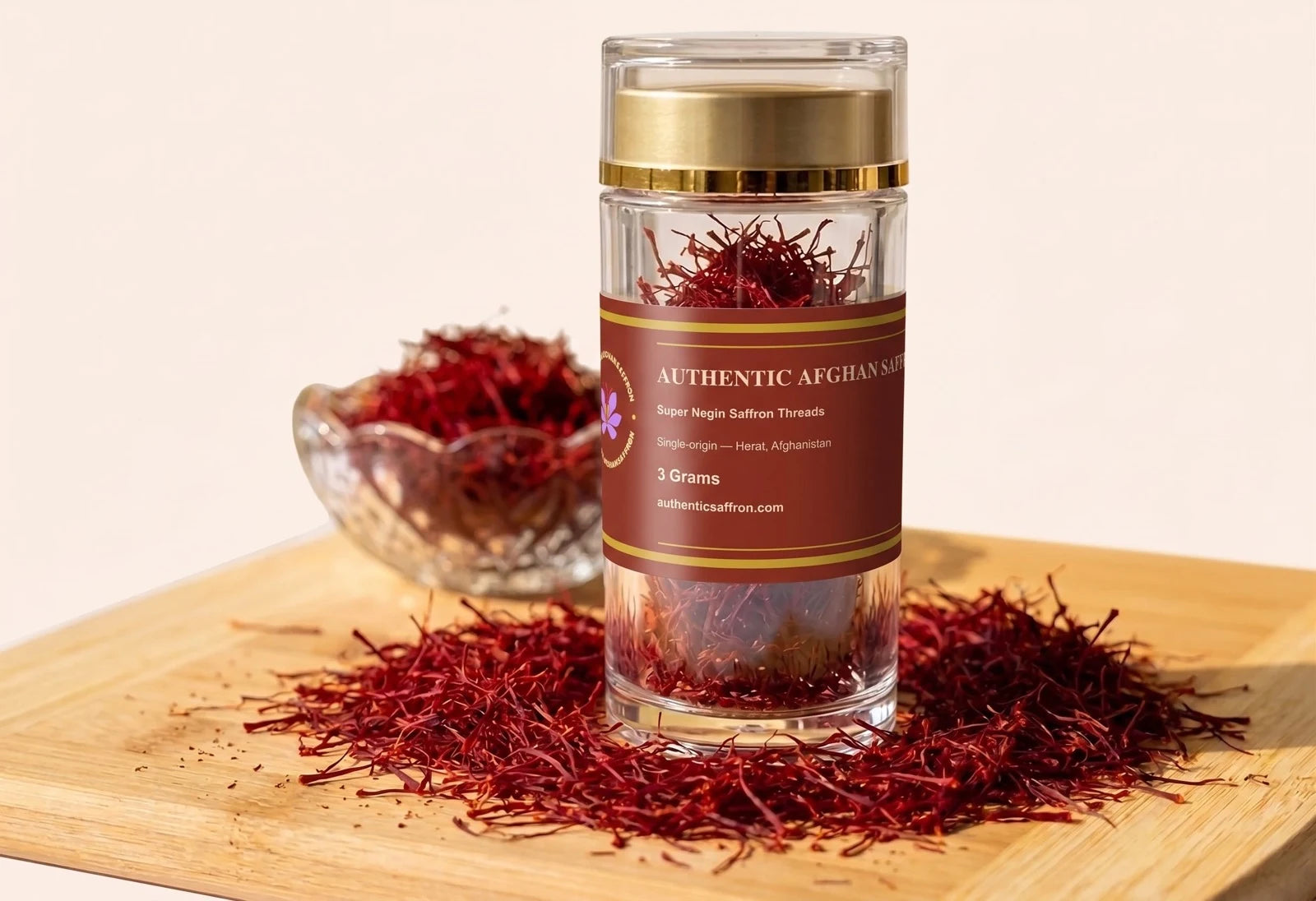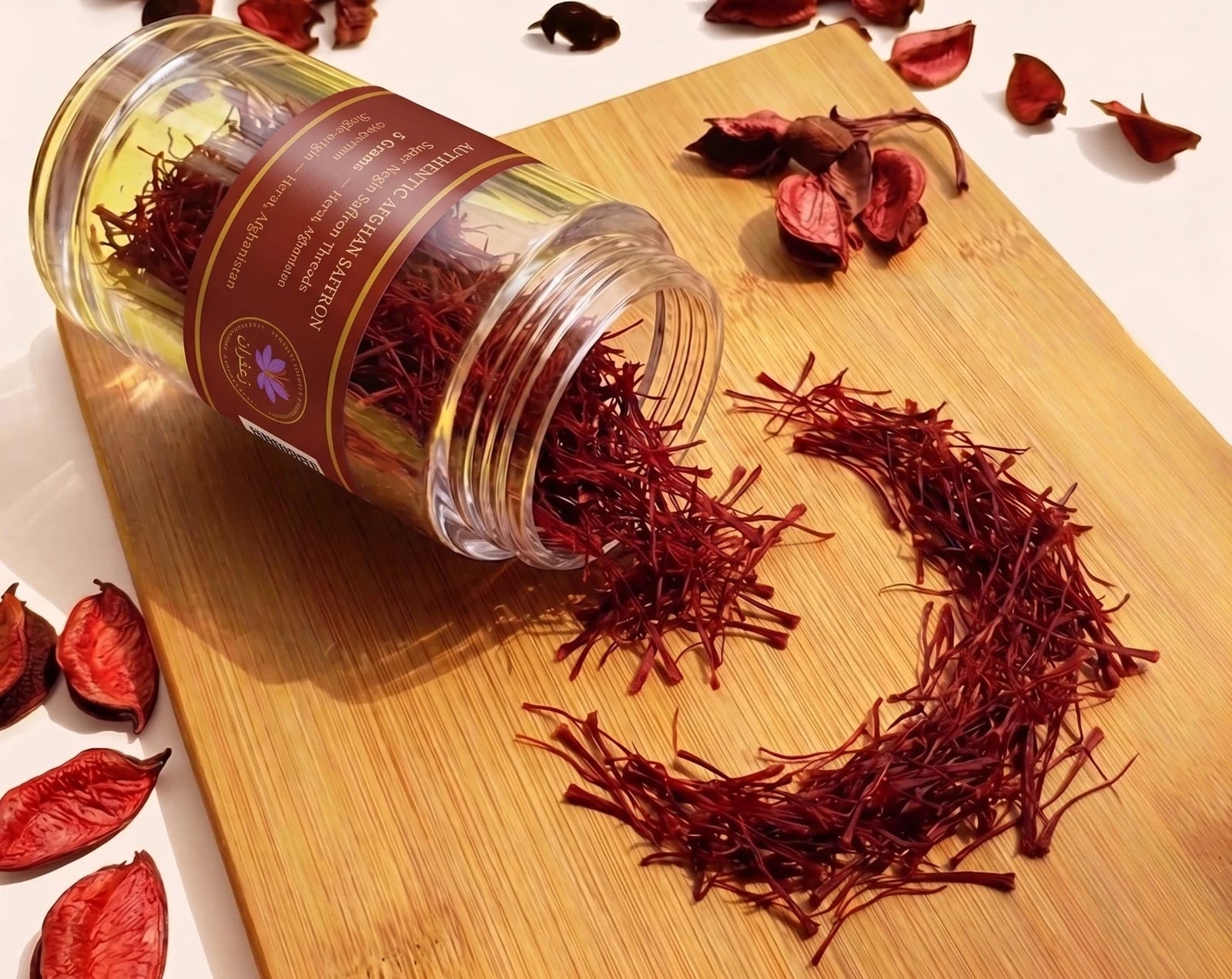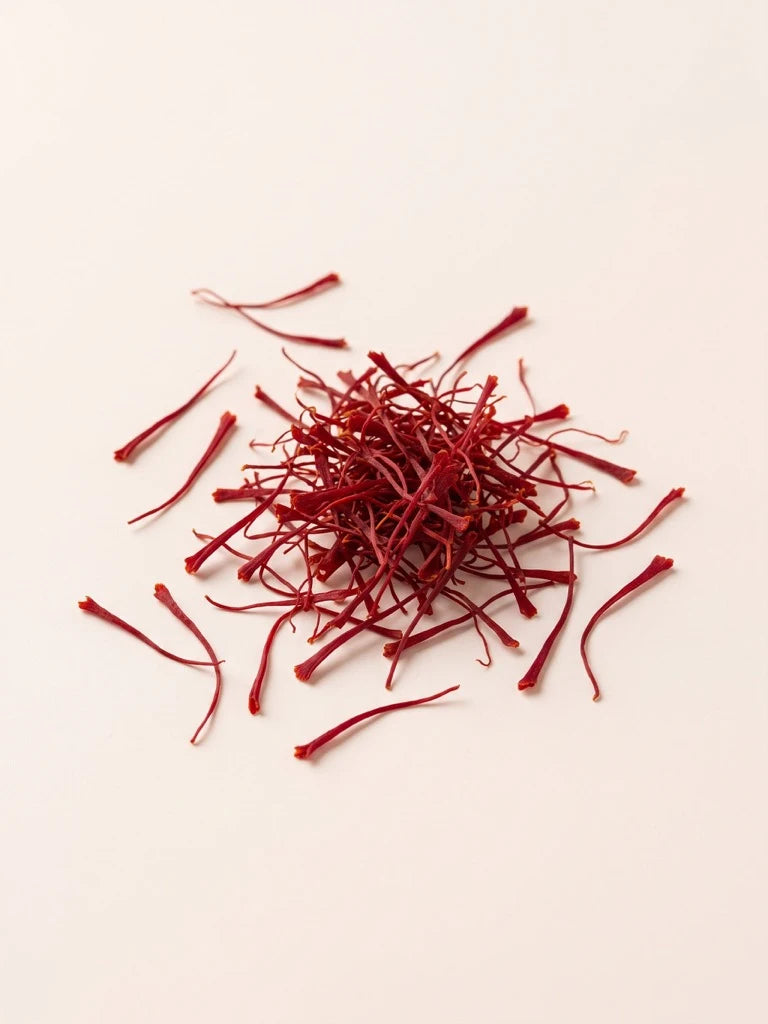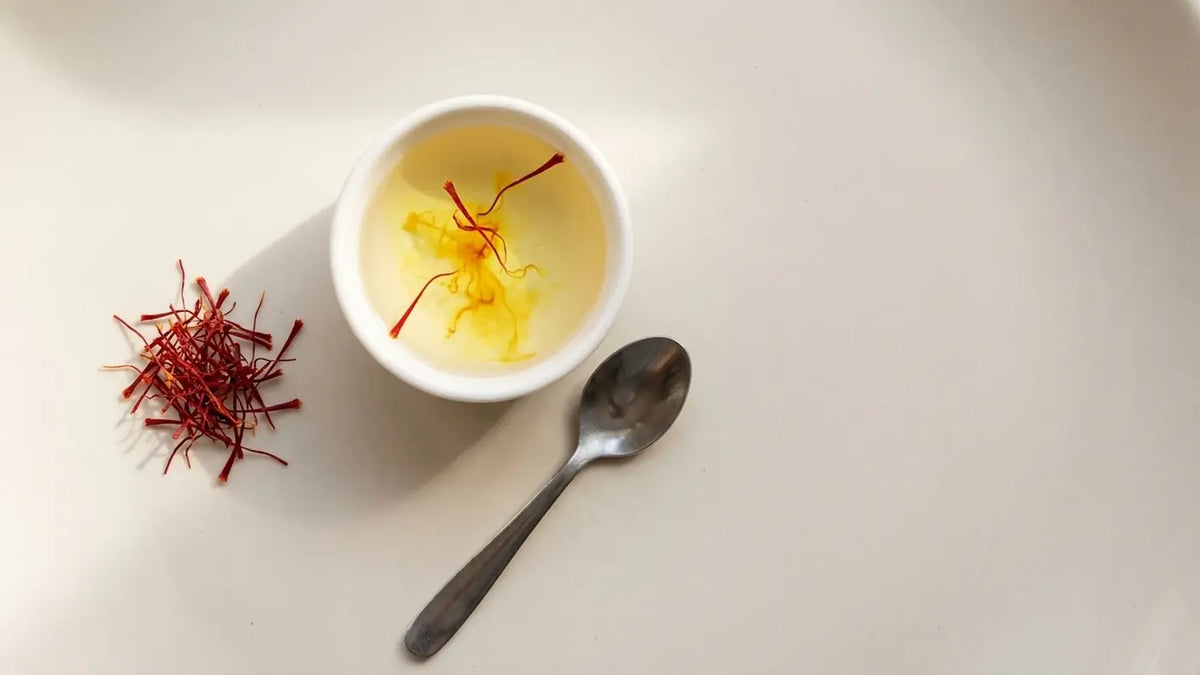
There is no true saffron substitute. Nothing else carries saffron’s combination of colour, bitterness and floral aroma. What you can do is replace one of those three separately: turmeric or annatto for colour, marigold petals for a hint of both, cardamom and vanilla for warmth in sweet dishes. Expect a different dish, not the same one.
That is the honest answer, and it is worth stating before the workarounds, because most substitute lists quietly imply an equivalence that does not exist. Below is what each option actually does, what it cannot do, and which dishes forgive the swap.
What are you actually trying to replace?
Saffron does three separate jobs, and a substitute usually manages one of them.
- Colour. Crocin, a water-soluble pigment, is what turns rice gold. It is the easiest property to imitate and the least interesting.
- Bitterness. Picrocrocin gives the faint bitter edge that keeps saffron dishes from tasting flat. Almost nothing in a kitchen reproduces it.
- Aroma. Safranal is the floral, hay-like scent people mean when they say a dish tastes of saffron. No substitute comes close.
Work out which job matters in your recipe before you reach for a jar. A biryani served to guests needs the aroma. A batch of buns that has to look right for a photograph needs the colour. Those are different problems with different answers.
How do the common substitutes compare?
Quantities below are for a dish serving four, replacing roughly 15 to 20 saffron threads. Start at the low end; colouring spices are far stronger by weight than saffron.
| Substitute | Replaces | Misses | Quantity for four | Works best in |
|---|---|---|---|---|
| Turmeric | Colour, though yellower and more opaque | All aroma; adds its own earthy, musty note | 1/8 to 1/4 tsp | Rice, lentils, robust curries |
| Annatto (achiote) | Colour, warmer and more orange | Aroma and bitterness | 1/4 tsp seeds, steeped in warm oil | Rice, stews, anything already tomato-led |
| Marigold or calendula petals | Colour plus a faint floral note | Depth; fades quickly in the pot | 1 tsp dried petals | Broths, simple pilafs |
| Safflower | A weak yellow colour only | Everything else; often sold as fake saffron | 1 tsp, if you must | Colouring alone, never flavour |
| Sweet paprika | Warm colour in a savoury base | Aroma; adds sweetness and body | 1/2 tsp, unsmoked only | Seafood stews, rice with tomato |
| Cardamom with vanilla | Aromatic interest in sweet dishes | Colour entirely | 2 pods plus a scrape of vanilla | Custards, milk puddings, buns |
| Nothing at all | — | — | — | Any dish where a bad imitation is worse than an honest omission |
Two entries in that table deserve a warning. Safflower is the material most often sold as saffron to people who do not know the difference, which is a fraud problem rather than a cooking one — we set out the physical differences in safflower versus saffron. And turmeric, though a fine spice in its own right, is not a quiet stand-in; the comparison in saffron versus turmeric explains why it changes a dish rather than filling a gap.
If your reason for substituting is that a colour is all you need, both turmeric and annatto are long-established food colourings, and the US Food and Drug Administration publishes its listings of permitted colour additives at fda.gov.
Which substitute suits which dish?
- Plain rice or pilaf. Turmeric at an eighth of a teaspoon, or annatto steeped in the cooking oil. The colour carries the dish; nobody was expecting a floral note.
- Seafood stew or paella-style rice. Sweet paprika, unsmoked. Smoked paprika will take the dish somewhere else entirely.
- Milk puddings and custards. Cardamom and vanilla. Skip the colour; a pale custard tastes better than a turmeric-tinted one.
- Enriched buns and sweet breads. A little turmeric for colour with cardamom for aroma, used together rather than alone.
- Clear broths. Marigold petals, or nothing. Turmeric clouds a broth and looks wrong.
- A dish whose whole point is saffron. Wait until you have saffron. Risotto Milanese without it is butter rice, and that is fine, but call it that.
Is substituting actually cheaper?
Less than people assume. Saffron is expensive by the gram because it is picked and trimmed by hand, and roughly 150 flowers go into a single gram. Per dish, though, the quantity is tiny: fifteen or twenty threads for four people. Spread across a meal, the cost of the saffron in a pot of rice is usually smaller than the cost of the rice.
The maths is set out properly in our saffron price guide, and the per-portion quantities in how much saffron per person. The frequent conclusion is that the real saving from substituting is small, while the difference in the finished dish is not.
There is a second, less obvious cost. Cheap saffron bought to avoid a substitute is often the worst outcome of all, because adulterated threads deliver neither colour nor aroma. Our guide to spotting fake saffron covers the tests that take a minute at the kitchen counter.
Frequently asked questions
What is the closest substitute for saffron?
There is no close substitute. For colour in a savoury dish, annatto steeped in warm oil comes nearest without adding a strong flavour of its own. For aroma in a sweet dish, cardamom with vanilla gives you something worth eating, though it tastes nothing like saffron.
Can I use turmeric instead of saffron?
For colour, yes, at about an eighth to a quarter of a teaspoon for four servings. Turmeric is much stronger by weight and brings an earthy flavour of its own, so the dish will read as turmeric rather than as a saffron dish without saffron.
Is safflower the same as saffron?
No. Safflower is a different plant with flat, floppy petals rather than trumpet-shaped stigmas. It gives a weak yellow colour and no saffron aroma, and it is the material most commonly sold to people as cheap saffron.
How much saffron would I need instead?
Fifteen to twenty threads, roughly 0.03 to 0.04g, is enough for a dish serving four. Bloom the threads in warm liquid at around 150F, or 65C, for ten to twenty minutes and add the liquid along with the threads.
Where should you go from here?
- Buying saffron — what to check before you spend anything.
- Blooming liquids compared — getting full value from a small pinch.
- Why saffron is expensive — where the cost actually comes from.