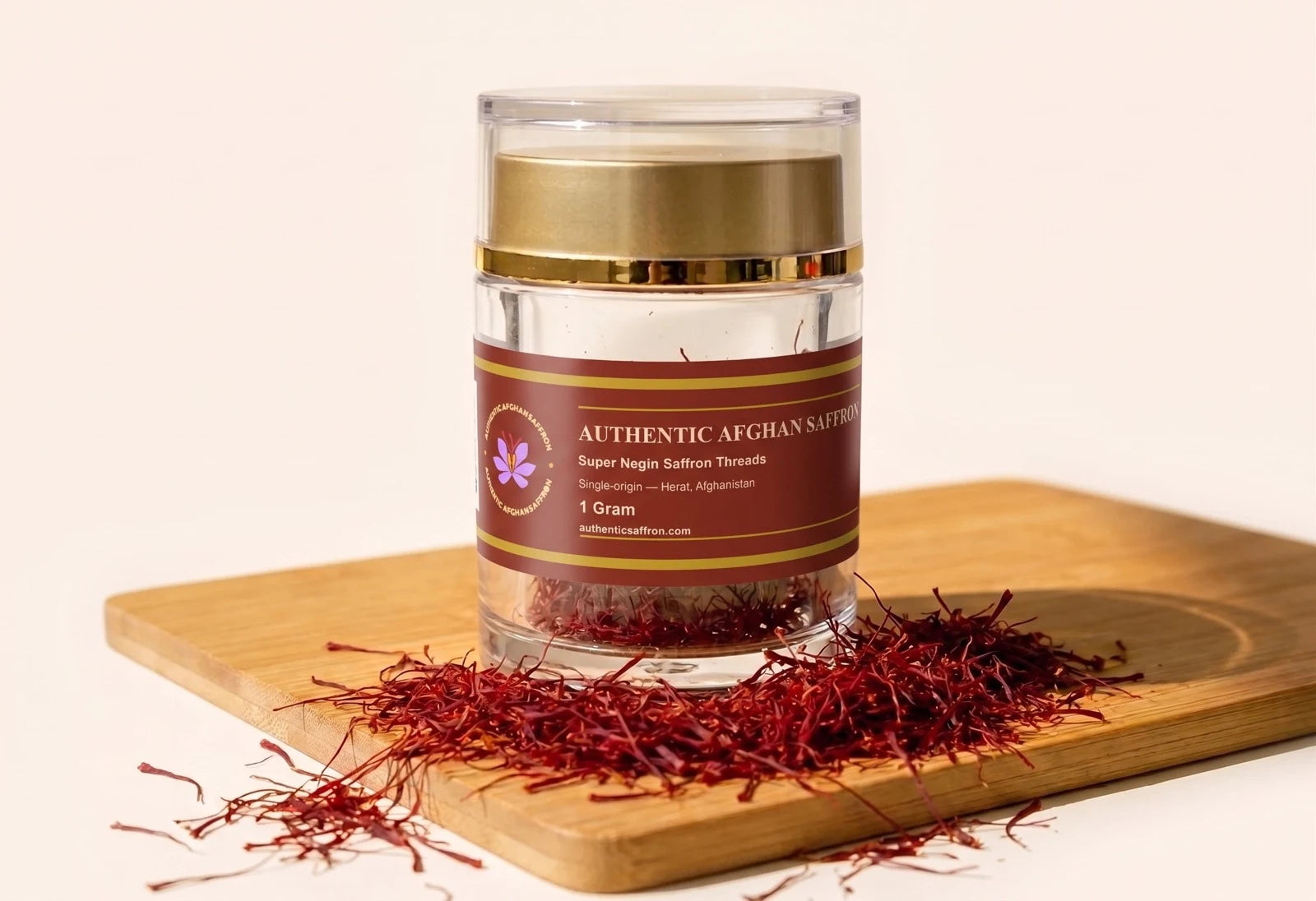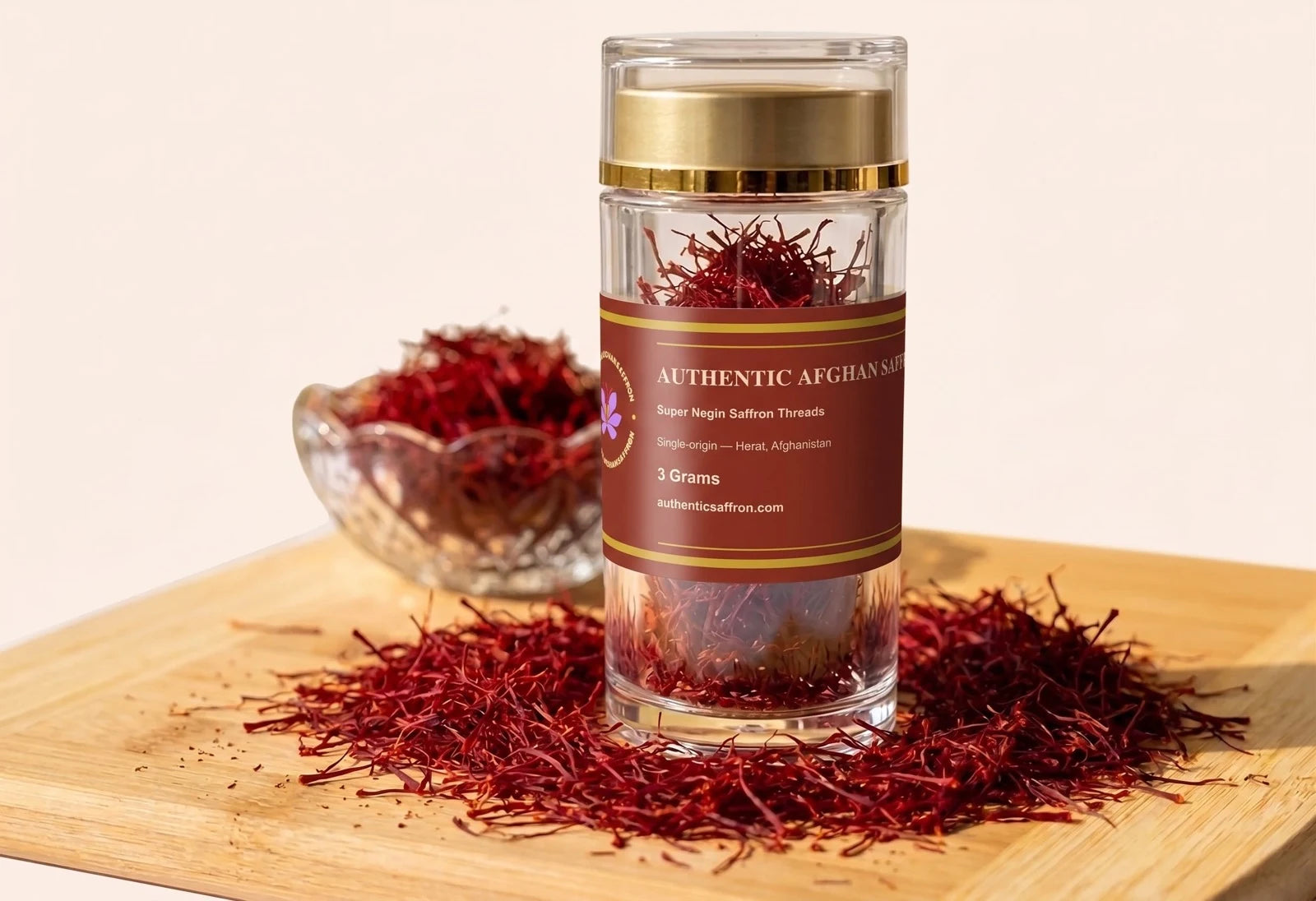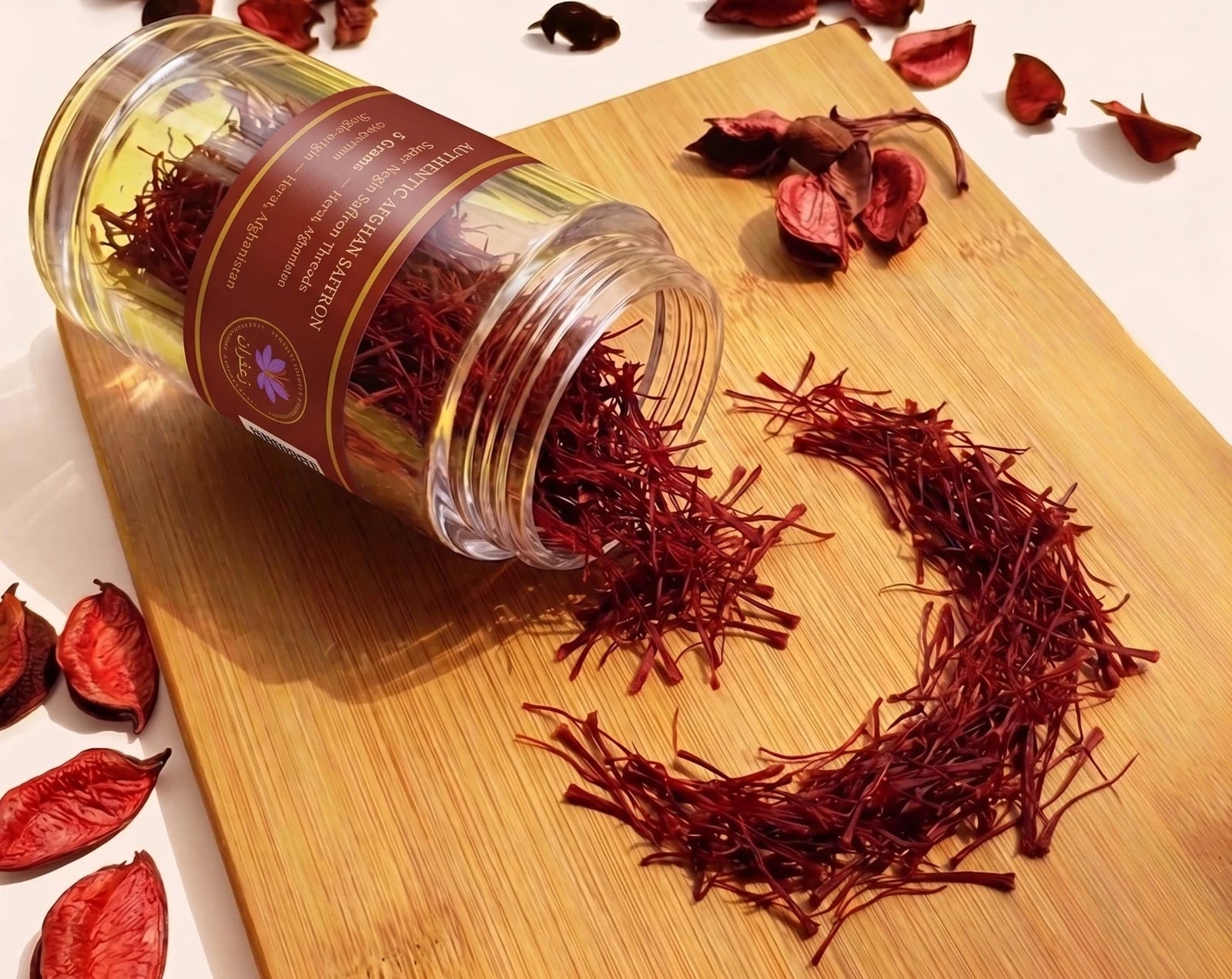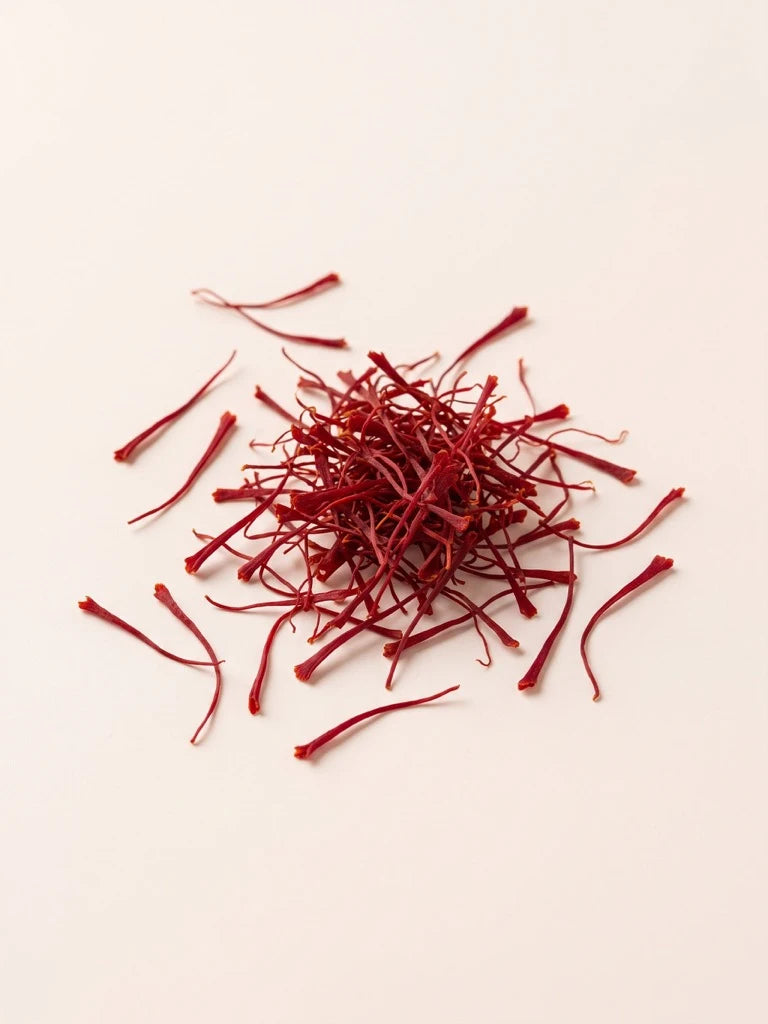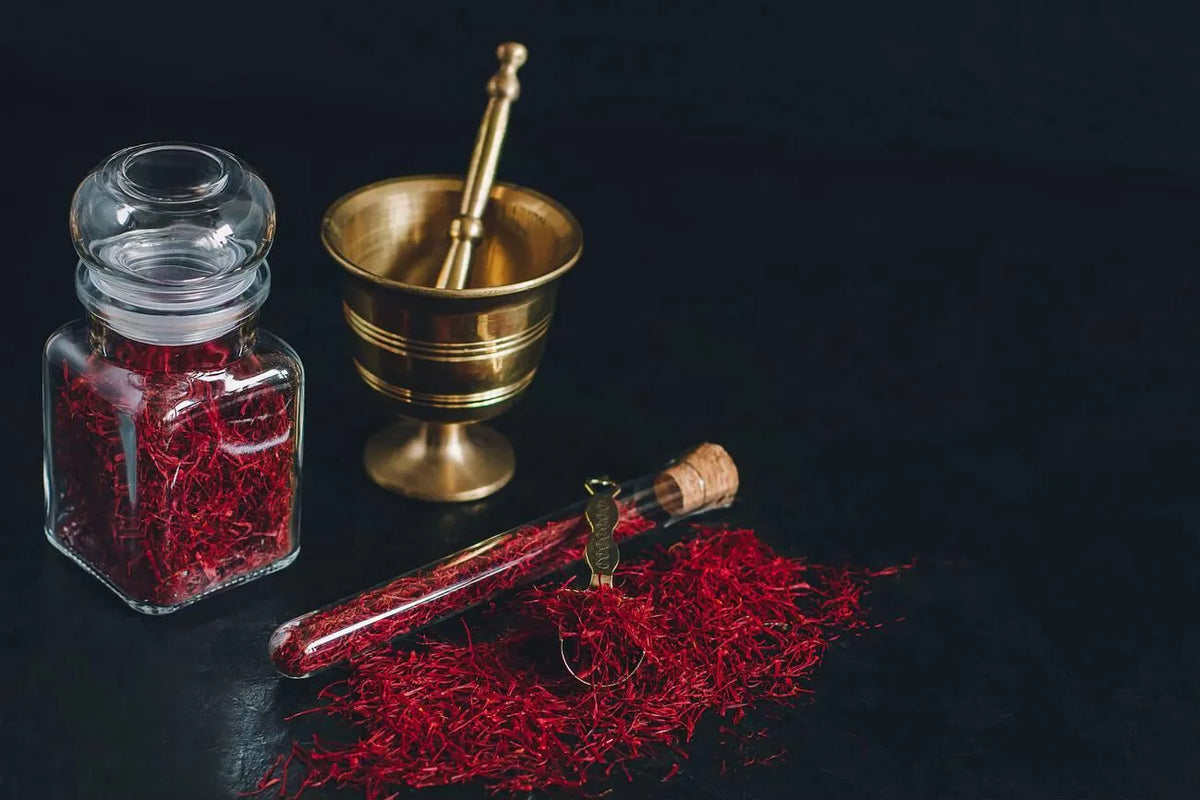
Safflower vs saffron is a comparison between two unrelated plants. Saffron is the three red stigmas of a crocus flower, picked by hand at roughly 150 flowers per gram. Safflower is the dried floret of a thistle-like annual grown mostly for oil. They look similar in a jar and behave nothing alike in a pan.
What is safflower?
Carthamus tinctorius is an annual crop with spiny leaves and a bright orange-yellow flower head. It has been grown for thousands of years, first as a dye plant and now mainly as an oilseed — safflower oil is a commodity crop tracked by agricultural agencies including the USDA.
The dried florets are also a food colouring in their own right. In the Philippines they are kasubha. In parts of southern Europe and the Middle East they go into rice and soups under local names, and nobody involved is pretending they are saffron. Older English names give the game away with a wink: false saffron, bastard saffron, dyer’s saffron.
The fraud is not the plant. The fraud is the label.
How do the two plants differ?
Crocus sativus is a sterile autumn-flowering bulb. Each flower opens for about a day and holds exactly three red stigmas. Those stigmas are cut out by hand, and it takes something in the order of 150 flowers to make one dried gram. That arithmetic is the entire reason saffron costs what it does.
Safflower gives you the whole flower head. It is machine-harvested at field scale, dried in bulk, and the florets separate easily. One plant yields many times the usable weight of a crocus, from a crop that needs a fraction of the labour.
So the two materials sit at opposite ends of every axis that matters — yield, labour, pigment chemistry and price.
| Feature | Saffron (Crocus sativus) | Safflower (Carthamus tinctorius) |
|---|---|---|
| Part used | Three stigmas from one flower | Whole florets from a flower head |
| Harvest | Hand-picked, roughly 150 flowers per gram | Field crop, harvested in bulk |
| Shape | Tube that flares into a trumpet at one end | Flat, ragged strand, no flare |
| Colour along the strand | Deep red at the flared tip, paler towards the base | Uniform orange-red end to end |
| Pigment | Crocin, water-soluble, read at 440 nm | Carthamin and safflower yellow |
| Colour in warm water | Golden yellow, released slowly over 10–20 minutes | Orange-yellow, released quickly |
| Aroma | Hay, honey, a faint medicinal edge | Almost none |
| Taste | Distinctly bitter, then sweet | Flat, faintly grassy |
| Typical use rate | A pinch for a family dish | A spoonful or more |
What can you see in the jar?
Tip a few strands onto a white plate and use a phone camera at maximum zoom. Two features settle it.
- The trumpet. A saffron stigma is a tube. One end flares open into a small serrated trumpet, and the other end is a cut stub. Safflower has no tube and no flare. It is a flat, torn-looking strand of even width.
- The colour gradient. Real saffron is not one colour. The flared end is dark red and the colour thins towards the base, sometimes with a pale or orange section. Safflower is dyed by nature in one shade, so it is the same colour everywhere.
Bulk is the other giveaway. Safflower florets are broader and take up more volume for the same weight, so a jar looks generously full. A gram of saffron looks like disappointingly little, and that is what a gram of saffron looks like.
What happens when you put each in water?
Drop a few strands of each into separate glasses of cold water and watch for fifteen minutes.
Saffron works slowly. A thin yellow thread of colour sinks from each stigma, the water turns golden rather than red, and after fifteen minutes the strands themselves are still red. Crocin is water-soluble, but it has to diffuse out of the tissue, and that takes time.
Safflower works faster and finishes orange. The florets pale noticeably as their pigment leaves, and the water carries an orange cast rather than the clean gold saffron produces. If the safflower has been dyed on top — which happens, because natural safflower is not red enough to be convincing — the water reddens almost at once.
The method and the timings are set out step by step in our note on the cold water test.
Does safflower do anything in cooking?
It colours. That is the honest answer. Safflower will tint rice and broth a warm orange-yellow, which is why it earned its place in several traditional kitchens long before anyone tried to pass it off as something else.
What it does not do is smell or taste of saffron. Saffron brings picrocrocin, which is bitter, and safranal, which carries the hay-and-honey aroma that arrives when a bloom hits warm liquid. Safflower brings neither. Substitute one for the other in a dish built around saffron and you get the colour with the interest removed.
If you want colour alone and know it, safflower is cheap and works. If you want the aroma, nothing else does the job — not safflower, not turmeric, as we set out in the comparison with turmeric.
Should the price tell you anything?
Yes, though not as reliably as people hope. Safflower costs a tiny fraction of saffron per gram, so a jar priced far below the market for saffron is a signal worth taking seriously.
The trap is the pack size. A small jar at a comfortable-looking price can work out at more per gram than a larger one, and a listing that quotes only the pack price is often hiding that. Work out the price per gram every time, as we explain in the saffron price guide, and compare like with like.
Cheap saffron is not automatically fake. It is usually explainable another way — more yellow style, higher moisture, older stock. Substitution with safflower sits at the crude end of a much broader spectrum of saffron adulteration.
Frequently asked questions
Is safflower the same as saffron?
No. They are unrelated plants. Saffron is the three red stigmas of Crocus sativus, hand-picked at roughly 150 flowers per gram. Safflower is the dried floret of Carthamus tinctorius, a field-grown oilseed crop. The confusion is a naming accident, not a botanical one.
Can I use safflower instead of saffron?
Only for colour. Safflower will tint rice or broth a warm orange-yellow, but it carries none of the bitterness and none of the hay-and-honey aroma that makes saffron worth using. In a dish built around saffron, the substitution is obvious.
How do I tell safflower from saffron by eye?
Look for the trumpet. A saffron stigma is a tube that flares open at one end and is darkest red at that flare, fading towards the base. Safflower is a flat strand of even width and even colour, with no tube and no flare.
Is selling safflower as saffron legal?
Selling safflower under its own name is perfectly legitimate and traditional in several cuisines. Selling it as saffron is a misdescription, and in most jurisdictions that is fraud. The problem is the label, not the plant.