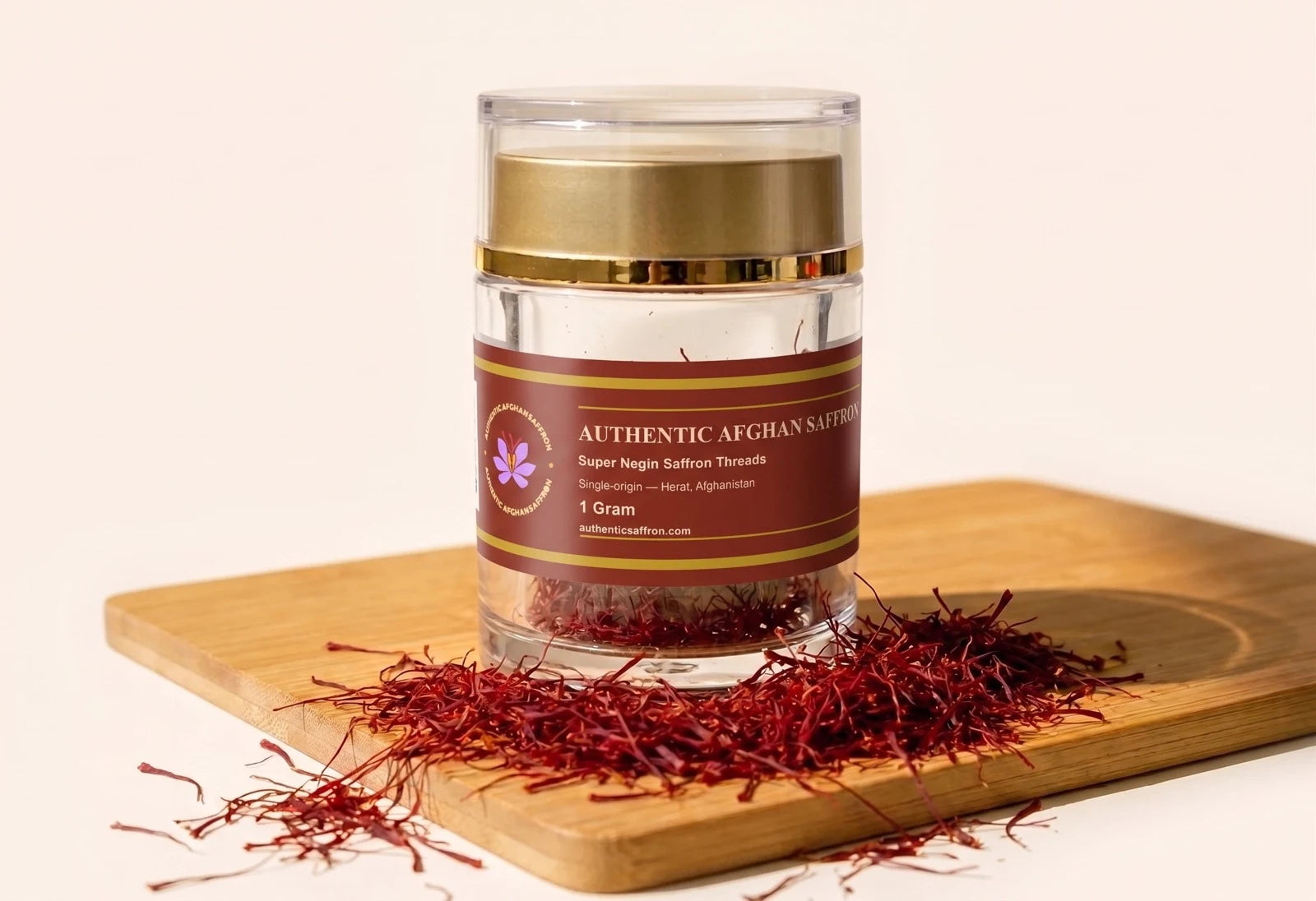
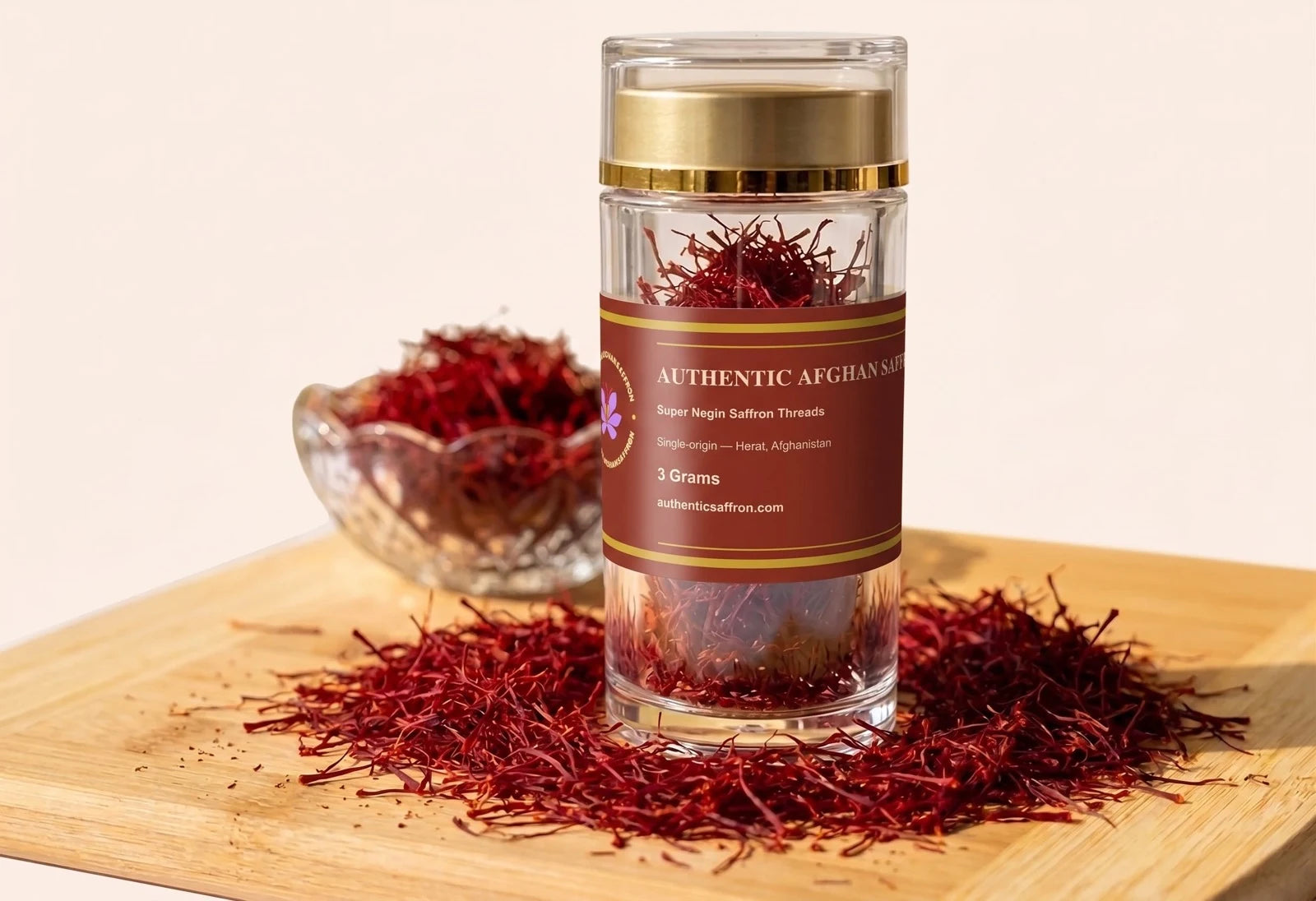
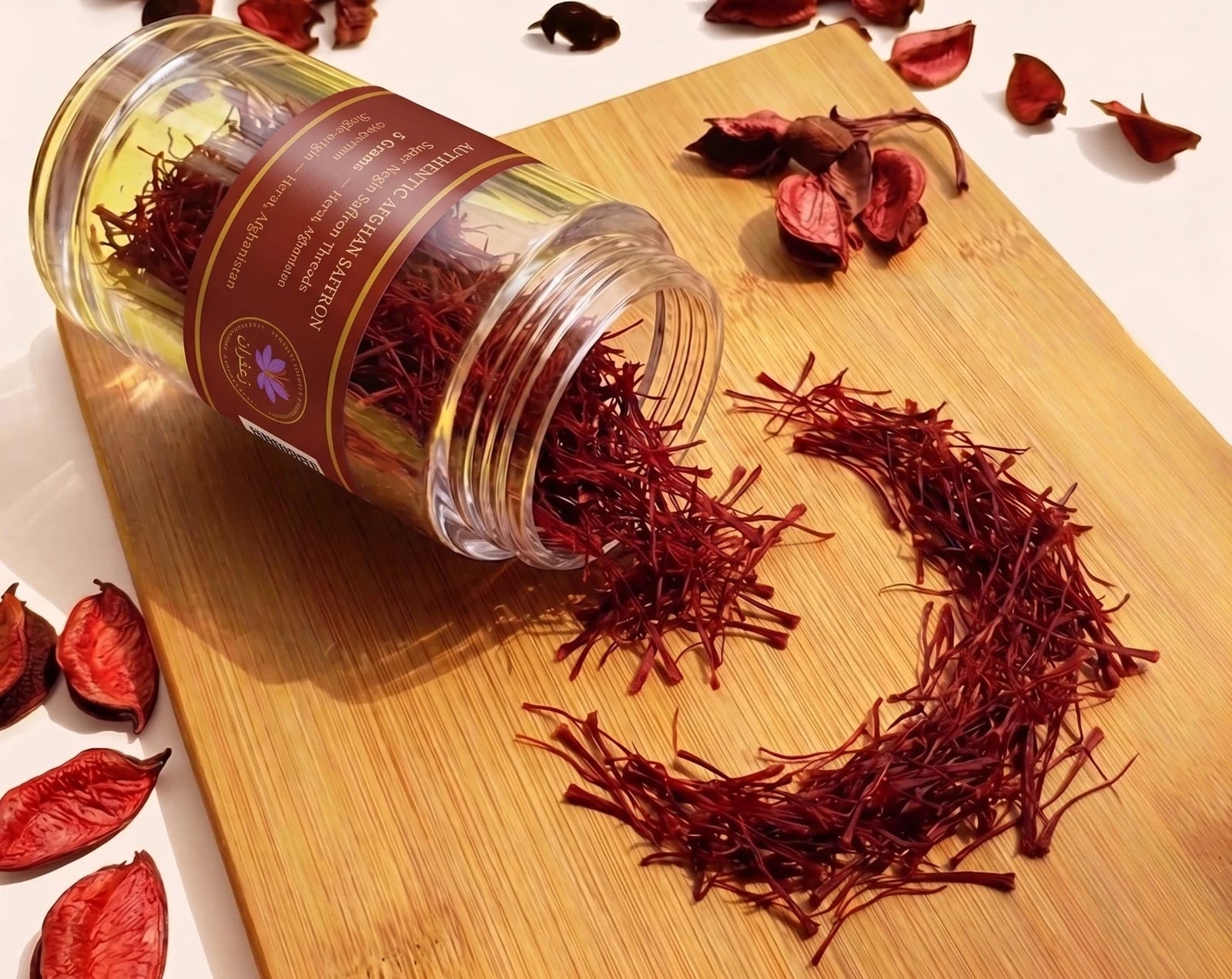
Saffron Origin
Saffron is a crocus that needs a hot dry summer, a cool autumn and a short sharp harvest window. Only a handful of places on earth offer that. Herat, in western Afghanistan, is one of them — it grows roughly 95% of Afghanistan’s saffron and produces long, thick, deep-red thread.
Origin matters in saffron for two reasons. Climate genuinely changes the thread. And origin determines what you can legally buy and what you can trace.
Why Herat
High-desert valleys, cold nights, dry autumn air and a harvest picked at dawn and separated the same day. Why Herat saffron explains the growing conditions, the two-week harvest window, and why timing between picking and drying does more to the finished thread than most people expect.
How origins compare
Spanish, Kashmiri and Afghan saffron differ in thread character, price and how easy each is to verify. Afghan vs Spanish vs Kashmiri saffron compares them honestly, including where each origin’s reputation runs ahead of what a buyer can actually check.
What harvest looks like
One gram of saffron takes 150 to 170 flowers, each picked by hand before the sun is up. Inside the Herat harvest follows the two weeks that produce a whole year of saffron.