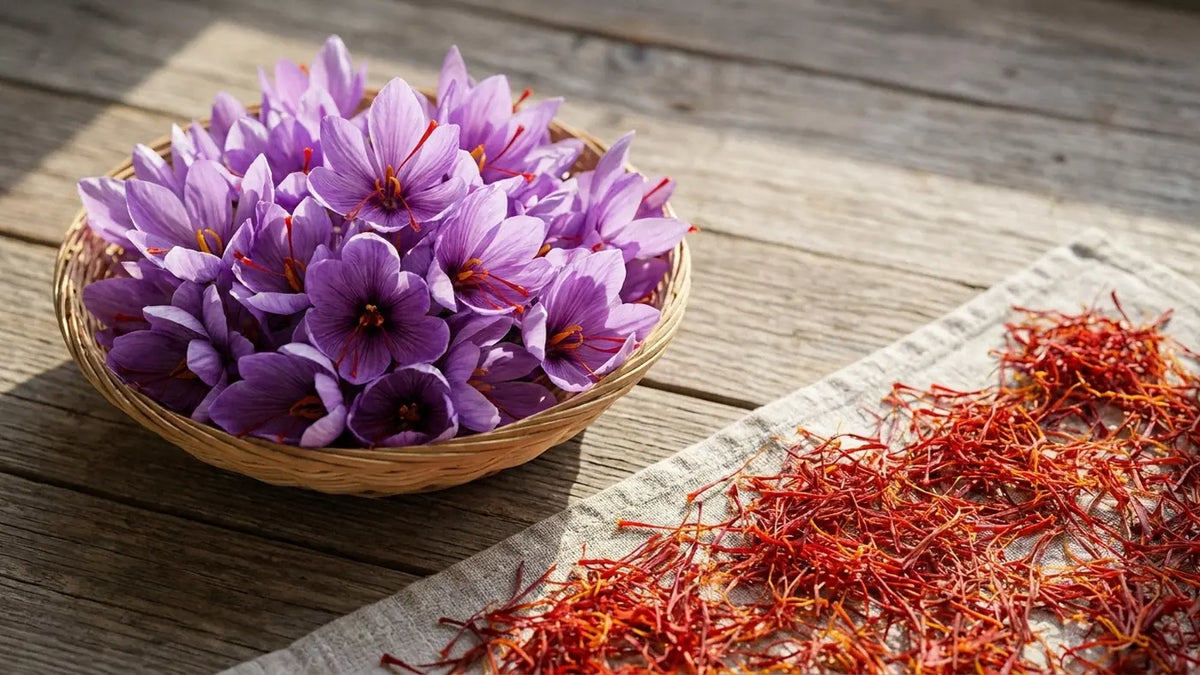
The entire world supply of saffron is picked by hand, at dawn, during a window of roughly two weeks each autumn. In Herat that window falls in late October and early November. The flowers open overnight, must be picked before the sun climbs, and the three red stigmas inside each one have to be separated by hand the same day. That is the whole reason saffron costs what it does.
Why does it all happen at dawn?
Crocus sativus opens in the cool of the night and begins to wilt once the sun is on it. Heat and light degrade the aroma compounds in the stigma before they are ever dried. So pickers are in the fields before first light, working the rows while the flowers are still closed or barely open, and stop when the sun gets high.
A single flower gives three red threads. It takes somewhere around 150 flowers to produce one gram of dried saffron, and roughly 150,000 to produce a kilo. There is no machine for any of it — no one has built one that can separate a stigma from a style without crushing it.
What happens after the picking?
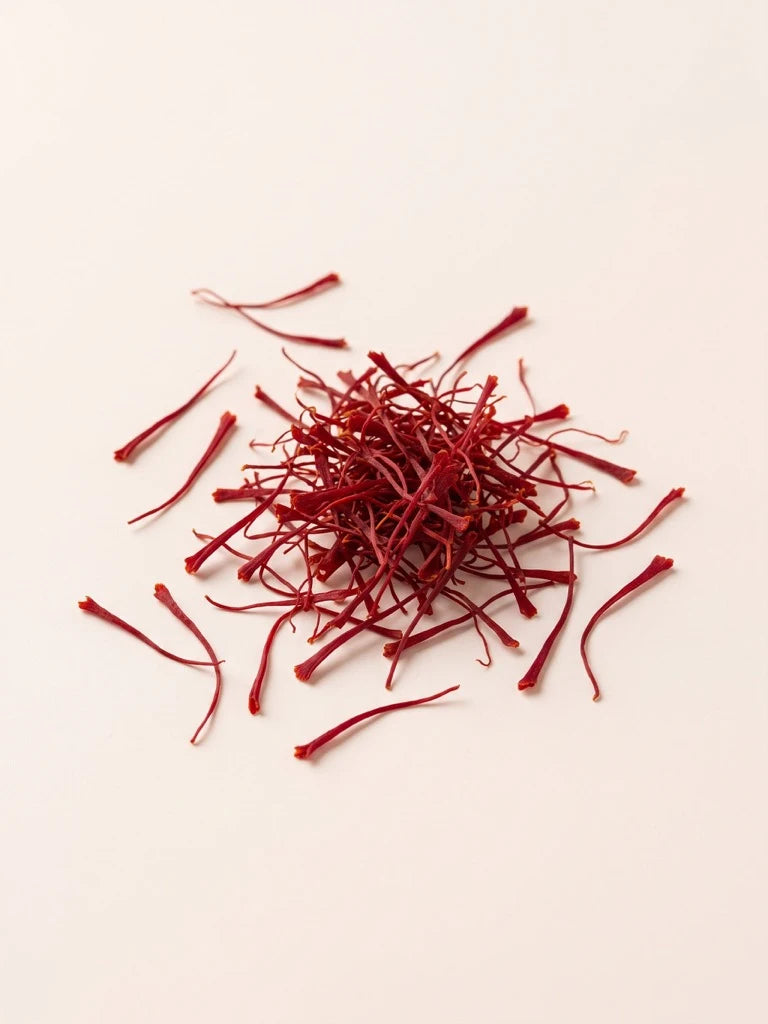
The flowers go straight to a sorting room, usually within hours. Someone sits with a tray and pulls the three crimson stigmas out of each bloom, discarding the purple petals and — if the grade is going to be Super Negin — cutting away the pale yellow style at the base. That yellow part weighs something and contributes almost nothing in colour or flavour, which is exactly why cheaper grades leave it attached.
Then the threads are dried. Done well, drying is fast and gentle and locks in the crocin. Done badly, it either scorches the threads or leaves them damp enough to spoil. This step separates a good lot from an ordinary one more than most buyers realise.
Why Herat specifically?
Herat sits in a high, dry valley in western Afghanistan with cold winters, hot dry summers and the kind of poor, well-drained soil the crocus corm actually prefers. It is climatically near-identical to the Khorasan region across the border in the wider region, which has been the historical heartland of saffron for centuries.
About 95% of Afghanistan's saffron comes from Herat, and the province's crop has been ranked the world's best by the International Taste Institute for ten consecutive years. We wrote more about the conditions in why Herat grows the world's best saffron.
What does this mean when you're buying?
Two practical things. First, the harvest year matters. Saffron is an agricultural product with a single annual crop, and it fades. A jar without a harvest date is asking you not to think about how old it is. Second, the yellow style is the tell. If you can see pale strands mixed into the red, you are paying saffron prices for weight that does nothing.
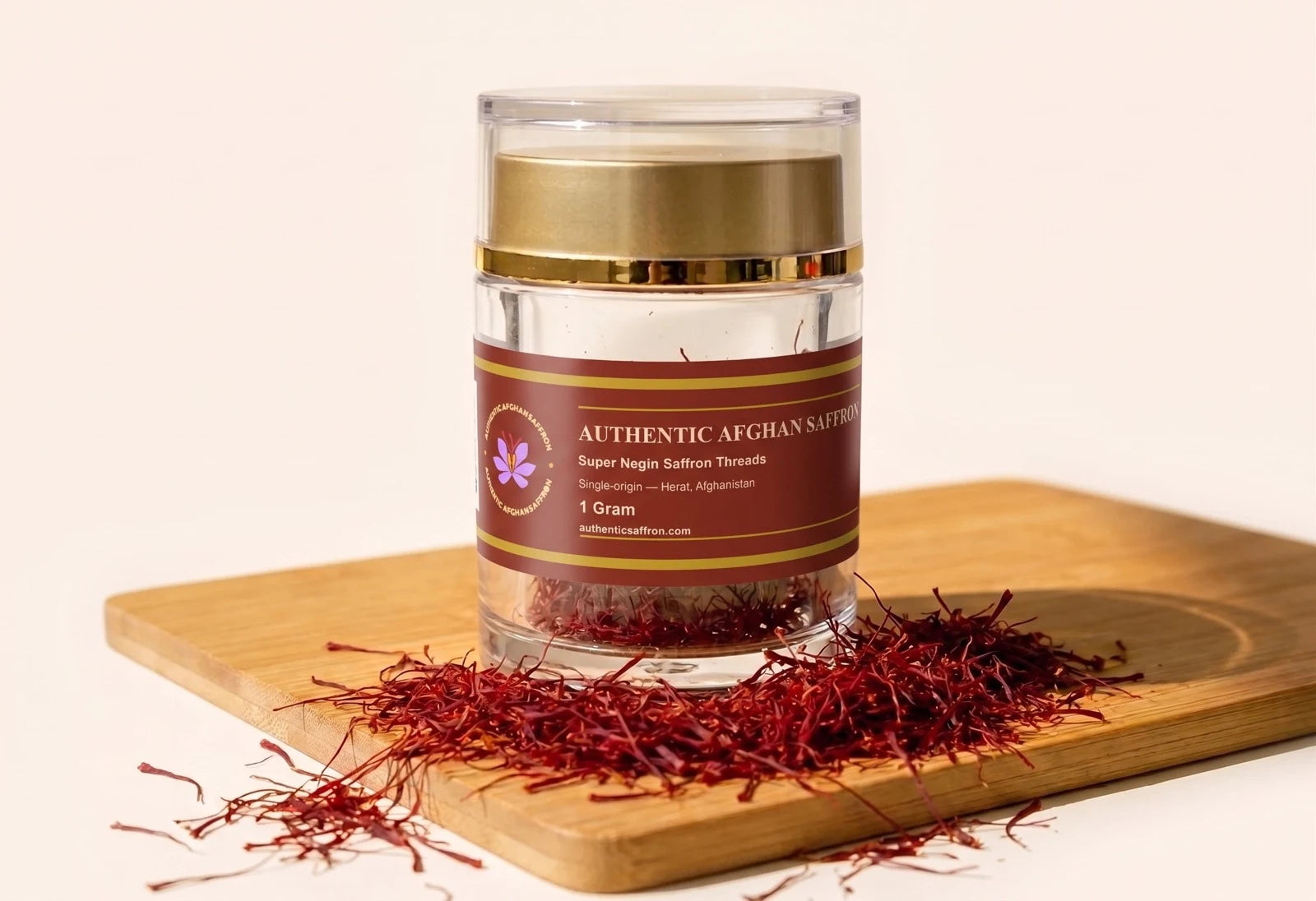
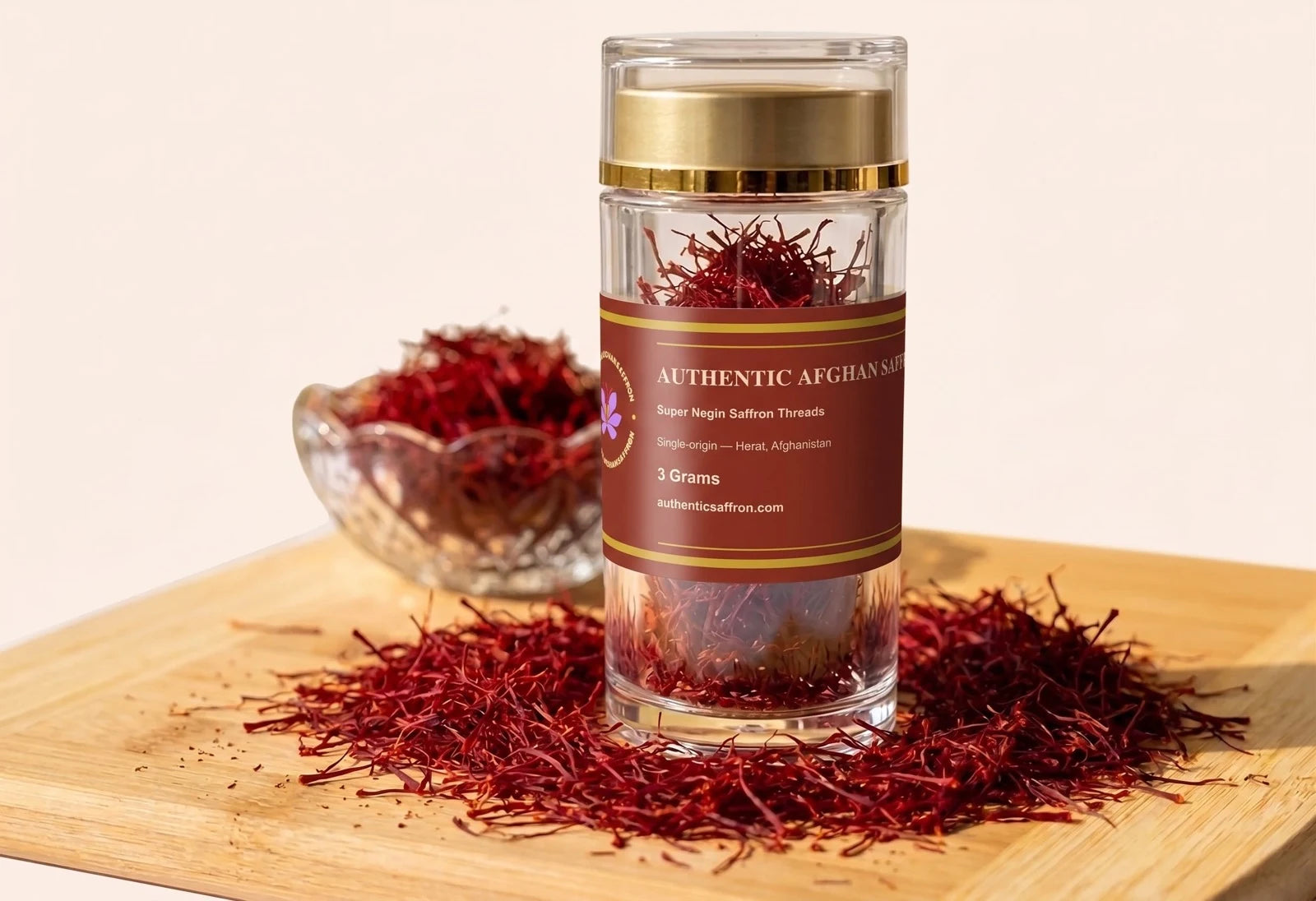
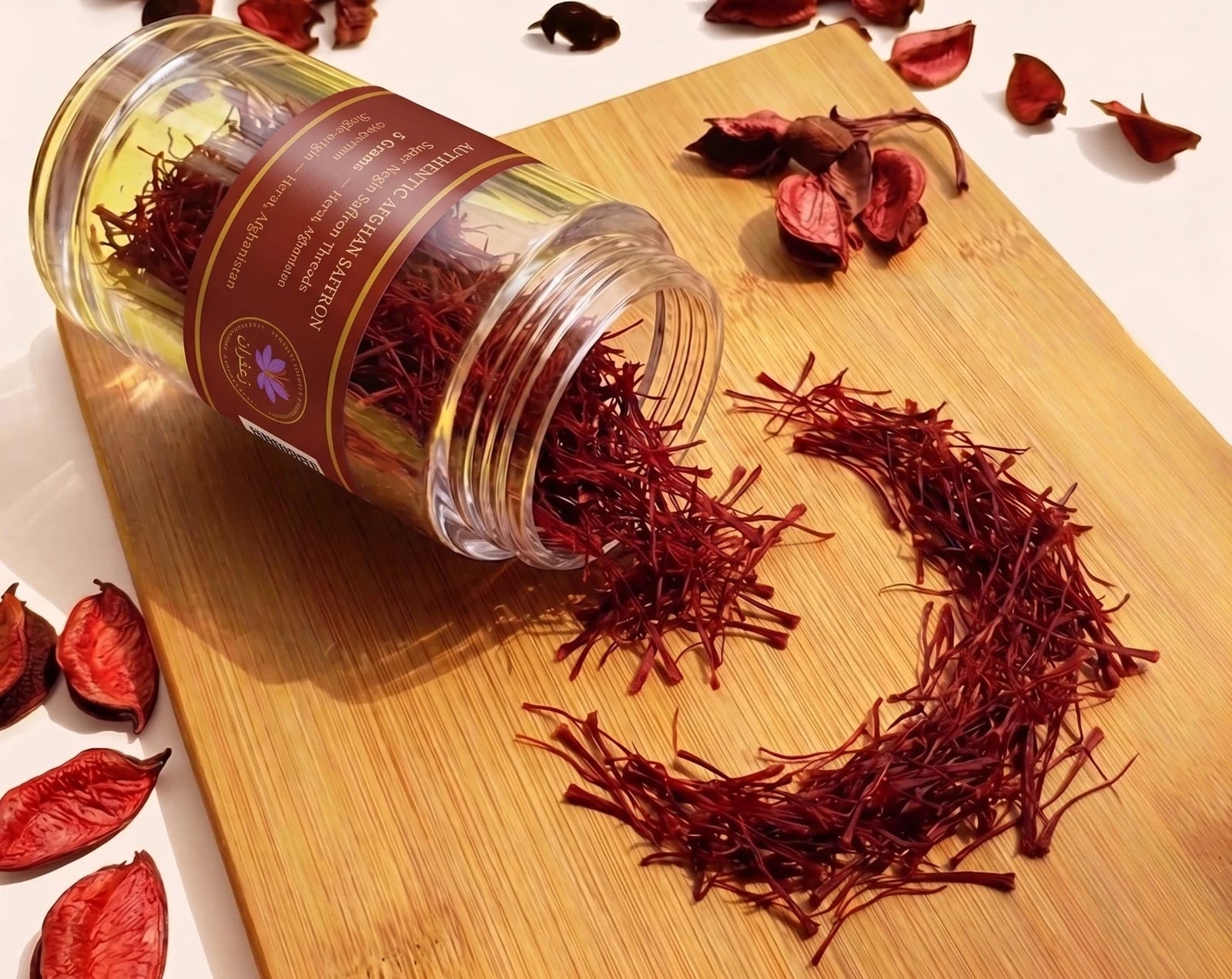
Every jar we sell carries its harvest season, and the threads are all-red Super Negin with the style cut away. You can see the current harvest here, or read what Super Negin actually means.
Last updated August 2026.