Why is saffron expensive? Because it is the only spice whose entire yield is three thread-like stigmas per flower, picked by hand, on a plant that flowers for a few weeks a year and cannot be sown from seed. The price is not scarcity theatre. It is labour arithmetic that no machine has yet managed to undo.
How many flowers go into a gram?
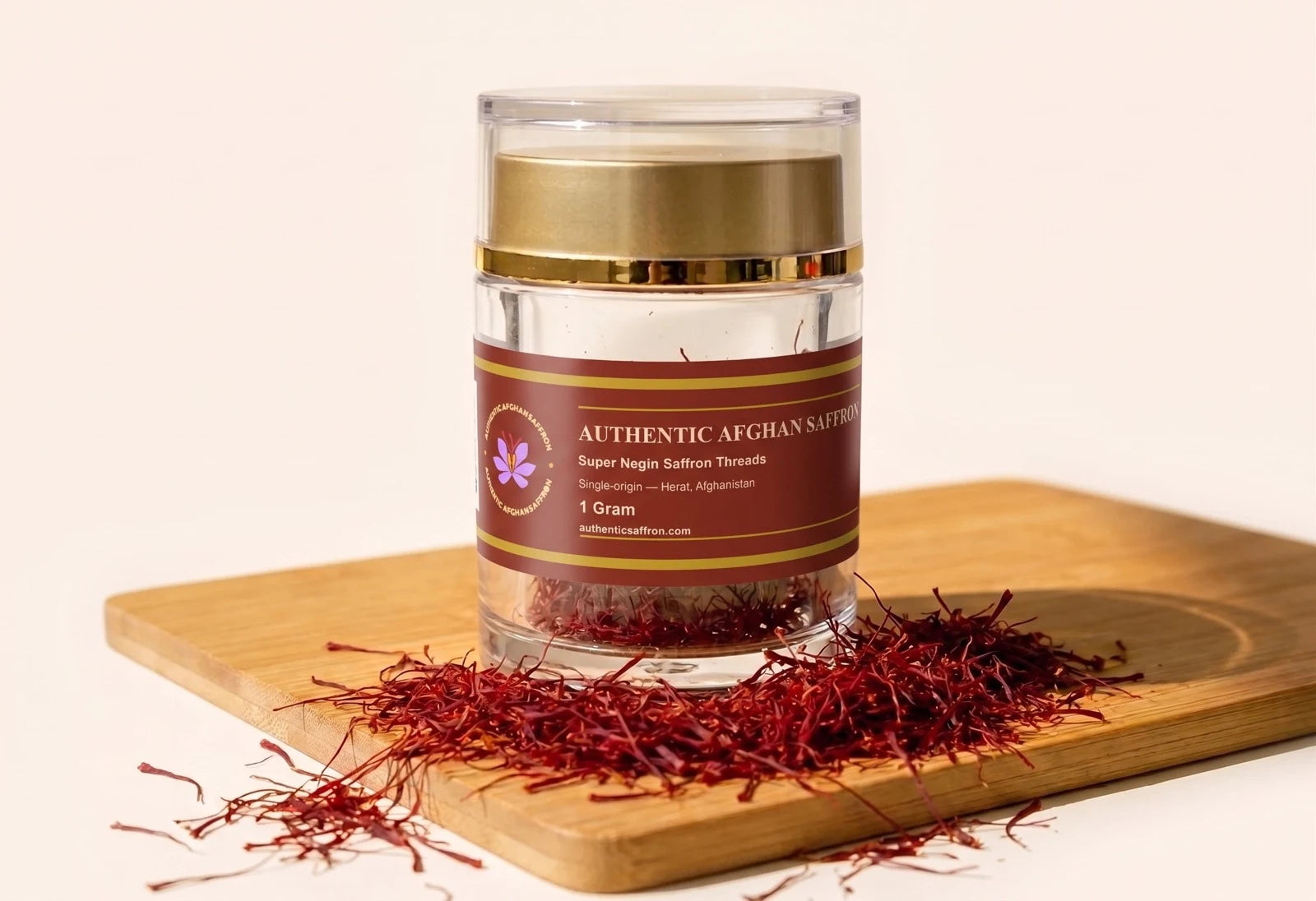
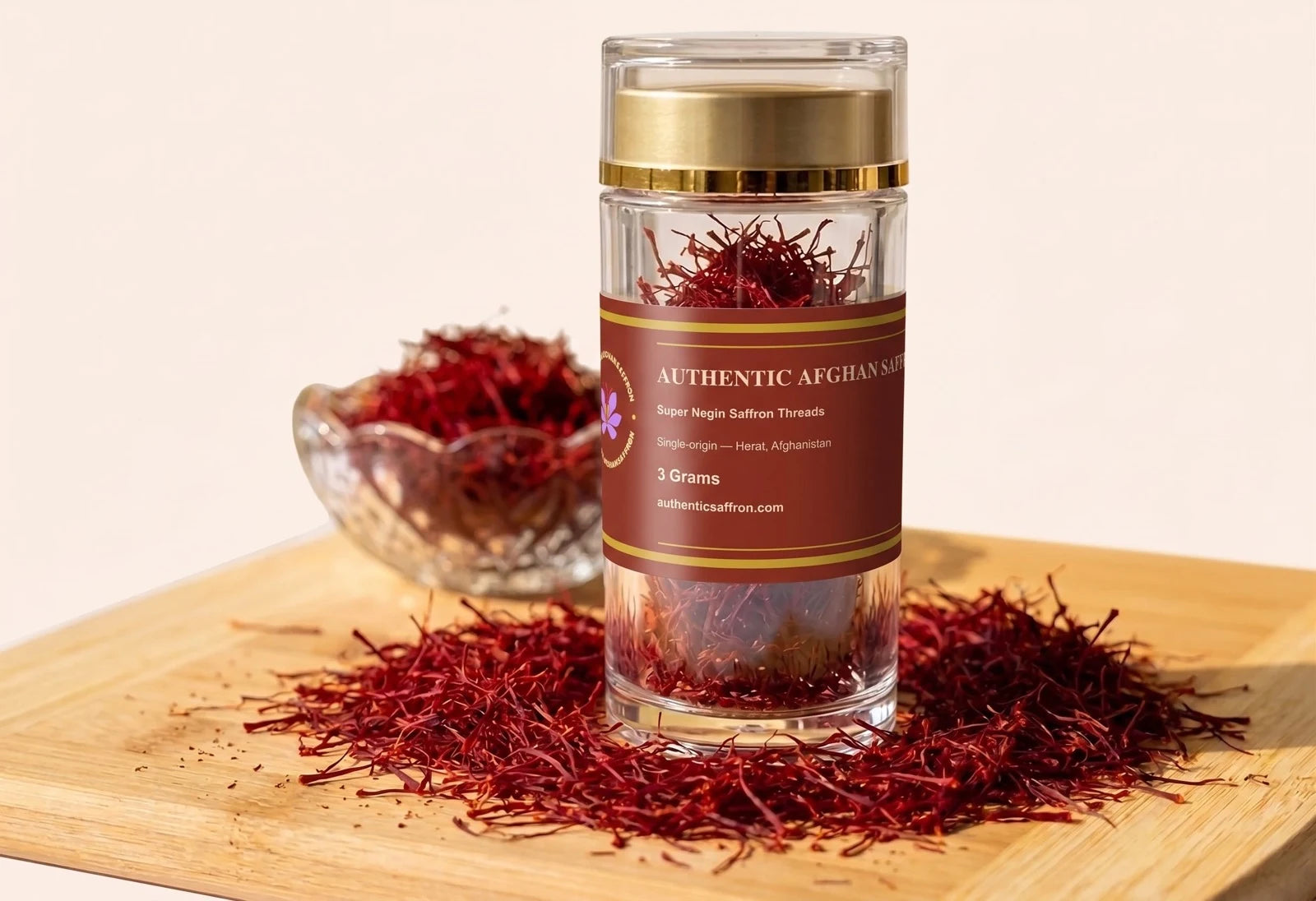
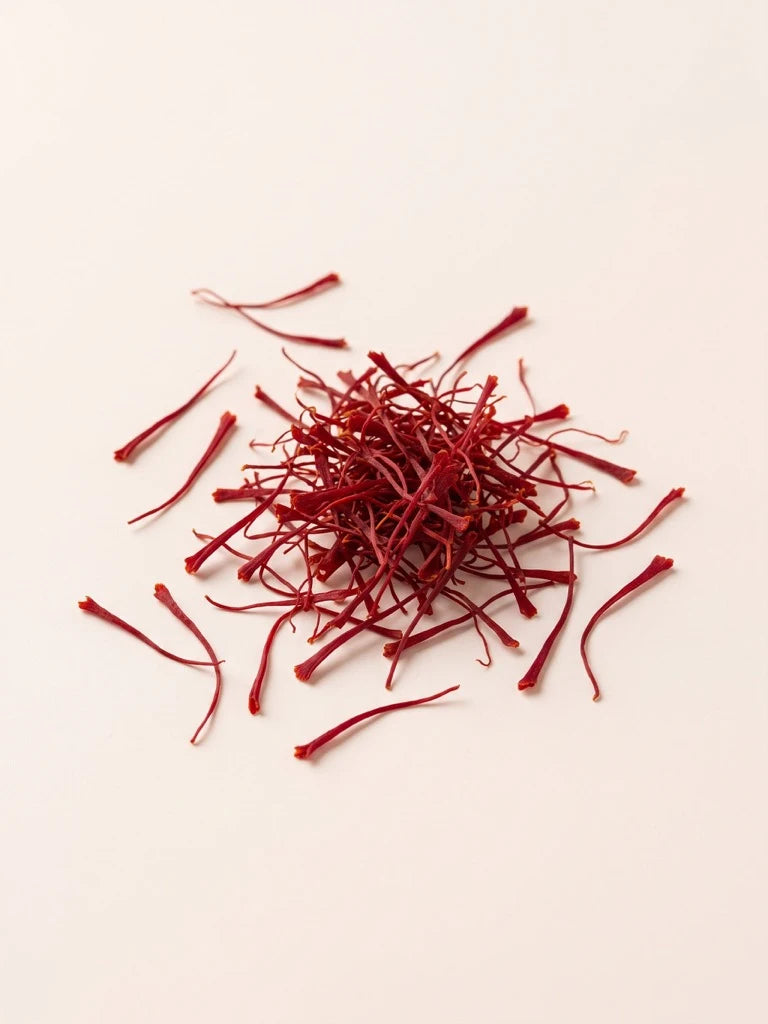
Roughly 150. Each of those flowers carries three red stigmas, so a single gram of dried saffron holds somewhere near 450 individual threads. The figure moves with thread size, grade and how much of the pale style is left attached, but 150 flowers per gram is the working anchor the trade uses, and it is the honest place to start any conversation about price.
Scale it up and the number stops being abstract.
| Dried saffron | Approximate flowers | Approximate red stigmas |
|---|---|---|
| 0.5 g | 75 | 225 |
| 1 g | 150 | 450 |
| 5 g | 750 | 2,250 |
| 1 oz (28 g) | 4,200 | 12,600 |
| 1 lb (454 g) | 68,000 | 204,000 |
| 1 kg | 150,000 | 450,000 |
A kilo of saffron is a field of roughly 150,000 flowers, each one snapped off by hand in the hour after dawn, carried indoors, opened, and stripped of three threads with fingertips. Then dried. Then sorted. There is no step in that sequence where a machine currently does better than a person, and several where it does markedly worse.
Why has the harvest never been mechanised?
People have tried, repeatedly, and the same three obstacles keep returning.
- The flowers do not open together. A field flushes over two to three weeks, and each morning brings a new set of open blooms among yesterday’s spent ones. A machine would have to distinguish them, in the dark, without treading on the corms below.
- The valuable part is fragile and buried. The stigmas sit inside a soft flower on a hollow stalk. Anything strong enough to grip the flower tends to crush what is inside it.
- Separation is finer than picking. Even where flowers are gathered mechanically, pulling three threads cleanly from the pale style without shredding them has resisted automation. Semi-automatic separators exist and are used in places; they trade a small speed gain for a larger loss in thread integrity.
The deeper reason is set out in why saffron resists machines. In short, the crop punishes speed at every stage, and the market pays for exactly the qualities that speed destroys.
How much does the harvest window matter?
Enormously, and it is the part of the cost most people miss. The whole year’s income arrives in about three weeks. Within those weeks, each morning’s flowers must be picked before the sun is up properly and processed the same day, or the aroma goes.
That compresses the labour requirement into a spike. A grower needs many hands for a short period, in a rural district, at exactly the same moment every neighbouring grower needs them. Labour in the harvest is therefore not priced like ordinary farm work. It is priced like a bottleneck, because it is one.
Weather makes it worse. A wet flowering period, a hot spell, or a badly timed first irrigation shifts the flush and shortens the window further. The full seasonal picture is in our saffron harvest calendar.
What costs come after the field?
Several, and they compound because the base material is already expensive.
Drying loses roughly four-fifths of the fresh weight, so every handling loss is a loss of finished product. Sorting is manual. Grading, where it is done properly, means laboratory time. Storage has to be cool, dark and sealed, because saffron fades in light and takes up moisture from the air. Then there is freight, customs, insurance and shrinkage on a commodity that is light, valuable and easy to lose.
Planting stock deserves its own line. Because Crocus sativus sets no viable seed, a grower expanding an acre must buy or grow corms, and corms are heavy, perishable and expensive. There is no cheap route to scale. The full cycle is described in how saffron is grown.
Is saffron actually expensive to cook with?
Per gram, yes. Per plate, much less so than the headline suggests.
A pinch for a dish serving four is typically fifteen to twenty threads. At roughly 450 threads per gram, that is somewhere between a twenty-fifth and a thirtieth of a gram. A single gram, used properly, seasons a great many dinners — which is why buying a small quantity of good saffron beats buying a larger quantity of tired saffron that you then have to use twice as much of. Our note on how much saffron you need works through the amounts by dish.
Freshness is doing real work in that calculation. Faded threads deliver less colour per gram, so the effective cost per plate rises even though the shelf price did not.
So why is some saffron cheap?
Because the arithmetic above cannot be beaten, only avoided. Cheap saffron is almost always cheap for a reason that can be named: more pale style left on the thread, higher moisture, older stock, a smaller pack disguising a high per-gram rate, or something that is not saffron at all.
Agricultural labour and specialty crop economics in the US are documented by the US Department of Agriculture, and the pattern they show for hand-harvested crops is consistent: where a crop resists mechanisation, the labour share of cost stays high and the retail price follows it. Saffron is the extreme case of that pattern. When a price departs sharply from it, the explanation is in the jar. We set out the realistic bands on our saffron price guide, and the specific mechanisms in why cheap saffron is cheap.
Frequently asked questions
Is saffron really the most expensive spice by weight?
Yes, consistently. Vanilla has come close in bad harvest years and some rare spices cost more in tiny quantities, but saffron has held the top of the table for a long time because its cost is structural rather than cyclical.
Will saffron ever get cheaper?
Only if the harvest is mechanised or the plant is changed, and neither looks close. Prices move year to year with weather, currency and the size of the crop in the largest producing countries, but the underlying labour requirement per gram has not fallen.
Is more expensive saffron always better?
No. Price sorts out the bottom of the market reliably and the top of it poorly. Above a certain point you are paying for packaging, brand and story as much as for measured colour and aroma. Ask for the crop year and the measured values rather than assuming.
How much saffron should a household actually buy?
For most cooks, one to two grams at a time. That is dozens of dishes, and it will be used while it is still fresh. Larger quantities only make sense if you cook with saffron weekly and can store it cool, dark and airtight.