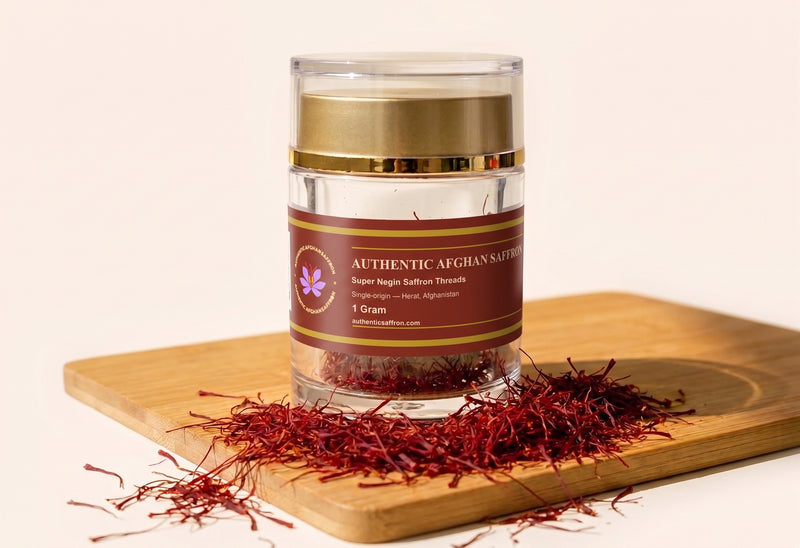
Saffron
1 gram
$12.99
The crystal collection
Buy single-origin Afghan saffron threads from Herat in 1 g, 2 g, 3 g, 5 g and 10 g sizes, plus a two-bottle gift box. Every jar is harvest-dated and contains whole Super Negin-cut threads, never powder.
One Herat lot at a time, with the pale yellow style trimmed away. Independent ISO 3632 testing of the current lot is pending; the complete certificate will be published on the Lab Report page when it is issued.
Use the single product listing to select 1 g ($12.99), 2 g ($22.99), 3 g ($29.99), 5 g ($44.99) or 10 g ($79.99) — from $8.00 a gram, or about 13¢ a cup of tea. The Gift Box pairs two 1 g bottles in a gold-foiled box.
Orders ship with tracking, typically within one business day. Free U.S. shipping over $50; the rate below that is calculated at checkout. Returns are accepted within 14 days of delivery for sealed, unopened items. Email us before returning anything so we can confirm the return instructions.
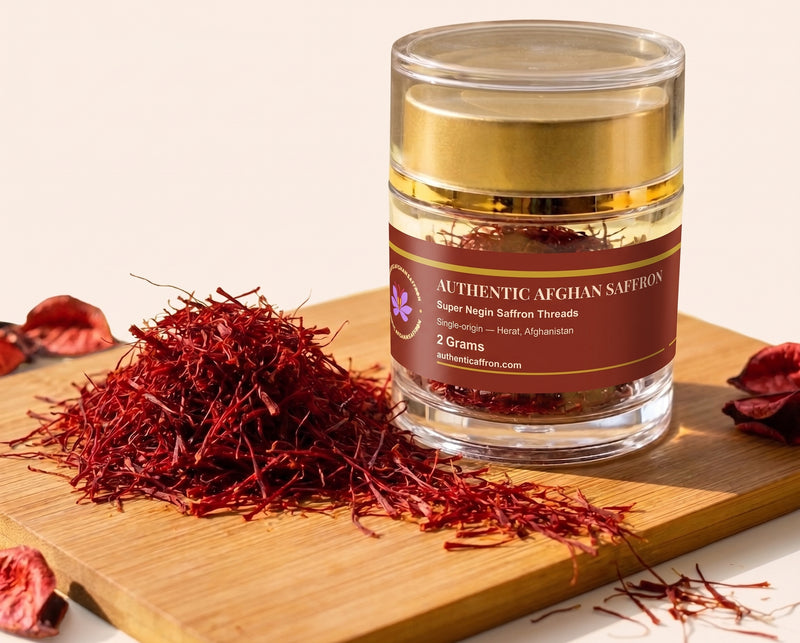
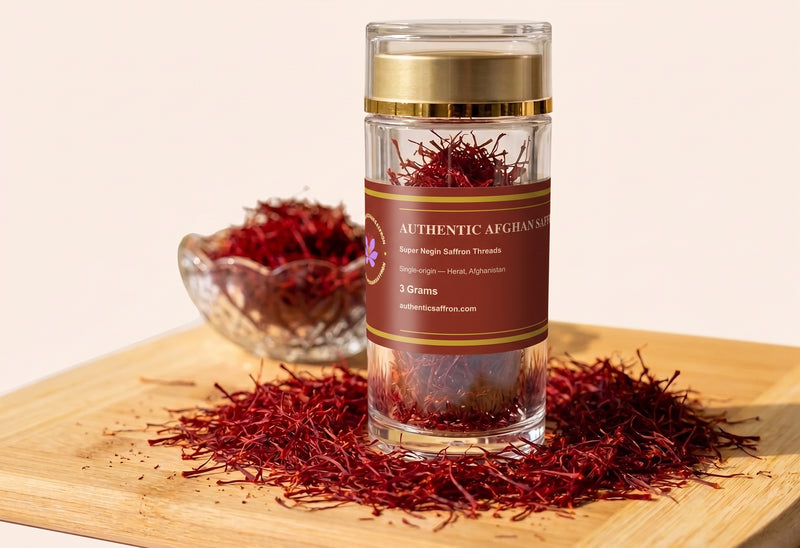

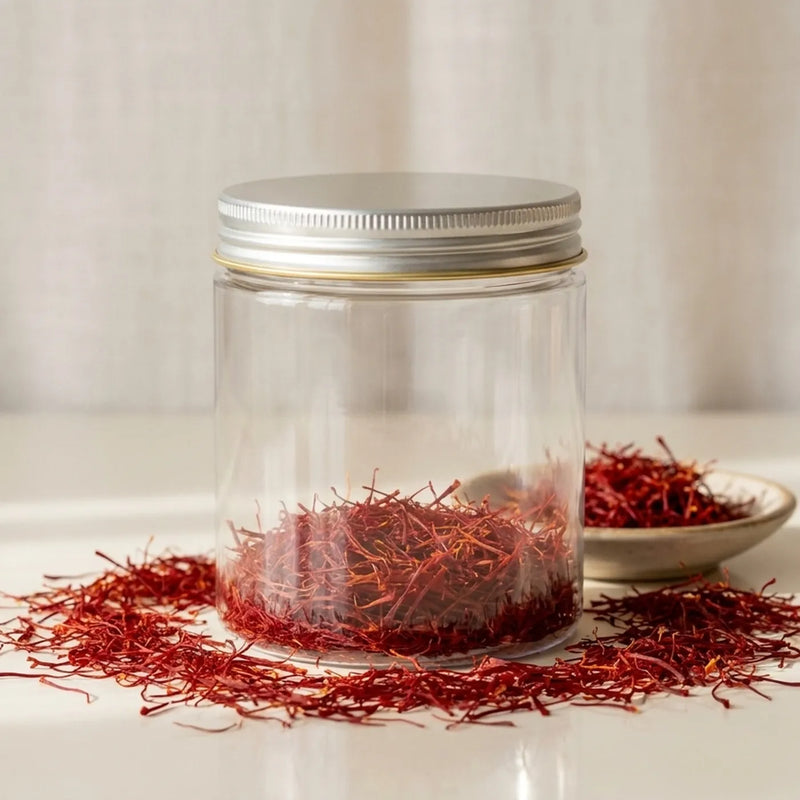
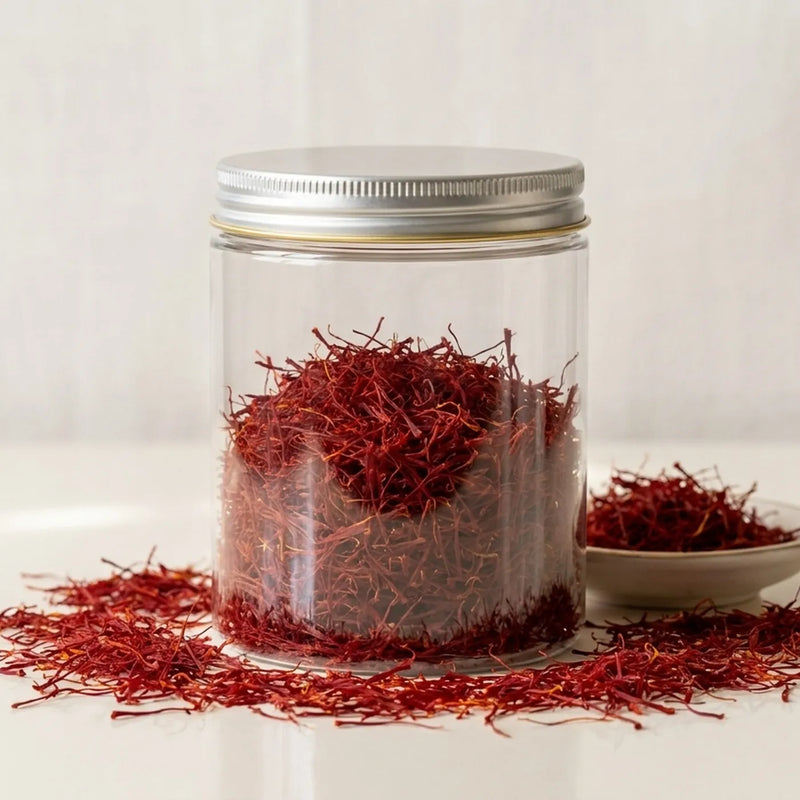
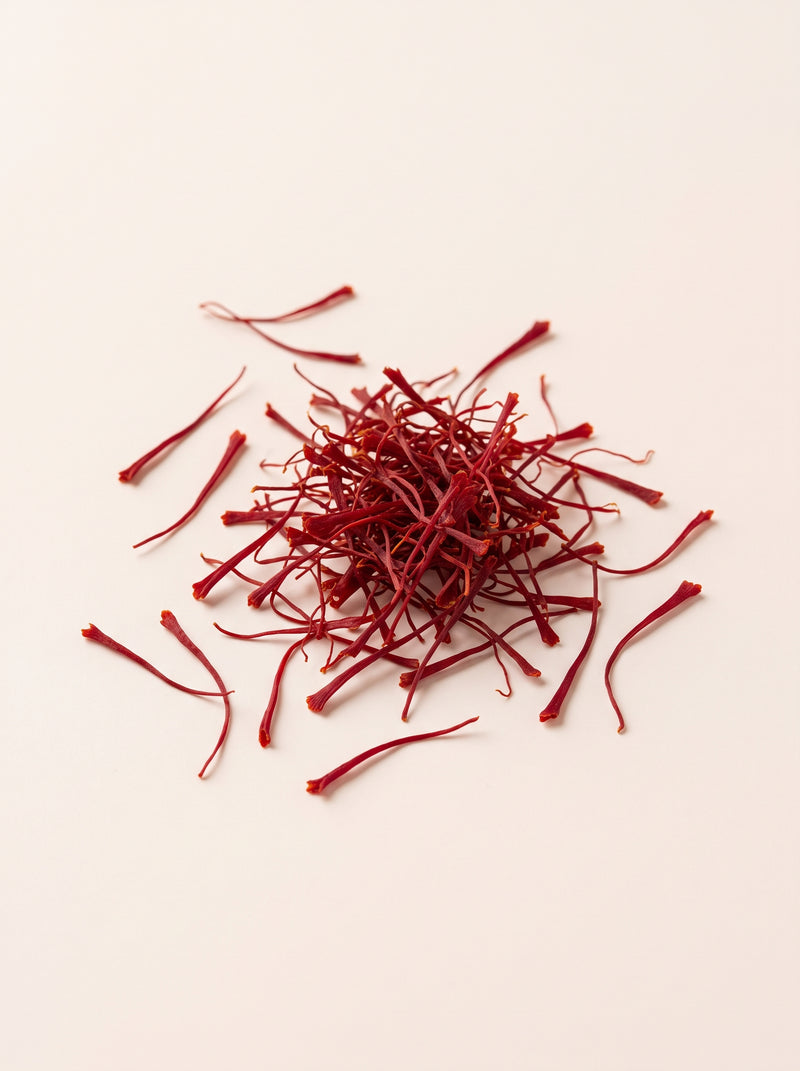
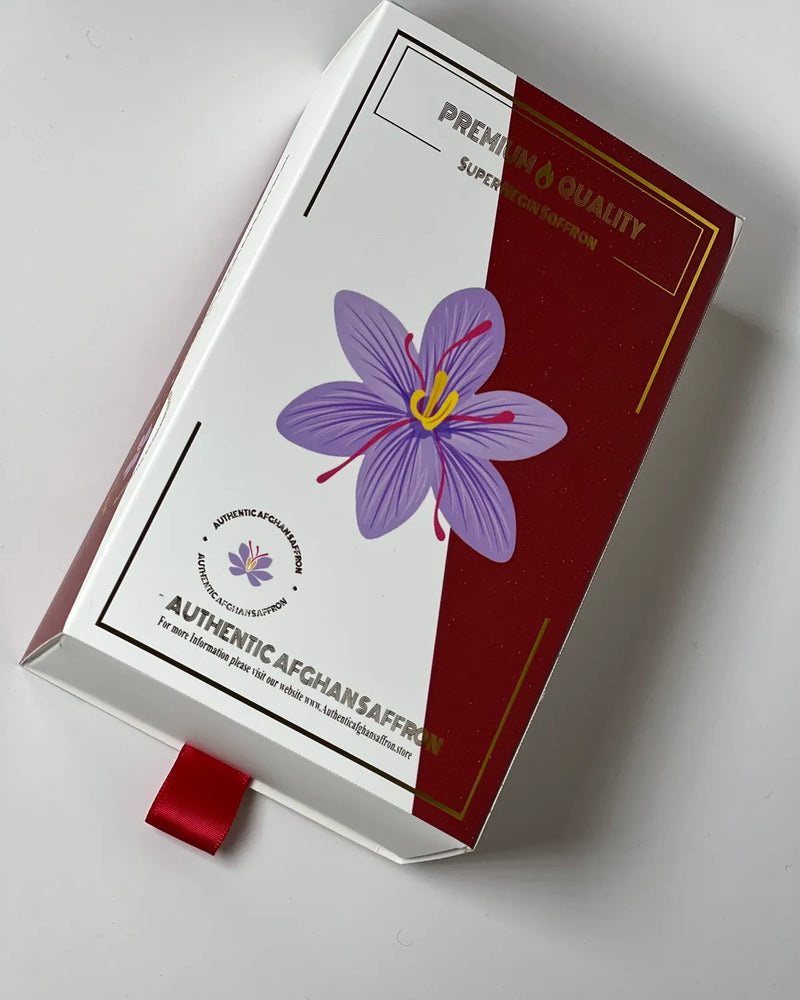
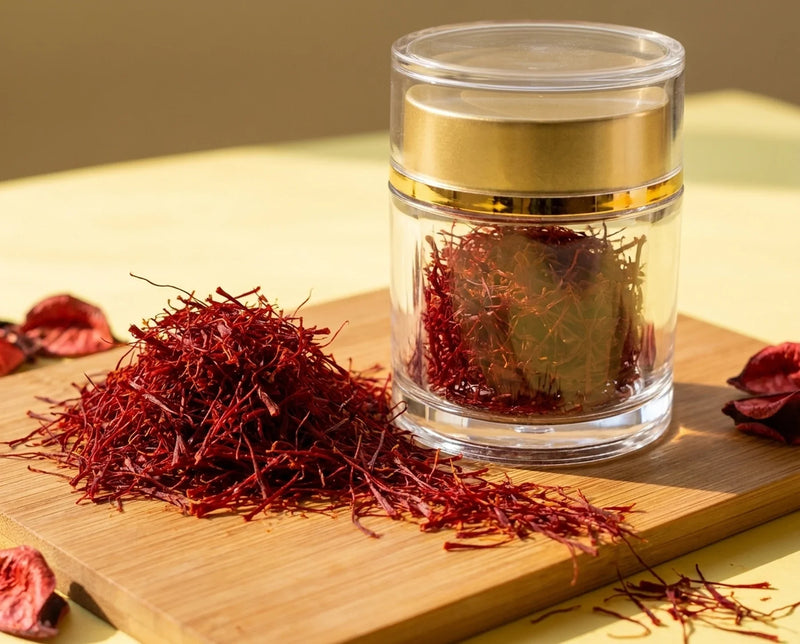
Authentic Afghan Saffron offers all-red Super Negin-cut threads from Herat, Afghanistan. Super Negin is a visual trade description, not an ISO laboratory category. Independent ISO 3632 testing of the current lot is pending; the complete certificate will be published on our lab report page when issued.
Choose 1 g, 2 g, 3 g, 5 g, or 10 g. Every size contains the same harvest-dated saffron; only the net weight and package format change.
For recipe-specific quantities and tested blooming methods, browse our saffron recipe collection.
Keep it sealed in its bottle, in a cool dark cupboard, away from sunlight and heat. Never the fridge — humidity is saffron's enemy. Stored well, saffron holds peak aroma for two years or more, and every bottle we ship carries its harvest date so you always know how fresh yours is.
Free U.S. shipping is available over $50. Returns are accepted within 14 days for sealed, unopened items; contact us first for instructions. For restaurant supply, events, or retail wholesale, visit our wholesale and events page.
Find your bottle
For giving
One full gram of Super Negin in a bottle that looks like a fragrance flacon. The gift they keep long after the last golden cup.
For the ritual
Two crystal bottles in a gold-foiled gift box, made for gifting or keeping one bottle at home.
For the kitchen
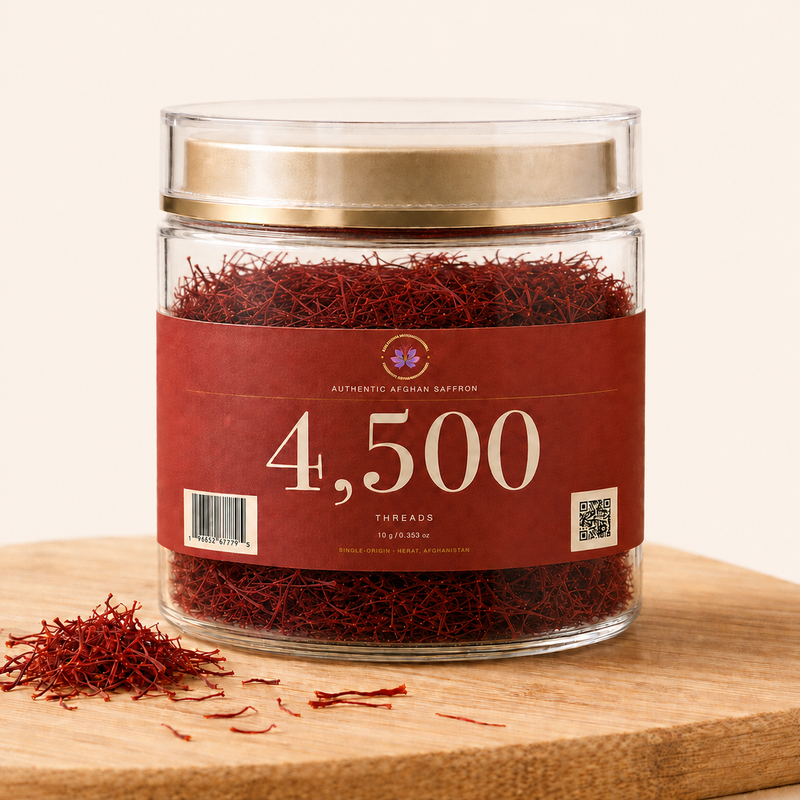
A larger bottle of the same all-red Herat saffron threads for kitchens that cook with saffron regularly.
| Bottle | Threads | Makes | Best for | Price | Buy |
|---|---|---|---|---|---|
| 1 g bottle | 450 | Single bottle | All-red Herat threads | $12.99 | Shop → |
| Gift Box — 2 × 1 g | 900 | Two 1 g bottles | Gift box | $27.99 | Shop → |
| 5 g bottle | 2,250 | Single bottle | All-red Herat threads | $44.99 | Shop → |
| 10 g bottle | 4,500 | Single bottle | All-red Herat threads | $79.99 | Shop → |
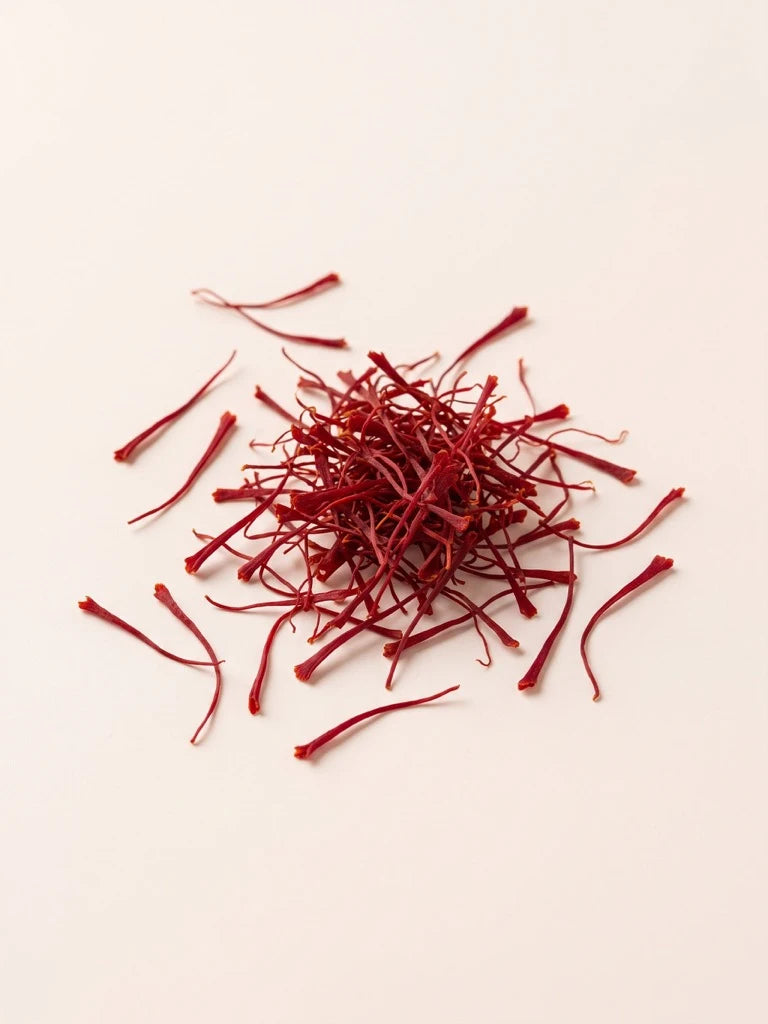
Single origin
95% of Afghanistan's saffron grows in Herat's high-desert valleys, where the altitude, the dry autumn and the cold nights produce the longest, deepest-red stigmas in the world. Herat's high-desert valleys grow about 95% of Afghanistan's saffron. Ours comes from there, and nowhere else — no blending, no vague 'imported', and a harvest date on every bottle.
Start with the 1 g Crystal Bottle. It's the gift unit, it contains one gram of all-red Herat saffron, and it is designed for gifting.
Buying it for someone
Order-by dates go live before each of these. The Harvest List gets them first.
A crystal bottle, wrapped, with a handwritten card. Nothing else needed.
The haft-sin table, the new year, and the saffron rice that has to be right.
Kesar for mithai, kheer and the sweets table.
The luxury food gift under $50.
Favours, custom labels and bulk quantities.
Buyer questions
The 1 g Crystal Bottle. It's the gift unit, it contains one gram of the same all-red Herat saffron sold in every bottle size.
Super Negin is the grade name for long, all-red stigmas with no yellow style attached — the highest visual grade. ISO 3632 Category I is a laboratory standard measuring crocin (colour), picrocrocin (taste) and safranal (aroma); Category I is the top tier and starts at a crocin reading of 200. Independent current-lot testing is pending; the full certificate will be published when issued.
Yes — the Gift Box ships with two crystal bottles in a gold-foiled sleeve and a card explaining the three ways to brew. Add a handwritten note at checkout if you'd like.
Use the measurements provided in the specific recipe you are preparing. Browse our recipe collection for tested quantities and methods.
Sealed, cool, dark and dry: two years or more at peak aroma. Every bottle carries its harvest date so you always know how fresh yours is.
Free U.S. shipping over $50, a flat rate below that, calculated at checkout. Orders ship with tracking, typically within one business day.
Yes — custom quantities, custom labels and chef pricing. Tell us what you're planning.
Returns are accepted within 14 days for sealed, unopened items. Email us first for return instructions.