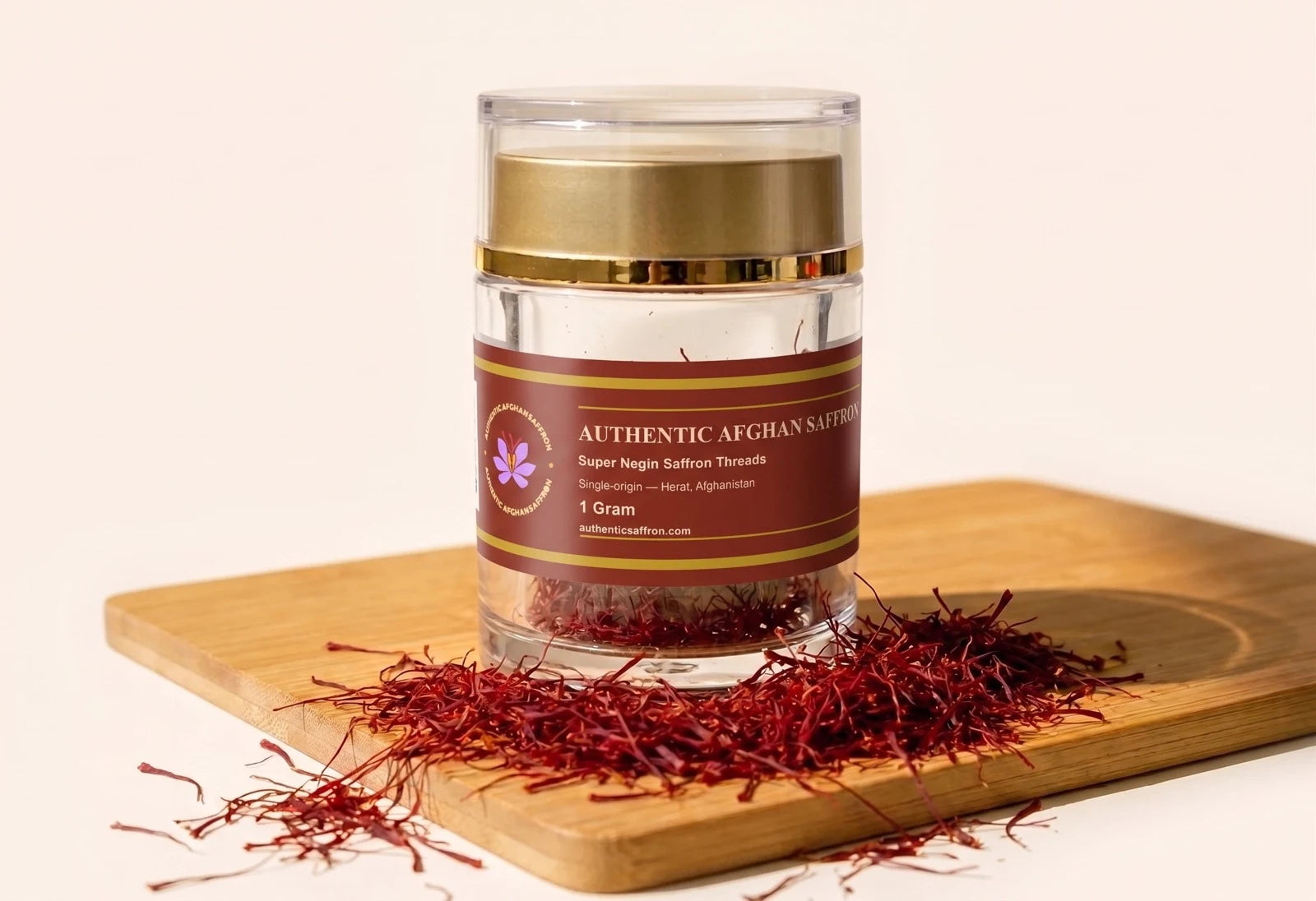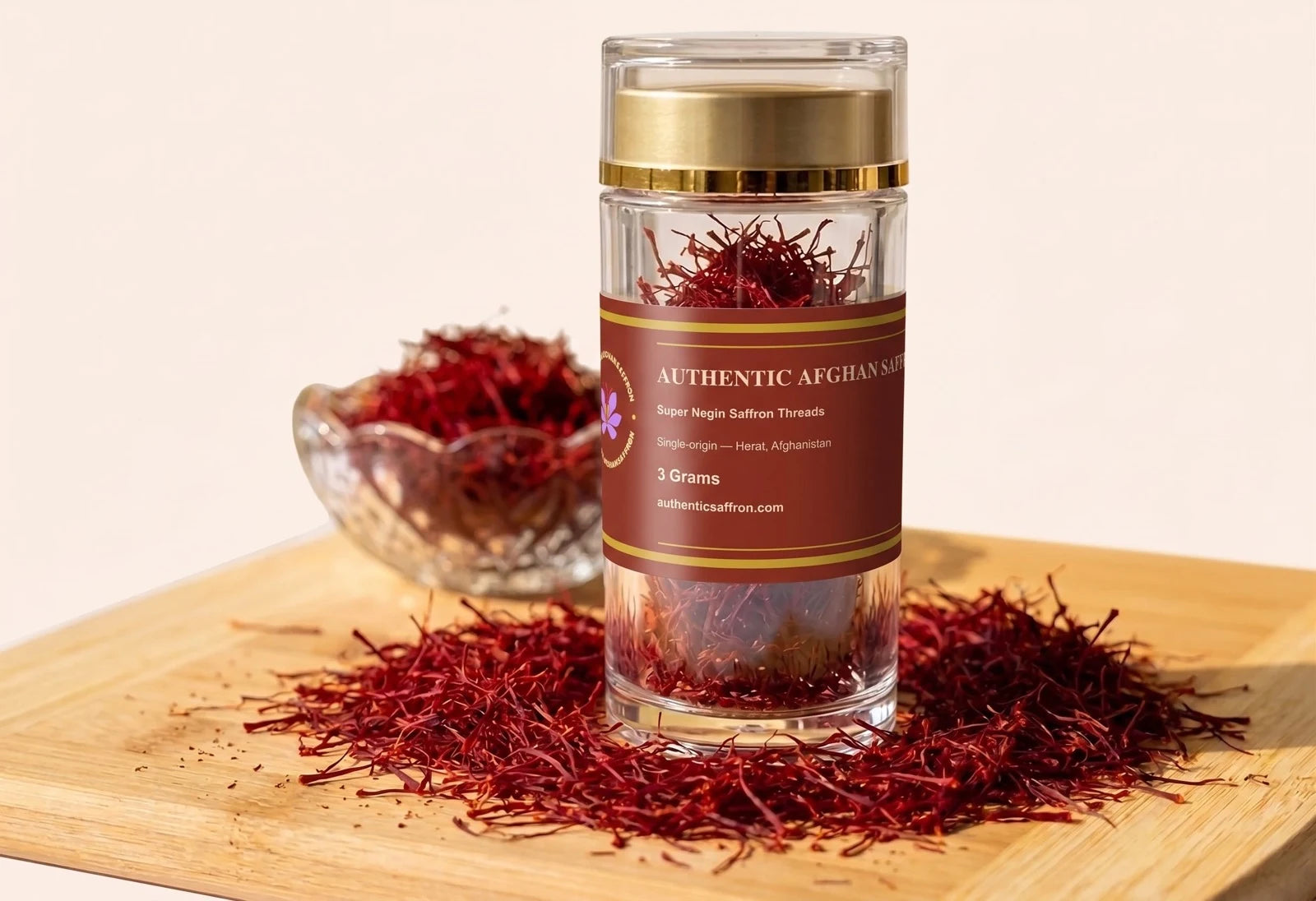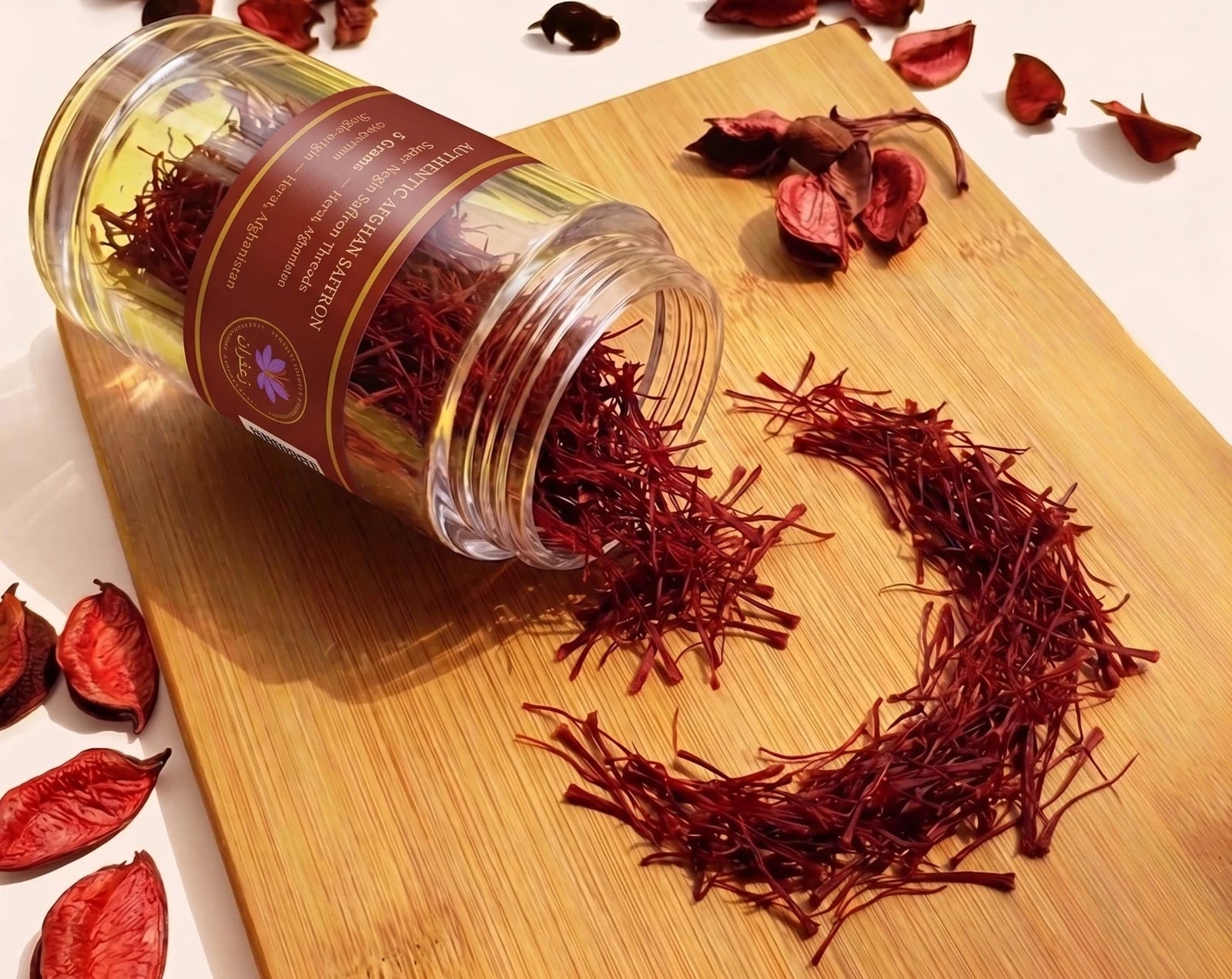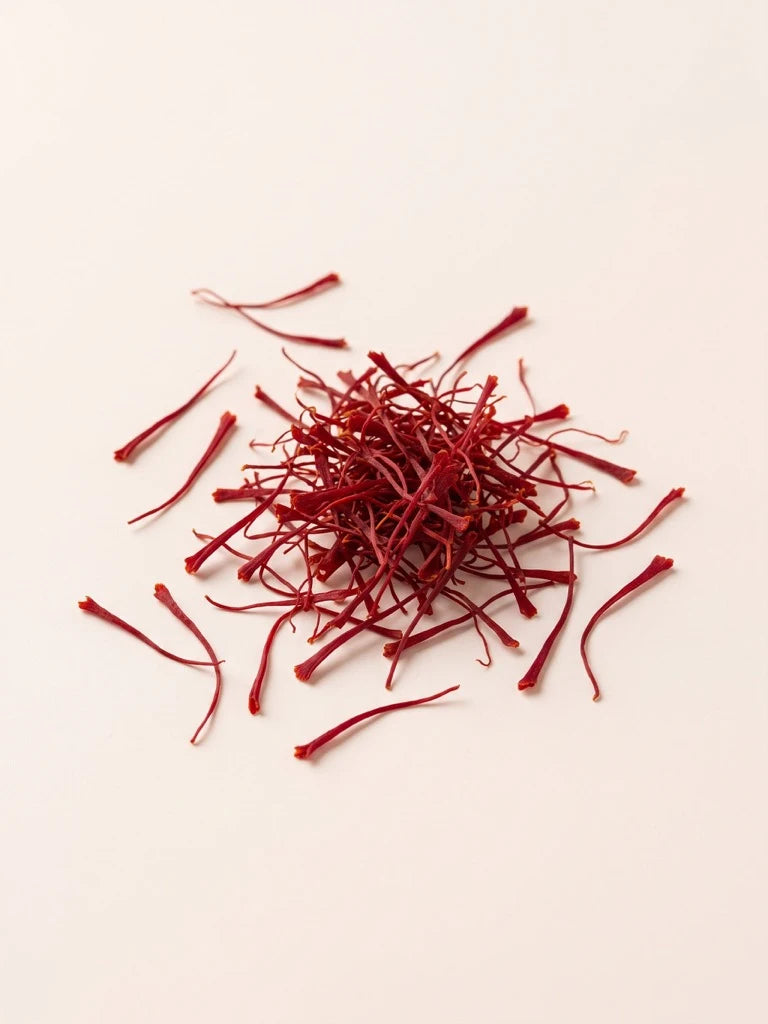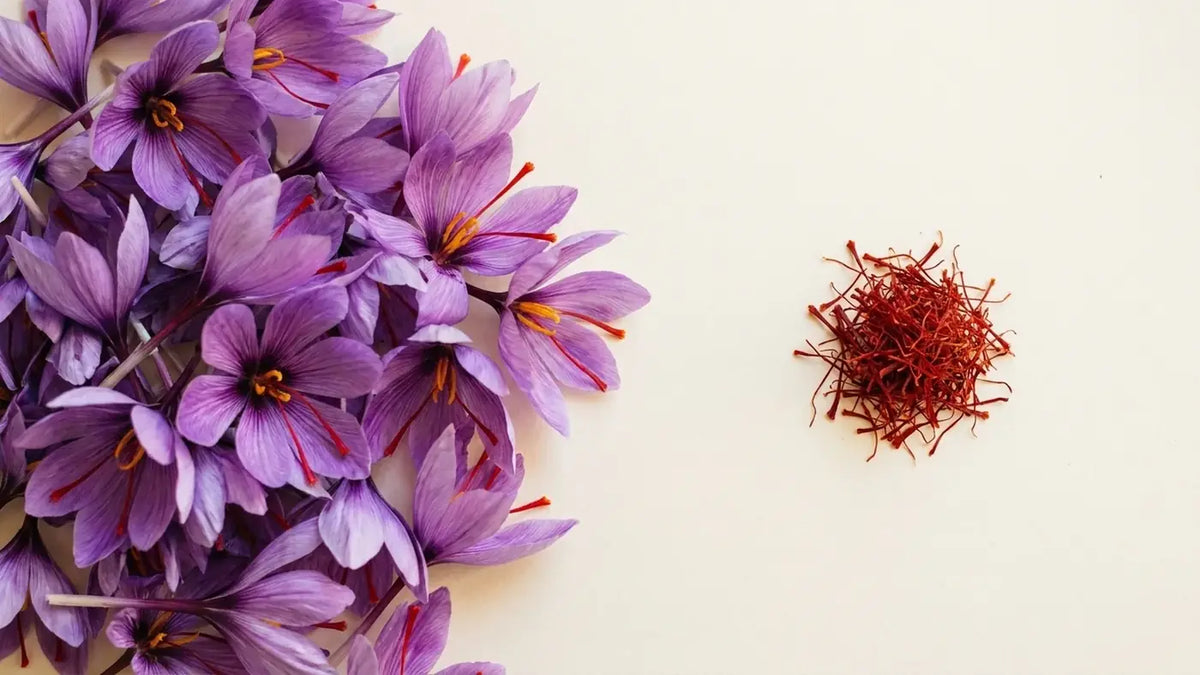
About 150 crocus flowers make one gram of dried saffron, and each flower gives only three red stigmas. That is roughly 450 threads in a gram, every one of them picked and separated by hand in a few morning hours. Nothing about that arithmetic has changed in centuries.
How many flowers per gram does saffron actually take?
How many flowers per gram saffron needs is the first question worth asking, and the working answer is about 150. Each Crocus sativus bloom carries a single three-branched stigma, so 150 flowers yield roughly 450 red threads. Weigh those threads after drying and you land near one gram.
Treat 150 as a centre of gravity rather than a constant. Thread length, how much of the pale style the picker leaves attached, the size of the corms and the weather during flowering all shift it. A batch of long, heavy, all-red threads gets there with fewer flowers. A batch cut short, or one carrying yellow style, needs more.
Why does drying change the count?
Freshly separated stigmas are damp and limp. Drying drives off most of that water and fixes the aroma compounds in place, and the threads lose the large majority of their weight in the process. Growers work on roughly five parts fresh stigma to one part finished saffron, though the exact ratio moves with the drying method and the moisture in the stigmas when they came off the flower.
This is why a saffron field looks so much more productive at dawn than it is by the end of the week. Baskets of flowers become handfuls of red thread, and handfuls become a small jar.
What does that mean for the jar on your shelf?
It helps to translate grams back into flowers. The table below uses the 150-flowers-per-gram figure and the three-stigma rule, rounded, so the numbers are indicative rather than exact.
| Dried saffron | Flowers (approx.) | Red threads (approx.) | Roughly what it cooks |
|---|---|---|---|
| 0.1 g | 15 | 45 | Two family pots of rice |
| 0.5 g | 75 | 225 | A run of weekend cooking |
| 1 g | 150 | 450 | Months of regular use for most homes |
| 5 g | 750 | 2,250 | A small restaurant kitchen’s season |
| 1 kg | 150,000 | 450,000 | A wholesale lot |
A generous pinch for a rice dish serving four is around twenty threads. Read down the table and you can see the whole supply chain compress into something domestic: one gram, sitting in a jar, is a field of flowers that no longer exists.
How long does one gram take to pick?
The flowers open at dawn and have to come off the plant that same morning, before sun and wind start pulling at the stigmas. A practised picker moves fast, bending to each bloom and dropping it into a cloth or basket. Field speed varies enormously with plant density, so we will not pretend to a single figure.
The slower half of the work happens indoors. Someone sits with a heap of flowers and separates the three red stigmas from the yellow style and the stamens, one flower at a time, for hours. Multiply that by 150 and you have the labour inside a single gram. Our own account of those days is in the Herat harvest journal.
- Pick: whole flowers, at first light, same morning they open.
- Separate: three red stigmas per flower, pulled clear of the pale style.
- Dry: gently and quickly, to fix aroma and drop moisture.
- Sort: broken threads, short threads and any yellow removed.
What makes the flower count vary?
Four things move the number in practice. The first is how much style the picker leaves on. Cutting right at the red line gives an all-red, stigma-only product; leaving a centimetre of yellow style adds weight that colours nothing. That difference alone can change how many flowers a gram takes by a wide margin, and it is the reason all-red grades cost more per gram than mixed ones. We unpack that trade-off in the guide to Super Negin.
The second is thread size. Bigger corms and a good growing season produce longer, thicker stigmas. The third is the drying: over-dried saffron weighs less, which flatters the flower count and costs you aroma. The fourth is simply the season — rainfall in autumn, a cold enough winter and a dry summer dormancy all feed into how the flowers come up.
Because of this variation, the international standard for saffron does not grade by flower count at all. ISO 3632 measures the dried product instead, reading colouring strength at 440 nm along with taste and aroma markers, and sorting the result into Categories I to III. Flower counts describe the farm; the standard describes what arrives in the jar.
Does the flower count explain the price?
Mostly, yes. Saffron is expensive because the yield per flower is fixed at three threads and the two hardest steps — picking and separating — have resisted mechanisation. Land, corms, water and drying all cost money, but labour is the part that scales directly with volume. Every extra gram is another 150 flowers handled twice.
That also tells you something about suspiciously cheap saffron. If a price implies less labour than 150 flowers can absorb, the difference is usually made up somewhere: yellow style left on to add weight, short broken threads, old stock, or something in the jar that never grew on a crocus. Our saffron price guide sets out what the honest bands look like, and why cheap saffron is cheap works through the shortcuts.
Frequently asked questions
How many stigmas does one saffron flower have?
Three. Each flower produces one style that divides into three red stigmas, and those stigmas are the saffron. Everything else on the flower — petals, stamens, the pale lower style — is discarded or used elsewhere.
How many flowers are in a kilogram of saffron?
Around 150,000, giving roughly 450,000 threads. The figure is approximate and shifts with thread length, how much style is left attached and how thoroughly the saffron was dried.
Does a higher flower count per gram mean better saffron?
Not on its own. A gram made from more flowers can mean short or thin threads just as easily as it can mean careful all-red cutting. Colouring strength, aroma and the absence of yellow style tell you more than the flower count does.
How many threads should I use in a dish?
For most rice dishes and stews serving four, about twenty threads is a generous amount, bloomed first in warm water. Saffron is easy to overdo, and more threads past a point make food bitter rather than better.