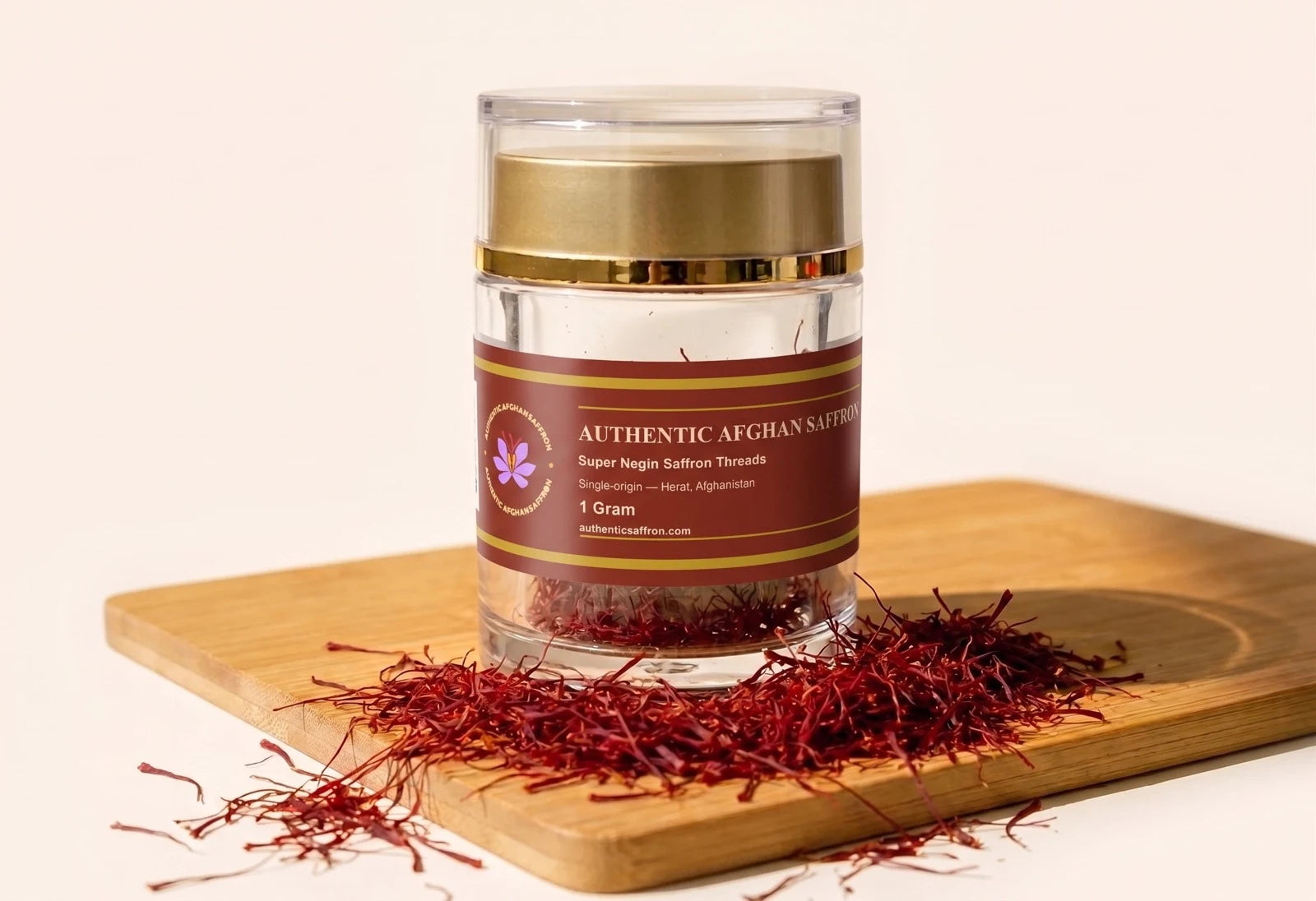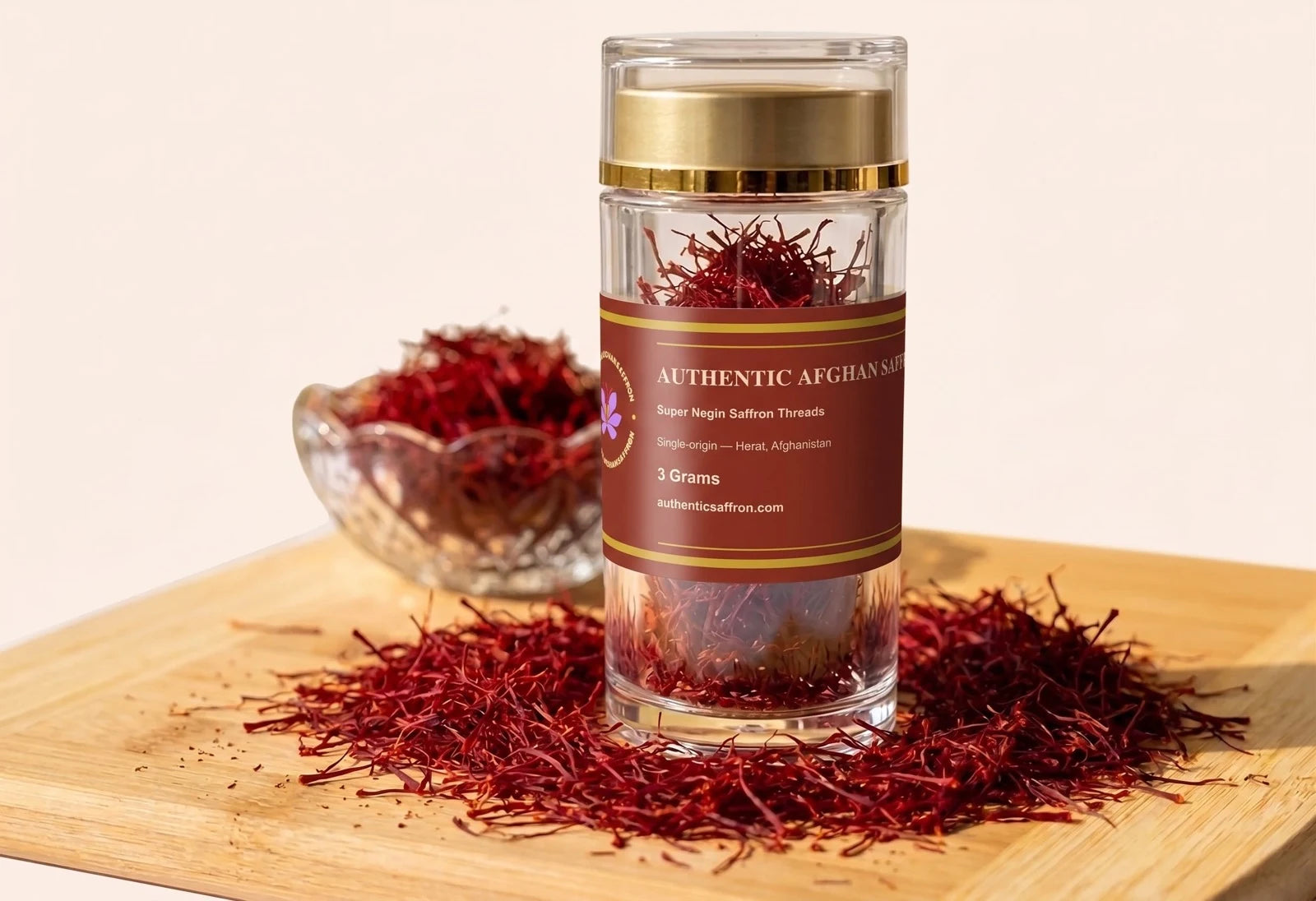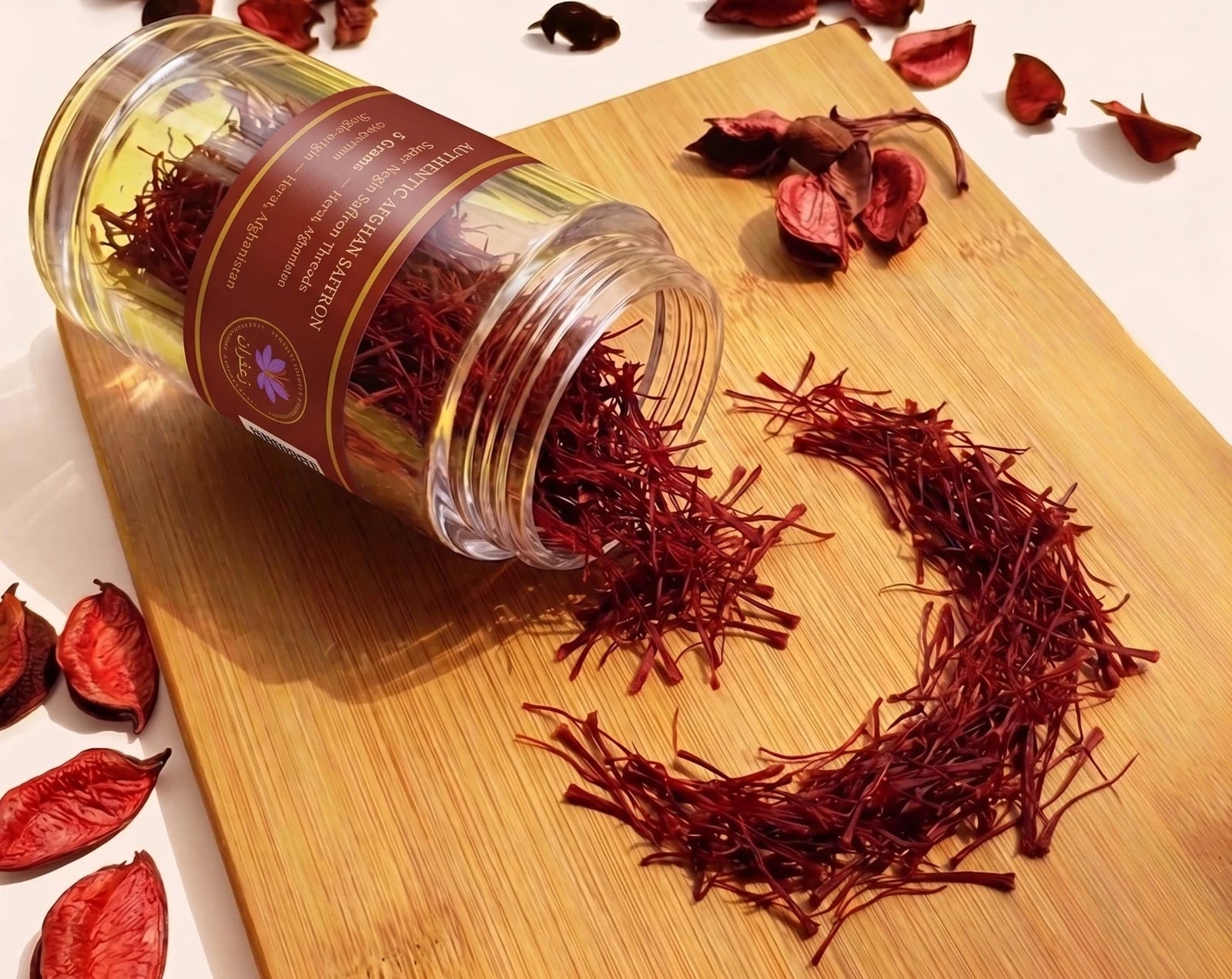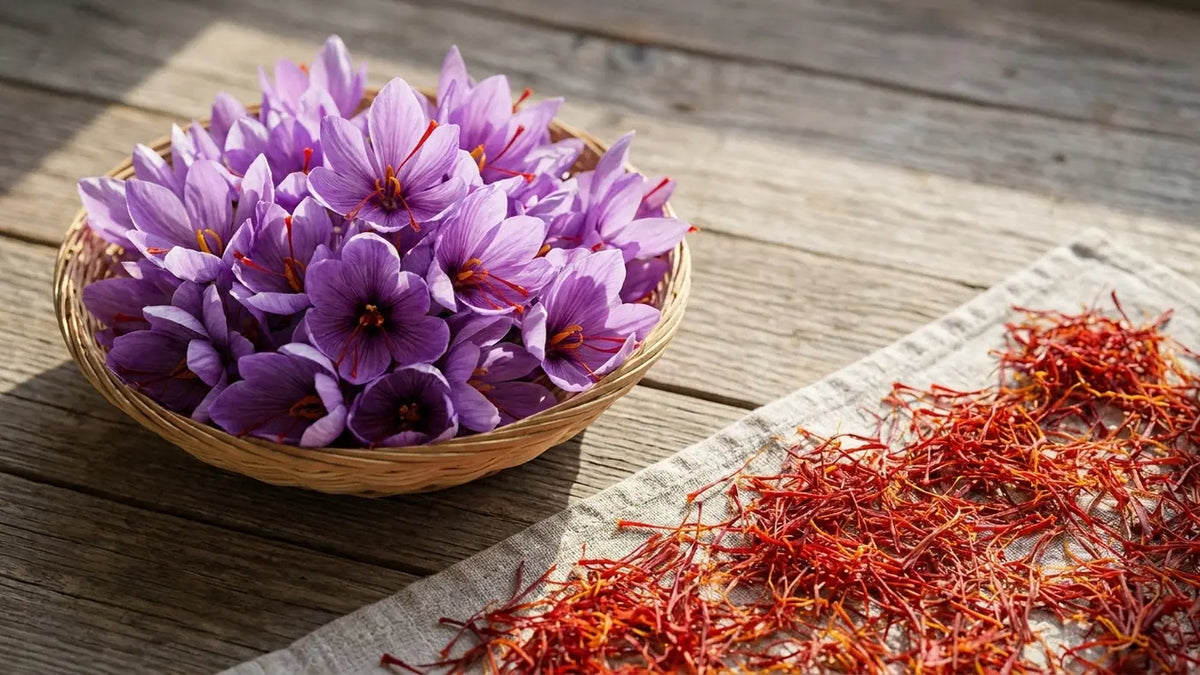
The saffron harvest season is short and late. In Herat, flowering usually runs from around the third week of October into the second half of November, with the peak in the first fortnight of that stretch. Everything else in the saffron year — dormancy, planting, winter leaf growth — exists to serve those few weeks.
When is the saffron harvest season?
Autumn, and only autumn. Saffron is one of the few crops that flowers as the growing year is shutting down, triggered by falling soil temperature after a hot, dry summer dormancy.
Across the northern hemisphere the pattern is broadly the same. Spanish fields in La Mancha and Greek fields in Kozani flower from late October into November. Kashmir flowers over a similar window. Morocco’s Taliouine highlands run a little later. Herat sits in the same band, with altitude doing most of the fine-tuning: higher fields start earlier and finish earlier, lower fields lag behind by a week or so.
The dates move. A late first irrigation delays the flush. A warm October pushes it back; an early cold snap pulls it forward and compresses it. Anyone who publishes fixed harvest dates for saffron is describing an average, not a promise.
What happens month by month?
The table below follows a Herat field through a full cycle. The right-hand column is the part that concerns anyone buying rather than growing.
| Period | In the field | What it means for buyers |
|---|---|---|
| June–July | Full dormancy. Corms lifted, sorted and replanted where a field is being renewed | Last season’s stock is roughly eight months old. Colour is fading in poorly stored lots |
| August–September | Ground prepared. Flower buds forming inside dormant corms | The thinnest point of the year for fresh saffron. Discounted stock is usually old stock |
| Early–mid October | First irrigation. Roots emerge, first buds break at higher elevations | New-crop talk begins. Nothing has been dried yet |
| Late Oct–mid Nov | Peak flowering. Daily dawn picking, same-day separating and drying | The current crop year is being created. Nothing is graded or shipped yet |
| Late Nov–December | Flowering ends. Leaves grow. Sorting, grading and first sales | New-crop saffron enters the trade. Testing and export paperwork begin |
| January–February | Leaves photosynthesise through the cold. Daughter corms fatten | New crop reaches importers and specialist retailers. Best time to buy |
| March–May | Leaves yellow and die back. Field goes quiet | New crop widely available and still close to peak condition |
Why does the harvest happen at dawn?
Because the flower is on a clock. Blooms open with first light and start to wilt within hours, and once open, the stigmas inside are exposed to sun, warmth and wind. Heat drives off the volatile compounds that give saffron its aroma before the threads have even been picked.
So the working day inverts. Pickers are in the field in the cold half-light, the baskets are indoors by mid-morning, the flowers are opened and the stigmas pulled the same day, and drying is finished before the next dawn brings a new flush. A field is walked every single morning for the two or three weeks it is in flower, whatever the weather.
This is also why harvest quality varies so much between lots that came from neighbouring fields. It is not the soil. It is whether the flowers picked on a heavy morning got separated that afternoon or the following one. Our account of a morning inside the Herat harvest follows the sequence in detail.
When does new-crop saffron reach shops?
Later than people expect. Drying finishes within days of picking, but the rest takes time: sorting by hand, grading, laboratory testing where it is done, export documentation, freight, customs and repacking.
In practice, saffron picked in early November tends to reach specialist US sellers between January and March. A jar bought in February is usually the freshest thing on the shelf all year. A jar bought in September is, on average, the oldest — not spoiled, but a full growing season further from the field.
That does not make late-summer saffron a bad purchase. It makes storage the deciding factor. Saffron kept cool, dark and airtight ages slowly; saffron kept in a clear jar above a stove does not. The practical rules are in how to store saffron.
Does the calendar flip below the equator?
Yes, cleanly. Growers in Australia, New Zealand and parts of South America harvest in their own autumn, roughly April to May, and their new crop lands in the northern hemisphere market at the opposite end of the year.
Volumes from those regions are small and prices are generally high, so they do not change the shape of the world market. They are worth knowing about for one reason only: if you find yourself in the September trough and want genuinely recent saffron, southern-hemisphere stock is one of the few honest ways to get it.
Does it matter when you buy?
Less than the seller’s disclosure does. A crop year printed on the pack is worth more than any month on a calendar, because it tells you what you are actually holding rather than what the season implies.
- Ask for the crop year. A seller who cannot name it is selling a blend of years, whatever the season.
- Treat “new harvest” in October with suspicion. Nothing picked in October has cleared testing and freight by the end of that month.
- Buy the quantity you will use in a year. One or two grams for most households. Freshness beats volume every time.
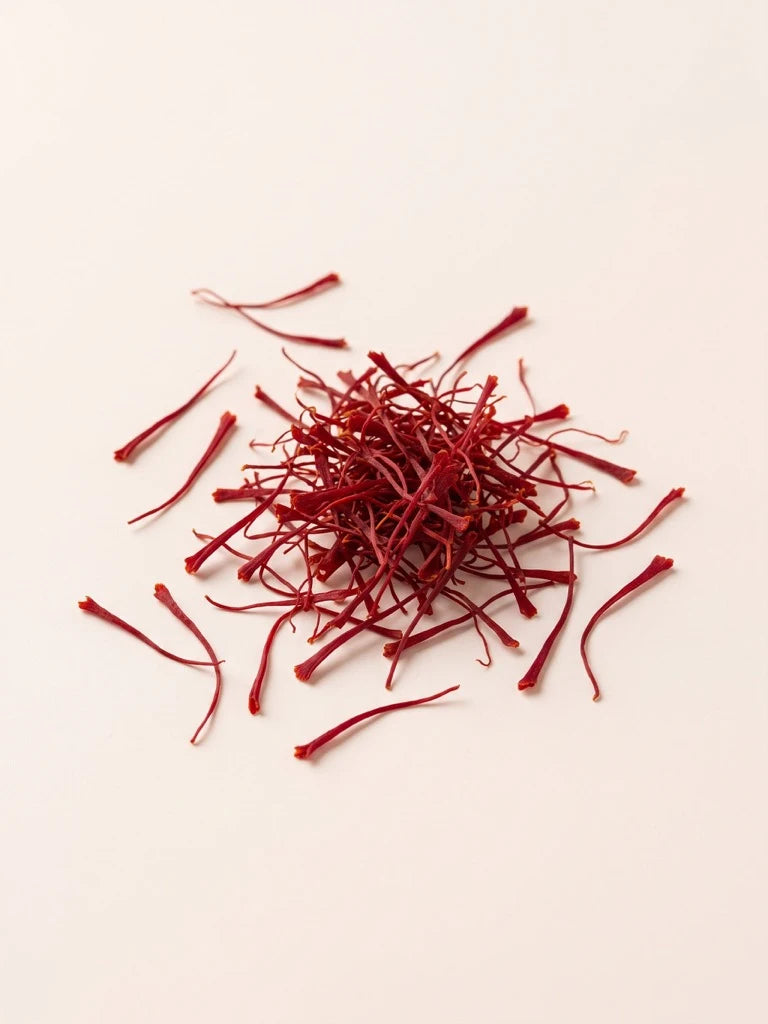
- Judge by the threads, not the date. Deep red, brittle, flaring at the tip, with a strong dry aroma when the jar is opened.
What the calendar really explains is why saffron is priced the way it is: an entire year of field work converted into product in three weeks. That argument is set out in full in why saffron is the most expensive spice, and the agronomy behind the cycle in how saffron is grown. For crop seasonality and harvest data generally, the US Department of Agriculture publishes the reference material for US-grown specialty crops, including small trial plantings of saffron.
Frequently asked questions
How long does the saffron harvest last?
Two to three weeks in most fields. Individual flowers last a single morning, and a field flushes in overlapping waves, so pickers walk the same rows every day for the length of the flowering period.
Is saffron harvested more than once a year?
No. Crocus sativus flowers once, in autumn. The rest of the year is dormancy, leaf growth and corm multiplication. A field can be picked daily during flowering, but there is only one crop per season.
What is the freshest time of year to buy saffron?
Roughly January to April in the northern hemisphere, once the autumn crop has been dried, graded, shipped and repacked. Late summer is the oldest point in the cycle, though well-stored saffron holds up well through it.
Does harvest timing affect quality?
Yes. Flowers picked at the start and end of the flush can differ from peak-season flowers, and a morning picked in rain or heat processes worse. What matters more is how quickly the stigmas were separated and dried after picking.