
Saffron Growing Regions of the World Compared
The world’s saffron growing regions plant the same crocus — climate, cutting and drying are what set them apart.
Read article →Field notes & recipes
Field notes from a saffron house: how to tell real saffron from dyed, what Super Negin actually means, the Afghan tea ritual, and the dishes worth spending threads on — qabuli pulao, sholeh zard, sheer yakh. Start with the saffron ritual, check our lab results, or go straight to the crystal collection.
The world’s saffron growing regions plant the same crocus — climate, cutting and drying are what set them apart.
Read article →
A dry summer, a cold winter and fast-draining alkaline soil are what make the Herat valley suit the saffron crocus.
Read article →
A month-by-month calendar of the saffron year in Herat, and what each stage means for anyone buying threads.
Read article →
Saffron sets no seed, flowers for a few autumn weeks and grows through winter. The full cycle from planting a corm to a dried...
Read article →From reading to tasting
Everything in the journal comes back to the same bottles: single-origin Herati Super Negin, single-origin and harvest-dated.
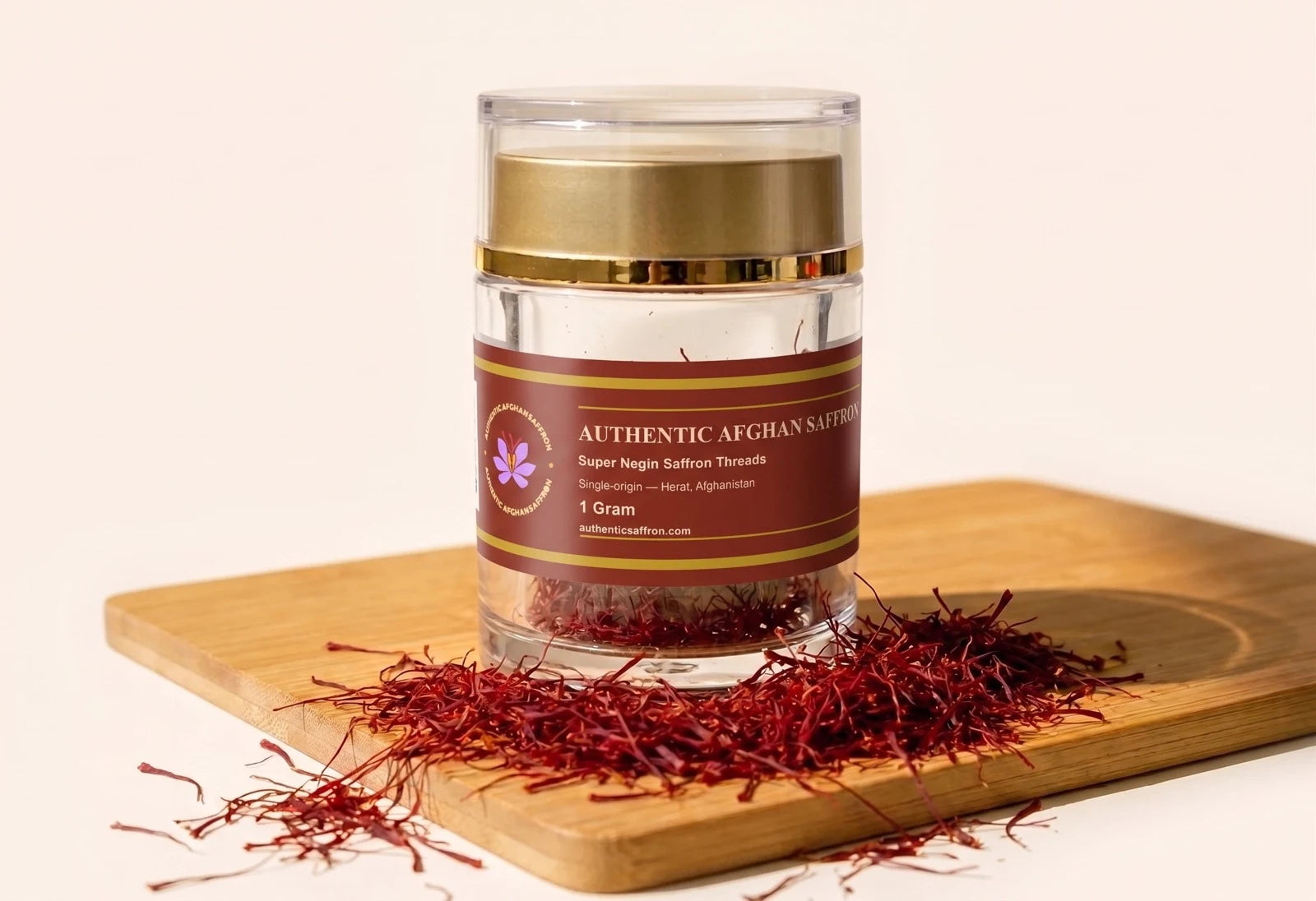
For giving
One gram of Super Negin in a crystal keepsake bottle. About 60 cups of tea.
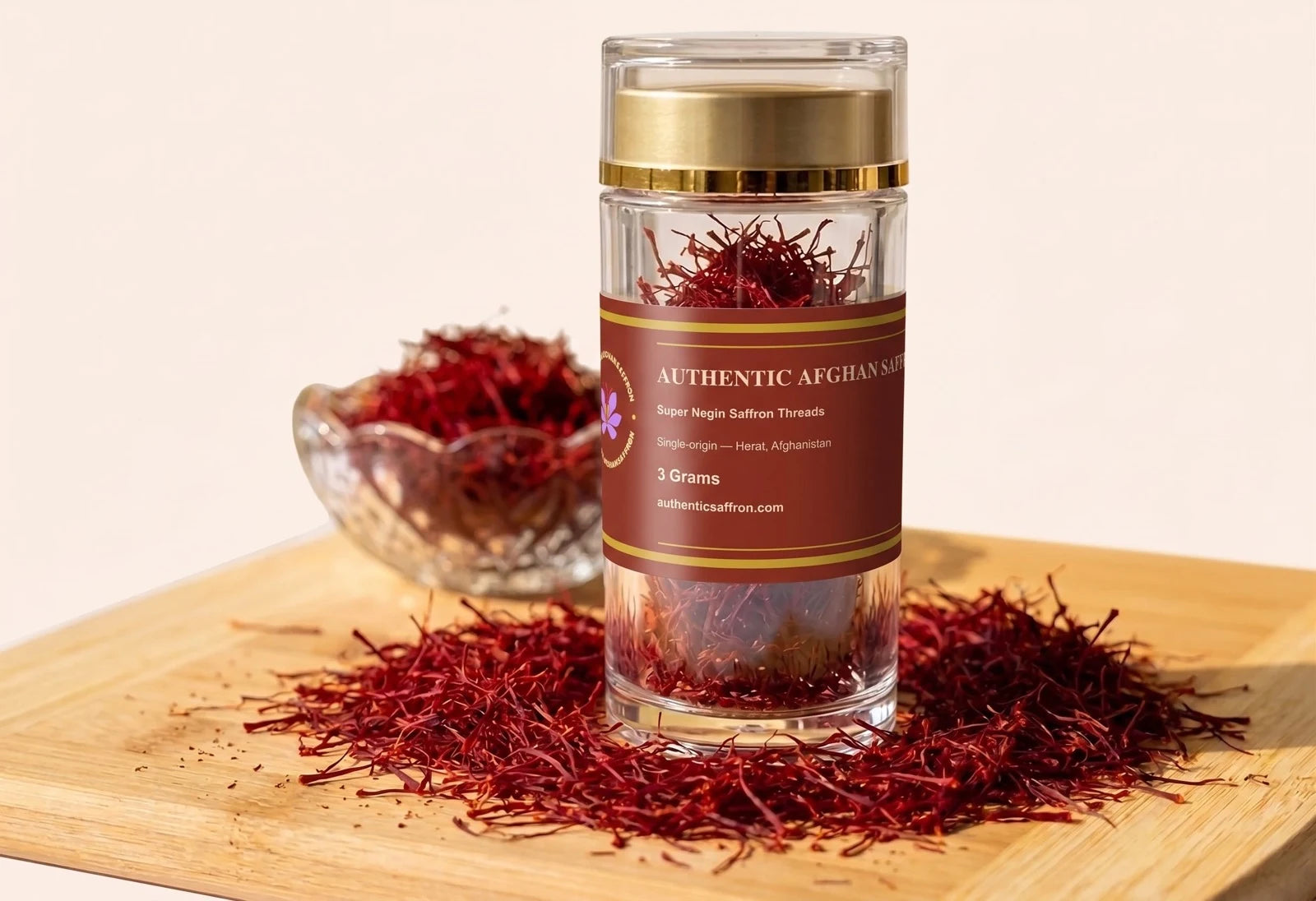
For the ritual
Two crystal bottles in a gold-foiled gift box — one to give, one to keep.
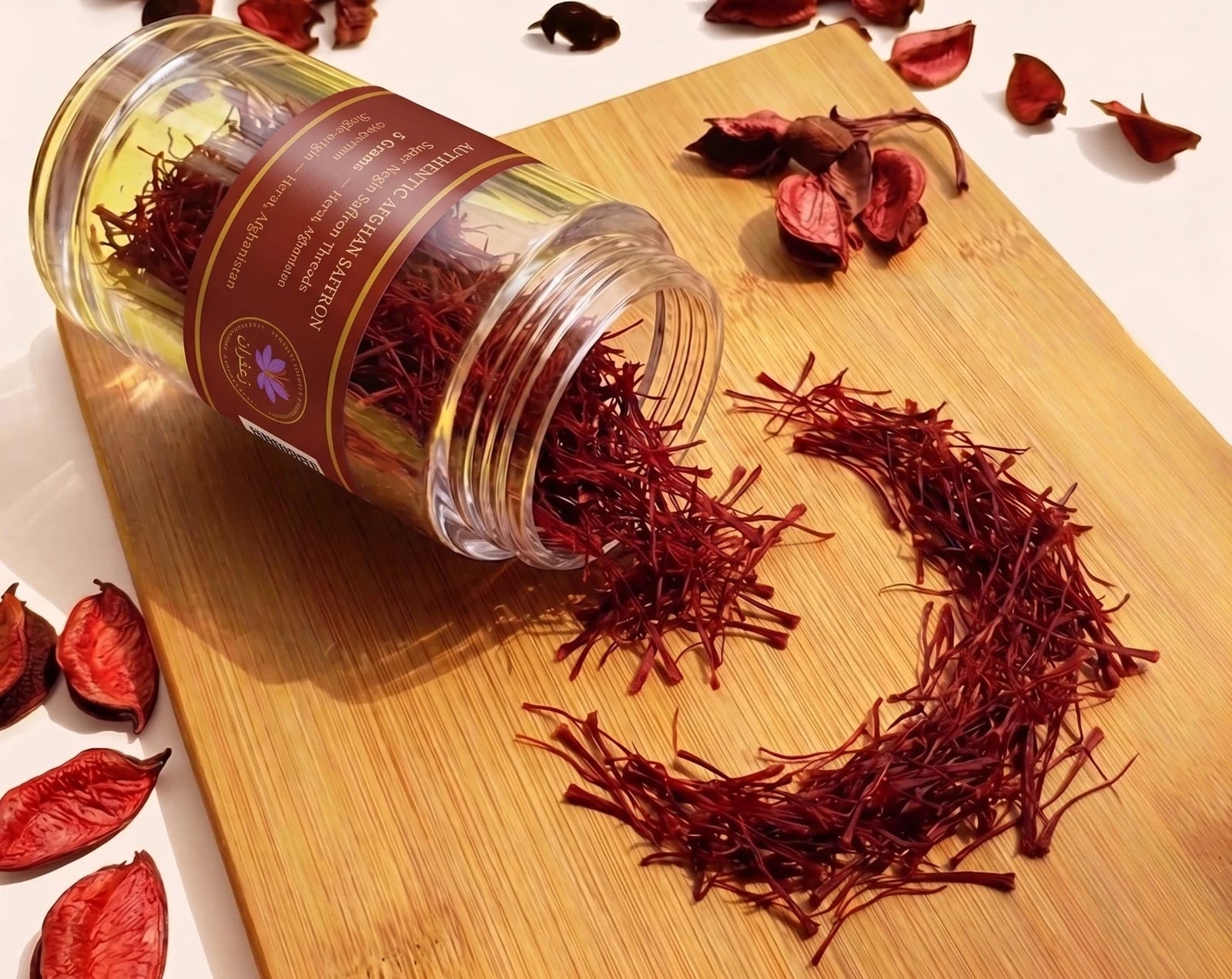
For the kitchen
For the kitchen that cooks with saffron, not around it.
Free U.S. shipping over $50 · Gift wrap and a handwritten card available
The Harvest List
Roughly one email a month: rituals, recipes, and first access to gift sets before Eid, Nowruz and the holidays. Plus 10% off your first order.