Saffron is grown commercially in a handful of dry, sunny, sharply seasonal places: Afghanistan’s Herat valley, La Mancha in Spain, the Kashmir plateau, Kozani in northern Greece, Taliouine in Morocco and a few protected pockets of Italy. The plant is the same everywhere. The soil, the drying and the cutting are what differ.
What actually differs from one saffron region to another?
Every one of the world’s saffron growing regions plants the same species, Crocus sativus, a sterile triploid that is propagated by splitting corms rather than by seed. There is no regional cultivar in the way there are regional grape varieties. What varies is everything around the plant.
Three variables do most of the work. Climate sets how vigorous the flowering is and how much aroma the stigmas develop. Cutting convention decides whether the yellow style stays attached to the red thread. Drying method — shade, warm air, gentle toasting, embers — shapes aroma more than most buyers realise, because the volatile compounds that carry saffron’s smell are formed and fixed during drying.
Two jars from the same region can therefore differ more than two jars from opposite ends of the map. Region is a useful starting filter. It is not a grade.
Which regions grow saffron commercially?
One producing country accounts for the large majority of world volume; the rest of the trade is spread across a small group of regions with long histories and modest output. These are the ones you will actually meet on a label.
Herat, Afghanistan
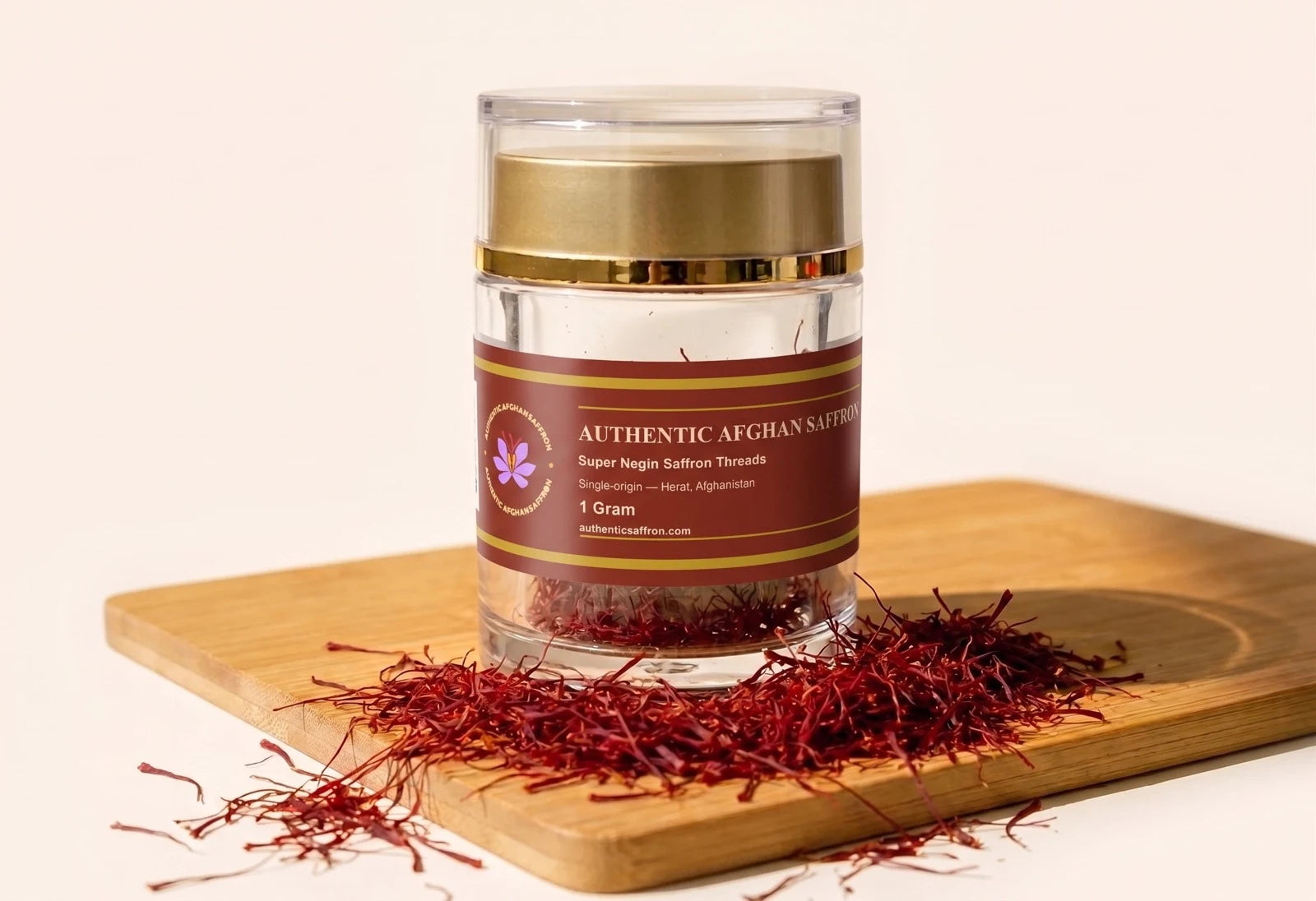
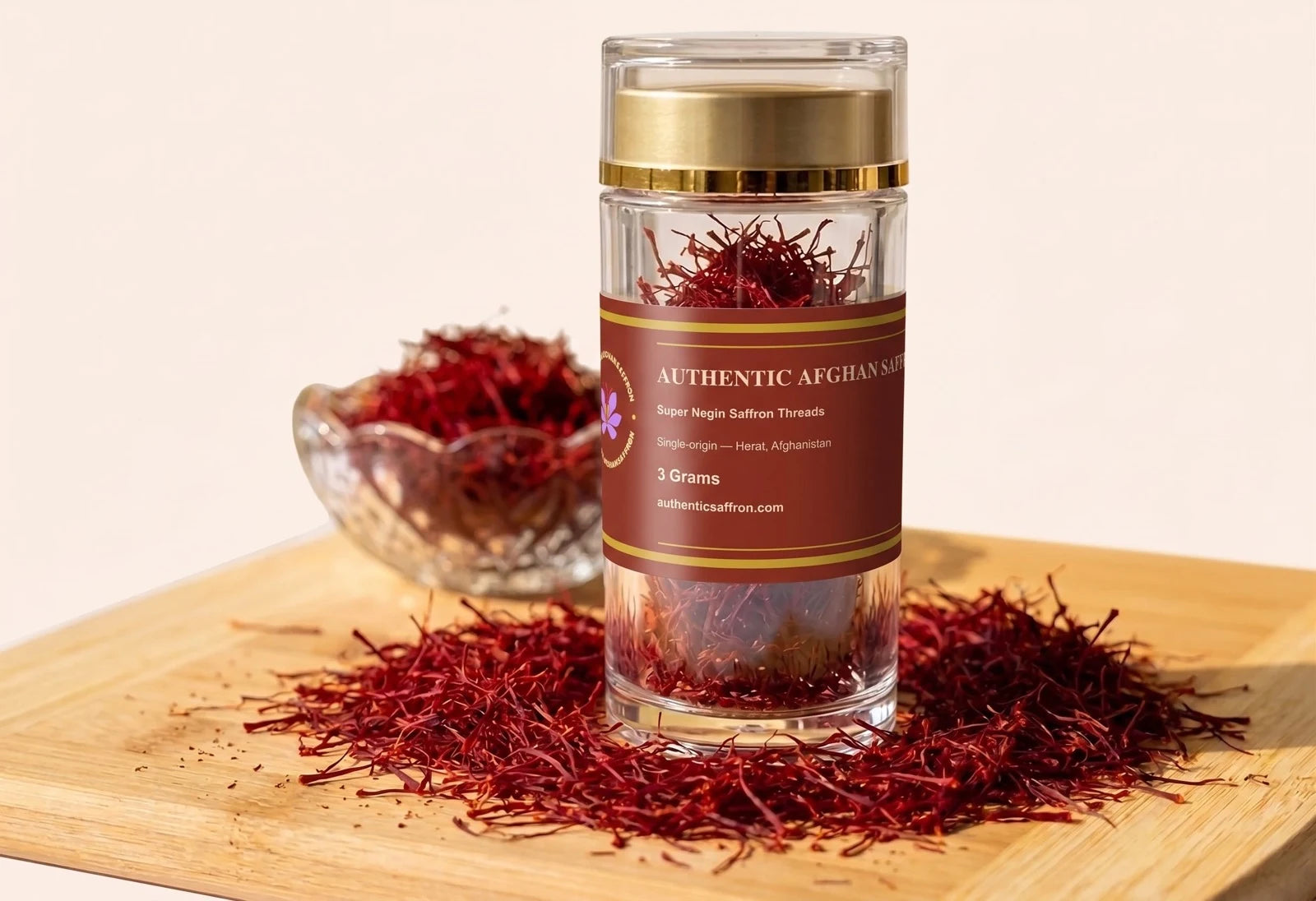
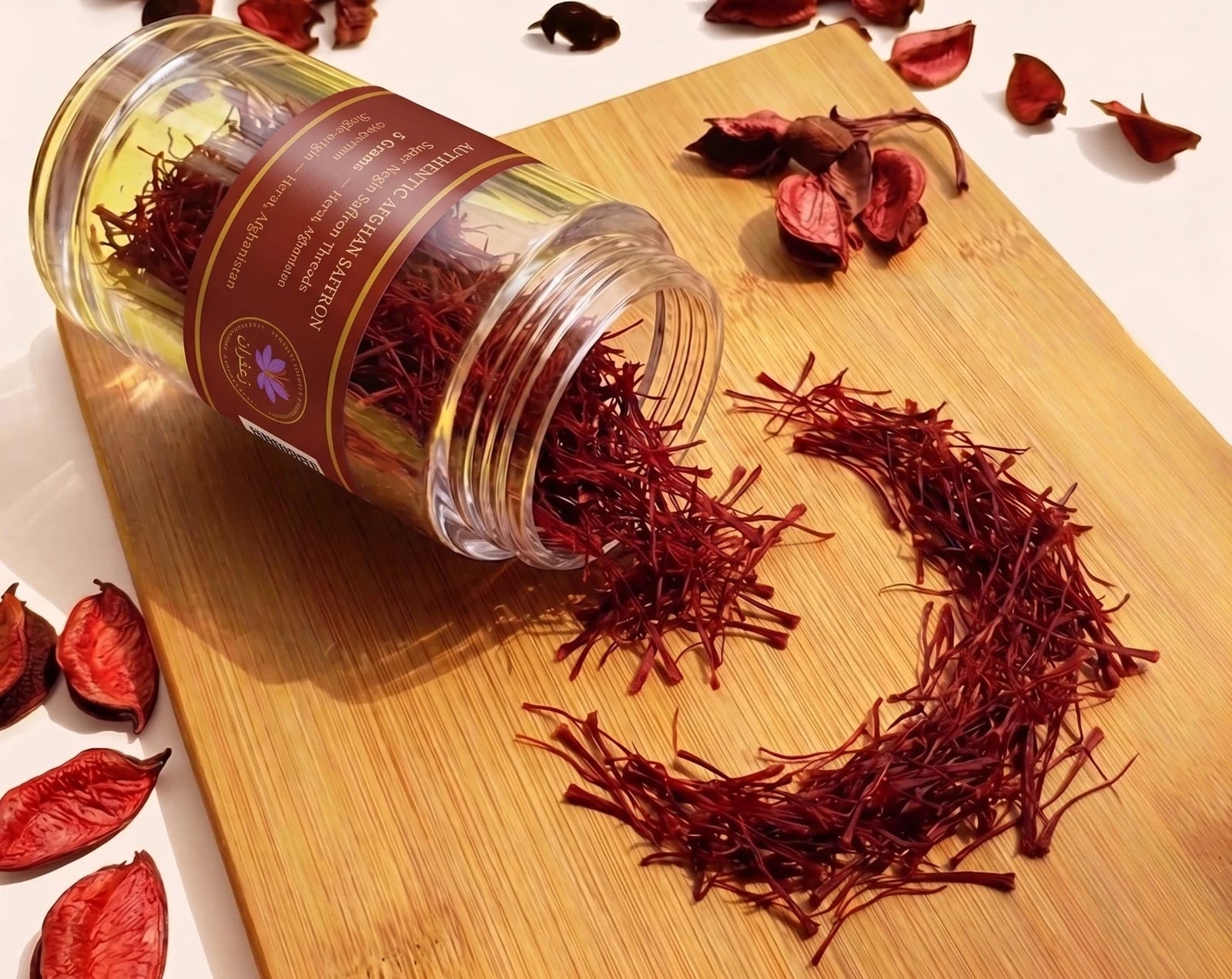
Western Afghanistan, on a high inland plain around 900 metres, with cold winters, a fiercely dry summer and a strong seasonal wind. Saffron spread widely here from the early 2000s as a replacement crop and is now a serious smallholder industry. Top grades are cut stigma-only, all red, and dried at low temperature. We explain the geography in detail in why we source from Herat.
La Mancha, Spain
A dry limestone plateau south of Madrid, with a protected designation of origin covering the region’s saffron. The Spanish signature is tostado: the stigmas are dried over gentle heat rather than in open shade, which gives a distinctly toasted, almost baked note in the aroma.
Kashmir, India
Grown on the elevated karewa terraces around Pampore, at high altitude and on a small, shrinking footprint. Kashmiri saffron carries a geographical indication and is traditionally sold in two forms: mongra, meaning stigma only, and lachha, where the yellow style stays attached. Real Kashmiri saffron is scarce and expensive, which is why so much of what is sold under the name is not from there — a problem we cover in Kashmiri saffron claims online.
Kozani, Greece
Northern Greece, around the town of Krokos, where a growers’ cooperative has controlled and marketed the crop for the better part of a century under a protected designation. Greek saffron is sold as red filaments and has a reputation for consistency rather than drama.
Taliouine, Morocco
The Anti-Atlas foothills in the south of the country, farmed in very small plots by cooperatives, largely shade dried. Moroccan saffron often reaches export markets through those cooperatives, and quality tracks how carefully each one works.
Abruzzo and Sardinia, Italy
Tiny volumes, protected-origin rules and famously high prices. The Abruzzo tradition dries stigmas gently over embers, and some Italian saffron is still sold ground rather than as threads, which is unusual elsewhere.
How do the saffron growing regions compare side by side?
The table below compares the working characteristics of each region rather than any quality ranking. Harvest windows shift by a week or two with the season.
| Region | Landscape | Typical harvest | Drying and cutting | Usual market form |
|---|---|---|---|---|
| Herat, Afghanistan | High inland plain, semi-arid | Late Oct – Nov | Low-temperature drying; all-red stigma-only for top grades | Whole threads |
| La Mancha, Spain | Dry limestone plateau | Late Oct – mid Nov | Gently toasted over heat | Whole threads, small tins |
| Kashmir, India | Elevated karewa terraces | Late Oct – early Nov | Sun and shade dried; mongra or lachha cut | Whole threads |
| Kozani, Greece | Upland northern plain | Late Oct – early Nov | Low-heat drying, cooperative controlled | Red filaments |
| Taliouine, Morocco | Anti-Atlas foothills | Late Oct – mid Nov | Mostly shade dried, smallholder cooperatives | Whole threads |
| Abruzzo & Sardinia, Italy | Mountain plains and valleys | Oct – Nov | Traditionally dried over embers | Threads and powder |
Notice what the regions share. All of them are dry in summer, cold enough in winter and moderate in autumn. The crocus wants a hot, dormant, rainless summer, then a cool damp autumn to trigger flowering. Places that cannot deliver that pattern do not grow saffron at scale, whatever their soil looks like.
Does region tell you quality?
Only loosely, and less than marketing suggests. A region tells you the likely style: toasted aroma from Spain, a cleaner floral profile from high dry plateaus, a heavier thread where the style is left on. It does not tell you the crop year, the drying discipline of one particular processor, or how long the jar sat under shop lights.
Three things matter more than the country name on the tin.
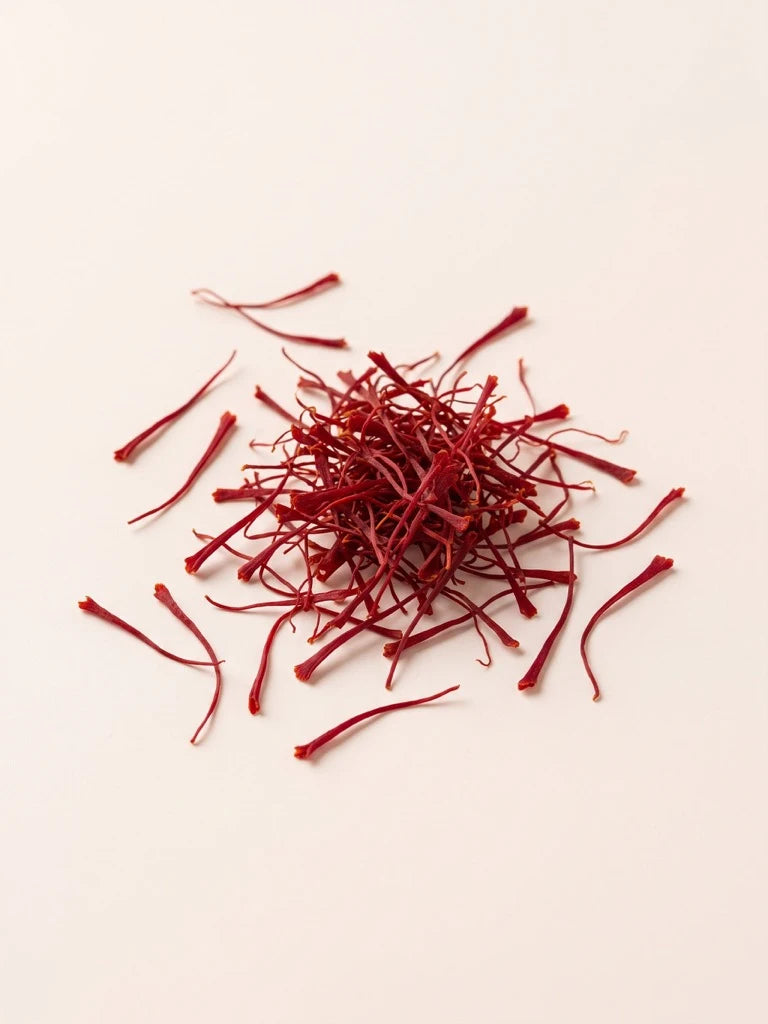
- Cut. All-red, stigma-only threads carry colour and aroma; attached yellow style adds weight and nothing else.
- Freshness. Saffron does not spoil, but it fades. Harvest year beats country of origin.
- Evidence. A seller who can name the valley, the season and the processing is telling you more than one who prints a flag.
For a direct head-to-head on the three names buyers most often weigh against each other, see our comparison of Afghan, Spanish and Kashmiri saffron.
How does regional saffron reach a US shelf?
Almost all saffron sold in the United States is imported; domestic production exists but is small and mostly experimental. Imported spices enter under the US Food and Drug Administration’s food import rules, which cover labelling, adulteration and the accuracy of what a package claims to contain.
That matters because origin is one of the easiest things to misstate. Saffron is light, high value and physically indistinguishable by eye once it is in a jar, so a thread grown in one region can be packed and sold as another with nothing visible to give it away. Ask sellers where the crop was grown, when it was harvested and who processed it. Our notes on buying saffron set out the questions worth asking.
Frequently asked questions
Which country produces the most saffron?
One producing country accounts for the large majority of global output, with Afghanistan, Spain, India, Greece, Morocco and Italy sharing a much smaller remainder. Volume and quality are separate questions, and the biggest producer is not automatically the best source for any given jar.
Is saffron grown in the United States?
Yes, but at a very small scale. There are grower trials and boutique plots in several states, and the harvest is sold locally at high prices. Effectively all supermarket and specialist saffron in the US is imported.
Does altitude make saffron better?
Altitude matters mainly through what it brings with it: cool nights, dry air and a sharp seasonal contrast. Those conditions suit the crocus. But a well-managed low plateau will beat a badly dried high-altitude crop every time.
Can you tell a saffron’s region by looking at it?
Not reliably. You can see thread length, colour uniformity and whether yellow style is attached, all of which hint at processing tradition. None of that proves geography, which is why documentation and a traceable supply chain matter more than appearance.