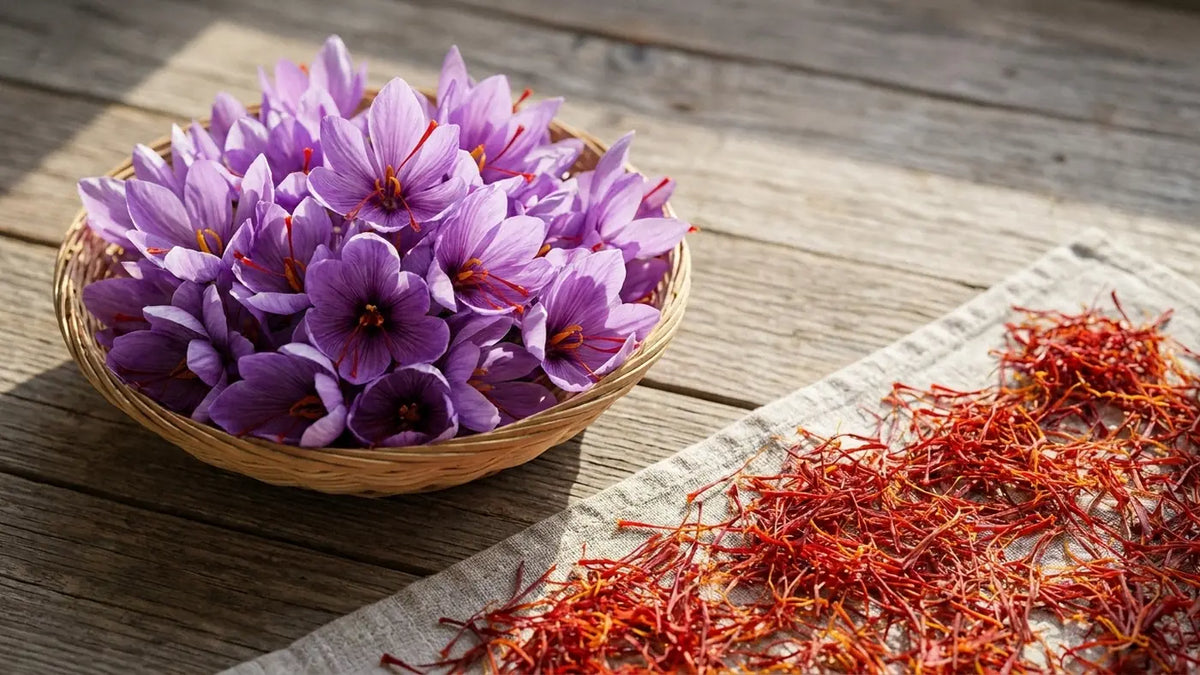
How saffron is grown comes down to one stubborn fact: Crocus sativus cannot reproduce from seed. Every plant is a division of an existing corm, planted by hand, flowering for a few autumn weeks. The three red stigmas inside each flower are the crop. Everything else in the field exists to produce them.
What kind of plant is saffron?
A small autumn-flowering crocus with a corm instead of a bulb — a solid, flattened stem base wrapped in fibrous tunics, roughly the size of a walnut when it is ready to plant.
It is a sterile triploid. It has three sets of chromosomes rather than two, its pollen and ovules do not pair up properly, and it sets no viable seed. Which means it has no wild population, no seed catalogue, and no conventional breeding programme. Every saffron field on earth is a clone of a clone, propagated by lifting corms and separating the small daughter corms that form each year on top of the spent parent.
That single quirk of biology shapes the entire crop. It caps how fast a grower can expand, it makes planting stock the largest capital cost in the field, and it is one reason saffron looks much the same in Herat as it does in La Mancha.
How are saffron corms planted?
In the dormant season, typically late spring through summer, into ground that has been ploughed deep and drains freely. Saffron wants light, well-drained soil and dislikes standing water more than it dislikes drought. Waterlogged corms rot, and the rot spreads.
Planting depth is usually somewhere around six to eight inches, deeper on light soils and in colder sites, shallower where the ground is heavy. Spacing varies enormously with local practice: dense rows for a quick return over three or four years, wider spacing where the field is meant to stay down for longer. A new field is normally given a full year before a serious harvest is expected.
After that the field regenerates itself. Each parent corm exhausts itself producing flowers and leaves, and forms several daughter corms above it. The population multiplies, crowds itself, and yields per corm start to fall. Somewhere between the fourth and seventh year, depending on soil and management, the grower lifts everything, sorts the corms by size, and starts again elsewhere.
What happens across the growing year?
Saffron runs on an inverted calendar. It is dormant through the summer heat, flowers in autumn, and does its growing through the winter, when almost nothing else in the field is awake.
| Season | Above ground | Below ground | What the grower does |
|---|---|---|---|
| Late spring | Leaves yellow and die back | Corm enters dormancy | Stop irrigating; plan lifting and replanting |
| Summer | Bare soil | Flower buds initiate inside the dormant corm | Lift, sort and plant corms; weed; keep the ground dry |
| Early autumn | Still bare | Roots emerge as soil cools | A first irrigation to trigger flowering |
| Flowering weeks | Flowers open at dawn, a few weeks only | Corm draws on stored reserves | Pick daily at first light; separate and dry the same day |
| Winter | Narrow grass-like leaves | Daughter corms build and fatten | Protect the leaves; weed; leave the field alone |
The winter leaves are the part outsiders overlook. Nothing is harvested from them, but they are the whole engine of next year’s crop: they photosynthesise through the cold months and pack the daughter corms with the reserves that will become flowers twelve months later. Grazing them, cutting them or losing them to disease costs the following harvest, not this one.
How is saffron harvested?
By hand, at dawn, one flower at a time. Flowers open with the light and begin to wilt within hours, and stigmas exposed to sun and warmth start losing aroma immediately. So picking happens in the cold hour after first light, the whole flower is snapped off at the base and dropped into a basket, and the field is walked again the next morning, and the morning after that.
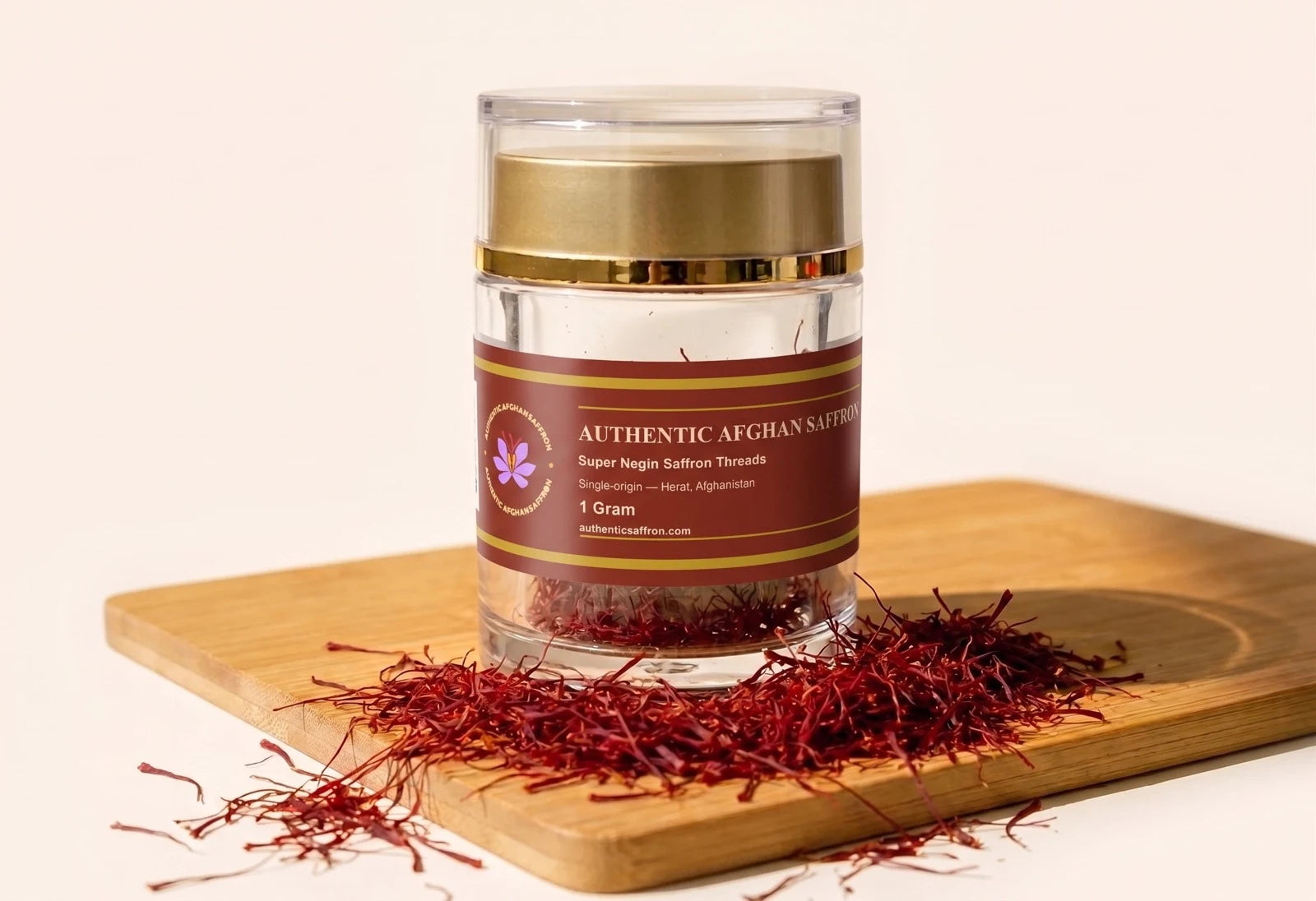
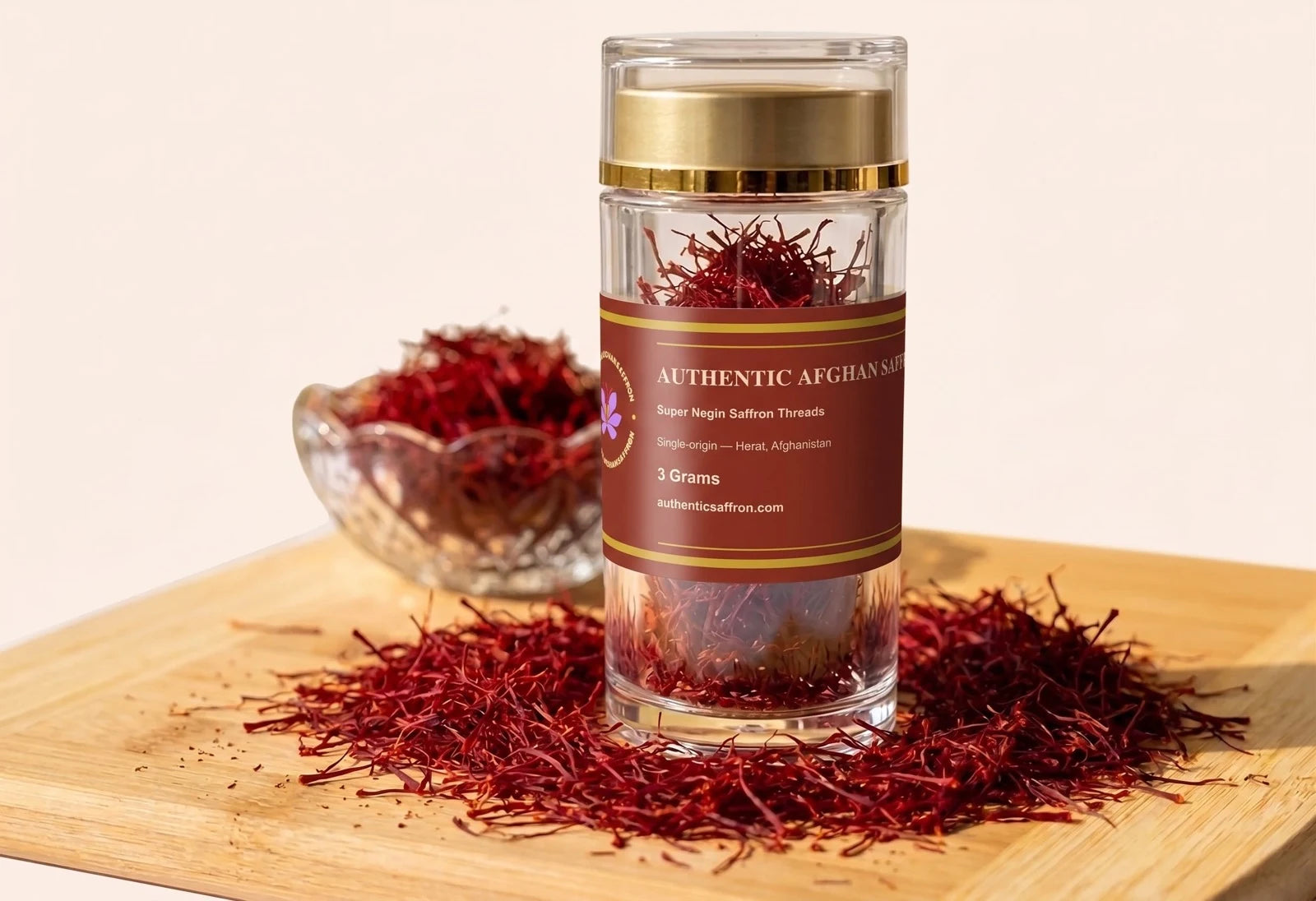
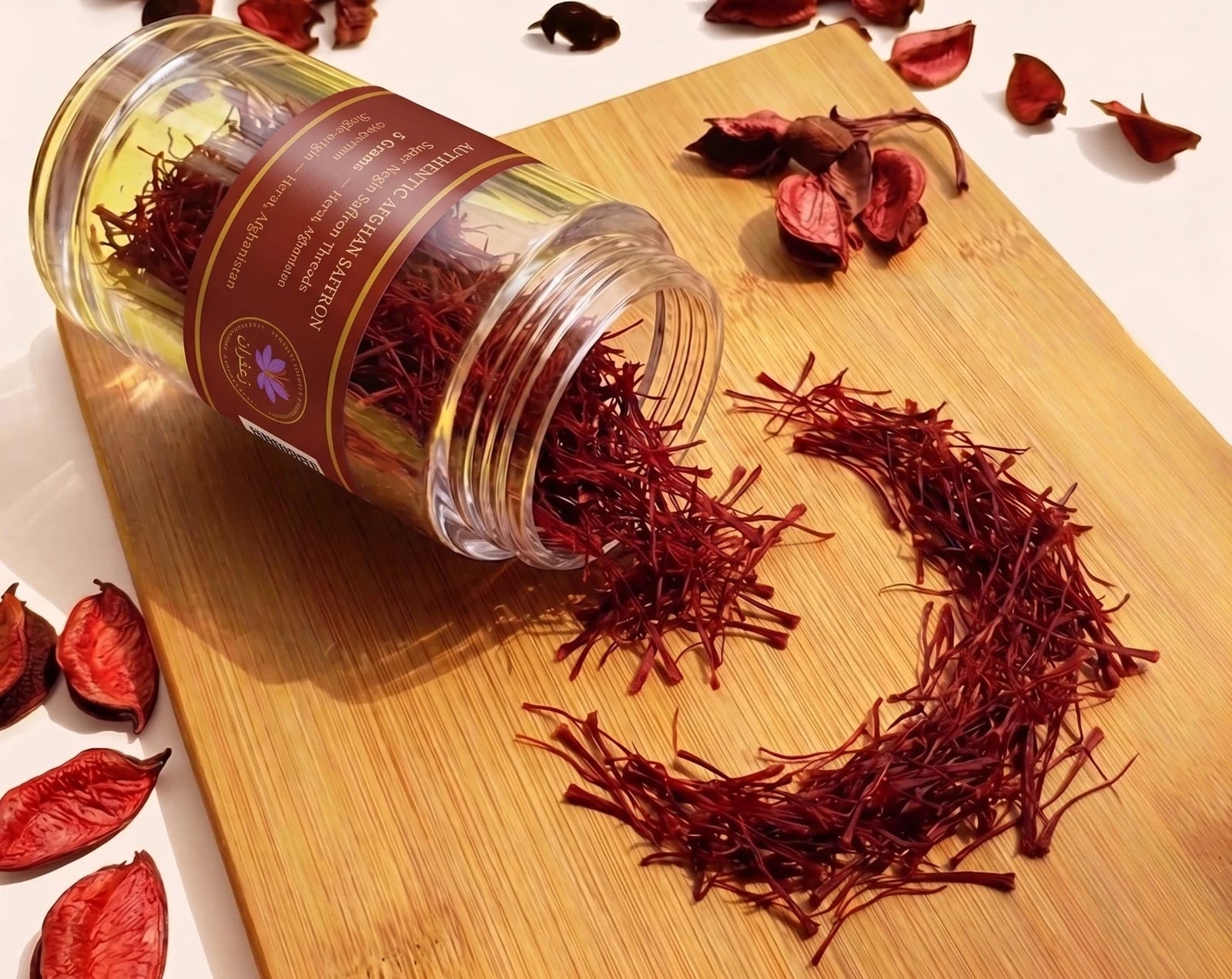
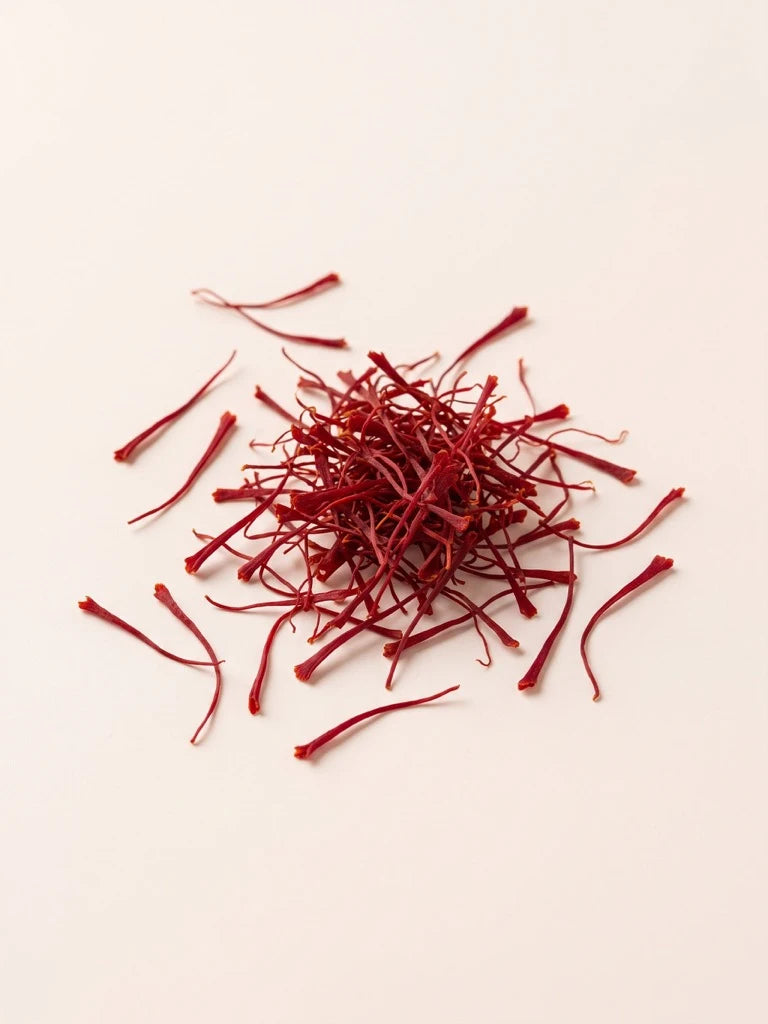
Back indoors, the flowers are opened and the three red stigmas pulled out, usually still joined at the base into a small Y. This is the slowest job in saffron and the one that decides quality. How much of the pale style is left attached, how quickly the work is done, and how carefully the threads are kept apart all show up in the final product. Our account of the Herat harvest follows a single morning through this sequence.
What does drying actually do?
More than it looks. A fresh stigma is limp and mild. Most of what people recognise as saffron — the hay-and-honey aroma, the deep red rigidity, the trumpet shape that flares at the tip — is created during drying.
The chemistry is straightforward. Picrocrocin, the bitter compound in the fresh stigma, breaks down under gentle heat and releases safranal, the volatile that gives saffron its smell. Too little heat and the threads dry slowly, mould, or stay pale. Too much and the safranal simply leaves. Traditional practice is a shaded, ventilated space over a day or two; industrial practice is a low-temperature dryer over a few hours. Both work. Both fail if rushed.
Stigmas lose the large majority of their weight in drying — roughly five parts fresh to one part dry is a common working figure, and it moves with the season and the thread size. Whatever the ratio, the threads must come out dry enough to snap rather than bend, because residual moisture shortens shelf life and, at scale, becomes something a buyer pays for. Once dried, keep them cool, dark and sealed; our note on storing saffron covers the details.
Why is the yield so small?
Because the harvestable part of the plant is three threads weighing a couple of milligrams each. It takes roughly 150 flowers to make one gram of dried saffron — about 450 stigmas — and that gram represents 150 individual flowers picked, carried, opened and stripped by hand.
Yield per acre depends on corm size and density, soil, water and the age of the planting, and it varies enough between fields and years that a single figure would be misleading. Research on specialty crop production and soils in the US is published through the US Department of Agriculture, including trial work on saffron as a small-farm crop. The arithmetic behind the flower count is set out in more detail in how many flowers go into a gram, and the reasons Herat suits the plant are on our Herat page.
Frequently asked questions
Can you grow saffron from seed?
No. Crocus sativus is a sterile triploid and sets no viable seed. It is propagated only by dividing corms, which is why planting stock is the main constraint on how quickly any grower can expand.
How long does a saffron field stay productive?
Commonly four to seven years. The corms multiply each season until the planting becomes crowded and yield per corm falls, at which point the grower lifts the corms, grades them by size and replants in fresh ground.
Why must saffron be picked in the morning?
Flowers open at first light and begin to wilt within hours. Sun and warmth degrade the aromatic compounds in the exposed stigmas, so picking early and processing the same day protects both aroma and colour.
Does the saffron flower have any other use?
The petals and the yellow stamens are edible but carry almost none of the colour or aroma, and the pale style adds weight without value. In some places petals are used for dye or animal feed. For the buyer, the important point is that only the red stigma is saffron.