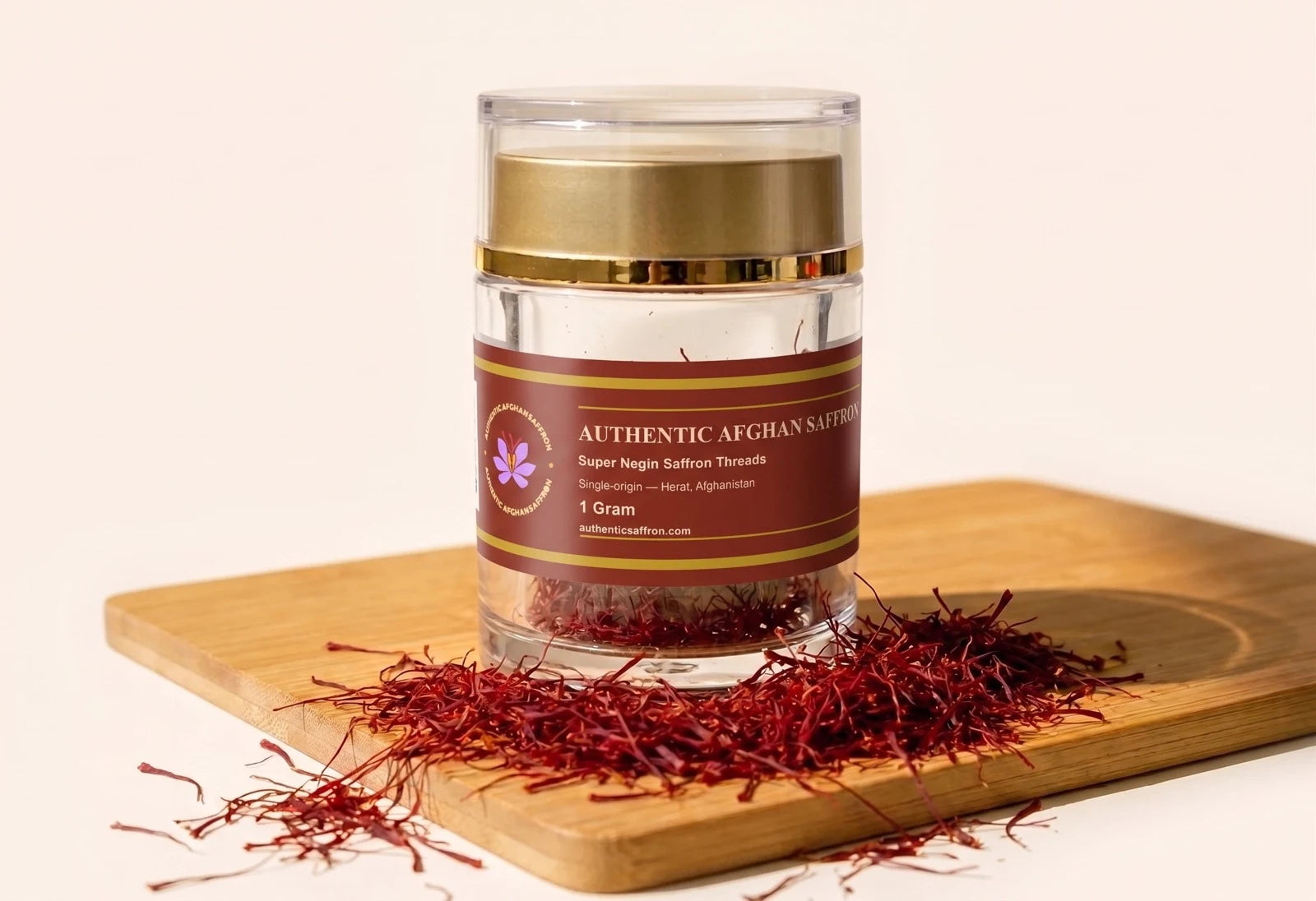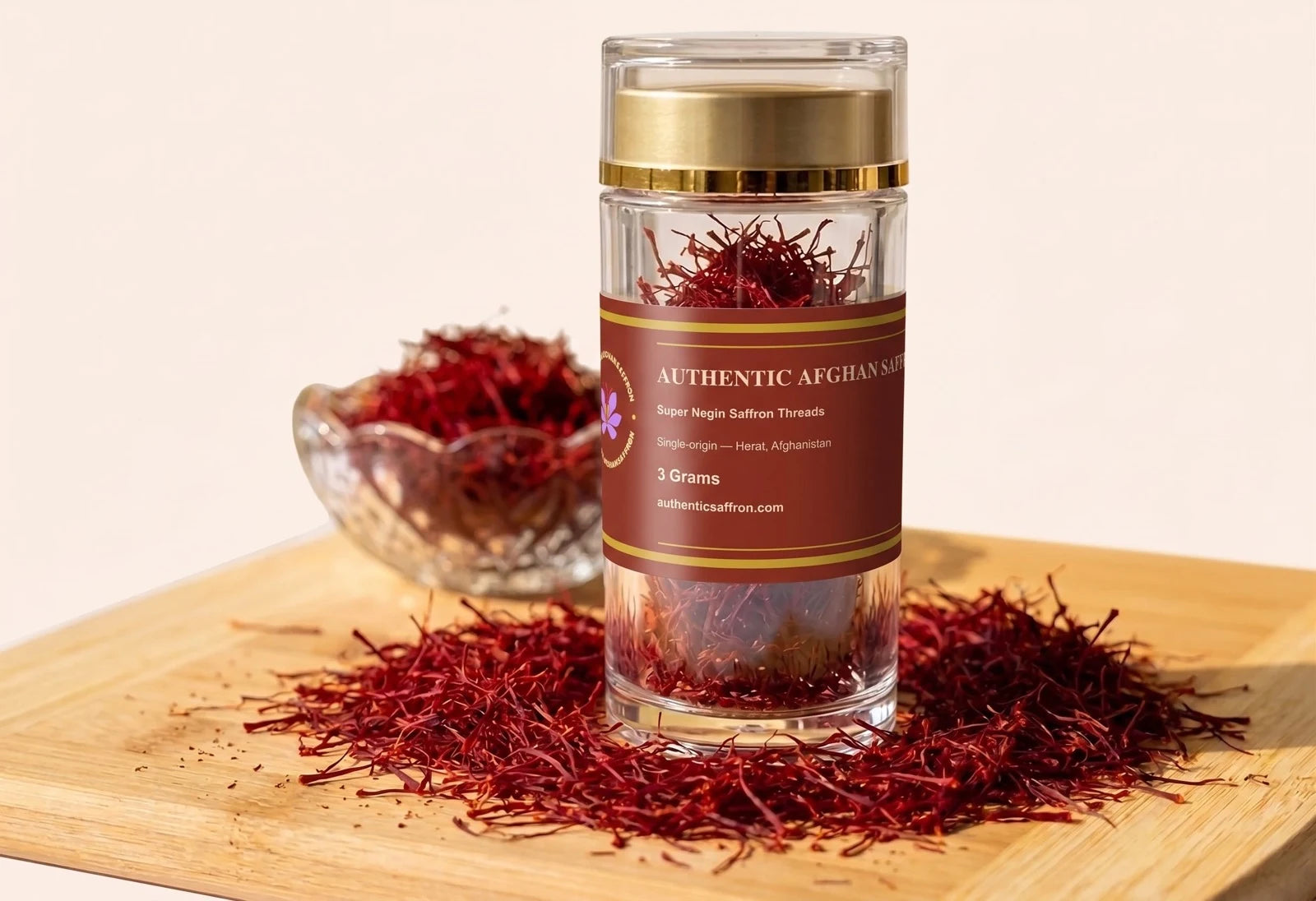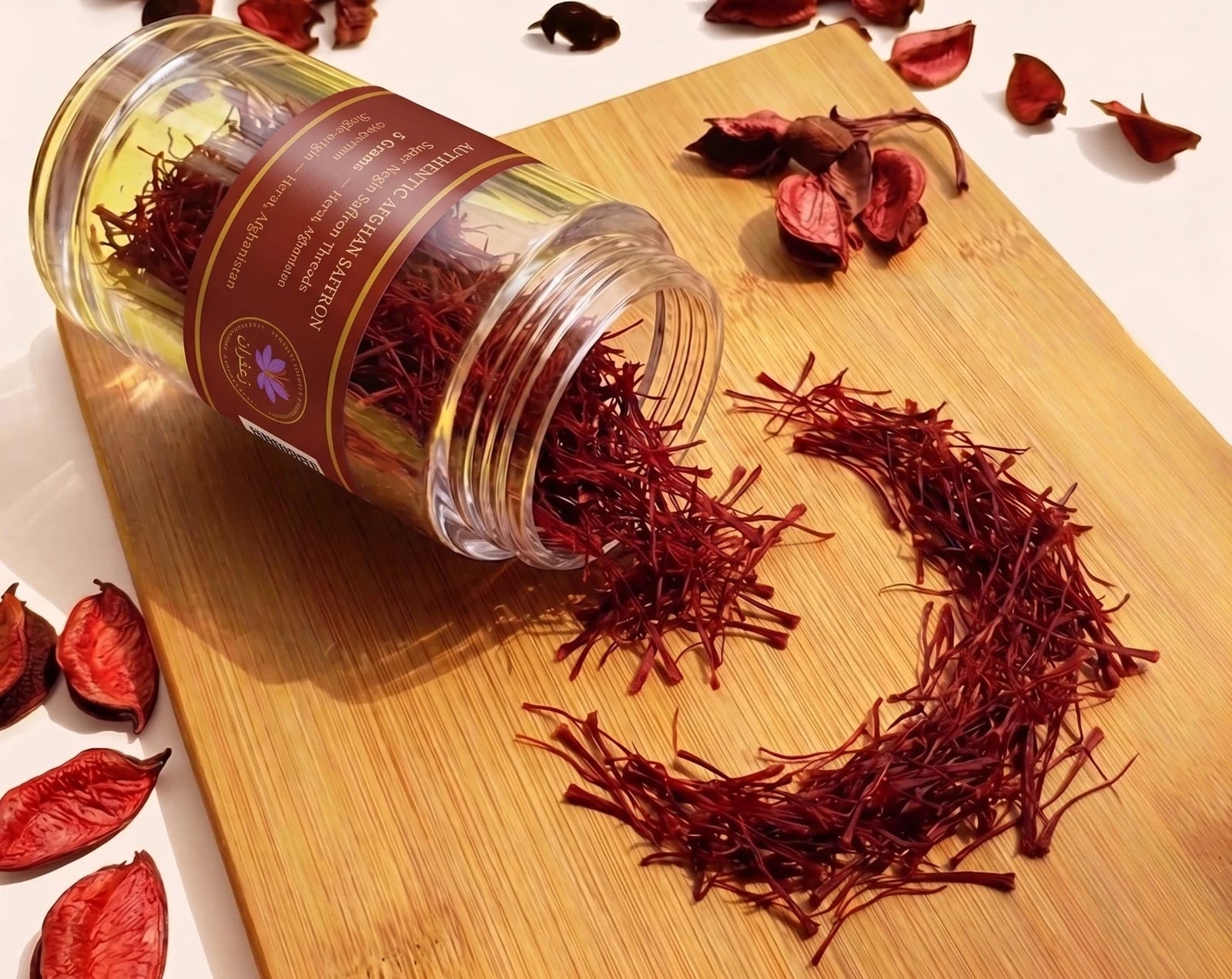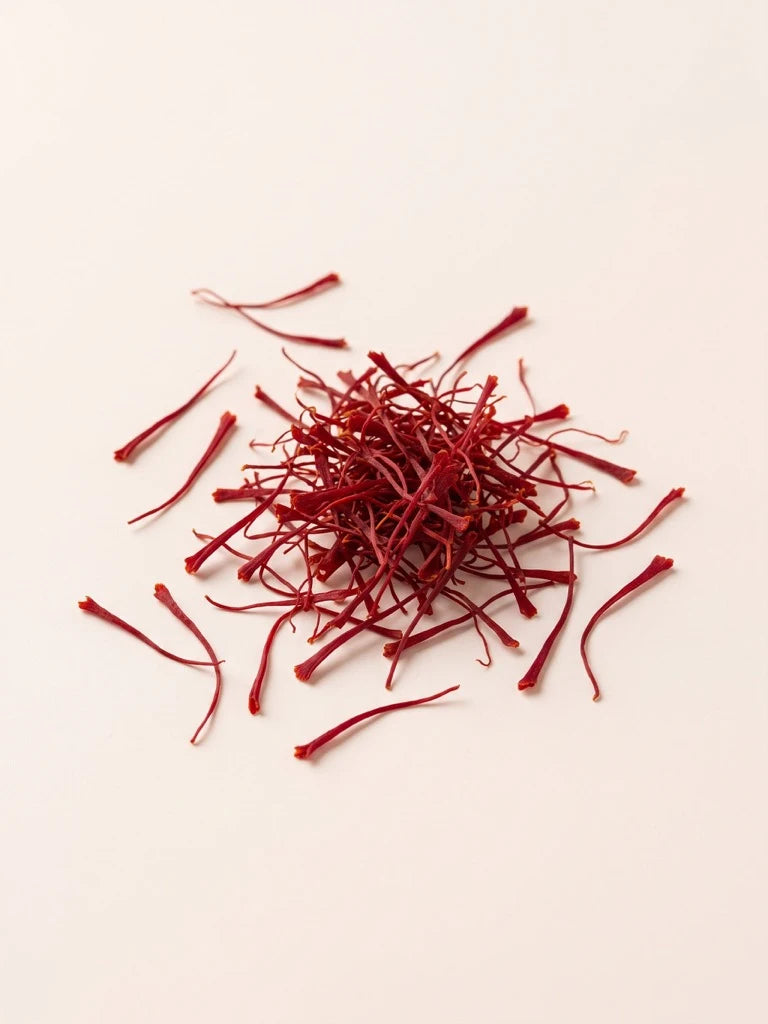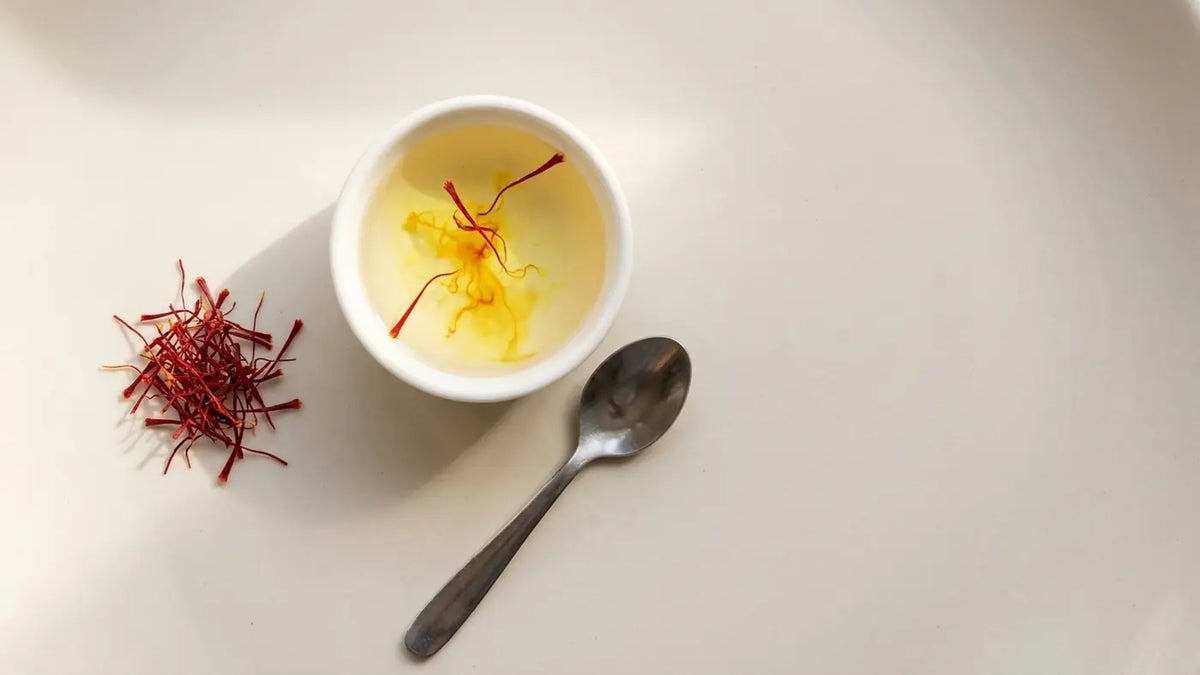
Water is the default, and for good reason: crocin, the pigment that carries saffron colour, is water-soluble. Warm water at about 150°F (65°C) for 10 to 20 minutes pulls out most of what a thread has. Milk, broth and alcohol each change the result. This is how to bloom saffron in all four, and when each is worth choosing.
What is actually happening when saffron blooms?
Blooming is extraction. A dried stigma holds its active compounds inside cell structures that need liquid, warmth and time to open up. Three things come out, at different speeds and into different solvents.
Crocins are glycosides — sugar-bound pigments — which is why they are so readily water-soluble and why the international method for measuring saffron colour reads an aqueous extract at 440nm. Picrocrocin, the bitter principle, is likewise water-soluble and comes out early. Safranal, the aroma compound, is volatile and only sparingly soluble in water; it is the one you lose to steam and the one a fat or an alcohol will hold on to better.
That split is the whole argument. Choose your liquid according to whether you are chasing colour, aroma, or both. The measurement side of it is set out in ISO 3632, listed in the ISO catalogue, and we unpack the numbers in what E1%1cm means.
Which blooming liquid should you use?
| Liquid | Pulls out best | Temperature | Steep time | Use it for |
|---|---|---|---|---|
| Water | Colour and bitterness | 150°F / 65°C | 10–20 min | Rice, paella, soups, anything where colour leads |
| Milk or cream | Aroma, held by the fat | 150°F / 65°C | 20–30 min | Custards, ice cream, firni, bread doughs, saffron milk |
| Broth or stock | Colour, plus salt-carried savour | 150°F / 65°C | 15–20 min | Risotto, braises, pilafs built on stock |
| Neutral spirit or wine | Broadest range, aroma included | Room temperature | 30 min to several hours | Cocktails, syrups, poaching liquids, finishing splashes |
| Oil or melted butter | Very little on its own | Warm, never sizzling | Poor at any duration | Only after a water bloom — not as the first step |
The last row is the one worth memorising. Pouring threads straight into hot oil is a common instinct and a poor one: the pigments you most want are water-loving, and dry fat gives them nothing to dissolve into while the heat drives the aroma off. Bloom in water first, then stir the infusion into the fat.
Is plain water always the safe choice?
Close to it. Water is neutral, cheap, and it extracts the pigment that most dishes are asking saffron for. It also lets you see what you have: a good bloom in a clear glass deepens from pale yellow to amber over ten minutes while the threads themselves stay stubbornly red. That visual is the basis of the cold water test.
The one caveat is hard water. Very mineral-heavy tap water can dull the final colour slightly. If your water leaves a chalk ring in the kettle, use filtered or bottled water for the bloom. The volume is small enough that it costs nothing.
What does milk do that water cannot?
It keeps the perfume in the bowl. Volatile aroma compounds partition into fat, so a milk or cream infusion releases them more slowly into the air and more of them survive to the table. That is why saffron milk smells so much more strongly of saffron than a water bloom of the same amount, even though the colour looks softer.
Softer is the trade. Milk proteins and fat scatter light, so the same threads produce a pale gold rather than a clear amber. For a custard or an ice cream that is exactly right. For rice, where you want the colour to read, water is the better carrier. Warm the milk to the same 150°F (65°C), hold it off the heat, and give it a little longer — 20 to 30 minutes — because extraction into a fattier liquid is slower to start.
Should you bloom saffron in broth or stock?
Yes, for any dish that is already built on stock. Broth is mostly water, so the colour extraction behaves much as it does in plain water, and you get a small bonus: the salt and dissolved savoury compounds carry saffron flavour into the dish more evenly than a separate splash of infusion would.
Two practical rules. Ladle out a small amount of warm stock rather than dropping threads into a simmering pot — a simmer is well above the temperature saffron wants, and the volatile aroma leaves with the steam. And use unsalted or low-sodium stock if you are blooming a lot of it, because reducing a salted infusion later concentrates the salt long before it concentrates the saffron.
Does alcohol extract more from saffron?
It extracts differently, and in some ways more broadly. Ethanol is a solvent for both polar and less-polar compounds, so a spirit infusion picks up aroma fractions that water leaves behind. It also works at room temperature, which means no heat loss at all — a saffron vodka or a saffron syrup base left on the counter for a few hours can smell remarkable.
The limits are practical rather than chemical:
- Alcohol is slow. Plan hours, not minutes.
- Anything you then boil hard will lose both the alcohol and much of the aroma it was carrying.
- The infusion is strongly flavoured by the spirit itself, so it belongs in drinks, syrups and poaching liquids rather than in a plain rice.
Wine is a middle case: enough water to move the pigment, enough ethanol to help with aroma, and its own acidity to consider. It suits poached fruit and braises.
How hot should the blooming liquid be?
Warm enough to open the tissue, cool enough to keep the aroma. Around 150°F (65°C) is the target across every liquid here — hot to the finger but a long way below a simmer. Boiling water strips volatile safranal off as steam within seconds, which is why a bloom that smelled wonderful in the mug can taste flat in the pot. We make the case at length in warm water, not hot.
Cold blooming also works if you have time. Room-temperature water over several hours in the refrigerator gives excellent colour and holds aroma well; it simply needs planning. Step-by-step timings for each approach are in our guide to blooming saffron.
Frequently asked questions
Can you bloom saffron in cold water?
Yes. Cold or room-temperature water extracts colour very well given several hours, and it loses less aroma than a warm bloom does. It only fails when you are in a hurry, since ten minutes in cold water will not do what ten minutes at 150°F (65°C) does.
Is milk better than water for blooming saffron?
Better for aroma, worse for colour. Fat holds volatile compounds so a milk infusion smells stronger, but milk proteins scatter light and the resulting colour reads paler. Use milk for custards, ice cream and doughs, and water for rice and stews.
Why should you not bloom saffron in hot oil?
Because the compounds that give saffron its colour are water-soluble and will not move into dry fat, while the heat of the oil drives off the volatile aroma. Bloom the threads in warm water first, then stir that infusion into the oil or butter.
How long should saffron steep?
Ten to twenty minutes in warm water, twenty to thirty in milk, and at least half an hour — often several hours — in a spirit at room temperature. Longer does no harm; the infusion simply stops getting darker once extraction is complete.