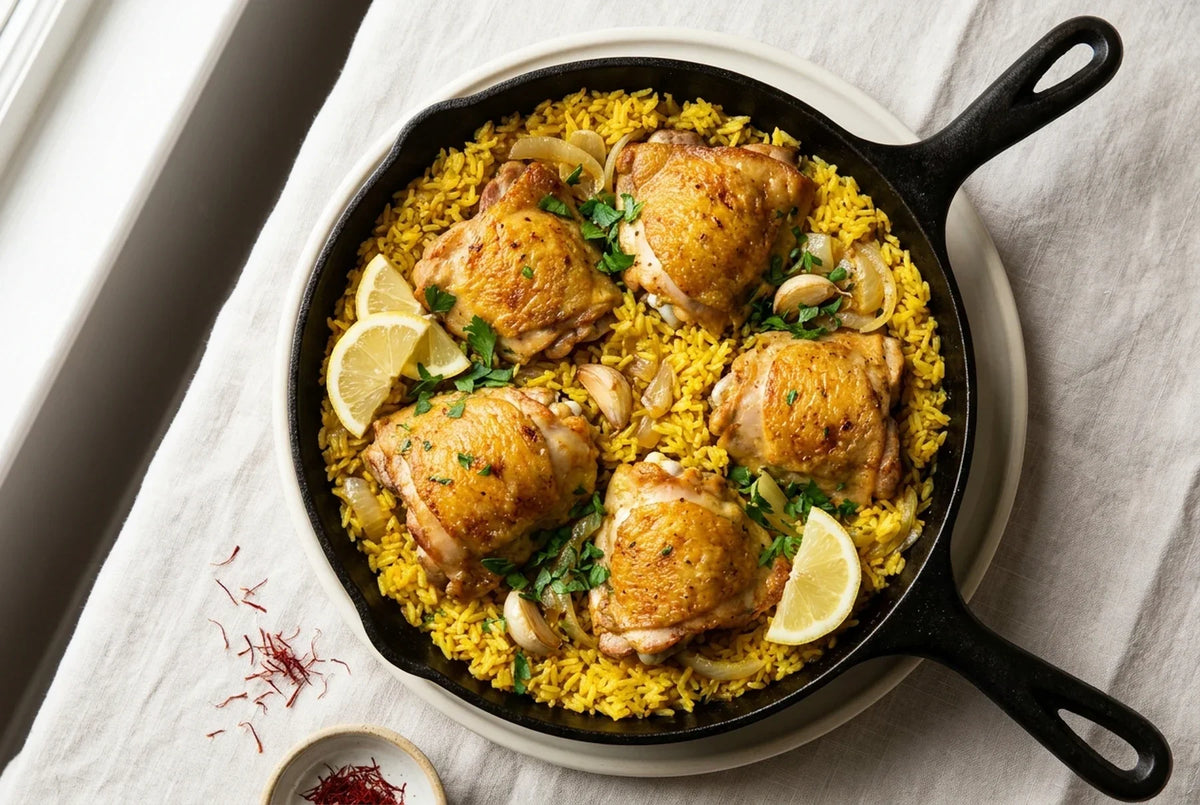
Saffron chicken and rice holds together in one pan if you do three things in order: brown bone-in thighs skin-down until the fat renders, cook the rice in that fat, and add bloomed saffron with the stock rather than at the end. Thirty threads, roughly 0.12 g, is right for six.
Why brown the chicken first?
Skin-on thighs laid skin-down in a dry, hot pan release two things you cannot buy: rendered fat and a layer of browned solids stuck to the metal. The rice then toasts in that fat and lifts those solids off the base when the stock goes in. Skip the browning and you are effectively boiling chicken on top of plain rice.
Thighs rather than breast, and bone-in rather than boneless, because the rice needs 18 minutes of covered time. Breast meat is dry at 12. Bones also give the stock enough body that you do not need to reach for anything from a carton.
Saffron enters with the liquid, not at the finish. Its pigment is water-soluble, so it needs a volume of liquid and time to travel. Stirred in at the end it colours the top inch and nothing beneath.
How many saffron threads, and bloomed in what?
Thirty threads, about 0.12 g, for six servings. That is a little more than plain saffron rice needs, because chicken fat, onion and stock all compete for attention. Under twenty threads in a pan this size and the saffron simply disappears.
Bloom them in warm stock rather than water — you are adding the liquid to the pot anyway, so you may as well make it work twice. Warm a quarter cup of the stock to about 150°F (65°C), crush the threads into it, and leave for 20 minutes while you prep the onion and garlic. Never boil the bloom. Heat above roughly 175°F starts driving off safranal, the compound behind the hay-and-honey aroma.
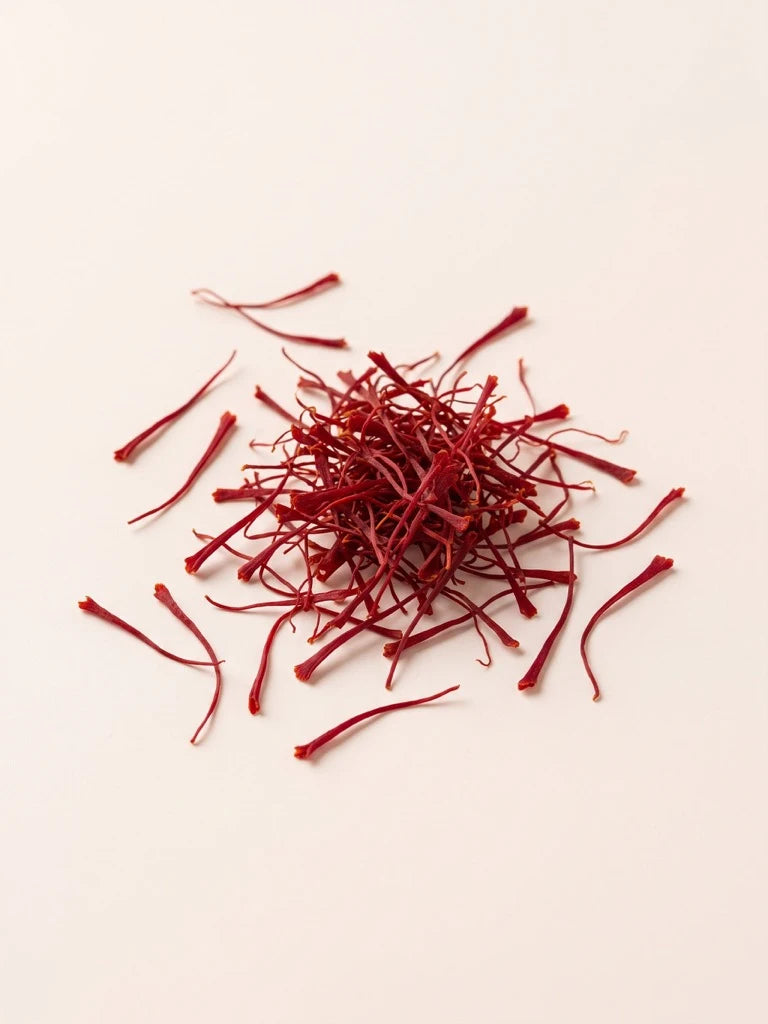
The bloomed liquid should be dense orange, opaque against the side of the cup. Pour it in threads and all. For other dishes, use the quantity listed in that recipe; cooking with saffron covers the technique behind it.
What goes in the pan?
Serves six. You need a 12-inch skillet or shallow casserole with a lid — wide matters more than deep, because the rice should sit no more than an inch thick.
- 6 bone-in, skin-on chicken thighs (about 2¼ lb / 1 kg)
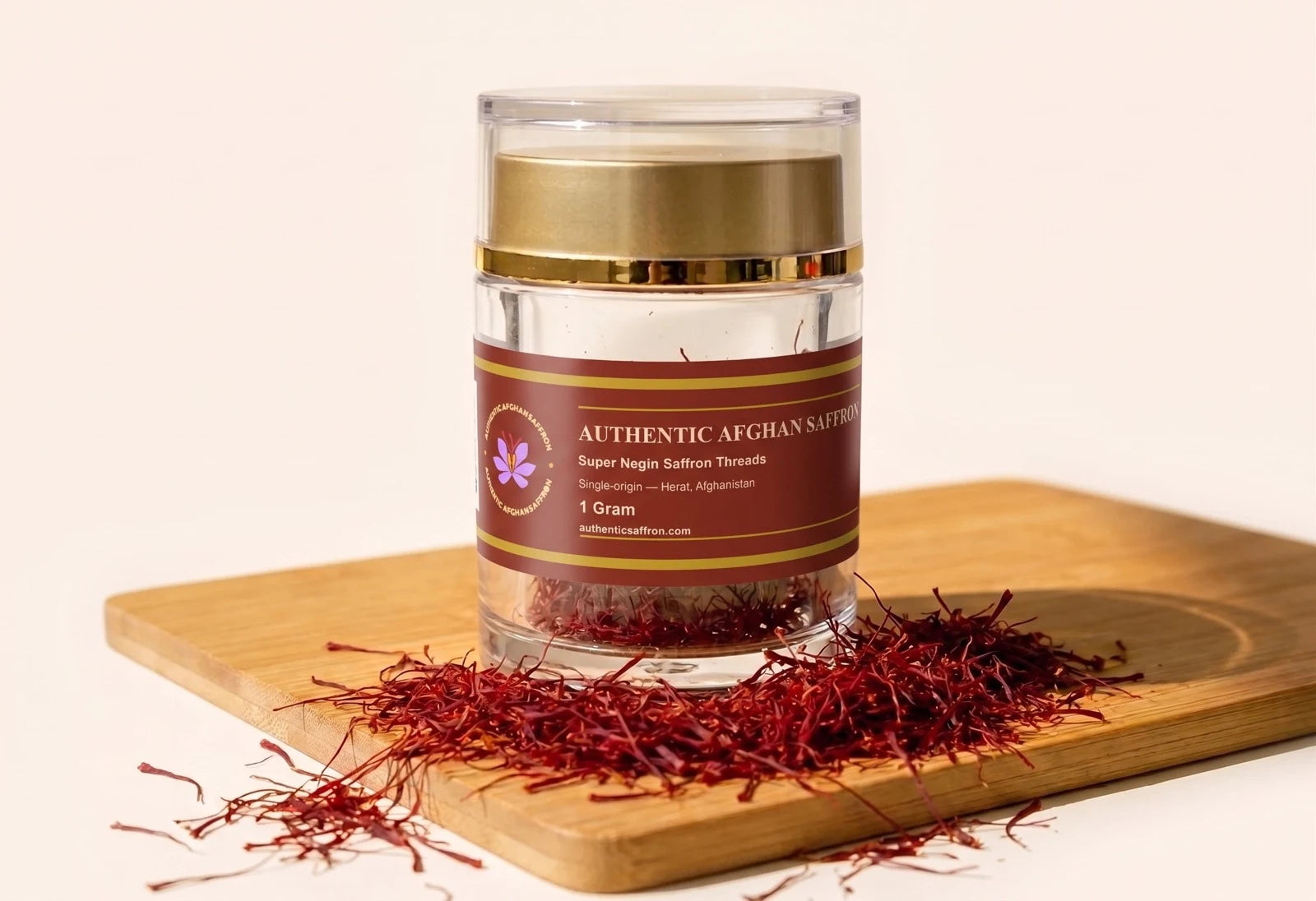
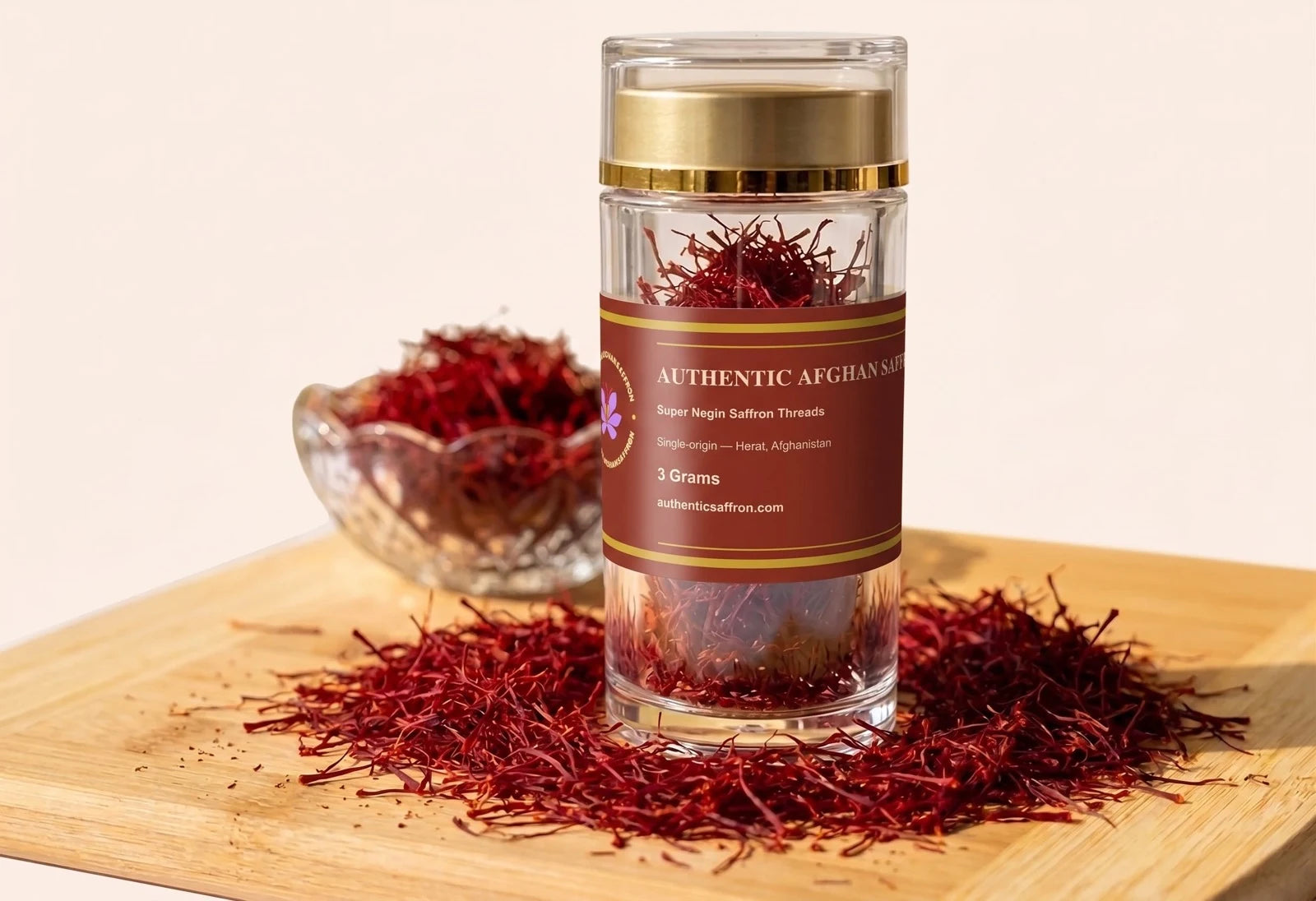
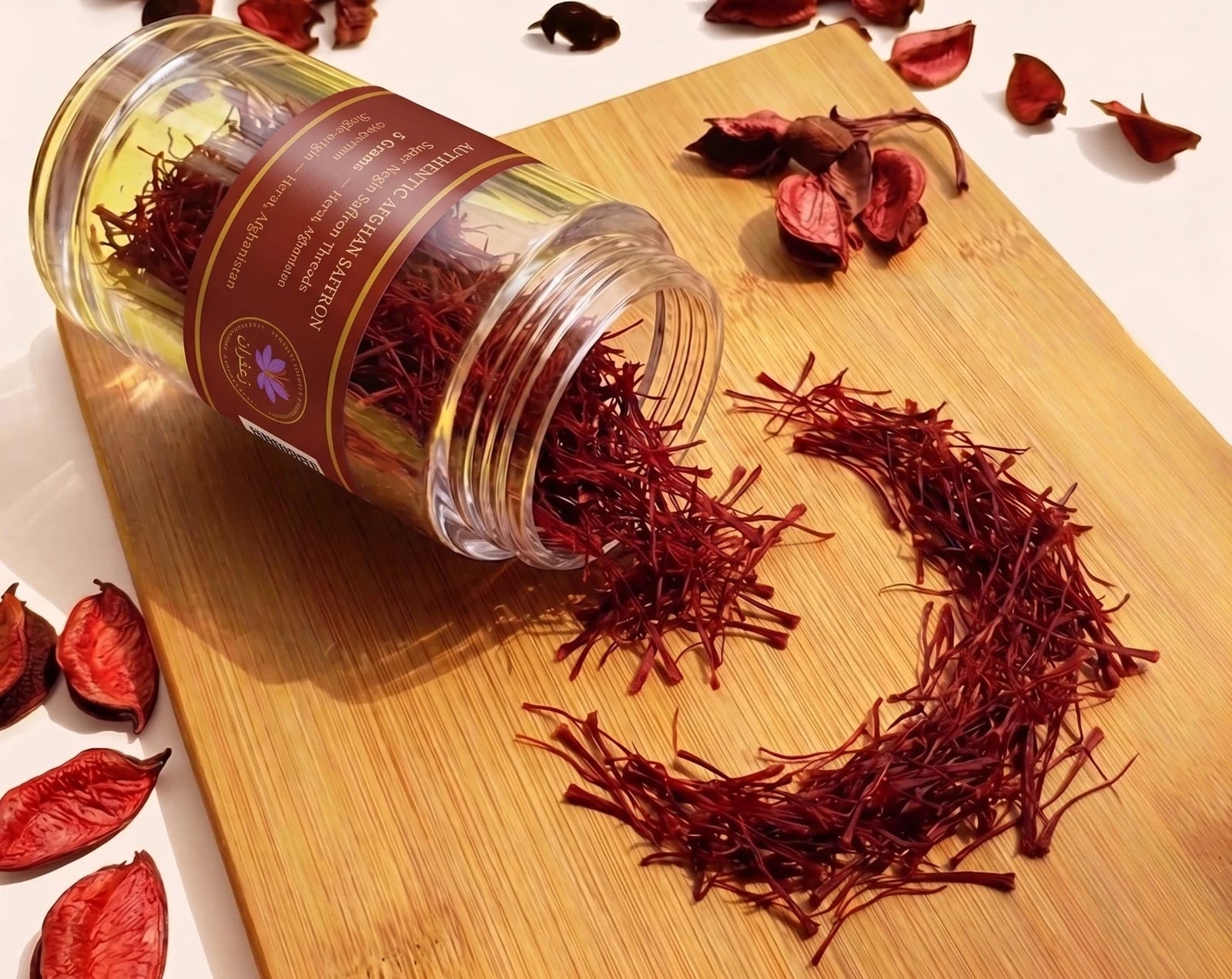
- 30 saffron threads (about 0.12 g)
- 3¼ cups (770 ml) chicken stock, divided
- 2 cups (400 g) long-grain basmati rice
- 1 large onion, finely diced
- 4 garlic cloves, sliced
- 1 teaspoon ground cumin
- ½ teaspoon ground black pepper
- 2 teaspoons fine sea salt, divided
- 1 tablespoon olive oil
- Zest of 1 lemon and juice of half
- A handful of flat-leaf parsley, chopped
How is it made?
- Bloom the saffron. Warm a quarter cup of the stock to about 150°F (65°C). Crush the saffron threads into it and set aside for 20 minutes. It should turn dense orange.
- Season and brown. Pat the thighs dry and season with 1 teaspoon of the salt and the black pepper. Set a 12-inch skillet over medium-high heat with the olive oil, lay the thighs in skin-down, and leave them alone for 8 minutes. The skin should be deep brown and release without tearing. Turn, give them 3 minutes more, then lift them onto a plate.
- Soften the aromatics. Pour off all but about 2 tablespoons of fat. Lower the heat to medium, add the onion and a pinch of salt, and cook for 6 minutes until translucent and just starting to colour at the edges. Add the garlic and cumin and stir for 1 minute.
- Toast the rice. Rinse the rice until the water runs almost clear, drain well, and tip it into the pan. Stir for 2 minutes so every grain is coated in fat and the browned base begins to lift.
- Add liquid and chicken. Pour in the remaining 3 cups of stock and the bloomed saffron with its threads. Add the remaining teaspoon of salt and bring to a simmer, scraping the base clean. Nestle the thighs back in skin-side up, leaving the skin proud of the liquid.
- Cover and cook. Cover, drop the heat to low, and cook for 18 minutes. The rice should have taken up all the visible liquid and the chicken should read 175°F (79°C) at the thickest part of the thigh.
- Rest and finish. Take the pan off the heat and leave it covered for 10 minutes. Scatter over the lemon zest, a squeeze of juice and the parsley, and bring the pan to the table.
Which mistakes ruin it?
The pan is the usual culprit. Crowd six thighs into a 10-inch skillet and they steam instead of browning; the skin stays flabby and the base never develops. If your widest pan is small, brown in two batches.
- Wet skin. Pat the thighs properly dry. Surface moisture has to boil off before browning starts, and by then the meat has overcooked.
- Submerging the skin. The thighs go back on top of the rice, not into it. Skin under liquid goes soft and there is no recovering it.
- Stirring after the lid goes on. Stirring releases starch and turns a pilaf into a risotto that nobody asked for.
- Too much fat left in. Two tablespoons is plenty. More and the finished rice is greasy rather than rich.
If the rice is still firm at 18 minutes, add a splash of hot stock down the side of the pan, cover, and give it 4 minutes more. If it is done but wet, uncover and turn the heat up for 2 minutes to drive the excess off.
Frequently asked questions
Can I use boneless chicken thighs?
Yes, with an adjustment. Boneless skinless thighs cook in about 12 minutes, so brown them, remove them, cook the rice covered for 8 minutes on its own, then lay the chicken on top for the last 10. You lose the rendered skin fat, so start with 2 tablespoons of oil rather than 1.
Does the saffron have to be bloomed in stock?
No, warm water works just as well for the chemistry. Stock is simply a free upgrade, since the liquid ends up in the pot regardless. What does matter is the temperature and the time: around 150°F (65°C) for 15 to 20 minutes, never a rolling boil.
What can I serve with it?
It is a full meal on its own, but a sharp counterpoint helps. Sliced cucumber and yoghurt with mint, or a plain tomato and onion salad dressed with lemon, both cut through the fat without competing with the saffron.
Will it reheat the next day?
It reheats better than most rice dishes because of the fat content. Cover the dish, add a tablespoon of water, and warm it at 325°F (160°C) for 20 minutes. The skin will not stay crisp; if that bothers you, lift the thighs off and give them five minutes under the broiler at the end.
Read next
- The basic saffron rice method — the same principles, without the chicken.
- Kabuli palaw with lamb shank — the layered, oven-steamed cousin of this dish.
- How to store saffron — so the second half of your gram is as good as the first.
- Our Afghan saffron — single-origin Super Negin from the Herat valley.