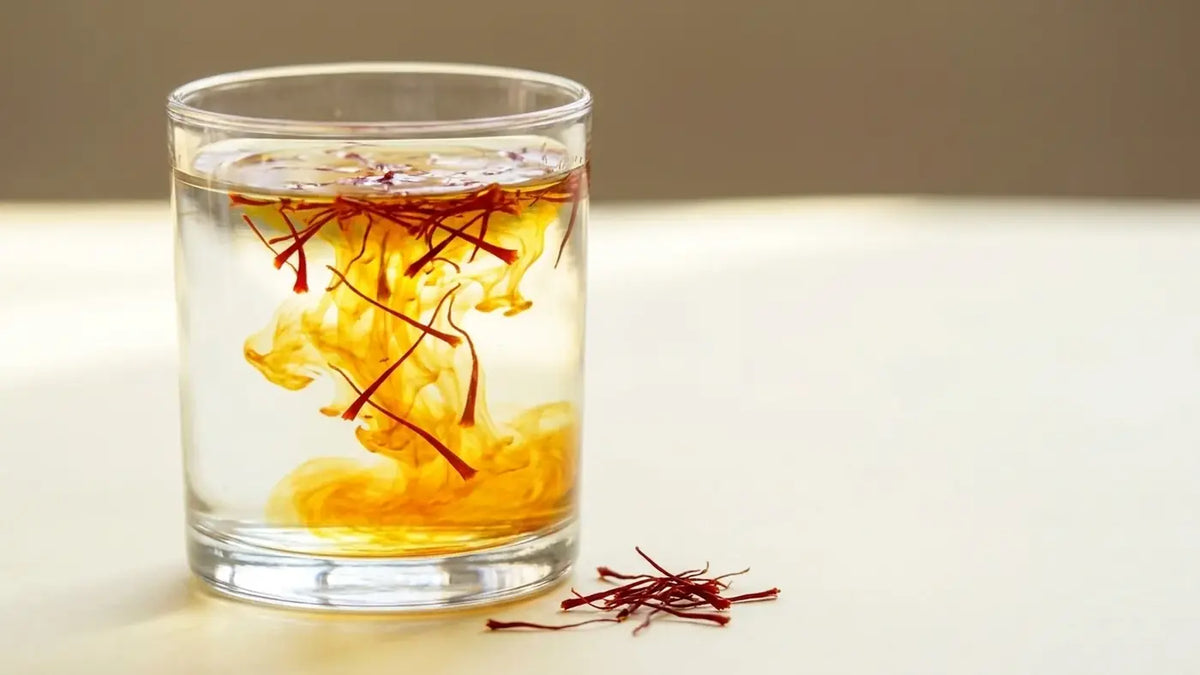
Picrocrocin is the compound that makes saffron taste like saffron. It is a bitter glycoside, second only to crocin by weight in a good thread, and labs read it at 257 nm. It also matters for a reason few people mention: as saffron ages, picrocrocin breaks down into safranal, the aroma compound.
What is picrocrocin?
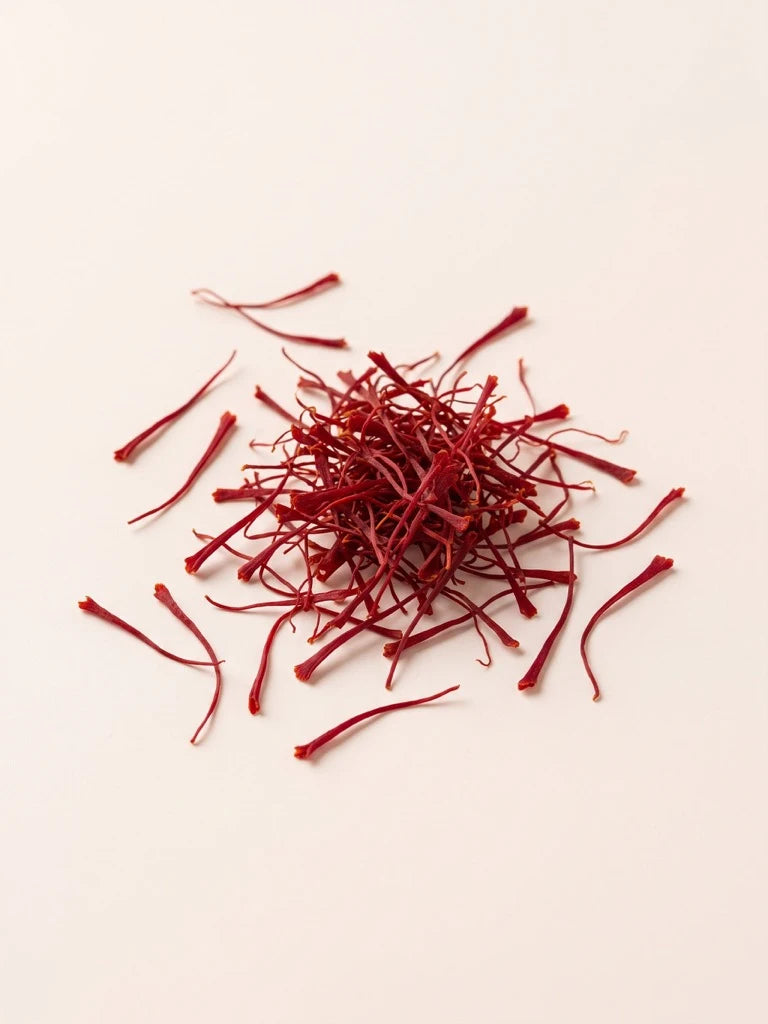
Chew a single dry thread. Nothing happens for a second or two, then a bitterness spreads across the back of the tongue — not sharp like citrus pith, more like hay or bitter almond, and it clears rather than lingering. That is picrocrocin, and it is the reason saffron is a seasoning rather than a food colouring.
Structurally it is a glycoside: a bitter fragment called safranal bound to a sugar. The sugar keeps it stable and water-soluble while the thread is intact. Break that bond — through drying, ageing or heat — and the sugar comes off, leaving safranal free to evaporate and be smelled. Picrocrocin is, in effect, saffron’s aroma held in storage.
That single relationship explains most of what follows: why fresh saffron tastes more than it smells, why old saffron smells more than it tastes, and why chasing the highest possible aroma reading is a mistake.
What does picrocrocin actually contribute to a dish?
Bitterness in cooking has a bad reputation it does not deserve. Used at the right level it does the same job as salt or acid: it stops a dish reading as flat. Saffron’s particular bitterness sits under sweetness rather than fighting it, which is why the spice works in a milk pudding and in a lamb braise without behaving like two different ingredients.
The failure mode is overdose. Push past roughly a thread per person and the bitterness stops being a base note and starts being the dish. People describe the result as medicinal, metallic or perfumed. It is not a sign of strong saffron; it is a sign of too much saffron, and it cannot be cooked out. Our note on how much saffron you actually need gives working amounts by dish.
Why does picrocrocin turn into safranal?
The conversion begins the moment the stigmas leave the flower. Drying does most of the work, which is why drying method is one of the few genuinely important decisions in saffron production. Dry too gently and the threads never develop; dry too hard and you burn through the picrocrocin reserve in a few hours to get a big, showy aroma that will not last.
After drying, the same reaction continues slowly in the jar. Heat, humidity and air all speed it up. A saffron stored badly for two years can read as intensely fragrant while tasting of almost nothing, because the reserve has already been spent.
Picrocrocin across the life of a thread
| Stage | Picrocrocin | Safranal | What you notice |
|---|---|---|---|
| Fresh stigma, undried | Highest | Very low | Grassy and bitter, almost no saffron smell |
| Properly dried | High | Moderate | Clear bitterness, warm hay aroma on the bloom |
| Over-dried or heat-forced | Reduced early | High immediately | Big smell in the jar, thin taste in the pot |
| Well stored, two to three years | Slowly falling | Slowly rising | Still usable; aroma leads, taste follows |
| Badly stored, warm and bright | Low | Fading as it evaporates | Little taste, little smell, weak colour |
Read across that table and a rule falls out. The saffron you want is the one in the second row, and the only way to keep it there is storage: airtight, cool, dark and dry. We go into the practicalities in how to store saffron.
How is picrocrocin measured?
The same water extract used for colour is read at three wavelengths. Picrocrocin absorbs at 257 nm, crocin at 440 nm and safranal at 330 nm, and each is reported as an E1%1cm figure corrected to dry weight. Nothing is measured in isolation, which is exactly why the three numbers are more informative together than any one of them alone.
Those wavelengths and the category thresholds sit inside ISO 3632, the international saffron standard published by the International Organization for Standardization, which defines Categories I, II and III. Testing of our own harvest is in progress and we will publish the full report rather than a summary of it.
- Picrocrocin is the taste figure, not the colour figure — a strong colour reading does not imply a strong taste reading.
- The three readings come from one sample on one day, so the date on a report matters.
- A high picrocrocin figure alongside a modest safranal figure usually indicates young, carefully dried saffron.
- The reverse pattern — low taste, high aroma — usually indicates age or aggressive drying.
Is a high picrocrocin reading always what you want?
Broadly yes, with one caveat. Because picrocrocin is the reserve that becomes aroma, a high figure means the saffron still has road ahead of it. It will keep developing in your cupboard rather than arriving already spent. For a spice you buy a gram at a time and use over a year, that headroom is worth more than a spectacular first impression.
The caveat is that no single reading is a verdict. Picrocrocin says nothing about whether the threads were bulked with style, dyed, or stored in a warehouse for three summers after testing. Those questions belong to authenticity checks and to a dated document, not to a number quoted in a product description. We cover the wider picture on the grading and quality hub.
How do you get picrocrocin into the food?
Bloom, do not sprinkle. Picrocrocin is water-soluble, so ten to twenty minutes in warm liquid at around 150°F (65°C) pulls it into solution along with the colour. Dry threads stirred into a finished dish deliver colour where they happen to land and taste almost nowhere.
Crush the threads first, lightly, between clean dry fingers or in a small mortar with a pinch of salt or sugar as an abrasive. More surface area means faster, more even extraction. Do not grind to dust and do not use a wet mortar — damp saffron sticks to everything it touches and you will lose half of it to the stone.
Add the bloom, liquid and all, at the point in the recipe where it can circulate. Rice takes it with the cooking water. A braise takes it in the last half hour, so the aroma is not simmered away. There is more in our guide to cooking with saffron and in the sibling piece on safranal.
Frequently asked questions
Should good saffron taste bitter?
Yes, mildly. A single thread chewed dry gives a clean, hay-like bitterness that arrives late and clears quickly. What it should not do is taste sweet, taste of nothing, or leave a chalky coating. Sweetness on the tongue is one of the oldest signs of a bulked or coated thread.
Does picrocrocin survive cooking?
Partly. Blooming pulls it into the liquid readily, and it carries through a braise or a rice dish. Very long, very hot cooking dulls it, which is one reason saffron is often added in two stages: some early for depth, the rest near the end.
Why do old threads taste weaker but smell stronger?
Because picrocrocin slowly breaks down and one of the things it becomes is safranal, the aroma compound. Storage shifts the balance from taste toward smell. A very fragrant, barely bitter saffron is usually an older saffron.
Can I taste the difference between grades?
Sometimes, but it is easy to fool yourself. Taste is better used to catch problems than to rank quality. Blooming a fixed number of threads from two samples in identical cups of warm water, side by side, tells you far more than tasting either one alone.