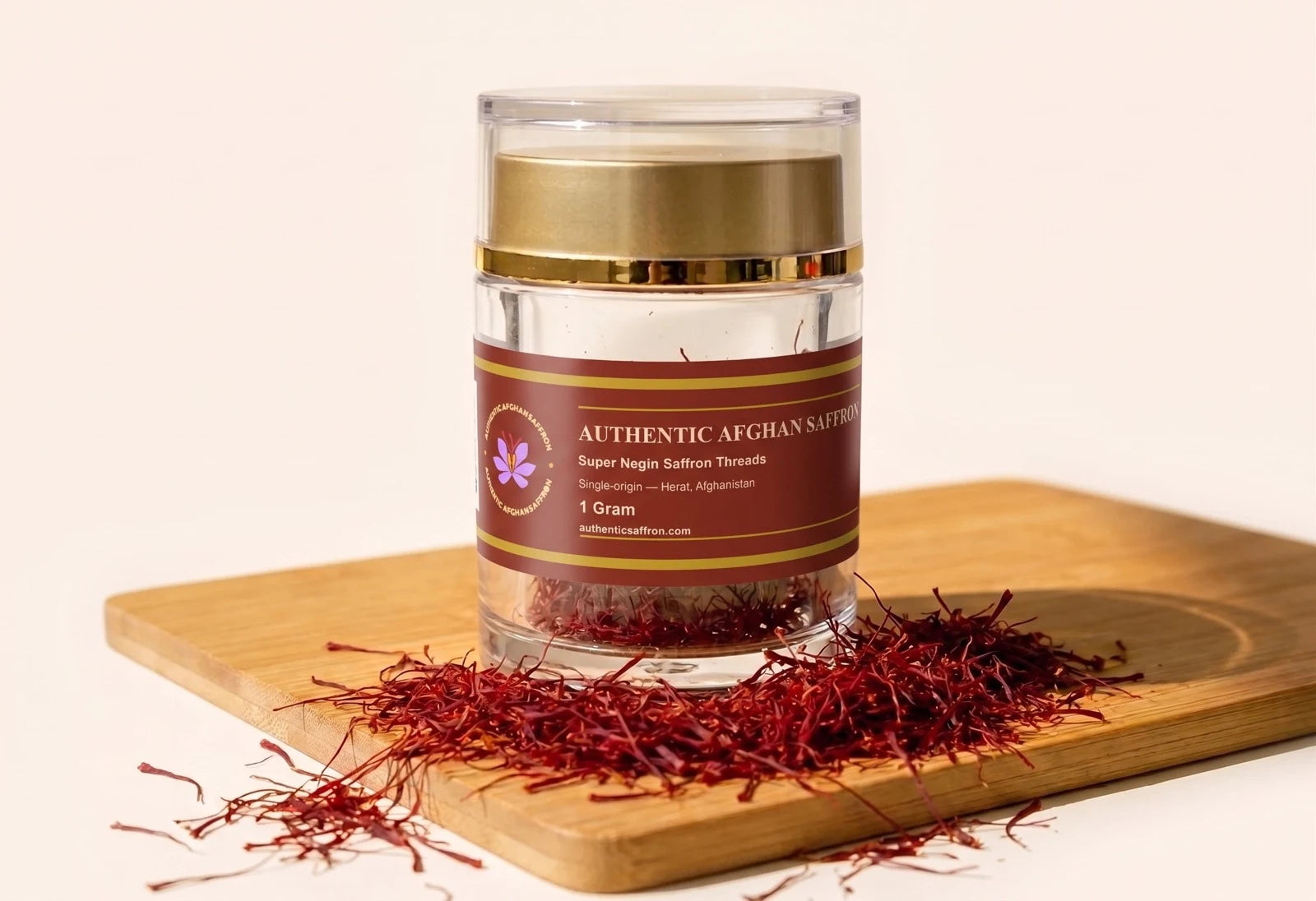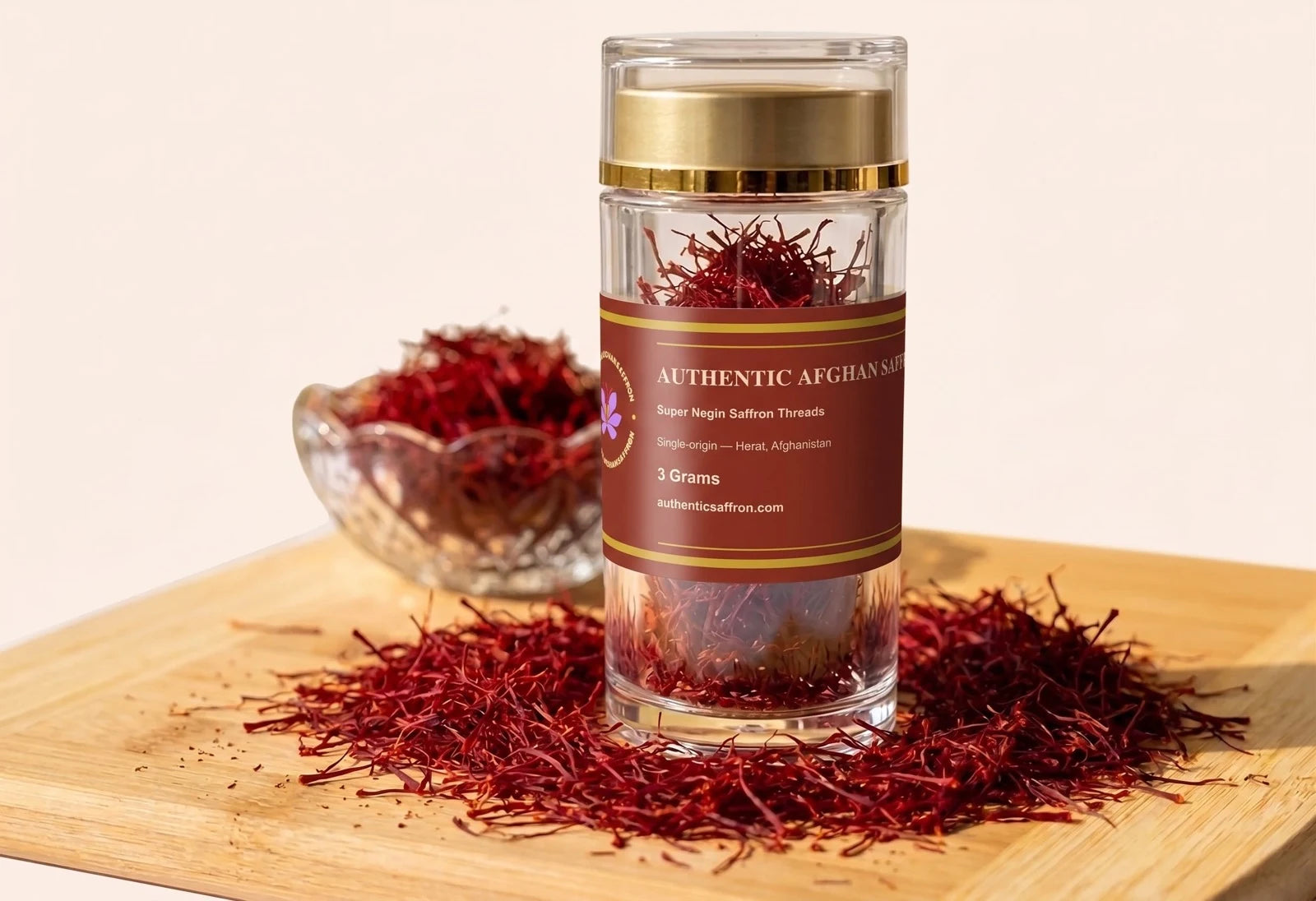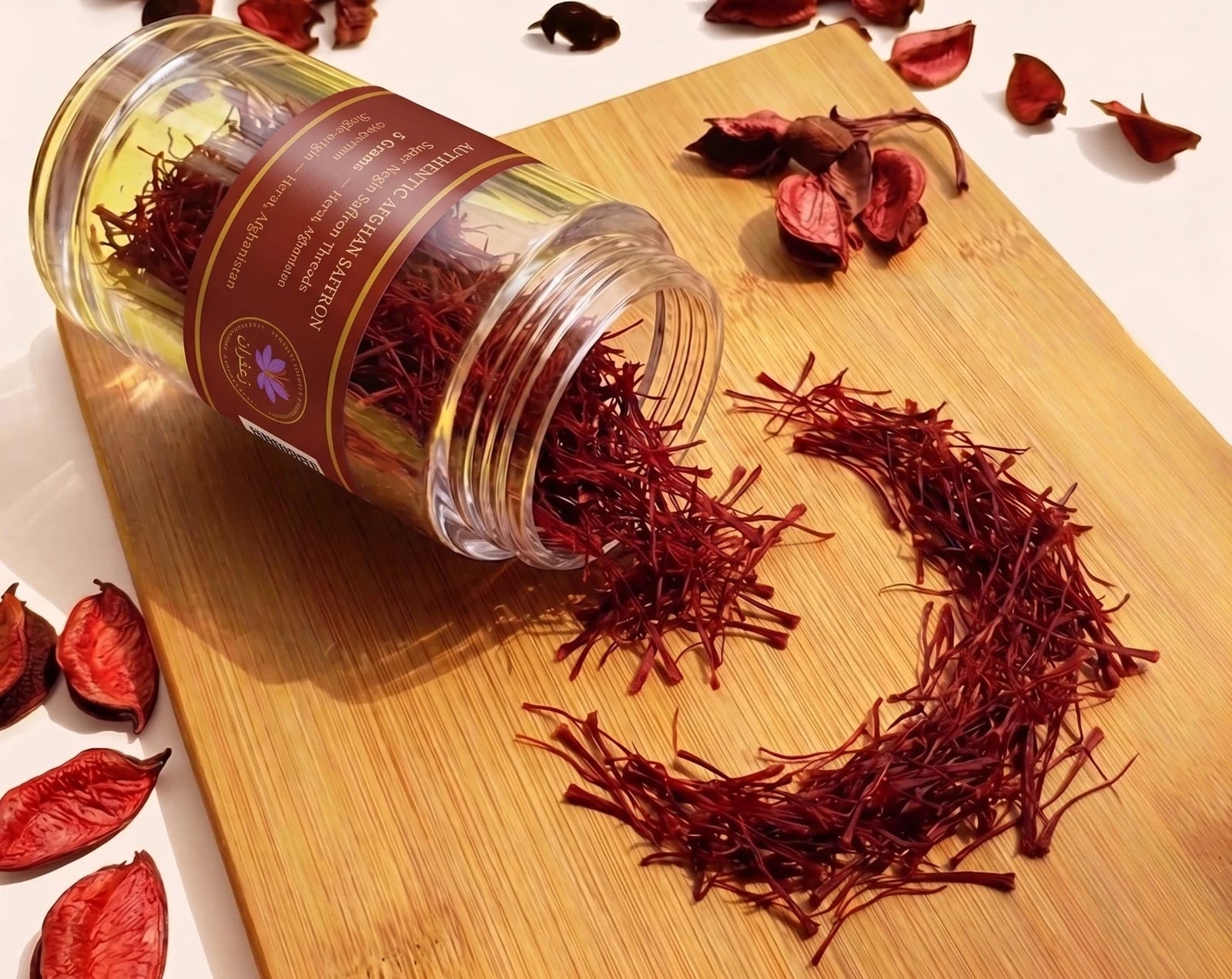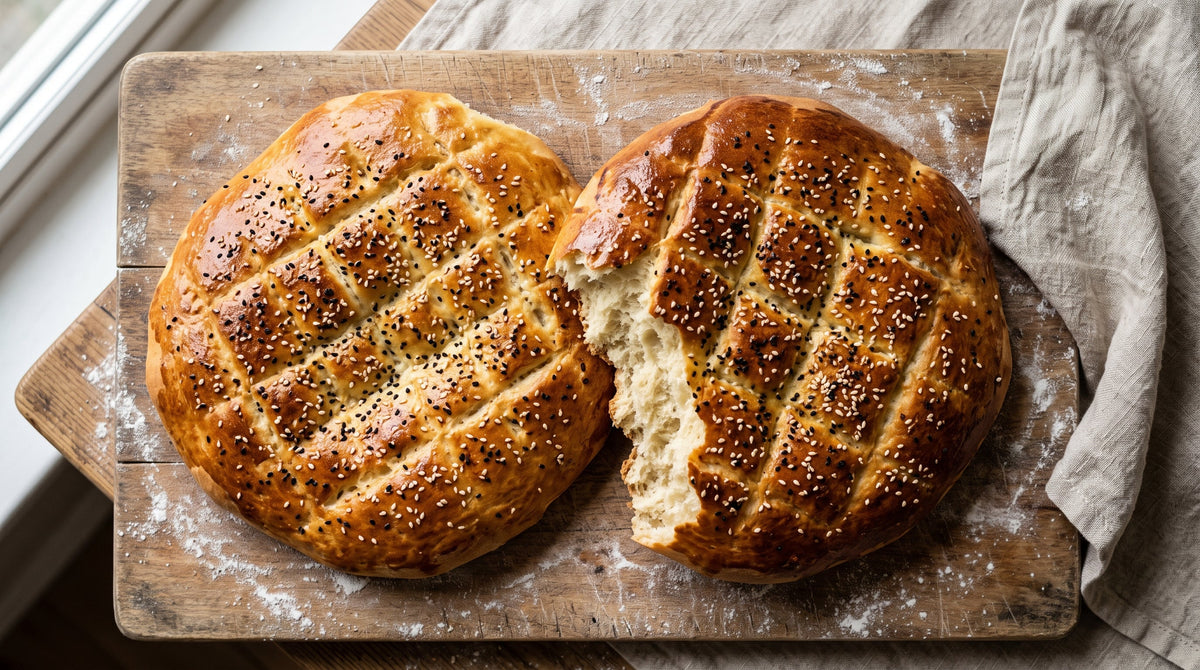
Roghani means oiled, and that is the whole idea. This naan e roghani recipe makes a soft Afghan flatbread enriched with yogurt and oil, ridged by hand and brushed with a glaze of 20 saffron threads, about 0.08 g, bloomed in warm milk. Four breads, roughly two hours start to finish.
The dough is simple. What takes practice is the shaping: the parallel grooves are pressed far deeper than they look in photographs.
What makes roghani different from plain naan?
Fat, mainly. A plain Afghan naan is flour, water, salt and yeast, baked against the wall of a tandoor until it blisters. Roghani adds oil and yogurt to the dough, which shortens the gluten, softens the crumb and keeps the bread pliable for a day instead of an hour.
The fat also changes what the bread can carry. A lean naan tastes of wheat and char; an enriched one has a faintly sour yogurt background and holds a brushed glaze on the surface instead of absorbing it.
Which is where saffron comes in. Bloomed in milk and mixed into melted butter, it goes onto the crust while the bread is still steaming, so the aroma is caught under the towel as the loaves cool. Put it in the dough instead and most of it burns off at 500°F.
How much saffron does this take?
Twenty threads, or 0.08 g, covers four breads, because the glaze sits on the surface where you meet it first. Worked into the crumb it would need three or four times as much, and most of that would be lost in the oven.
Bloom the threads in 3 tbsp of milk held around 150°F (65°C) for fifteen to twenty minutes. Milk extracts differently from water: the fat picks up the aroma compounds that water leaves behind, which suits a butter glaze. The temperature rule does not change, and the reason is set out in why blooming water should be warm rather than hot.
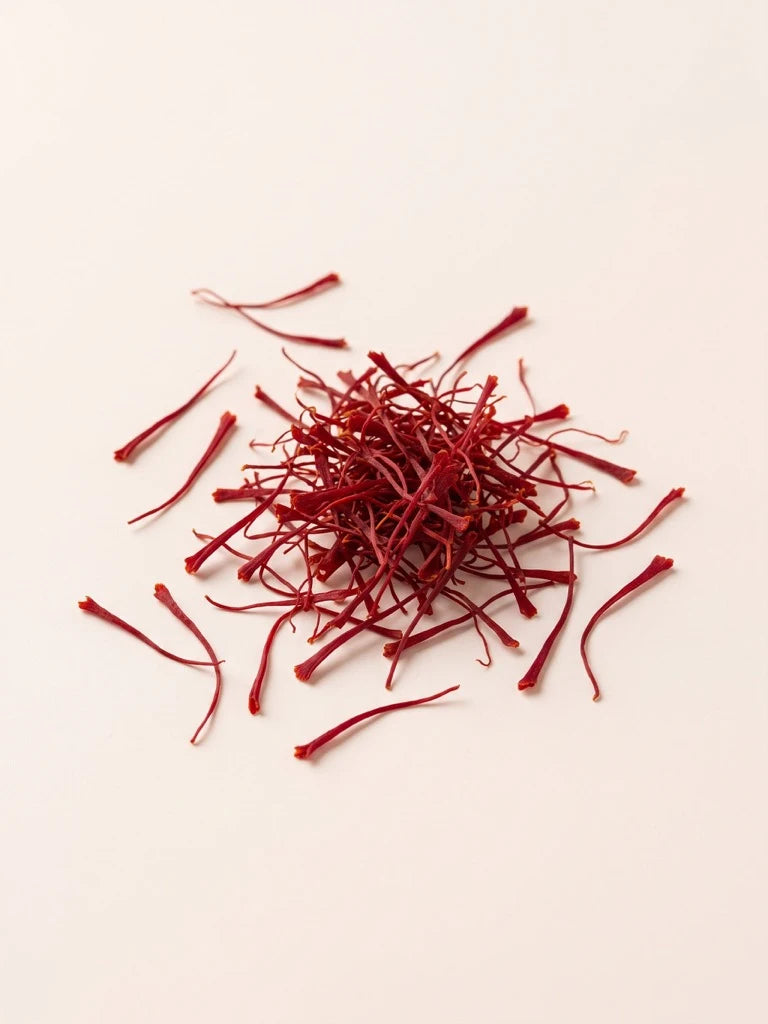
Leave the threads in when you brush. They catch in the grooves and darken slightly, which is how the bread is meant to look. Short, deep red stigmas hold their shape and colour through the glaze; pale, brittle threads dissolve into nothing, which is one reason Herat saffron is worth the difference here.
What goes into the dough?
- 500 g (about 4 cups) all-purpose flour
- About 20 saffron threads (0.08 g)
- 7 g (2 1/4 tsp) instant yeast
- 1 tsp sugar
- 1 1/2 tsp fine sea salt
- 120 g (1/2 cup) whole-milk yogurt, at room temperature
- 60 ml (1/4 cup) neutral oil, plus a little for the bowl
- 200 to 220 ml (about 7/8 cup) warm water
- 3 tbsp whole milk, for the glaze
- 2 tbsp unsalted butter, melted, for the glaze
- 1 egg yolk beaten with 1 tsp water, for the wash
- 2 tsp nigella seeds
- 2 tsp sesame seeds
How is it shaped and baked?
- Bloom the saffron. Heat the 3 tbsp of milk to about 150°F (65°C) — hot to the finger, no bubbles — and pour it over the threads in a small cup. Cover and leave it for 20 minutes. Boiling milk would take the aroma with the steam and leave you with colour.
- Mix the dough. Whisk the flour, yeast, sugar and salt in a large bowl. Add the yogurt, the oil and 200 ml of the warm water and bring it together with your hand. Add the last 20 ml only if there is dry flour left in the bowl.
- Knead. Turn it out and knead 8 to 10 minutes, until the dough is smooth, faintly tacky and springs back slowly when pressed. Yogurt doughs feel softer than lean bread doughs at the same stage; resist the urge to correct that with flour.
- First rise. Oil the bowl lightly, return the dough, cover and leave 60 to 90 minutes until doubled. The surface should be domed and slack, not tight.
- Heat the oven properly. Put a baking steel or stone on the upper-middle rack and heat the oven to 500°F (260°C) for at least 45 minutes. This is the step people cut short. A cold surface gives you a pale, dense bread no matter how good the dough was.
- Divide and rest. Knock the dough back gently, divide into four pieces of about 220 g, and roll each into a loose ball. Cover and rest 15 minutes so the gluten relaxes and the dough will stretch instead of fighting you.
- Shape by hand. On a lightly floured bench, press and stretch one ball into an oval roughly 10 by 6 inches and a scant half-inch thick. Use your hands, not a rolling pin: a pin crushes out the gas that makes the bread light.
- Score the grooves. Dip three fingers in oil and draw them down the length of the oval, pressing almost to the bench, to leave four or five parallel channels. Brush with egg wash and scatter nigella and sesame seeds along the ridges.
- Bake hot and fast. Slide the bread onto the hot steel and bake 7 to 9 minutes, until the ridges are deep brown and the grooves are still pale gold. Bake one at a time and let the steel recover for 3 minutes between breads.
- Glaze while hot. Stir the melted butter into the bloomed saffron milk, threads and all, and brush it over the bread the moment it comes out. Stack the finished breads under a clean tea towel so they steam each other soft.
Why does home naan come out tough?
An underheated oven, usually. Forty-five minutes of preheating with a steel in place is not padding; the surface has to set the base within thirty seconds. If the bread takes twelve minutes to colour, it has been drying out for eight of them.
A rolling pin is the second. Roghani gets its texture from an open, irregular crumb, and a pin flattens that into a cracker. Press outwards from the centre with your fingertips instead.
Third, adding flour while kneading. This dough should stay tacky. A stiff one bakes firm on the day and stale by evening, and no glaze fixes that.
Last, glazing cold bread. Butter on a cooled crust goes greasy; brushed on at 400°F it is drawn in as the bread contracts, and the saffron goes with it. If your threads give up no colour in the milk after twenty minutes, suspect the saffron rather than the method — our notes on judging authenticity cover that.
Frequently asked questions
Is saffron part of the traditional bread?
The everyday version is not made with it. Roghani naan is enriched with oil and yogurt, seeded, and that is the whole bread — saffron would be an unusual thing to spend on a loaf you bake weekly. The saffron glaze belongs to weddings and holidays. It adds aroma and a gold sheen to the ridges rather than changing the crumb.
Can I bake this without a baking steel?
Yes, though you will lose some lift. An upturned heavy baking sheet preheated for 45 minutes is the next best thing. A cast-iron skillet on the stovetop over medium-high also works well for one bread at a time: four minutes a side, covered, which gives a softer crust and a slightly chewier crumb.
Why did my grooves close up in the oven?
You did not press hard enough. The channels have to go almost through to the bench, because the dough springs in the first two minutes of baking and shallow marks vanish. Oiled fingers help, and so does shaping a slightly thicker oval so there is depth to press into.
How do I keep it soft the next day?
Cool the breads completely under a towel, then seal them in a bag rather than leaving them out. Reheat in a dry skillet over medium for 40 seconds a side, or wrapped in foil in a 350°F oven for six minutes. Never use a microwave for longer than fifteen seconds; it turns the crumb rubbery as it cools.
Read next
- Afghan shorwa with saffron, the soup this bread is usually torn into.
- Saffron chalow for the other half of an Afghan table.
- Saffron focaccia, where the threads go into the crumb instead of the glaze.
- Inside the Herat saffron harvest and why the picking window is so short.