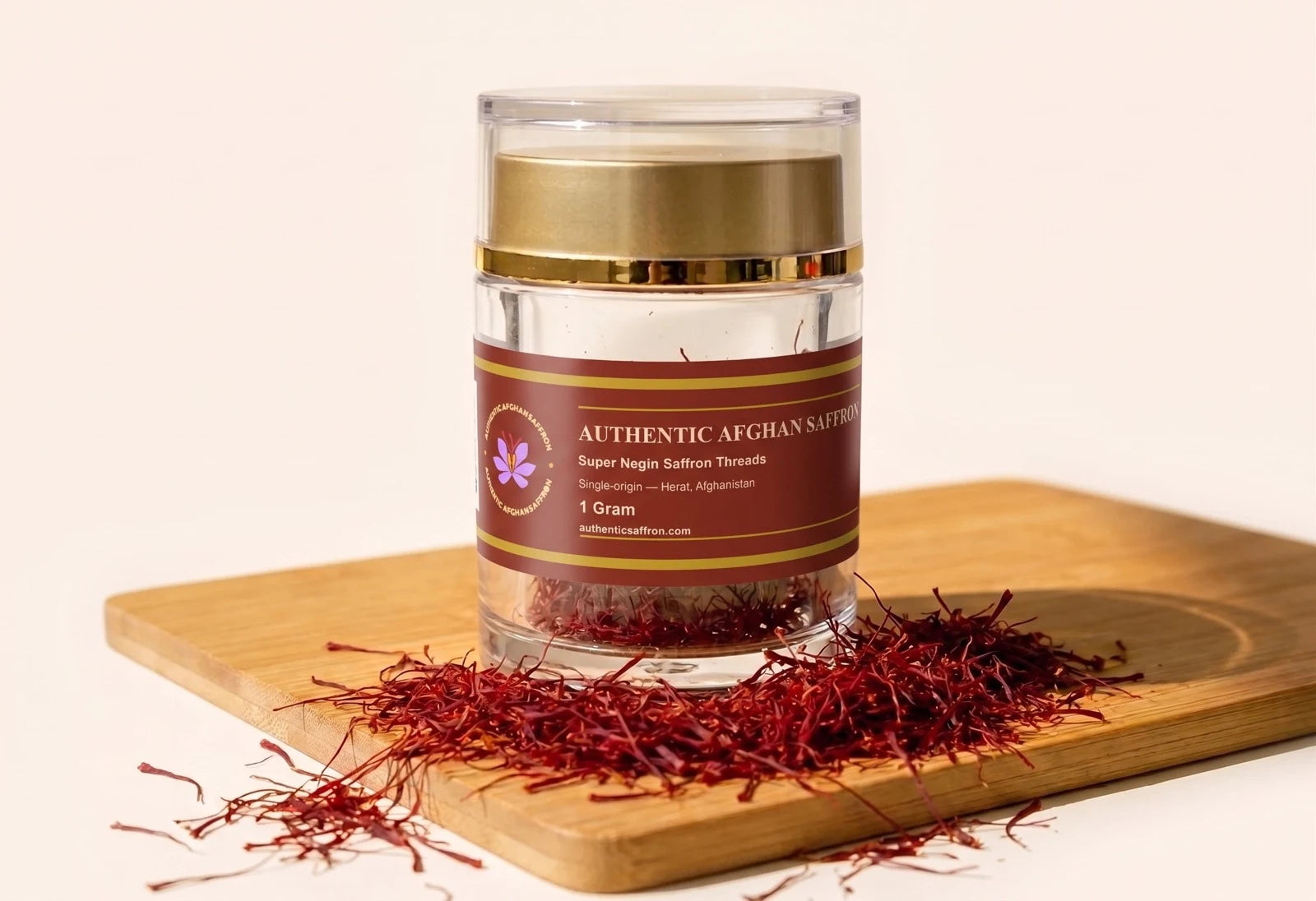
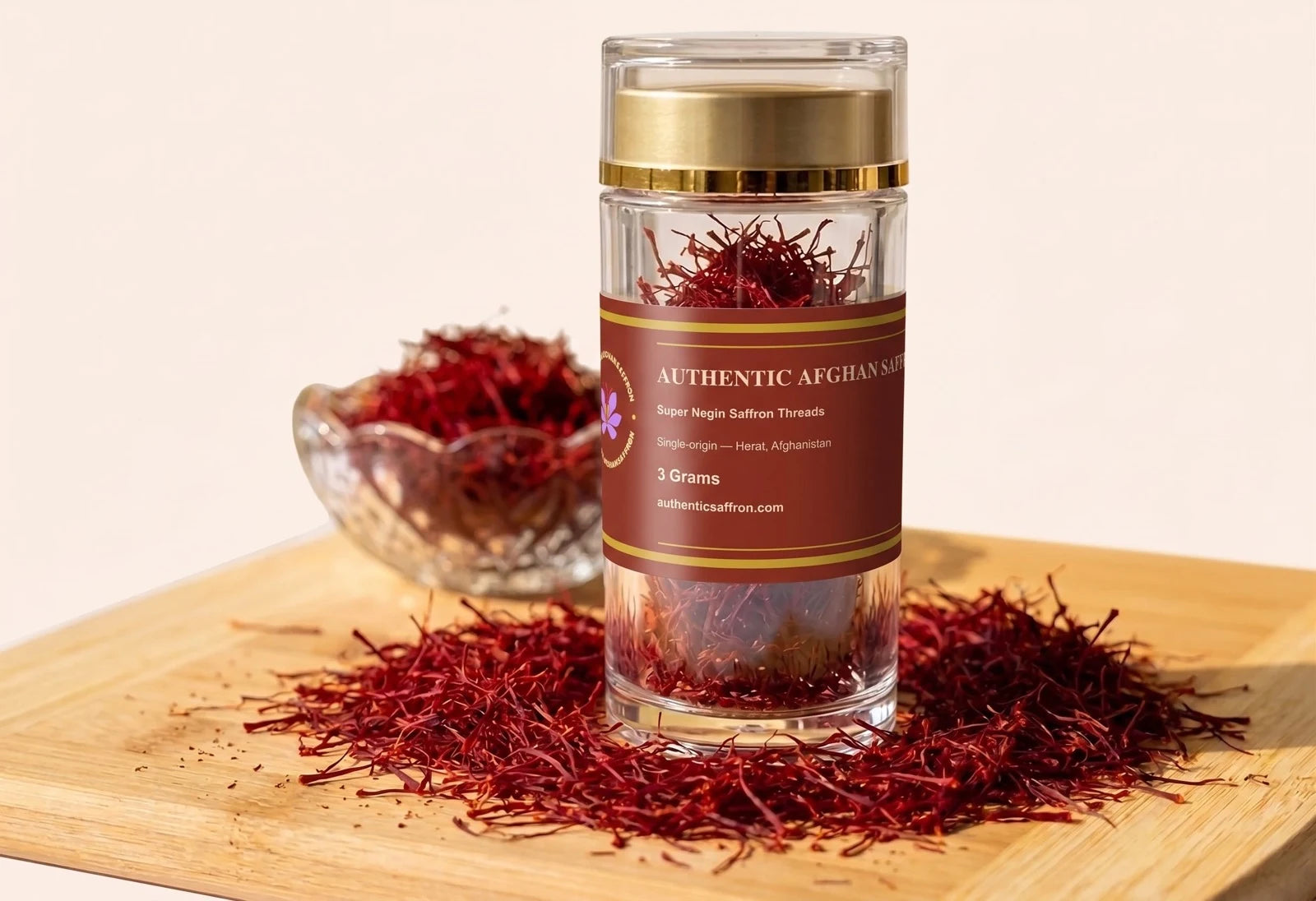
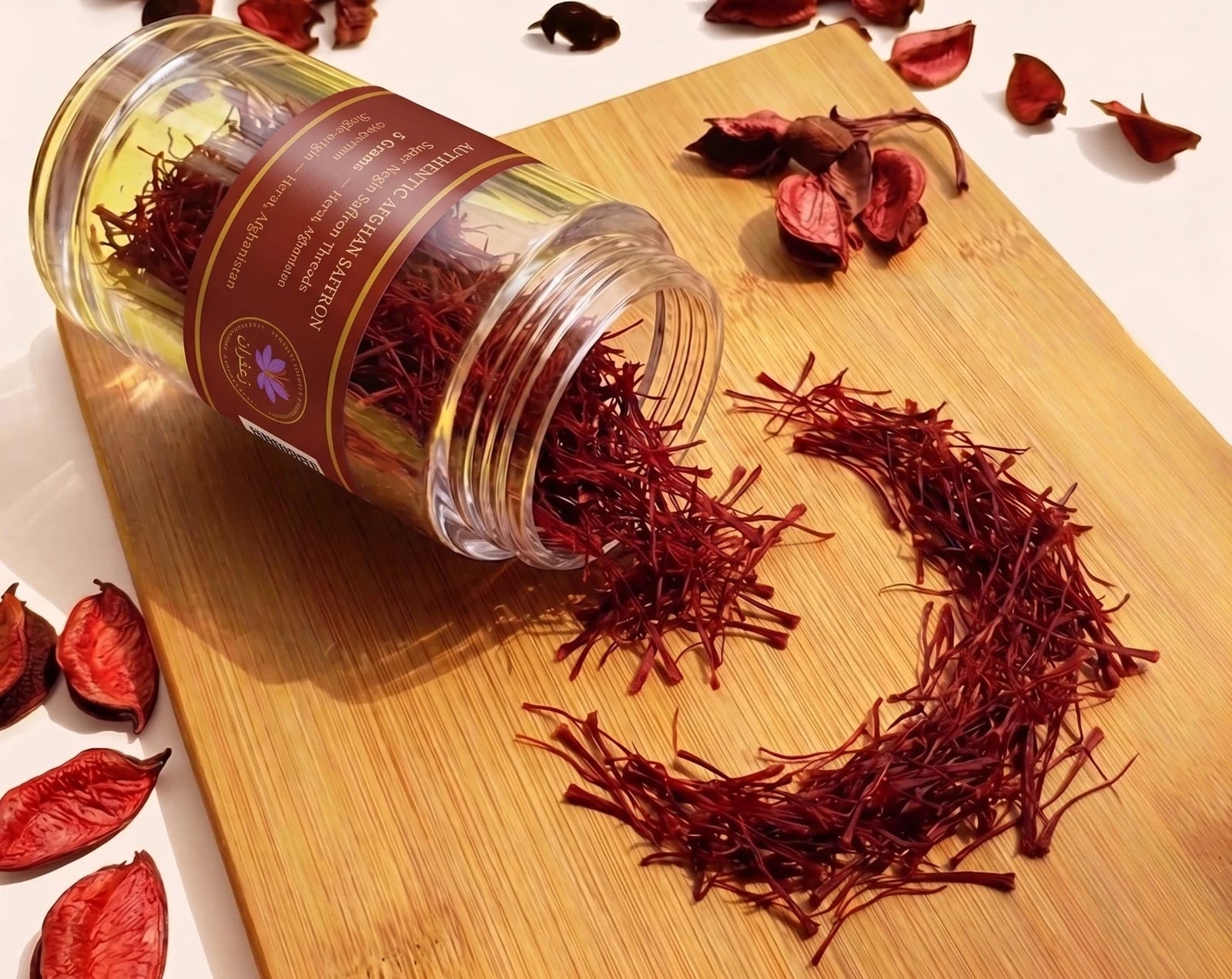
Saffron fraud is not one act. It is a series of small, rational decisions taken by different people at different points between a field and a jar, each of which adds weight, colour or margin. By the time the spice reaches a buyer, no single party has done anything obviously criminal, and the product is still worse than the label says.
Where does saffron fraud actually happen?
Ask most people and they picture a workshop dyeing corn silk. That exists, but it is the crudest and least common version. The bulk of the problem is distributed along a chain that is long, informal and largely undocumented.
A gram of saffron typically passes through a picker, a household that separates and dries it, a village collector, a regional wholesaler, an exporter, an importer, a repacker and a retailer. Eight sets of hands, eight opportunities, and a product whose quality cannot be judged by looking at it. Every link is also a point where the lot loses its identity: two sacks go in, one blended sack comes out, and the harvest date, the field and the drying method stop being knowable.
Fraud thrives on exactly that. Not on villainy, on anonymity.
What can go wrong at the farm and drying stage?
Three things, all of them about weight.
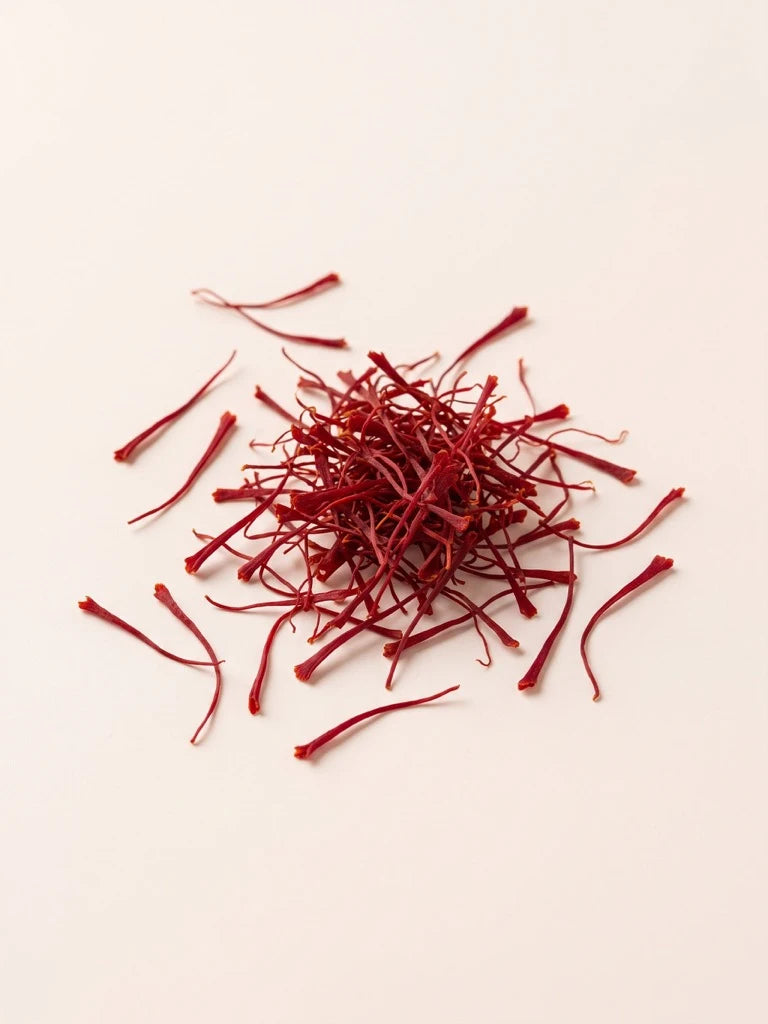
The first is style. The red stigma carries the colour and the aroma; the pale yellow style beneath it carries almost none. Leaving more style attached raises the weight of the day’s pick at no cost. It is not illegal, and in some markets it is normal and disclosed. It only becomes fraud when the resulting lot is sold as all-red.
The second is moisture. Saffron is hygroscopic — under-dry it, or let it pick up humidity afterwards, and every kilo carries water that a buyer pays for at the price of saffron. ISO 3632 caps moisture and volatile matter for this reason.
The third is time. Stigmas separated hours after picking, or dried too hot, lose aroma permanently. Nobody sets out to do this. It happens when a household is picking at dawn, processing at noon and out of daylight by five.
How does blending work at wholesale?
This is the stage that matters most and the one buyers never see. A wholesaler holds lots of different ages, different grades and sometimes different origins, and has a target price to hit. Blending is the tool. A weak lot goes in with a strong one, the average lands where the contract needs it, and the resulting sack is sold as a single product with a single description.
Nothing has been added. Nothing has been faked. But the harvest year is now a fiction, the origin is now an average, and the buyer’s idea that they are holding one farm’s work is gone.
| Stage | What can be introduced | Effect on the buyer | What catches it |
|---|---|---|---|
| Picking and drying | Excess style, high moisture, over-hot drying | Pays saffron prices for water and pale fibre | Moisture and colour figures on a current lab report |
| Village collection | Lots merged, harvest dates lost | No traceable origin or crop year | Lot numbering and harvest-year disclosure |
| Wholesale blending | Old stock averaged into new | Faster fade in the jar than expected | Crop year on the pack; a report tied to that lot |
| Export and repacking | Origin relabelling, invented grade names | Scarcity premium paid for abundant stock | Consistent paperwork; sellers who name the region |
| Retail listing | Stock photography, borrowed certificates | Buys the story, receives the average | Reading the certificate for lab, date and lot |
| Anywhere, powder only | Turmeric, paprika, starch, dyes | Little or no saffron at all | Buying threads, never powder |
What happens at repacking and branding?
Repacking is where the story gets written. A drum of blended threads arrives, and a brand attaches an origin, a grade word and a photograph to it. Most of the vocabulary used at this point is invented: A++, royal, premium, super grade. None of these appear in any standard. The one grading framework that exists, ISO 3632, defines Categories I to III on measured values — crocin read at 440nm for colour, picrocrocin at 257nm for bitterness, safranal at 330nm for aroma. You can see the current standard listed at ISO 3632-1:2025.
A certificate can be borrowed as easily as a photograph. The common trick is a genuine report, from a genuine laboratory, for a lot that is not the one in the jar. Our note on how to read a saffron lab report covers what has to line up: the laboratory’s name, the test date, the lot reference, and all three absorbance values rather than the flattering one.
Why does the listing page do so much of the work?
Because it is the only part of the chain the buyer can see, and it is the cheapest part to change. Rewriting a product description costs nothing. Sourcing a better lot costs money.
That asymmetry explains most of what is wrong with saffron marketing. The claims cluster where verification is hardest — origin, heritage, grade, family history — and go quiet where it is easiest, such as the crop year, the yellow style content, or a measured colour figure with a date attached.
What actually protects a buyer?
Not vigilance about the exotic frauds. Ordinary questions about the boring ones.
- Buy threads, never powder. Powder removes every visual check at once and is where the true adulterants live. See the common saffron adulterants for what turns up in it.
- Ask for the crop year. A seller who cannot name it is selling a blend, whatever else they say.
- Ask what the report covers. Laboratory, date, lot, and all three values. A screenshot with a logo is not a report.
- Compare price per gram, not per pack. Small jars flatter cheap saffron. Our price guide sets out the honest bands.
- Prefer sellers who disclose limits. Anyone who tells you what they have not yet proved is more likely to be telling the truth about the rest.
On that last point, we hold ourselves to it. Our own testing is underway and the report will be published in full, values and all, on our lab report page when it is complete. Until then we describe our saffron by what we can show: single origin, Herat valley, one harvest, all-red threads.
The US Food and Drug Administration classifies deliberate ingredient substitution for financial gain as economically motivated adulteration, and publishes general guidance for food importers and manufacturers at fda.gov. Enforcement reaches large shipments far more often than it reaches a repacked jar sold from a marketplace listing, which is why the buyer’s own questions still matter.
Frequently asked questions
Is most saffron on the market adulterated?
Outright substitution with another material is a minority of the trade and concentrated in powder and in tourist packaging. Quieter problems are far more widespread: excess style, high moisture, aged stock blended into new, and origin claims that are not supported. Those cost buyers more money in total.
Does a lab report guarantee the saffron in my jar?
Only if it is tied to the lot you bought. A report is a measurement of a specific sample on a specific date. Check the laboratory name, the test date and the lot reference against the pack. Without those three, the document proves that a laboratory exists.
Why does blending count as fraud if the saffron is real?
Blending on its own is legitimate and common. It becomes fraud when the blended lot is then described as single origin, single harvest, or a named grade it was not measured against. The wrong is in the description, not in the mixing.
Are the largest sellers safer than small ones?
Not reliably. Scale brings procurement standards, and it also brings longer chains and more blending. What correlates better with honesty is disclosure: crop year, origin at a level finer than a country, and a willingness to say what has not been tested.