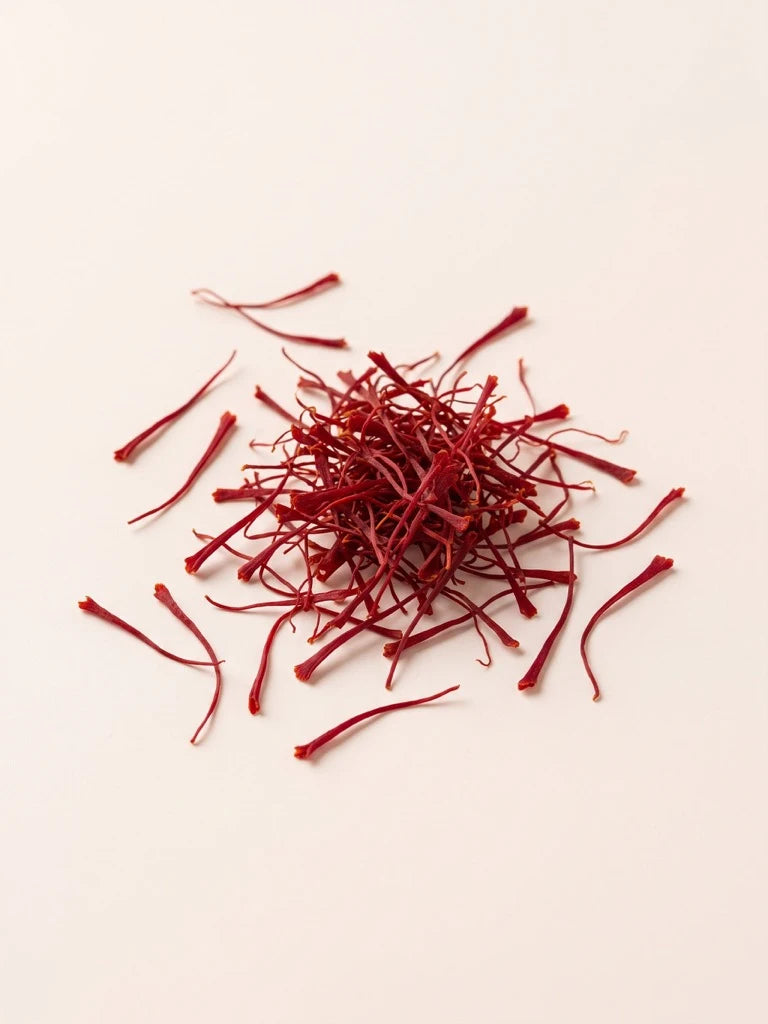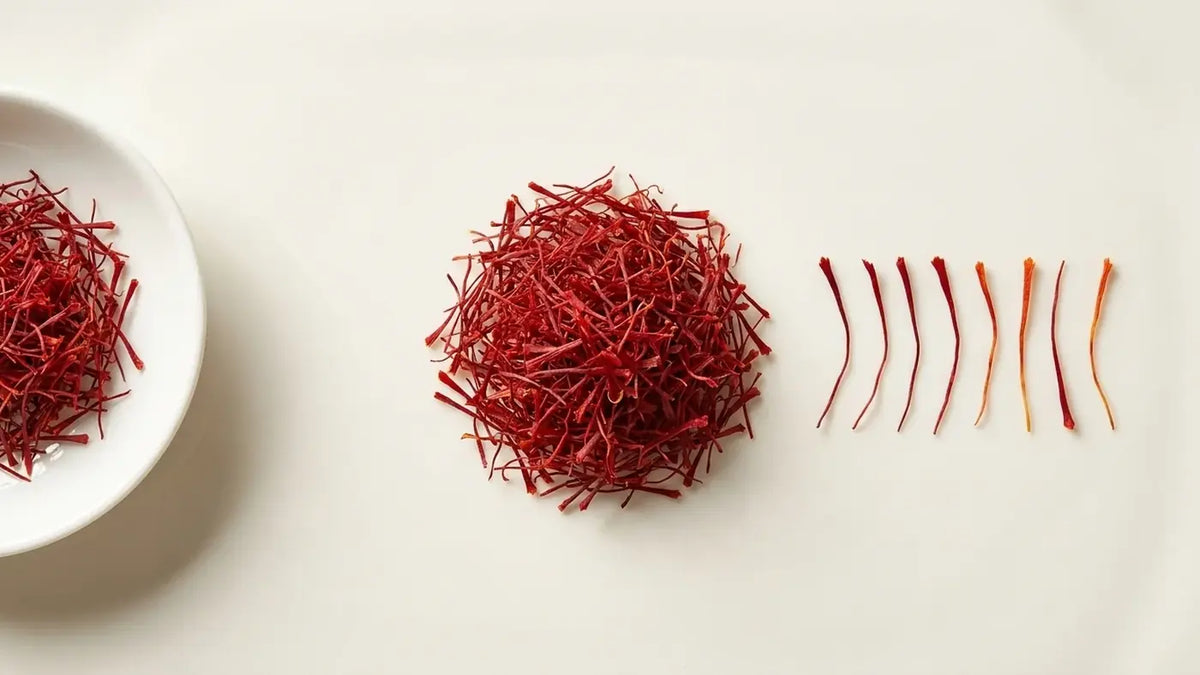
All red saffron means the pale yellow style has been cut away, leaving only the crimson stigma. That matters because the style carries almost no colour, aroma or bitterness while still adding weight. It is a statement about what was removed, not a guarantee of strength, freshness or origin.
It is the single most repeated phrase in saffron listings, and one of the least examined. A seller who says all-red is telling you something true and narrow. Everything a cook actually cares about — how much colour a pinch gives, how the kitchen smells when it blooms, whether the threads were dried well — sits outside that claim.
What does all-red saffron actually mean?
Picture one crocus flower. Inside it are three red stigmas, joined at the base to a single pale style that runs down toward the ovary. The picker takes the whole assembly. Someone then decides where to cut.
Cut at the join and you have three red threads and a discarded yellow stalk. Cut below the join and the threads stay attached in a small three-pronged bunch with a pale tail. Cut lower still and there is a centimetre of straw-coloured material hanging off the end.
All-red simply means the first of those three decisions was taken. It is a sorting outcome, and every producing region has its own vocabulary for it — Sargol and Negin in one trade tradition, coupe in the Spanish one. The threads themselves are doing the same thing.
Why does the yellow style matter at all?
Because you buy saffron by weight and cook with it by effect. The style contributes to the first and almost nothing to the second.
The three compounds that define saffron all sit overwhelmingly in the red tissue. Crocin gives colour and is read at 440nm on a laboratory report. Picrocrocin gives the bitter, hay-like taste and is read at 257nm. Safranal carries most of the aroma and is read at 330nm. Strip the red away and what remains is fibrous plant material that swells in water and turns it faintly cloudy.
So a gram with visible pale tails is a gram in which some fraction of your money bought stalk. The fraction varies with how low the cut was made, which is why the honest framing is a range rather than a percentage. If you want the arithmetic behind dosing by weight, we work through it in how much saffron you actually need.
How do the thread types compare in the tin?
| Presentation | Visible pale material | Colour per gram | Main risk to the buyer |
|---|---|---|---|
| All-red whole threads | None | Highest of the four | Age and poor storage, which the eye cannot see |
| All-red fragments and dust | None | High but falls faster after opening | Broken surfaces stale quickly; hard to count a pinch |
| Red with a short tail | A few millimetres | Moderate | Inert weight, usually priced as if it were not there |
| Ground powder | Impossible to judge | Unknowable by inspection | Dilution and adulteration are invisible once ground |
The bottom row is the reason we tell people to buy threads. Everything the all-red claim is about becomes unverifiable the moment saffron is milled, which is the whole argument in threads versus powder.
Can all-red saffron still be weak?
Yes, easily. Three ways, none of them visible in a product photograph.
- Age. Crocin degrades steadily. Two-year-old all-red threads can give less colour than fresh threads with a small tail on them.
- Light and heat. Saffron stored in a clear jar on a sunny shelf loses strength regardless of how it was sorted. This is why how you store saffron changes the value of what you bought.
- Drying method. Threads dried too fast or too hot can lose aroma compounds while still looking perfect. Colour survives the eye test better than smell does.
There is also the blunt case: dyed material. Corn silk, safflower petals and shredded plant fibre are all dyed red and sold as saffron, and every one of them is technically all-red. The claim is satisfied and the product is a fake. We cover the tells in how to spot fake saffron.
How do you check that red really is red?
Handle the threads before you trust the label.
- Tip the tin onto white paper. Pale tails, dust and fragments all show up against white in a way they never do in a photograph.
- Look at the tips. Genuine stigmas flare into a trumpet at one end and taper at the other. Dyed strands are usually uniform along their length.
- Rub one thread between damp fingers. Real saffron stains slowly and yellow-orange. Dye runs immediately and often red or pink.
- Drop threads in cool water. The water should colour gradually over several minutes while the thread stays red. Instant colour, or a thread going pale, is a bad sign.
- Smell the open tin. Hay, honey and something faintly medicinal. Sweet, perfumed or flat all mean something is wrong.
None of these is a laboratory test. They are cheap filters that catch the obvious problems. For the numbers that catch the rest, you need a dated report, and the United States food labelling framework administered by the FDA treats economically motivated adulteration of spices as a live concern rather than a curiosity.
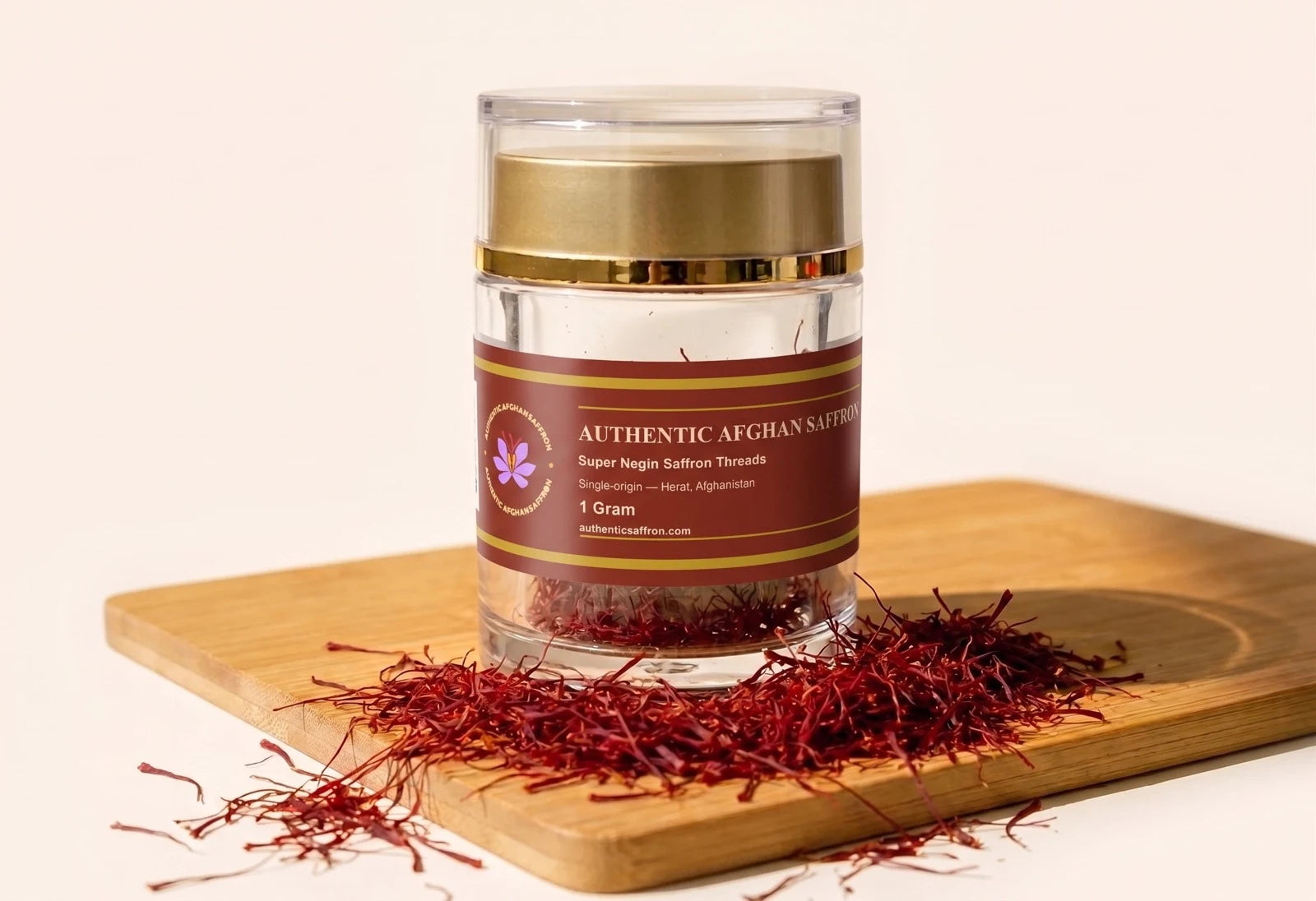
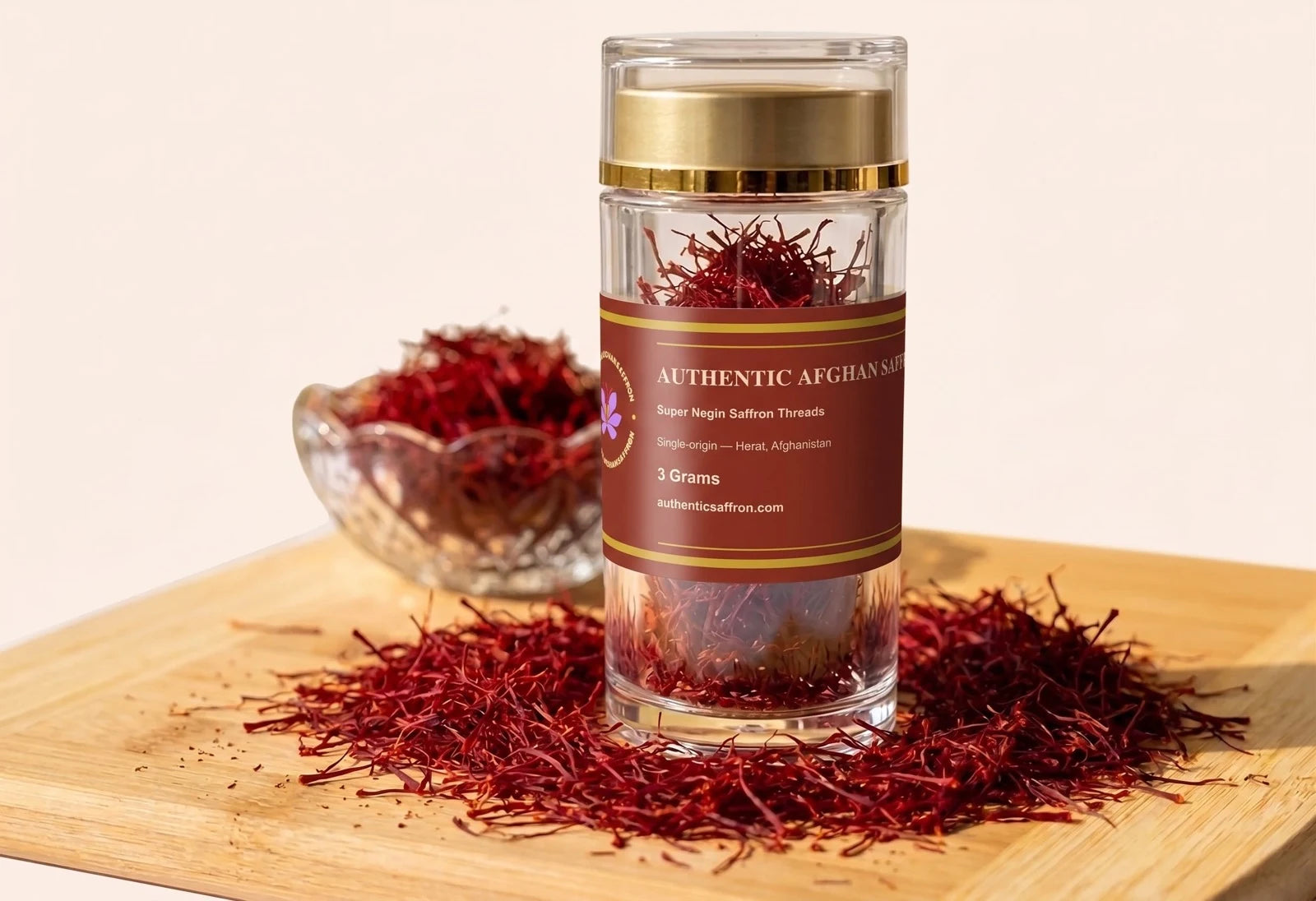
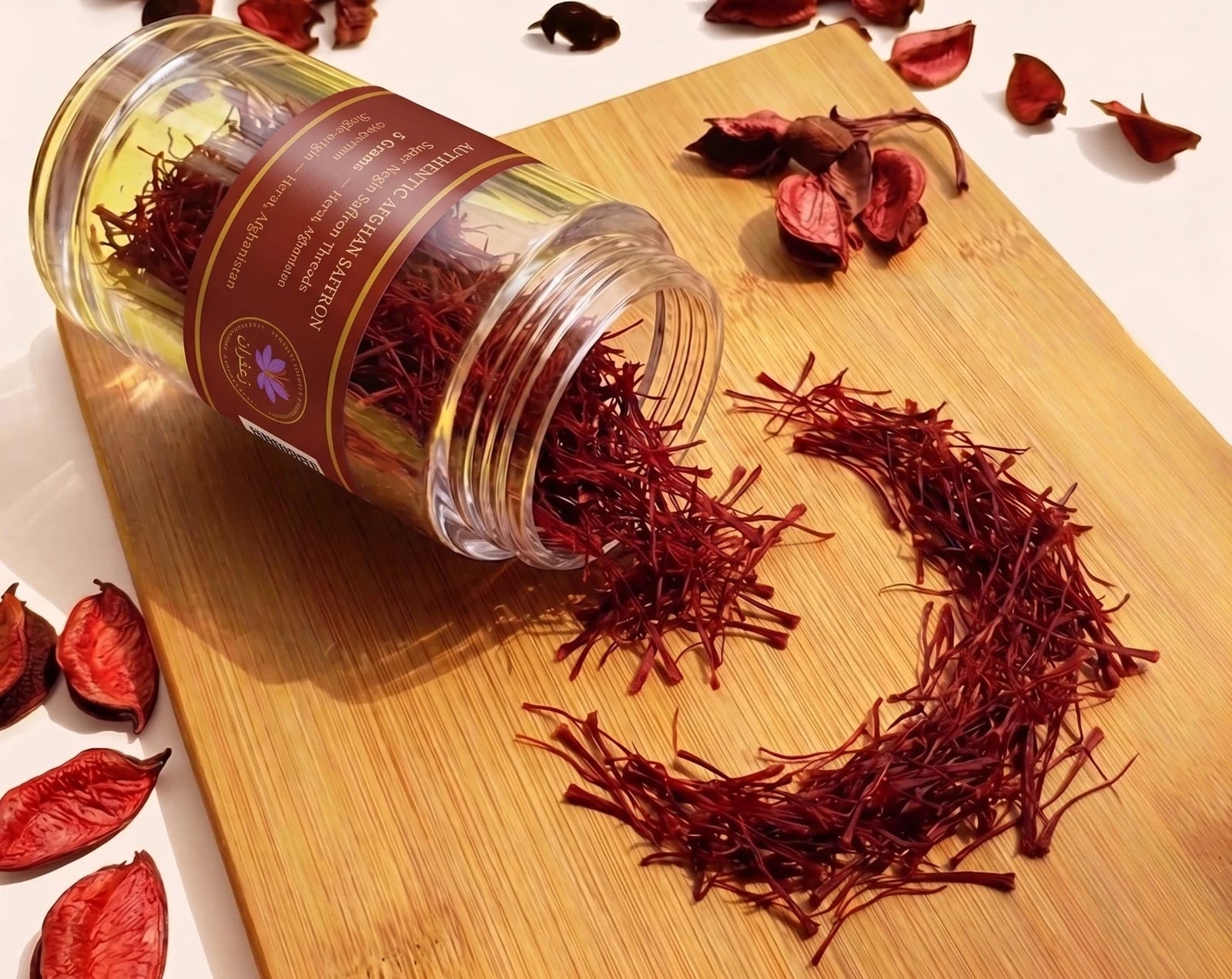
Our threads are all-red and sorted for length, and we would rather show you a photograph of the actual harvest than repeat the phrase. Testing on the current batch is underway and the report will be published in full when it is finished.
Frequently asked questions
Is all-red saffron the same as Category I?
No. All-red describes how the threads were cut. Category I is a laboratory result under ISO 3632, based on absorbance readings for colour, bitterness and aroma. All-red threads can fall into any category depending on freshness and handling.
Does a small yellow tail mean the saffron is bad?
No, it means part of the weight is inert. The red tissue on those threads works exactly as it should. The question is price: a tailed thread should not cost the same per gram as an all-red one.
Can fake saffron be all red?
Yes, and most of it is. Dyed corn silk and safflower are coloured red precisely so they satisfy the all-red expectation. Colour alone proves nothing, which is why thread shape, water behaviour and smell matter more.
Why do all-red threads sometimes look almost black?
Very deep red reads as near-black in low light and in photographs, especially with dense, well-dried threads. Spread them on white paper in daylight and the true crimson shows. Genuinely black, brittle threads are usually scorched during drying.