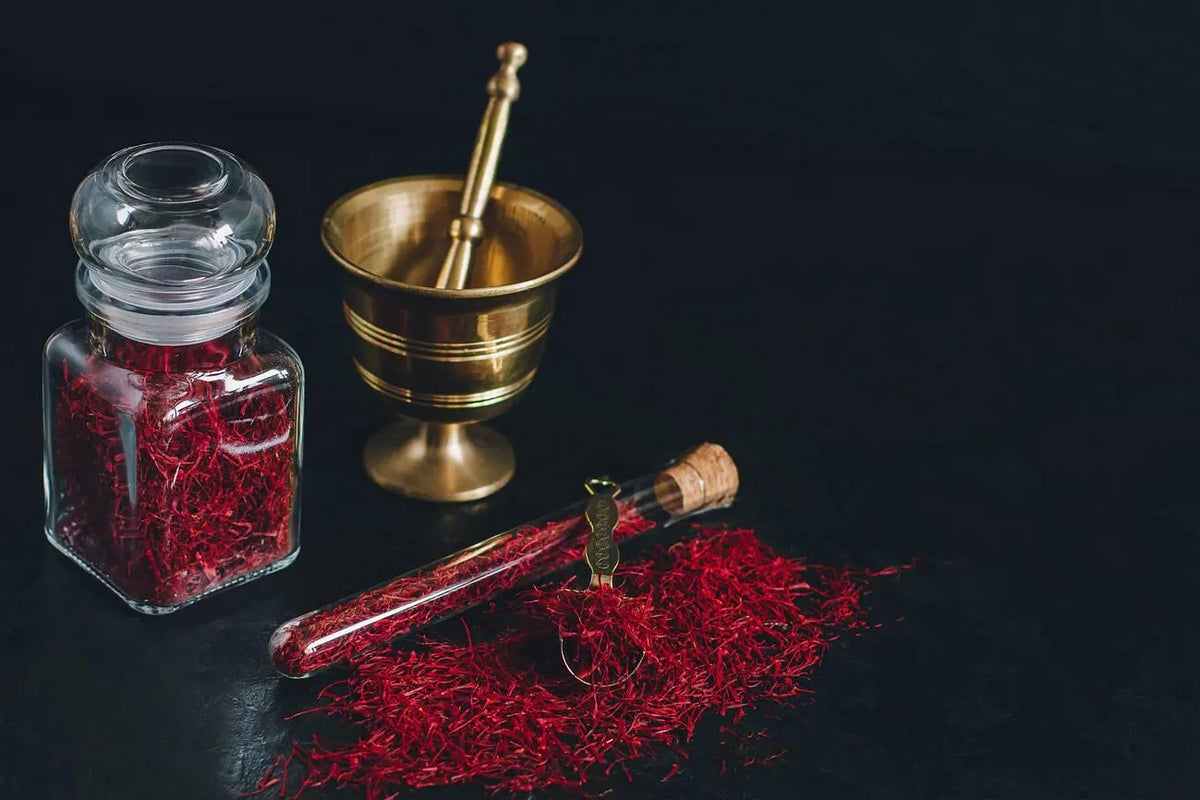
The saffron threads vs powder question has a short answer: buy threads. Whole threads can be inspected, counted and smelled, and a fake is usually obvious within seconds. Powder hides everything. Once saffron is ground, no buyer on earth can tell it from turmeric, safflower and a dye by looking at it.
What is the difference between saffron threads and powder?
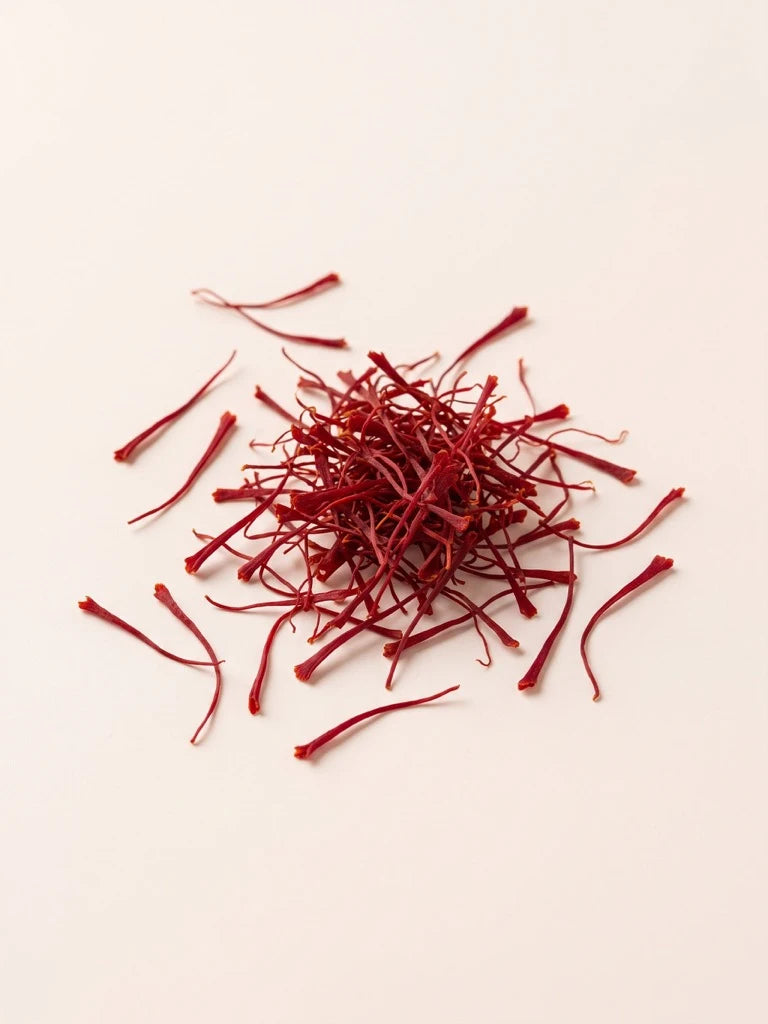
Threads are the dried red stigmas exactly as they came out of the flower: three per bloom, each one narrow at the base and flaring into a small trumpet at the tip. Powder is those same stigmas ground down, or at least that is the claim. Both forms are recognised by the trade, and the international standard for saffron covers filaments and powder alike.
The difference that matters is not chemical. It is evidential. A thread carries its own identification — shape, colour uniformity, the way it behaves in water, the smell when you crush it between finger and thumb. Powder carries none of that. You are left trusting the label.
Why is powder so easy to adulterate?
Because every physical check you would normally run depends on seeing the thread. Grinding removes the shape, blends the colour and dilutes the aroma into whatever else is in the jar.
The substitutions are not exotic. Ground turmeric brings a yellow that looks convincing in a sachet. Safflower petals, marigold, paprika and dyed starch all appear in one adulteration case or another, and a synthetic colourant can make almost any base powder look like the real thing in water. Our rundown of common saffron adulterants lists what turns up most often.
Regulators treat this as a labelling and adulteration problem. The US Food and Drug Administration sets the rules for what an imported spice package may claim to contain, but enforcement is inevitably partial, and the practical burden of verification lands on the buyer. With threads, that burden is manageable. With powder, it is close to impossible without a laboratory.
How do threads and powder compare in practice?
| Factor | Whole threads | Ground powder |
|---|---|---|
| Visual verification | Shape, flared tip and all-red colour are checkable | None possible |
| Adulteration risk | Low, and detectable by eye and water test | High, and undetectable at home |
| Aroma retention | Good — less surface exposed to air | Poorer — volatile aroma escapes faster |
| Dosing accuracy | Countable by thread, easy to repeat | Depends entirely on purity of the blend |
| Colour release | Needs blooming, 10–20 minutes | Faster, disperses almost immediately |
| Shelf life in use | Fades slowly if kept dark, dry and sealed | Fades noticeably sooner |
| Sensible use | Everyday cooking, gifting, anything you want to verify | Ground at home, immediately before use |
Does powder lose its aroma faster?
Yes, and the reason is geometry. Saffron’s smell comes from volatile compounds that leave the thread whenever they meet air. Grinding multiplies the exposed surface many times over, so the aroma that would have stayed locked inside an intact thread for a year or more starts escaping the moment the mortar comes out.
Colour behaves better than aroma here. The pigments that turn rice gold are relatively stable in the dark and degrade mainly with light, heat and time. This is why old or ground saffron can still look impressive in water while smelling of almost nothing — a useful thing to know, because colour alone is a weak test of quality.
Is powdered saffron ever the right choice?
Occasionally, and we would rather say so than pretend otherwise. Ground saffron disperses instantly, which suits some baking, some confectionery and situations where a bloom cannot be stirred through evenly. A few protected-origin producers in Italy have sold ground saffron for generations under strict rules, and it is genuine.
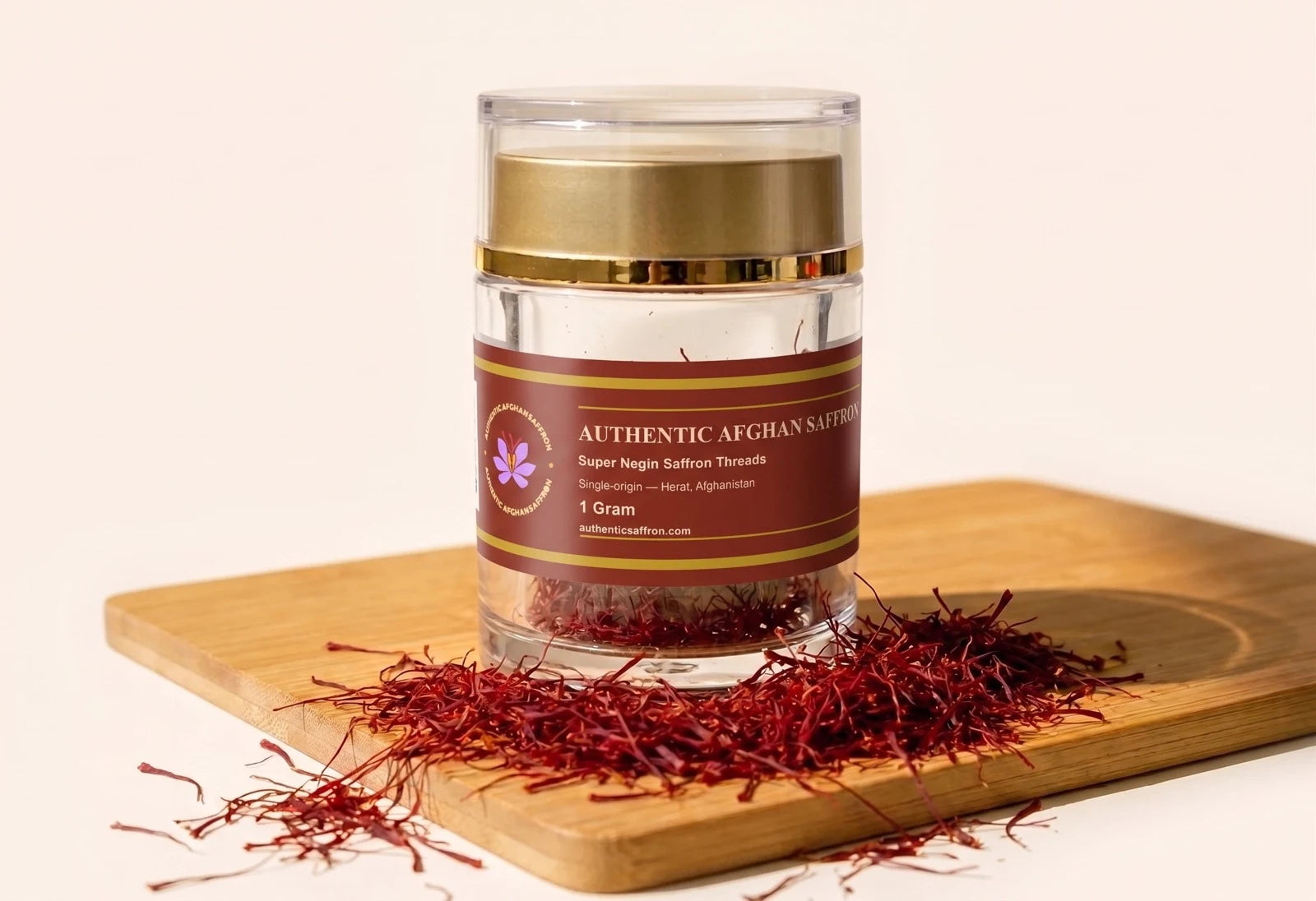
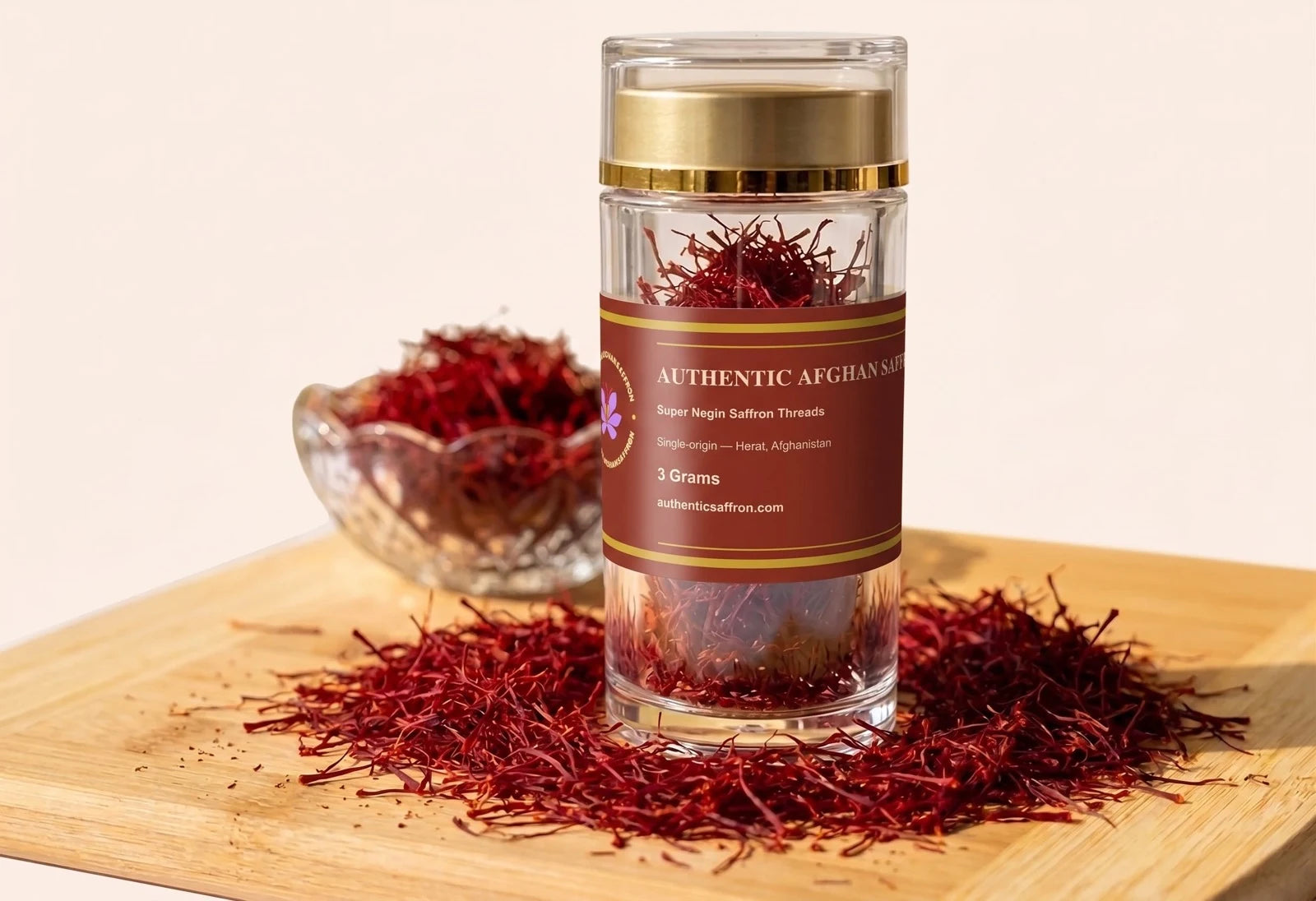
The distinction is who did the grinding. Powder you made from threads you inspected is fine. Powder bought as powder from a seller you cannot audit is a different product, and the risk is not theoretical. The rule we would give anyone shopping is simple: buy the form you can check, then change it yourself if a recipe needs it. Whole threads in a sealed jar — our own are sold as whole threads in a 1 g bottle — keep that option open.
How should you grind saffron yourself?
Only grind what you need for the dish in front of you. Powder does not keep.
- Make sure the threads are brittle-dry. If they feel slightly pliable, spread them on a plate for an hour in a dry room. Do not toast them over a flame.
- Put them in a small mortar with a pinch of sugar or coarse salt. The crystals give the pestle something to work against.
- Grind to a fine, even powder — a minute or so, no more.
- Bloom the powder in a tablespoon of warm liquid at around 150 °F / 65 °C for ten minutes. Warm, never boiling.
- Add the liquid and every last grain of the powder to the dish.
Whether to grind at all is worth thinking about; we go through the trade-offs in grinding saffron properly. For everything else, blooming whole threads gives you the same result with none of the loss.
What should you check before buying threads?
Threads only help if you actually look at them.
- Colour: deep red end to end, with no pale yellow style attached.
- Shape: a narrow base widening into a flared, slightly ragged trumpet at the tip.
- Behaviour in water: colour bleeds out slowly over minutes; the thread itself stays red.
- Smell: hay, honey and something faintly medicinal. Flat or dusty means old.
- Paperwork: a named origin, a harvest year and a seller who answers questions.
Our full walkthrough is in how to spot fake saffron, and the shopping checklist sits on the buying guide.
Frequently asked questions
Is saffron powder always fake?
No. Genuine ground saffron exists, including from protected-origin producers who have sold it that way for generations. The problem is that a buyer cannot tell genuine powder from adulterated powder without laboratory analysis, so the risk sits entirely with you.
Is powdered saffron stronger than threads?
It disperses faster, which can read as stronger in the first minute, but gram for gram genuine powder is not more potent than the threads it came from. Bloomed threads catch up and usually deliver more aroma, because less has been lost to the air.
How much powder equals a pinch of threads?
Weigh rather than convert by eye. Roughly twenty threads is a generous amount for a dish serving four, and the equivalent in powder is whatever those twenty threads weigh once ground — a very small fraction of a gram.
Can I grind saffron in a coffee grinder?
You can, but you will lose a lot of it to the walls of the machine and to any residue already there. A small mortar with a pinch of sugar or salt wastes far less and gives you more control over the texture.