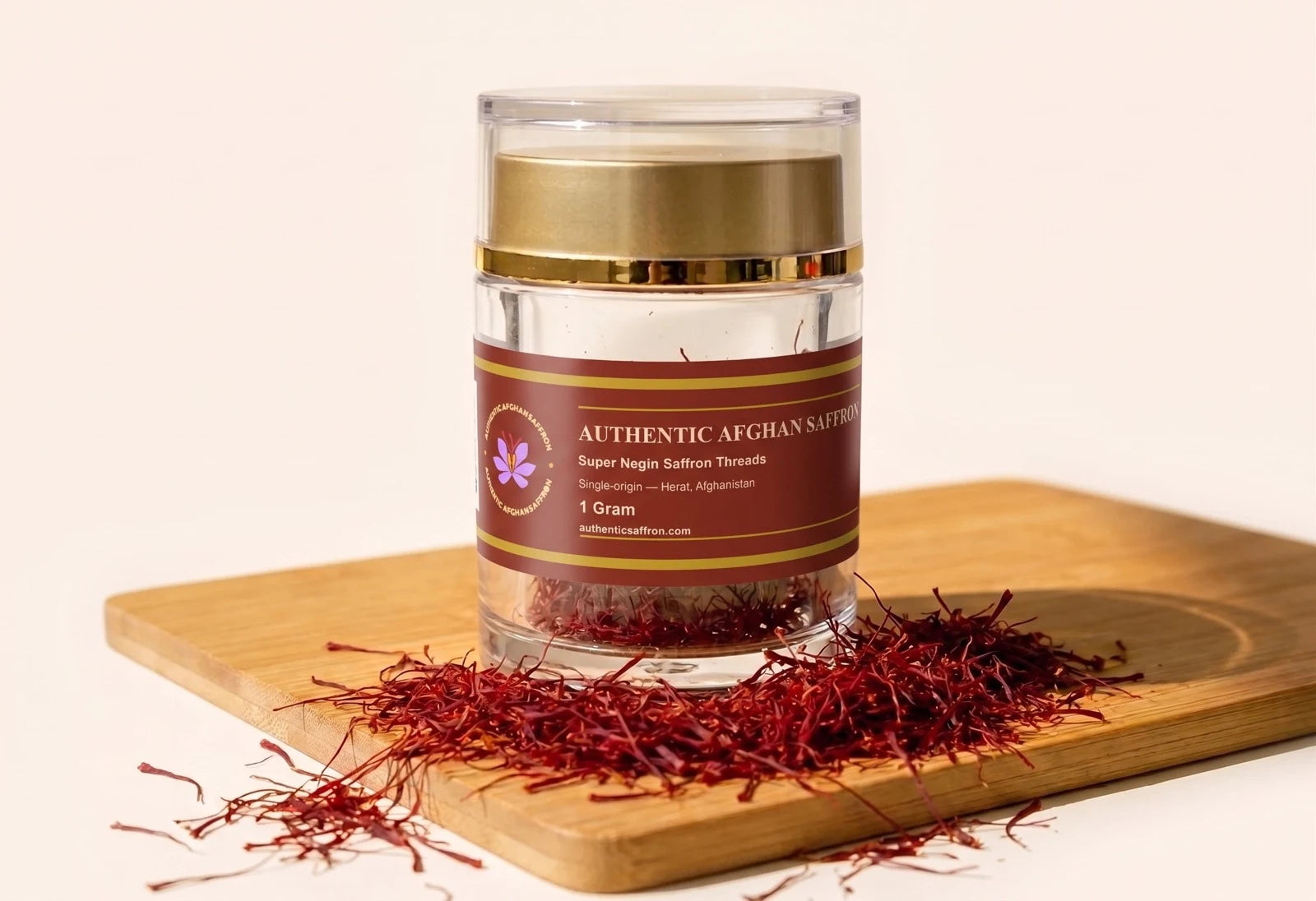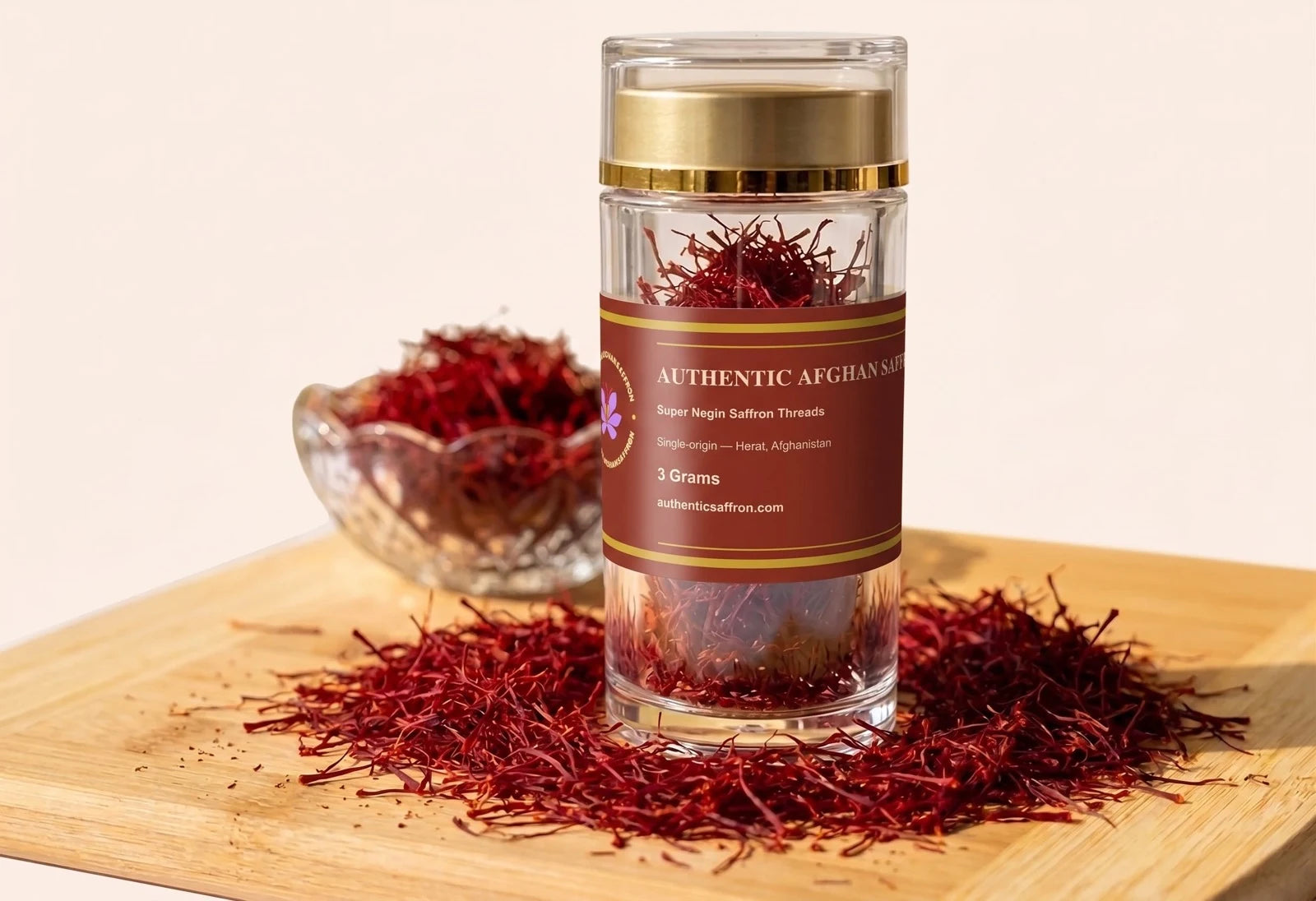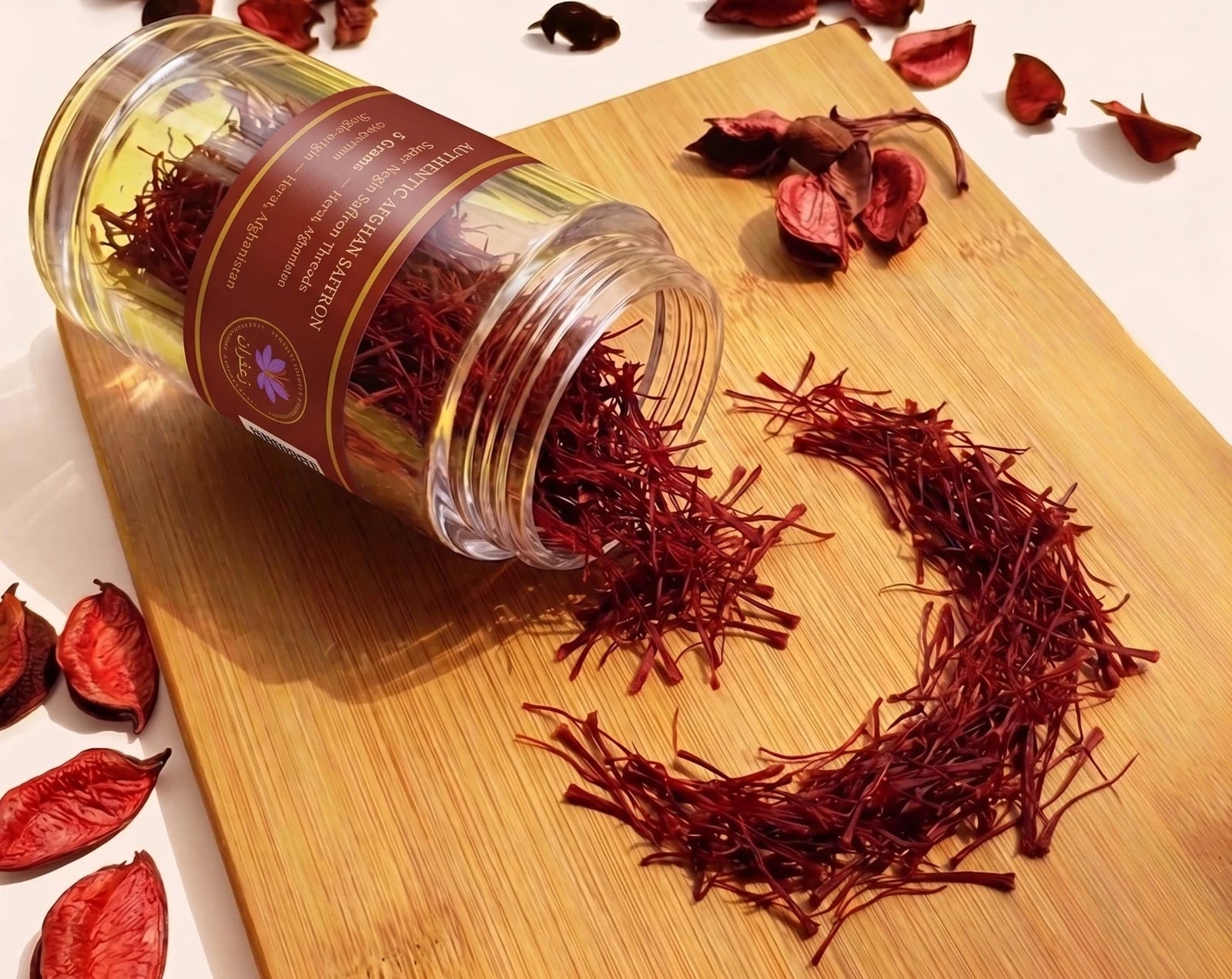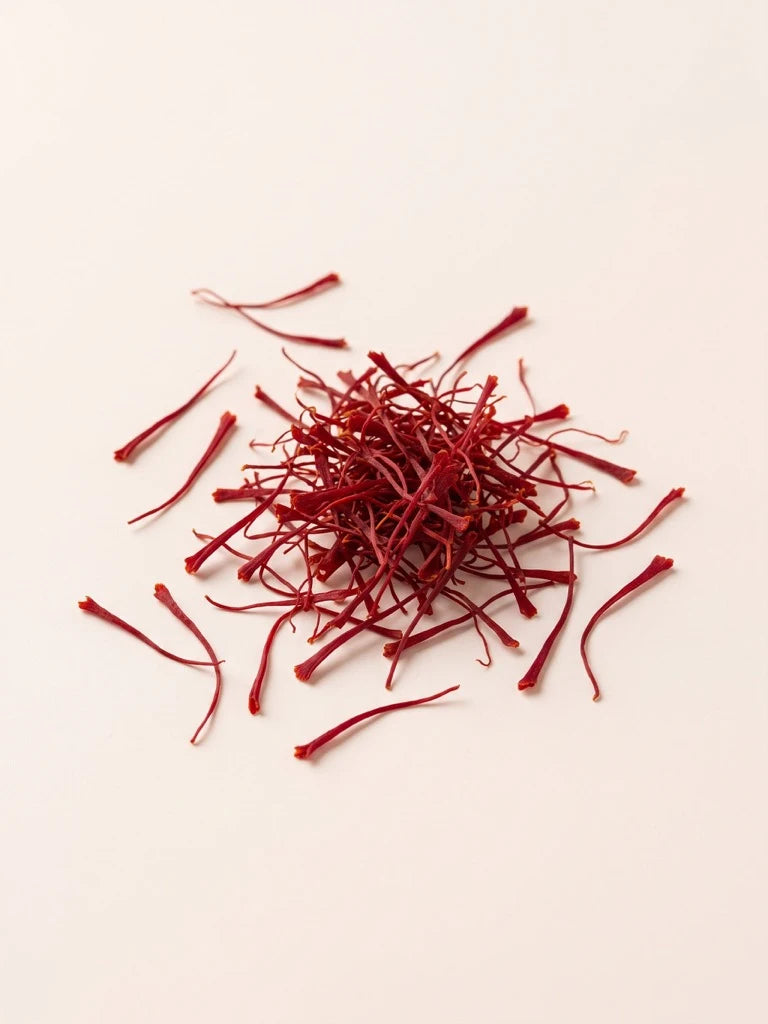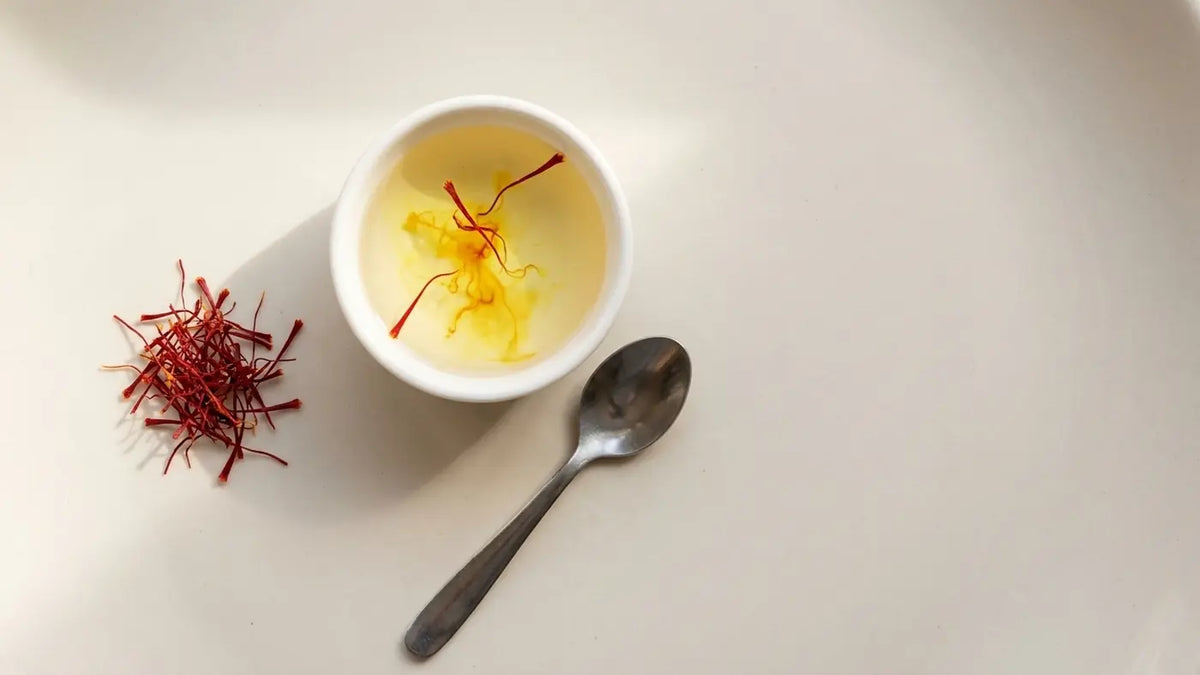
Grind saffron only when a dish needs even colour with no visible threads — and grind it dry, in a small mortar, with a pinch of sugar or salt as an abrasive. That is the short version of how to grind saffron. Fingers are the worst tool for the job, and a great many dishes are better with the threads left whole.
Why grind saffron at all?
Two honest reasons, and one bad one.
The first honest reason is extraction speed. Grinding multiplies the surface area exposed to liquid, so crocin and picrocrocin dissolve faster and more completely from a powder than from an intact stigma. In a short infusion — a five-minute bloom before a bake, say — that difference is real.
The second is distribution. Powder disperses evenly through a dough, a custard base or a spice rub in a way that threads never quite do. If you have ever cut into a saffron bun and found one orange streak and a lot of pale crumb, that is a distribution problem.
The bad reason is habit. Plenty of recipes say “grind the saffron” because the previous recipe said it. If the saffron is going into a wet dish that simmers for half an hour, whole threads will give up everything they have without any help.
What is the right way to grind saffron?
A small mortar and pestle, kept dry. Here is the sequence we use.
- Measure the threads onto a saucer first. Once they are powder they are impossible to count.
- Dry them briefly if the kitchen is humid: two minutes in a warm, switched-off oven or ten minutes on a plate near — not on — a heat source. Threads that bend rather than snap will smear instead of grinding.
- Add an abrasive. A pinch of granulated sugar for sweet dishes, coarse salt for savoury, at roughly two to three times the volume of the saffron. The crystals do the cutting.
- Grind with a circular pressing motion, not a pounding one, until the powder is uniform and deep orange-red.
- Scrape the mortar out with the back of a teaspoon, then rinse the last of it directly into your blooming liquid. The residue clinging to the stone is a surprising share of a small quantity.
Total time is under a minute. Everything after that is the bloom, which we cover in the guide to blooming saffron properly.
Which grinding method works best?
The comparison below is about what each method costs you as well as what it gives.
| Method | Evenness of powder | Aroma retained | Waste | Best for |
|---|---|---|---|---|
| Mortar and pestle, dry, with sugar or salt | Very even | High | Low | Doughs, custards, rubs, short infusions |
| Mortar and pestle, dry, no abrasive | Uneven, tends to smear | High | Moderate — sticks to the stone | Larger quantities only |
| Electric spice grinder | Even | Lower — blade heat and airflow | High for small amounts | Several grams at once, rarely worth it |
| Crumbled between fingers | Coarse and inconsistent | Moderate | High — oil and static | Nothing, really |
| Not ground — whole threads bloomed | Not applicable | Highest | Lowest | Rice, stews, soups, tea, anything simmered |
Two rows deserve a note. The electric grinder is the one people reach for and regret: a blade chamber built for peppercorns will scatter a tenth of a gram of saffron around its walls, and the blade tip warms enough to cost you volatile aroma. The last row is the one most cooks should be in.
Why not just crumble it between your fingers?
Because fingertips are warm, slightly oily and full of static, and saffron is a dry, light material that answers to all three. Threads stick to skin. Powder clings under the nail. On a quantity measured in hundredths of a gram, losing even a fifth of it matters more than it would with any other spice in the rack.
There is also a moisture issue. Damp fingers pull humidity into the threads and turn crumbling into smearing, which produces flakes rather than powder. If you have no mortar, fold the threads into a small square of parchment and roll a rolling pin or the base of a glass over the packet. It is not elegant, and it works.
What should you do with the powder once it is ground?
Use it. Ground saffron is more exposed to air, light and moisture than an intact thread, and it starts losing aroma from the moment the pestle stops. Grinding is a step in a recipe, not a storage strategy.
- Bloom within minutes: warm water, milk or stock at around 150°F (65°C) for 10 to 20 minutes, never boiling.
- If you must hold it, keep it in a sealed opaque container and use it inside a day or two. The reasons are set out in how saffron degrades.
- Never grind a whole tin in advance to save time later. You will be cooking with a much weaker spice by the third dish.
This is also why we sell threads rather than powder. Once saffron is ground, no buyer can verify what is in the jar by looking at it, and the international standard ISO 3632, listed in the ISO catalogue, sets a tighter moisture limit for powder than for filaments precisely because ground material is the more fragile form. The trade-offs are compared in threads versus powder.
When should you skip grinding entirely?
Whenever the dish has liquid and time. Rice, pilaf, risotto, soups, braises, poaching syrups and tea all give whole threads twenty minutes or more in hot liquid, which is more than enough for full extraction. In several of those dishes the threads are also part of the look: a scatter of intact red filaments over white rice says something a uniform yellow does not.
Skip it too when you are cooking with saffron you have not used before. Whole threads give you a last chance to check colour, shape and smell before they go in, which powder takes away. More on that in cooking with saffron.
Frequently asked questions
Do you need to grind saffron before using it?
No. Whole threads release their colour and aroma fully in any dish with liquid and twenty minutes of time. Grinding helps mainly in doughs, custards and dry rubs where powder distributes more evenly than threads can.
What can I use instead of a mortar and pestle?
Fold the threads into a square of parchment or baking paper and roll a rolling pin, a heavy glass or a jar over the packet. Add a pinch of sugar or salt inside the packet first so the crystals do the cutting.
Should saffron be toasted before grinding?
Only very gently, if at all. Brief warming in a switched-off oven makes damp threads brittle enough to grind cleanly, but a hot dry pan drives off safranal, the volatile compound responsible for saffron aroma. If the threads already snap when bent, skip the step.
How long does ground saffron keep?
Far less well than threads. Grinding exposes much more surface to air, light and moisture, so bloom the powder within minutes if you can, and use any you hold back inside a day or two from a sealed opaque container.