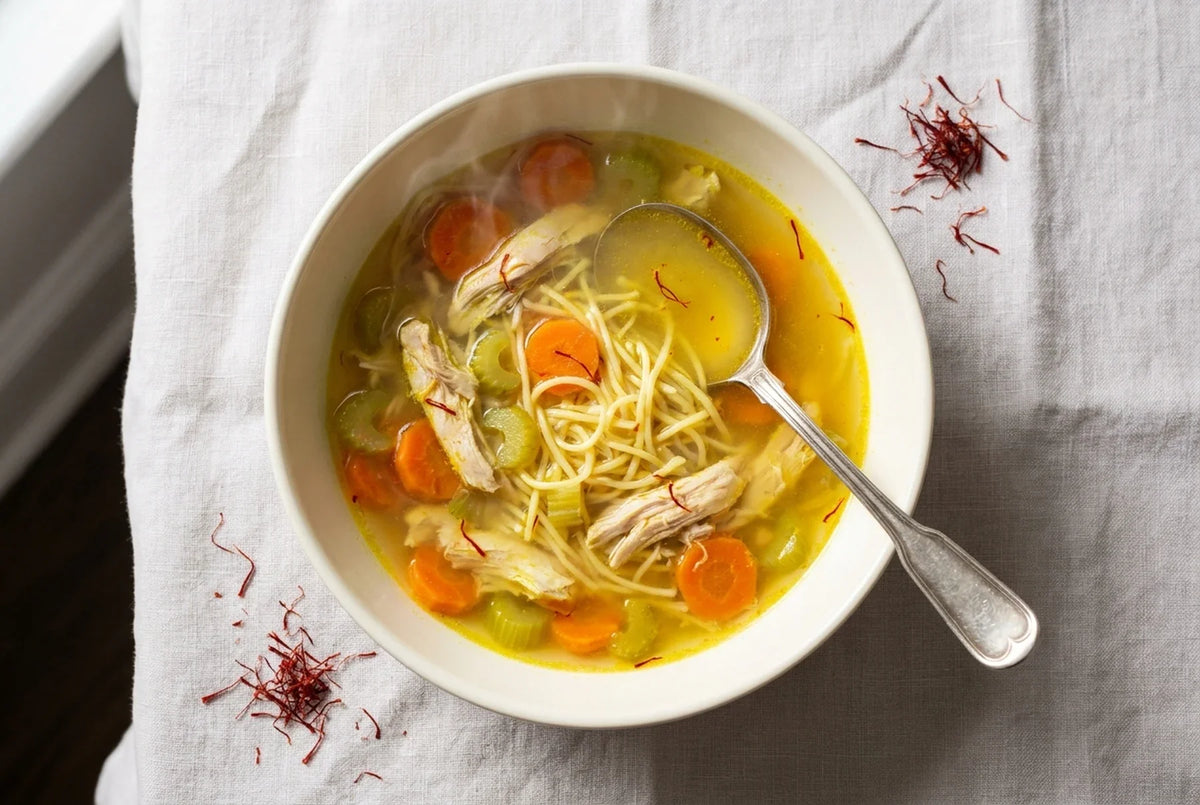
Saffron chicken soup is not chicken soup with a yellow tint. Bloom 30 threads (0.12 g) in warm broth, hold them back until the last ten minutes, and the pot smells of hay and citrus rather than of stock cube. Bone-in thighs, a clear broth, about ninety minutes.
Most golden chicken soups get their colour from somewhere other than saffron — turmeric, rendered fat, a long boil on yellow-skinned birds. That is worth saying out loud, because it explains why so many recipes calling for saffron produce a soup that tastes exactly like the version without it.
The difference is entirely in when the threads go in and what they went into first.
Why does saffron suit chicken soup?
Chicken broth is close to the ideal carrier. Saffron splits its work between crocin, which is water-soluble and does the colour, and safranal and its relatives, which are volatile and much happier in fat. A broth from bone-in, skin-on thighs has both a watery phase and a film of rendered fat, so both halves of the spice reach you. Skinless breast gives colour and very little smell.
The second reason is contrast. Simmered onion, carrot and celery are sweet, and long-cooked chicken is soft and slightly flat. Saffron’s bitterness is faint but it puts an edge on the broth, especially alongside lemon. It is the same reason a good soup wants a squeeze of something acidic at the end.
What saffron cannot survive is a forty-minute simmer. The aromatics leave with the steam. Everything below is arranged so the colour has time to spread and the smell arrives intact.
How much saffron does this need?
Thirty threads, about 0.12 g, for a pot yielding roughly six servings. Soup is thin and generously salted, and both make saffron read louder than it does in rice or bread. Forty threads is the most this pot takes before the broth turns faintly medicinal.
Warm 1/4 cup of broth to about 150°F (65°C). You want steam and a flat surface, not bubbles. Pour it over the threads, cover the bowl with a saucer so the aroma stays where you can use it, and leave it 20 minutes. Never bloom in boiling liquid; the compounds you are trying to keep leave first.
Then hold it back. The bloomed liquid goes in during the last five to ten minutes of cooking, threads included. If you want visible red flecks in the bowl, keep three or four dry threads aside and crumble them over at the table. Our guide to blooming liquids compared covers when broth beats plain water, and it usually does here.
What goes into the pot?
- 2 lb (900 g) bone-in, skin-on chicken thighs, about 6
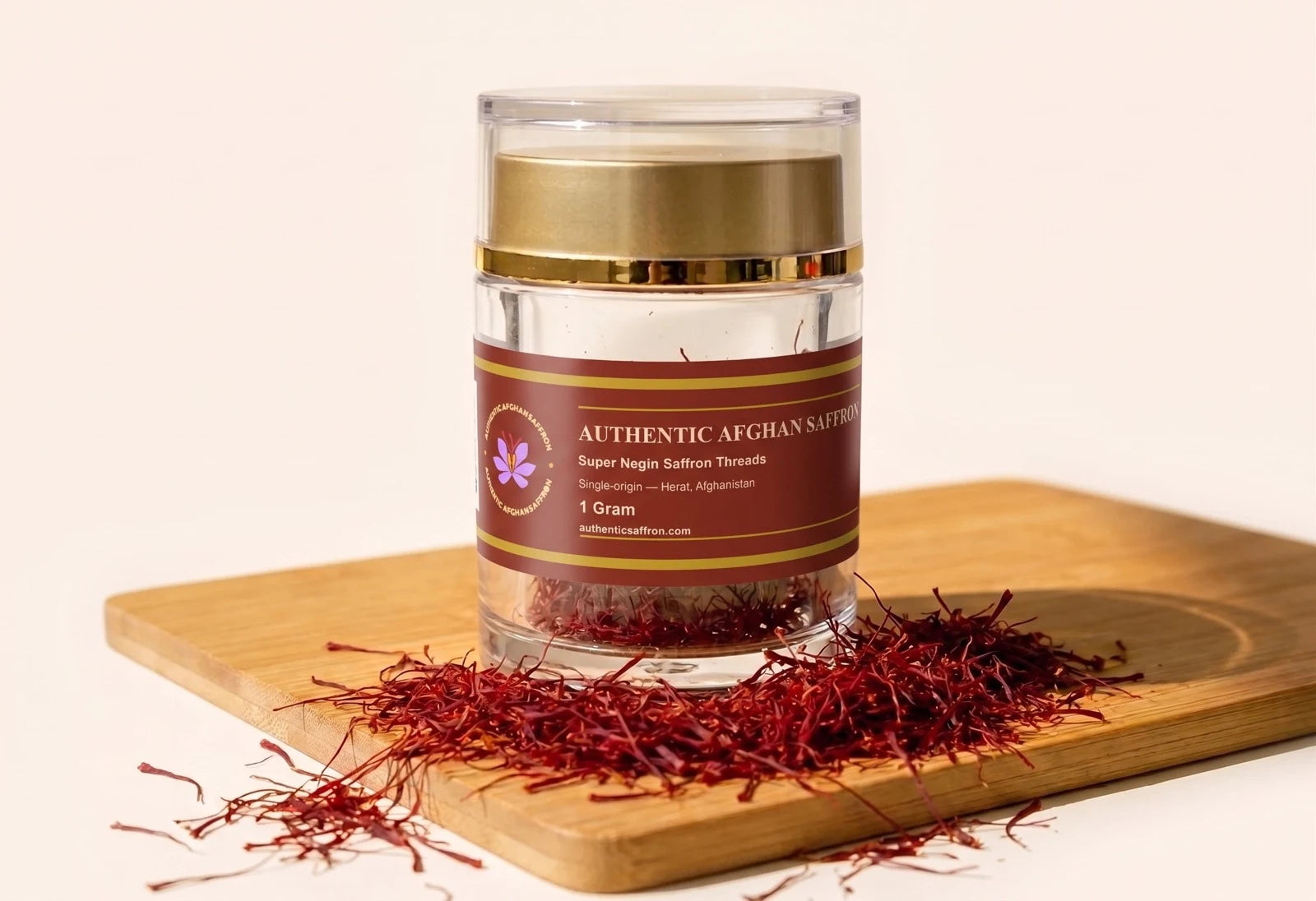
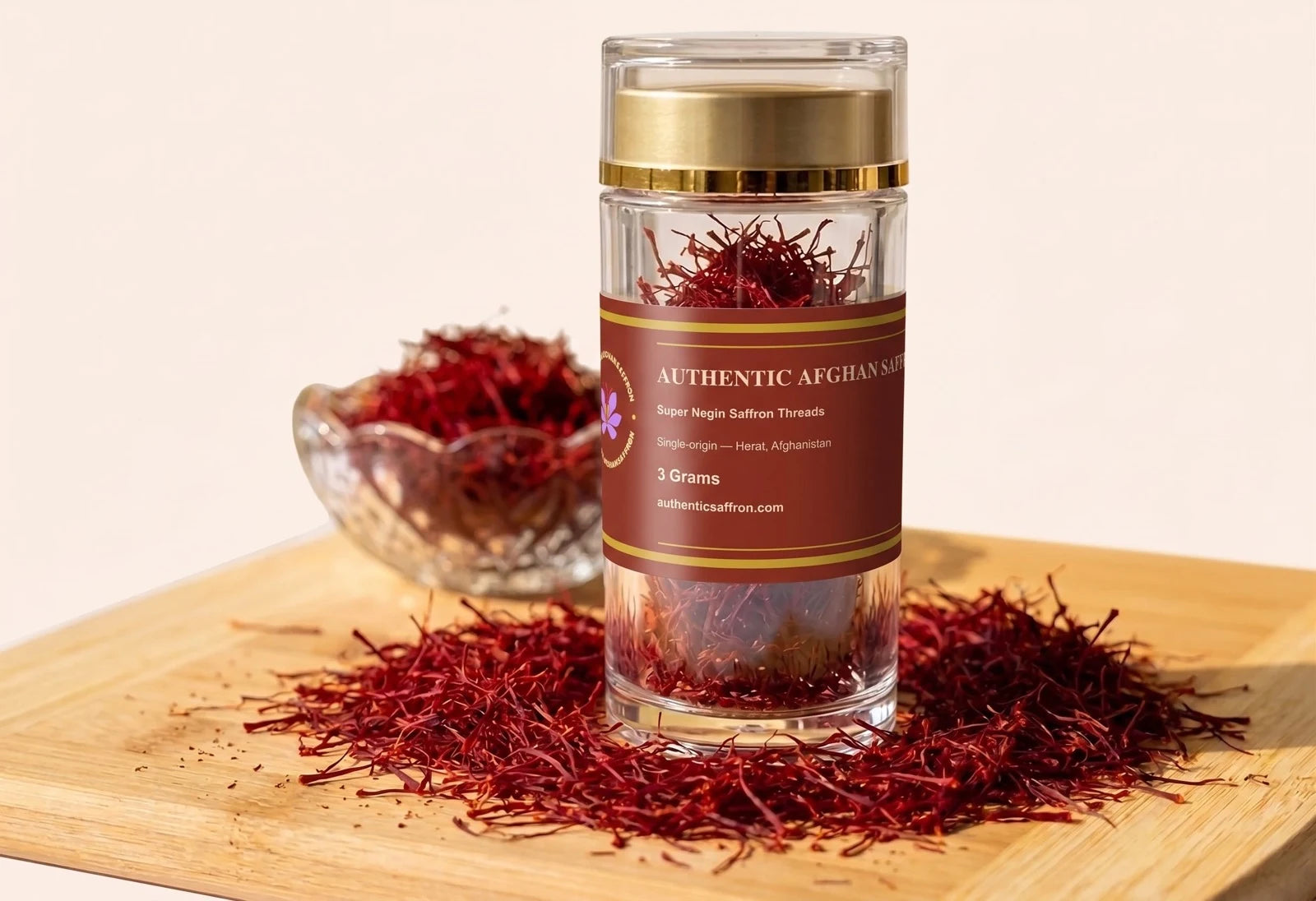
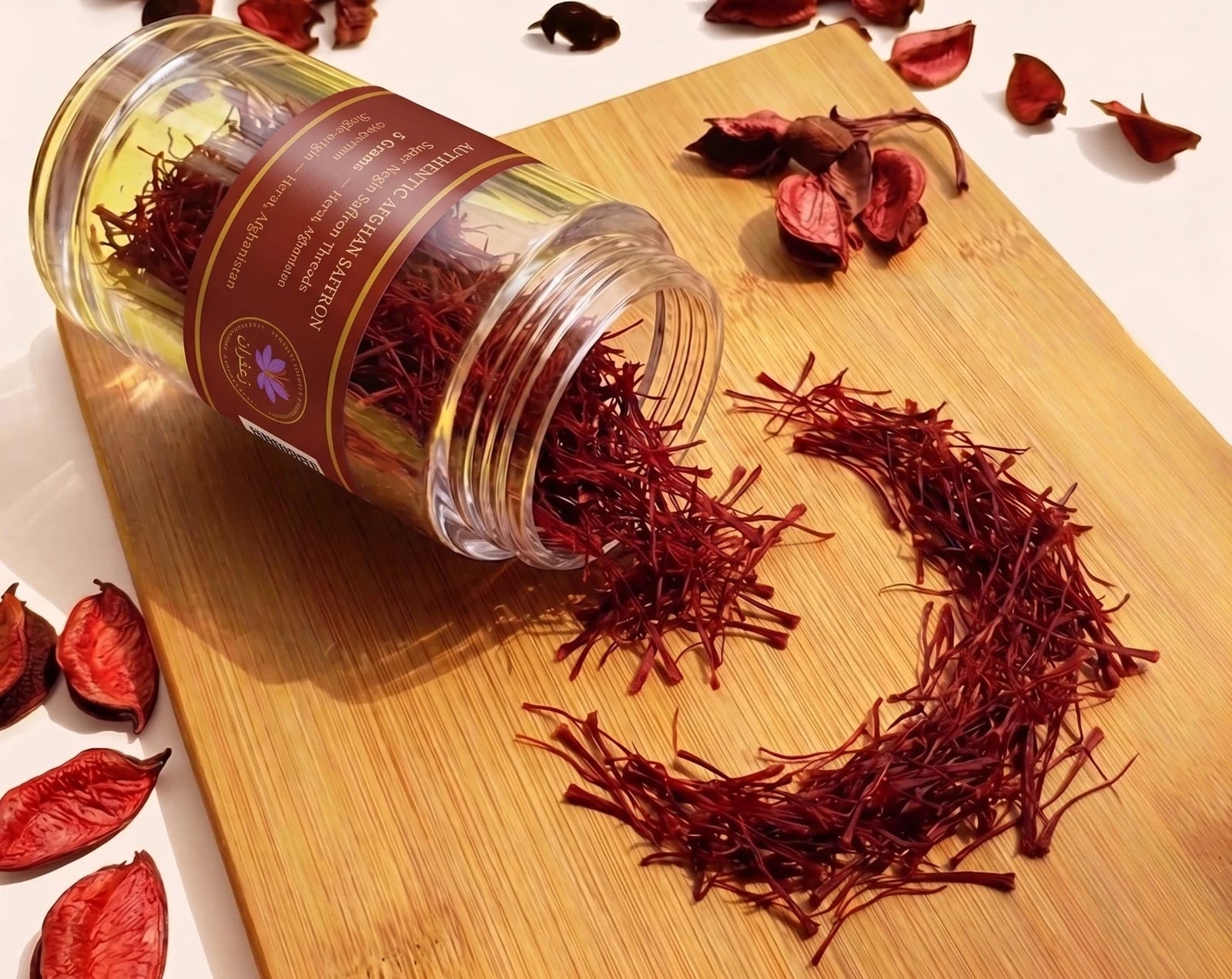
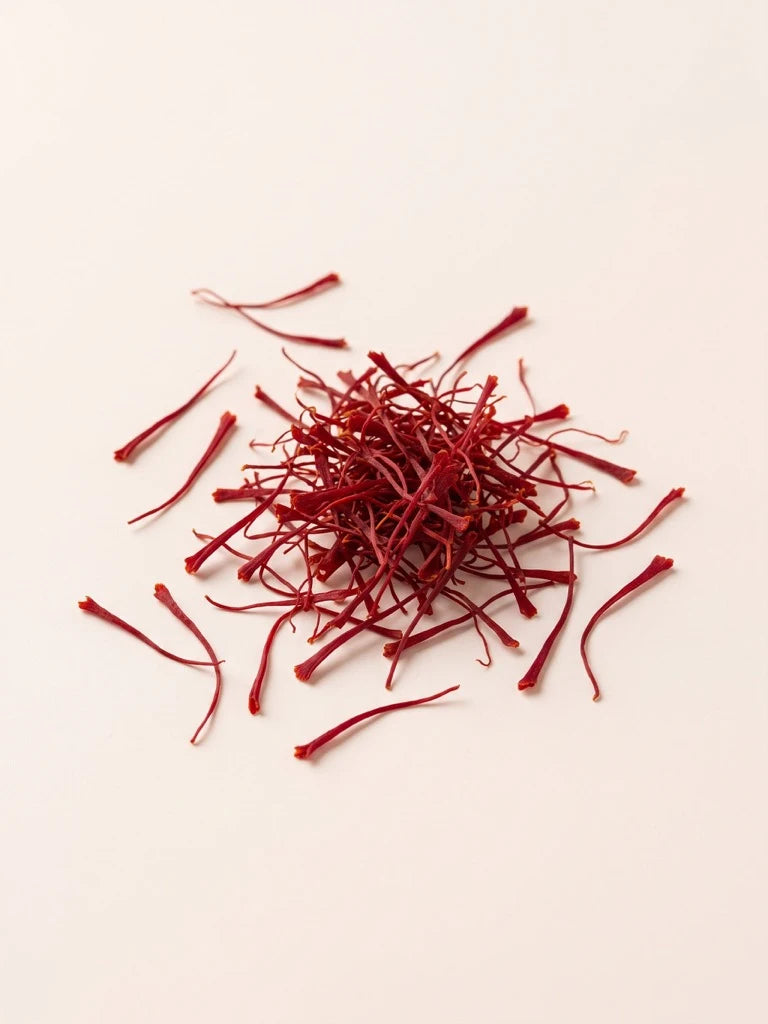
- About 30 saffron threads (0.12 g)
- 1/4 cup (60 ml) chicken broth, warmed to about 150°F (65°C), for blooming
- 1 tbsp olive oil
- 1 large onion, diced
- 2 carrots, cut into 1/2-inch coins
- 2 celery stalks, sliced
- 3 garlic cloves, smashed
- 8 cups (2 L) low-sodium chicken broth or water
- 2 wide strips lemon zest, pared with a peeler
- 1 bay leaf
- 1/2 cup (95 g) long-grain white rice, or 4 oz (115 g) short egg noodles
- 2 tbsp lemon juice
- 1/4 cup chopped dill or flat-leaf parsley
- Fine sea salt and freshly ground black pepper
How do you put it together?
- Bloom the saffron. Warm 1/4 cup of broth to about 150°F (65°C) and pour it over the threads in a small bowl. Cover with a saucer and leave it for 20 minutes while you cook. The liquid should be deep orange by the end, not pale yellow.
- Brown the thighs. Heat the oil in a 5 to 6 quart pot over medium-high. Lay the thighs in skin side down and leave them alone for 6 to 8 minutes. They will release from the base by themselves once the skin is deep gold; if you have to prise one up, it is not ready. Turn, give them 2 minutes, then move them to a plate.
- Cook the vegetables. Pour off all but about a tablespoon of the fat. Add the onion, carrot and celery over medium heat and cook for 8 minutes, until the onion is translucent and the browned bits on the base have loosened into the vegetables.
- Add the garlic. Stir in the smashed garlic and cook for 1 minute, just until it smells sweet.
- Simmer the chicken. Return the thighs skin side up with any juices, then add the broth, lemon zest and bay leaf. Bring it up to a simmer and skim the grey foam off the surface for the first five minutes. Then lower the heat until a bubble breaks every second or two and cook, uncovered, for 35 to 40 minutes.
- Shred the meat. Lift the thighs onto a board. Discard the skin and bones and pull the meat into large pieces with two forks. Small shreds disappear into the broth; thumb-sized pieces stay recognisable.
- Cook the rice. Add the rice to the simmering broth and cook for 15 minutes, or cook noodles for the time on the package. While it cooks, skim off as much surface fat as you like, but leave a thin gold film behind — that film is what carries the saffron aroma.
- Finish with the saffron. Return the chicken to the pot and stir in the bloomed saffron with its threads, the lemon juice and the herbs. Keep it below a simmer for 5 minutes. Taste, salt properly, and let it stand off the heat for a few minutes; the colour deepens as it sits.
Why does the broth turn cloudy?
Heat, almost every time. A rolling boil shakes fat into the liquid as an emulsion and knocks loose protein off the meat, and once a broth is cloudy there is no clarifying it in a home kitchen. You want the surface barely moving for the whole forty minutes.
Skipping the skim is the other half. The grey scum that rises in the first five minutes is coagulated protein, and if you stir it back in it stays. One minute of attention with a spoon at the start decides how the soup looks at the end.
Rice added too early is a separate problem. Give it more than about twenty minutes in the pot and it sheds enough starch to turn the broth thick and dull, which also mutes the saffron. Fifteen minutes is enough.
The most common saffron mistake here is putting the threads in with the broth at the start. After forty minutes you have a yellow soup with no aroma, which is an expensive way to make it look nice. More on that in cooking with saffron.
Frequently asked questions
Can I make this with a rotisserie chicken?
You can, and it saves an hour. Skip the browning step, simmer the stripped carcass in the broth for 30 minutes to get some body back, then strain, add the vegetables and cook them through. Fold the meat in at the end with the saffron. The soup will be lighter and less roasted, so be a little heavier on the lemon.
Should I strain the broth?
Only for a consommé-style bowl, and you would strain before the vegetables go back in. Here the onion and carrot in suspension are part of the texture. Clear means unclouded, not vegetable-free.
How do I stop the rice bloating in leftovers?
Cook it separately and spoon it into each bowl. Rice left sitting in broth keeps absorbing overnight and by morning you have a thick porridge with the same seasoning spread across twice the volume. The same goes double for noodles.
Does saffron chicken soup freeze well?
The broth and chicken freeze fine for three months; leave the rice or noodles out. What does not survive is the aroma, which fades noticeably after a few weeks. Bloom five or six fresh threads in a spoonful of the reheated broth and stir them through, and it comes back.
Read next
- Afghan shorwa with saffron — the slower, lamb-based cousin of this pot.
- The basic saffron rice method, if you would rather serve rice alongside than in the broth.
- How much saffron per person for scaling this up to a crowd.
- How much saffron do you need, with thread counts for other dishes.