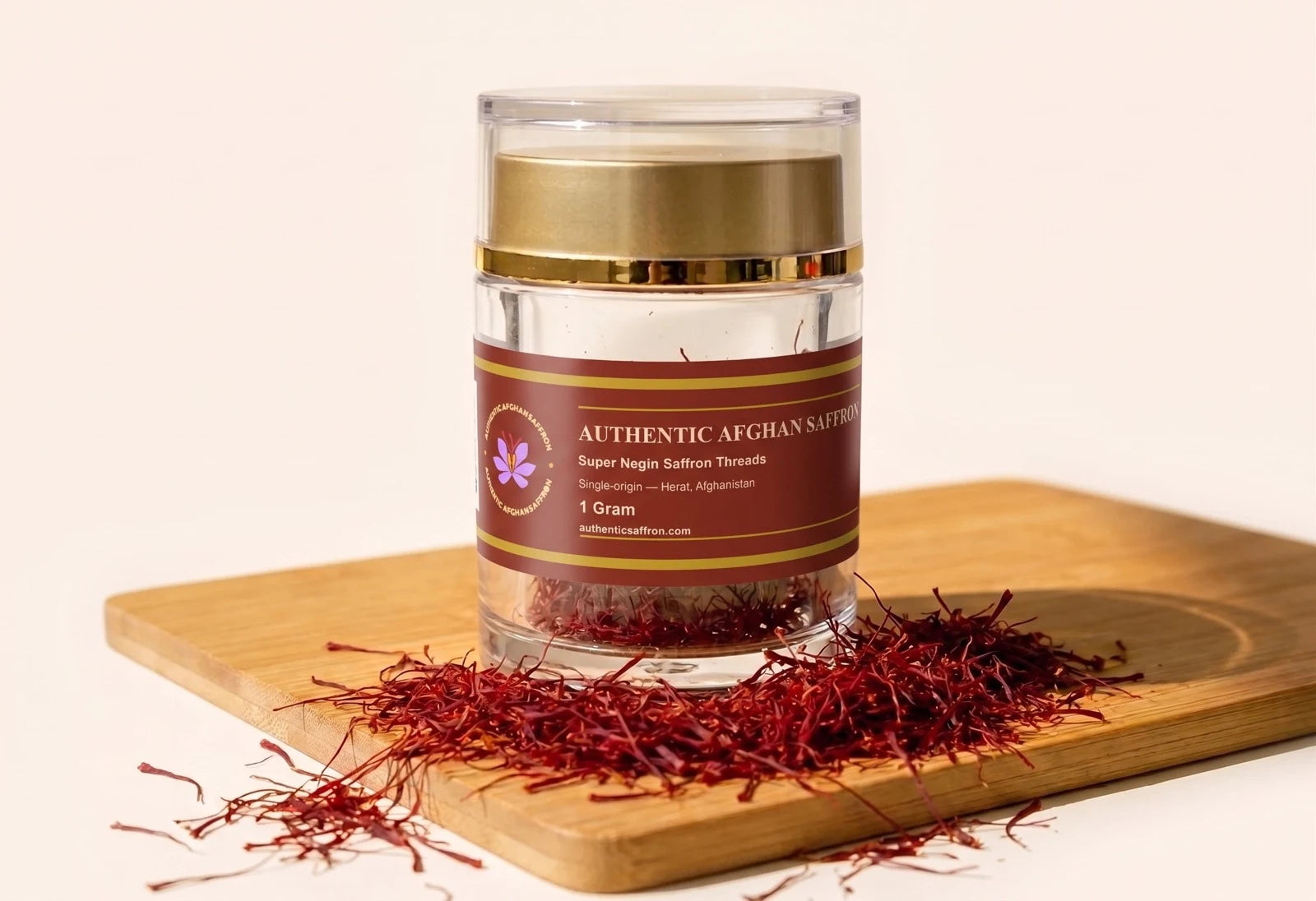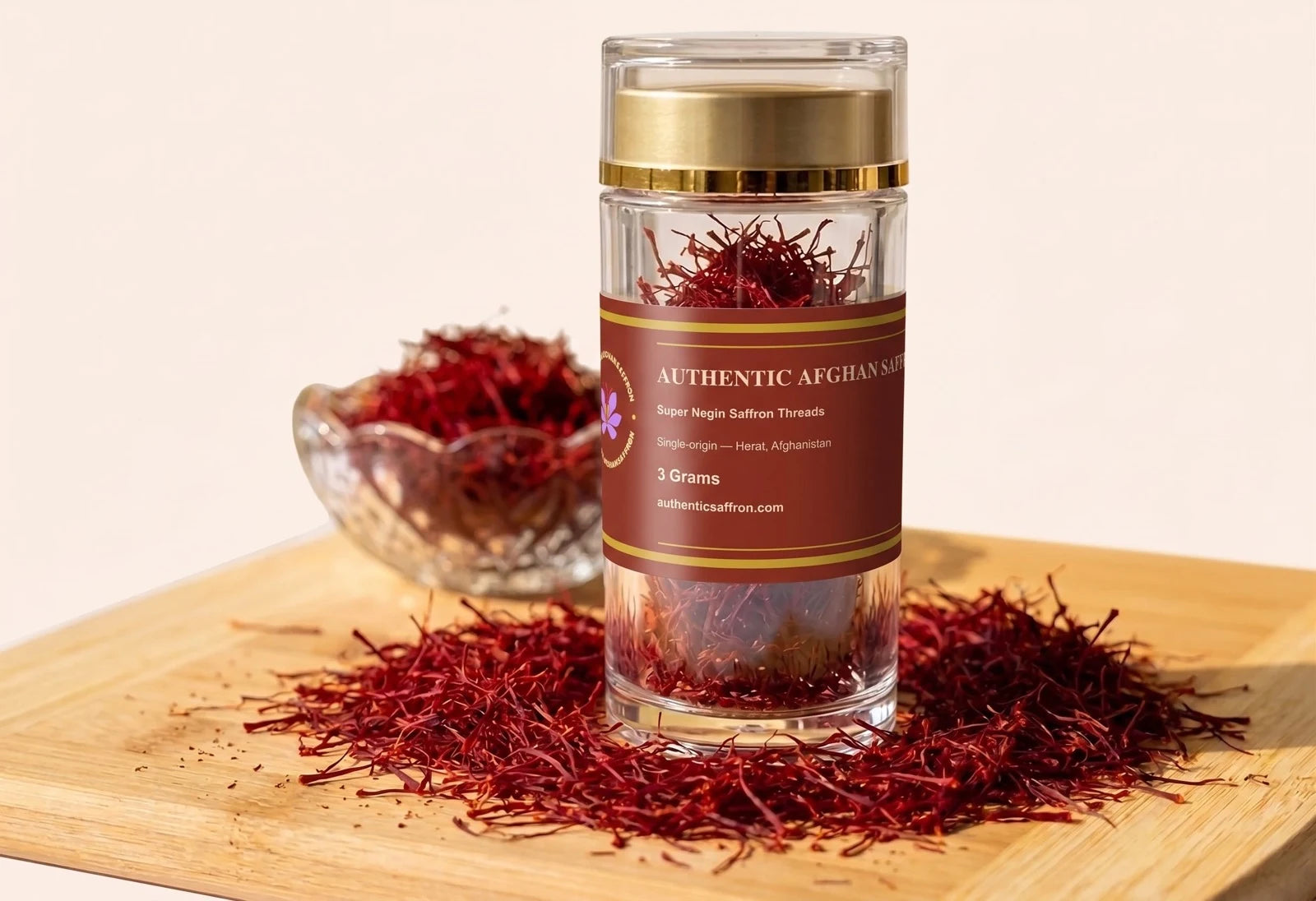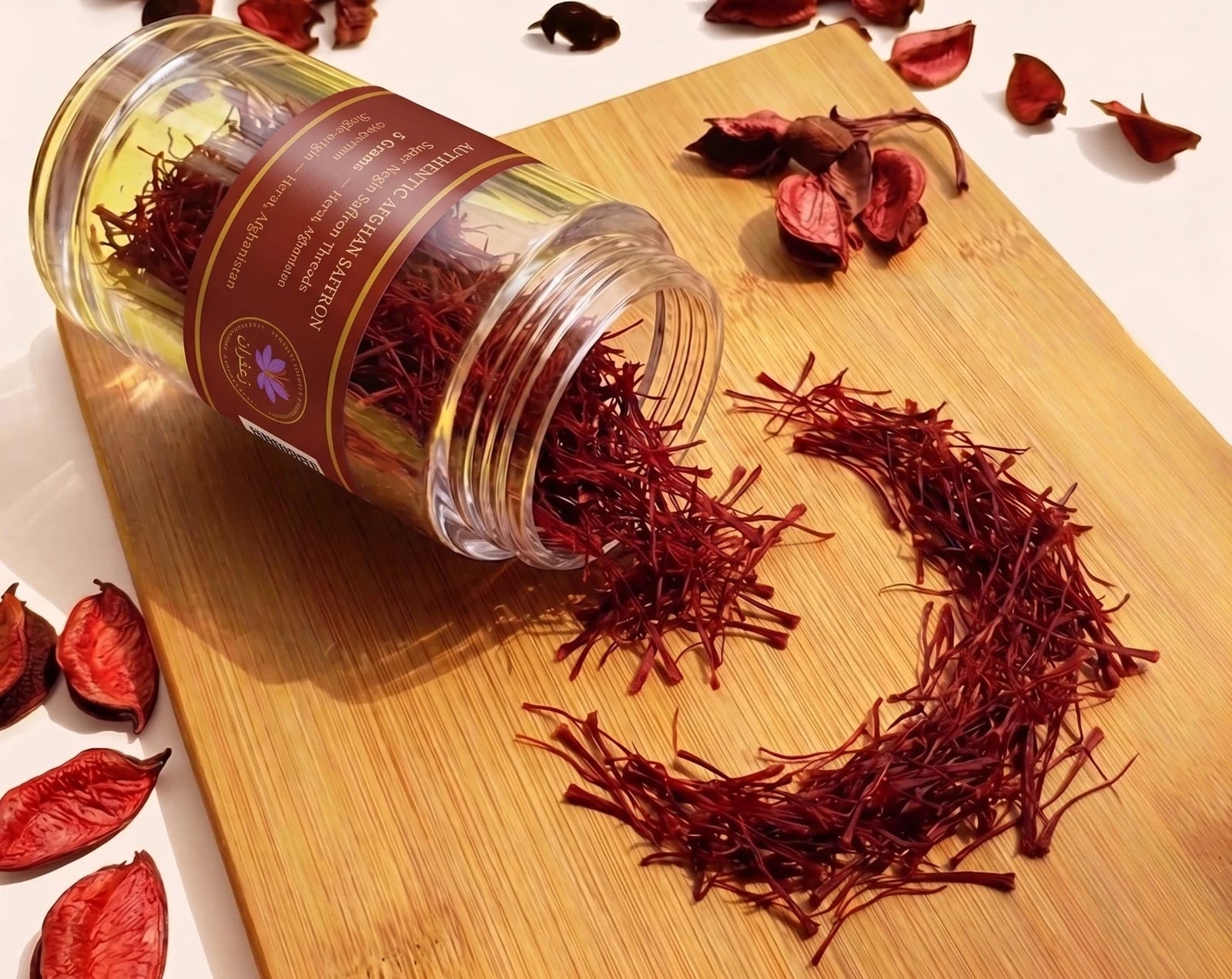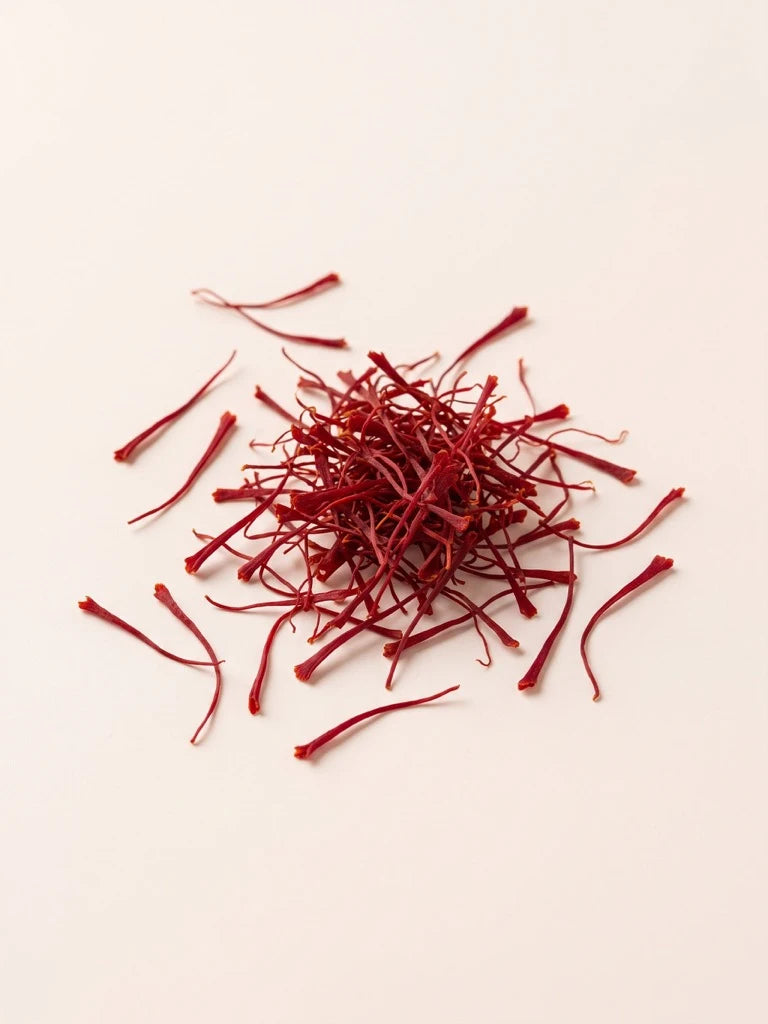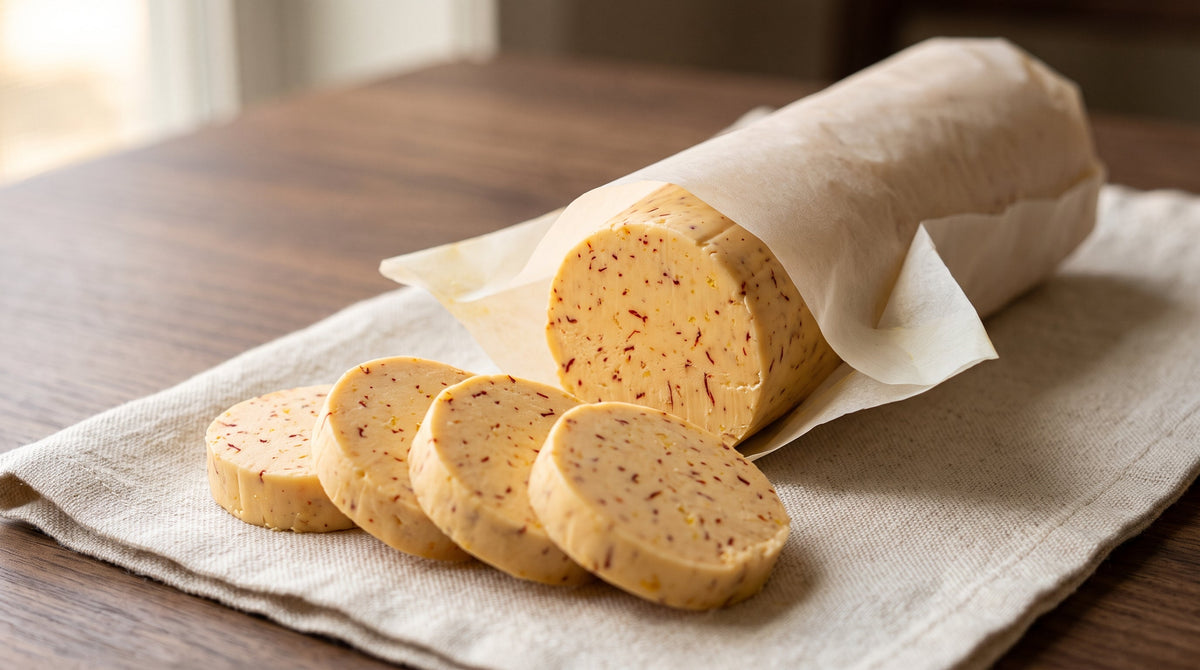
This saffron butter recipe takes 30 threads — 0.12 g — bloomed in a tablespoon of warm water and beaten into 225 g of softened unsalted butter. Roll it into a log, chill it hard, then cut coins to melt over rice, white fish or sweetcorn. It keeps three months in the freezer.
Why beat water into butter at all?
It sounds like a mistake. Butter is fat; the pigment you are chasing is water-soluble. But butter is already an emulsion, roughly 16 to 18 per cent water suspended in fat, and it will accept one more tablespoon without complaint if the temperature is right. That is the whole trick, and temperature is where people lose it.
There is a second reason worth knowing. Safranal, the compound behind the smell of saffron, is volatile and dissolves happily in fat. A stiff block of butter holds it in place. A syrup in the fridge loses its aroma steadily over a fortnight; a frozen log of saffron butter still smells like saffron in February. Fat is the best storage medium in a domestic kitchen for this particular spice.
No heritage claim here. Compound butter is a French restaurant habit, a way of banking a finishing sauce in the freezer. Saffron is not traditionally treated this way anywhere. What it does is turn an expensive spice into single portions you cannot over-pour, which for most home cooks solves the real problem.
How much saffron does 225 g of butter need?
Thirty threads, about 0.12 g, for two sticks. Cut into half-inch coins that log gives you roughly fifteen pieces, so each coin carries about two threads. One coin finishes a plate of rice or a fillet of cod, which is a sensible dose for one person. Our note on how much saffron per person sets out where that number comes from.
Bloom the threads in 1 tablespoon of water held around 150°F (65°C) for 15 minutes, covered. Steaming, no bubbles. Boiling water is the mistake to avoid: it takes the aroma off the top and leaves you with dye. Then, and this matters more here than in most recipes, let the bloomed liquid cool to room temperature before it goes anywhere near the butter. Hot liquid melts fat on contact and you get an oily pool instead of an emulsion.
Whole red threads are the right buy for this. You will see them suspended as flecks through the pale orange butter, which is both attractive and a way of checking what you paid for. Pale yellow style mixed in adds bulk and nothing else. There is more on dosing and blooming across dishes on our cooking with saffron page.
What are the ingredients?
Unsalted butter, and good butter, since there is nowhere for it to hide. A higher-fat European style block at 82 per cent holds the added water better than a standard 80 per cent one.
- About 30 saffron threads (0.12 g)
- 1 tbsp (15 ml) water, for blooming
- 225 g (2 sticks) unsalted butter, softened to about 65°F (18°C)
- 3/4 tsp fine sea salt
- 1 tsp finely grated lemon zest
- 1 small garlic clove, grated on a rasp, optional
- 1 tbsp finely chopped chives, optional
How do you make and shape it?
- Soften the butter to the right point. Cut the block into half-inch cubes and leave them on the counter 45 to 60 minutes. You want butter that dents under a thumb but holds its shape and looks matte. Anything glossy or greasy is too warm and will split. Never soften it in the microwave.
- Bloom the saffron. Heat the tablespoon of water to about 150°F (65°C), steaming with no bubbles breaking. Crumble the threads in, cover the cup and leave 15 minutes, then leave it a further 15 to come down to room temperature.
- Crush the wet threads. Press them against the side of the cup with the back of a teaspoon until they break up. Whole threads give you orange streaks and pale gaps; crushed ones give you an even colour through the whole log.
- Beat the butter on its own first. Two minutes with a paddle on medium, or three minutes with a fork worked against the side of a bowl, until it is noticeably paler and holds soft peaks. Butter that has not been aerated cannot take on the water.
- Add the bloom in three goes. Pour in a third, beat until it disappears, scrape the bowl down, repeat. After the first addition it will look curdled and wrong. Keep going. It comes together within about 30 seconds each time.
- Season and taste on bread. Beat in the salt, lemon zest and any garlic and chives. Taste it on a torn piece of bread rather than off the spatula, because a spatula-load of fat coats your tongue and flattens everything.
- Roll the log. Scrape the butter onto a 14 inch sheet of parchment in a rough sausage about an inch and a half across. Fold the near edge over, then push the long edge of a ruler or a sheet pan against the base of the roll while pulling the paper back. That compacts it and drives out air pockets.
- Chill hard, then slice. Twist the ends like a sweet wrapper and refrigerate at least two hours. Cut coins about half an inch thick with a knife run under hot water and wiped dry between cuts.
- Store it. Wrap the log in foil over the parchment and freeze for up to three months, or keep it in the fridge for two weeks. Coins go straight from frozen onto hot food.
What makes saffron butter weep or split?
Every failure in this recipe is a temperature failure. The butter was too warm, or the liquid was.
- Beads on the cut face. If a sliced coin shows small orange droplets after a day in the fridge, the emulsion was never properly formed — usually butter above 70°F. Let the log come back to 65°F, beat it again, re-roll.
- An oily, grainy mess. That is hot bloom liquid hitting soft butter. It is recoverable: chill the bowl until the mixture is firm at the edges, then beat from cold.
- Do not exceed a tablespoon of liquid per 225 g. Two tablespoons is roughly where a home block starts sweating no matter how carefully you work.
- Skip salted butter. Salt levels vary wildly between brands, and this recipe has too little else in it to absorb a surprise.
One use case to rule out: frying. Saffron butter is a finishing butter. Above about 350°F the milk solids brown and the aromatics you paid for are gone in seconds. Melt it over food already on the plate, or stir it into rice off the heat. For pairing ideas beyond fish and rice, see our notes on saffron flavour pairings.
Frequently asked questions
Can I use ground saffron powder instead of threads?
Yes, and it disperses more evenly, but you lose the visual check. Powder is where adulteration hides, so buy it only from a seller whose threads you already trust. Use a scant 0.06 g and still bloom it in warm water first, since dry powder stirred into fat tastes dusty.
Why did mine come out streaky rather than evenly orange?
Whole threads that were never crushed, almost always. Wet saffron threads are tough and they stay intact through beating, so the colour travels only in the liquid around them. Press them flat against the cup with a spoon before they go in.
What is it best on?
Plain steamed rice, white fish, scallops, corn on the cob, mashed potato, soft scrambled eggs and warm flatbread. It is very good stirred through a bowl of small pasta with nothing else. It is wasted on anything with tomato, chilli or strong cheese in it.
Does it really keep three months frozen?
Well wrapped, yes, and it is the best-keeping saffron preparation in this collection. Freeze the log whole rather than pre-sliced; every cut face is another surface losing aroma. Double wrapping matters because butter picks up freezer smells fast.
Read next
- Saffron rice — the dish a coin of this was made for
- Saffron scrambled eggs — another fat-first approach
- Our saffron — what we sell and where it comes from