Saffron eggs are a two-minute dish with one slow step in front of them. Bloom 10 threads — about 0.04 g — in a tablespoon of warm milk for fifteen minutes, then beat that liquid into three eggs and scramble them low and slow in an 8-inch nonstick pan. Total time, twenty-five minutes.
Most saffron dishes hide the spice inside something loud. Eggs do not. There is nowhere for a thread to shelter in a plate of soft curds, which makes this both the cheapest way to taste what your saffron actually smells like and the least forgiving.
Why does saffron suit eggs so well?
Eggs are mild, fatty and slightly sulphurous. Saffron is floral, hay-like and faintly bitter. The two do not compete, because they occupy different parts of the mouth — the egg is texture and richness, the saffron is aroma sitting on top of it.
Fat is also a good carrier. Butter and cream hold volatile aroma compounds long enough for you to smell them at the table rather than lose them to the pan. That is why this recipe finishes with cold butter off the heat instead of cooking everything in oil.
Be clear about what this is, though. Scrambled eggs with saffron is not a heritage dish with a century behind it. Saffron and egg turn up together in Afghan, Indian and Spanish kitchens in various forms, and this is a modern breakfast borrowing that pairing. What saffron adds is perfume and a faint bitterness that keeps rich eggs from tasting flat by the third mouthful.
How many threads should you use?
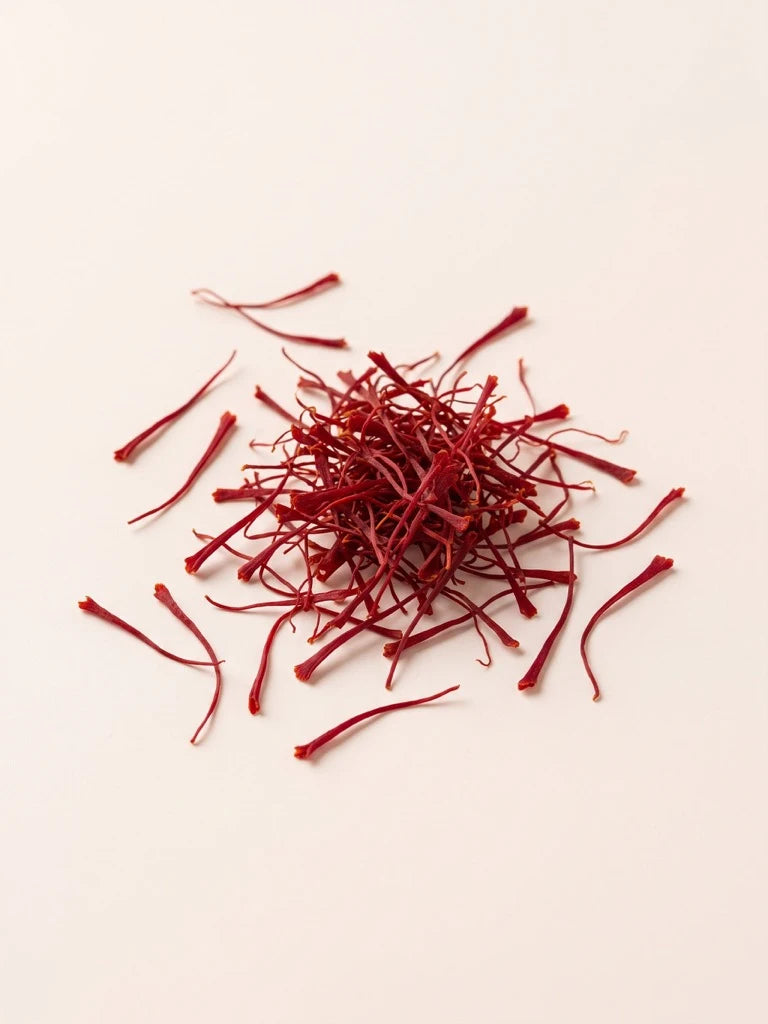
Ten threads for three eggs, which is roughly 0.04 g on a jeweller’s scale. That sounds miserly. It is not: eggs are a quiet background, and at twenty threads the dish tips into something medicinal rather than breakfast.
Bloom the threads in 1 tablespoon of whole milk warmed to about 150°F (65°C). Milk out of the fridge into a small pan for forty seconds over low heat is about right — it should feel hot on the back of a finger but nowhere near a simmer. Cover the cup and leave it fifteen to twenty minutes. Boiling liquid drives the aroma off as steam and leaves you with orange colour and nothing else.
Weighing beats counting once you cook this often, and our notes on cooking with saffron cover the small scales worth owning. If you are scaling up for a table, work from the per-person ratios rather than doubling by eye.
What goes into it?
- 3 large eggs, as fresh as you can find
- About 10 saffron threads (0.04 g)
- 1 tbsp (15 ml) whole milk, for blooming
- 1 tbsp (15 g) unsalted butter, cold, cut into two pieces
- 1 tbsp (15 ml) heavy cream or creme fraiche, cold
- Fine sea salt
- Ground white pepper, or black pepper if that is what you have
- 2 slices sourdough, toasted and buttered, to serve
Nothing here is negotiable except the toast. Cold butter at the end is the part people skip and then wonder why their eggs tighten on the plate.
How do you cook them?
Read the whole method first. Once the eggs hit the pan there is no pausing to look something up.
- Bloom the saffron. Warm the milk to about 150°F (65°C) — hot to a fingertip, no bubbles — and pour it over the threads in a small cup. Cover with a saucer and leave 15 to 20 minutes. The milk should turn the colour of weak apricot juice.
- Beat the eggs. Crack the eggs into a bowl, add the bloomed milk with the threads still in it, and whisk for about 20 seconds. Stop when there are no ropes of white left, not when it foams. Add a pinch of salt and let it stand 5 minutes.
- Set the pan. Put an 8-inch nonstick skillet over low heat and add one piece of butter. It should melt into a slick without foaming loudly. If it browns at the edges, the pan is too hot — wipe it out and start again.
- Pour and wait. Pour in the eggs and count slowly to twenty without touching them. A thin skin will form on the base. That skin is your first curd and it needs to exist before you start stirring.
- Stir slowly. With a silicone spatula, push the set egg from the edge into the middle, then tilt the pan so the raw egg runs into the gap. Repeat every few seconds. This takes 3 to 5 minutes on low heat and should never look violent.
- Pull them early. When about two thirds of the mixture has set into soft curds the size of small peas and the rest is still glossy, take the pan off the heat completely. Keep stirring off the burner for another 15 seconds.
- Finish off the heat. Drop in the second piece of cold butter and the cream and fold them through. The cold fat stops the cooking and loosens the curds. Taste, add salt if it needs it, and grind over the pepper.
- Serve at once. Spoon onto warm buttered toast and eat standing up if you have to. Scrambled eggs lose their texture within two minutes of leaving the pan and no amount of saffron rescues them.
What are the common mistakes?
- The pan is too hot. If the eggs hiss when they land, the heat is wrong. Hot pans set the outside of each curd before the inside has moved, and the eggs weep water onto the plate within a minute.
- The saffron went in dry. Threads crumbled straight into raw egg give you brown flecks and almost no perfume. The fifteen-minute soak is the recipe.
- They were cooked to done. Eggs carry enough residual heat to keep cooking in the pan for another thirty seconds. Pull them while a third of the mixture still looks glossy and loose.
- Too much liquid. One tablespoon of blooming milk per three eggs is the ceiling. Beyond that the curds cannot hold together and you get scrambled egg soup.
One more thing worth saying: cook these in a pan you can see into. A dark nonstick surface hides the moment the curds start to set, and that moment is the whole dish.
Frequently asked questions
Can I use ground saffron instead of threads?
You can, but use less — a scant pinch, closer to half what you would use in threads, because powder extracts faster and more completely. It still needs the warm milk. Ground saffron dusted dry into beaten egg leaves visible specks and tastes dusty rather than floral.
Will the eggs actually look orange?
Only just. Eggs are already yellow, so the colour shift is subtle — a deeper, slightly rosier gold at the edges of the curds. If you want to see what your saffron is really doing, bloom a second batch of threads in water and look at that instead. The point of saffron in eggs is smell, not colour.
Does this work in a stainless or cast-iron pan?
Cast iron holds too much heat for eggs this soft, and stainless needs more butter than the dish wants. If stainless is all you have, take the pan off the burner every 20 seconds to control the temperature, and accept slightly firmer curds.
How do I scale this up for four people?
Use two pans rather than one big one. Eight eggs in a 12-inch skillet spread too thin and set before you can stir them. Double the saffron to 20 threads, bloom it all in 2 tablespoons of milk, and split the liquid between the bowls.
Read next
- How to bloom saffron – the fifteen-minute step this recipe depends on, in more detail
- Blooming liquids compared – why milk suits eggs and water suits rice
- Saffron compound butter – make it once and your eggs are a thirty-second job