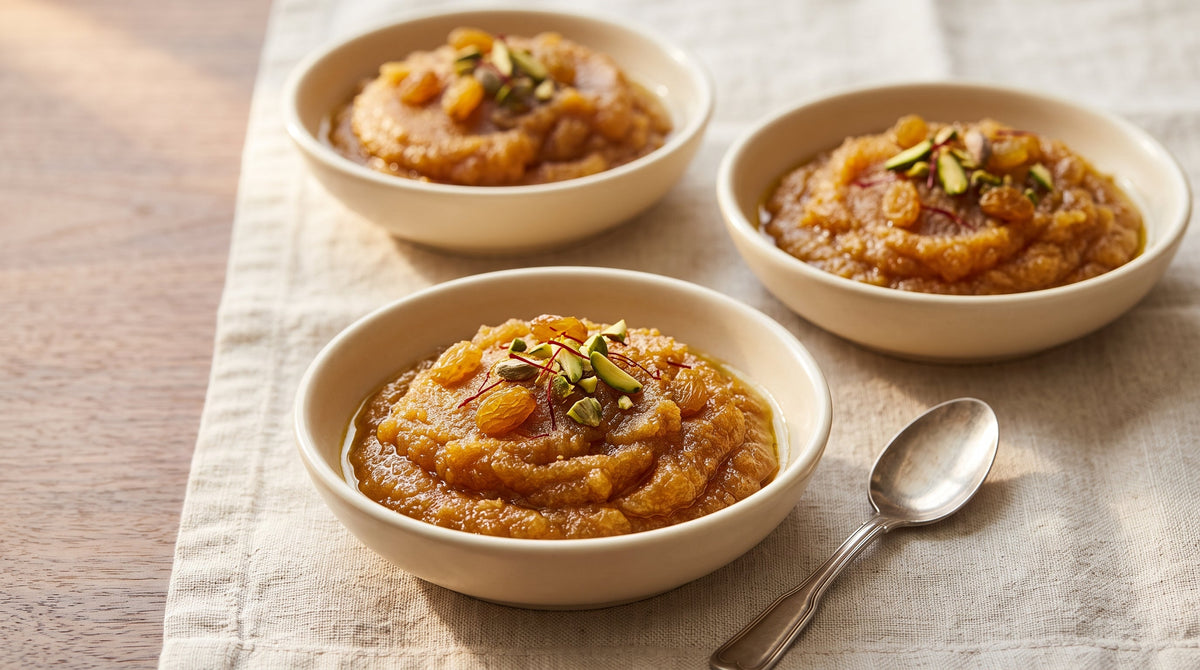
This saffron halwa recipe takes 25 threads, about 0.10 g, bloomed in warm milk and stirred into semolina toasted in ghee. The whole thing is done in forty-five minutes in one heavy pan. The only difficult part is the moment the hot syrup hits the grain and spits.
Everything else is stirring. Get the syrup and the semolina hot at the same time and the texture takes care of itself.
Why does saffron belong in halwa?
Halwa in Afghan and South Asian kitchens is usually built on three flavours: ghee, cardamom and sugar. That combination is warm but flat. It has no top note. Rosewater is the traditional fix, and saffron is the other one — the version brought out for Eid, for a birth, for guests who matter.
Saffron does two things here. It pushes the colour from the beige of toasted semolina to a deep amber, and it adds a dry, hay-and-honey aroma that sits above the ghee rather than underneath it. Because halwa is eaten warm, the aroma arrives before the first spoonful does.
This is a genuine pairing, not a marketing one. But it is worth saying plainly that most halwa, most days, is made without saffron. It is the festival version, and the cost is the reason.
How much saffron does this need?
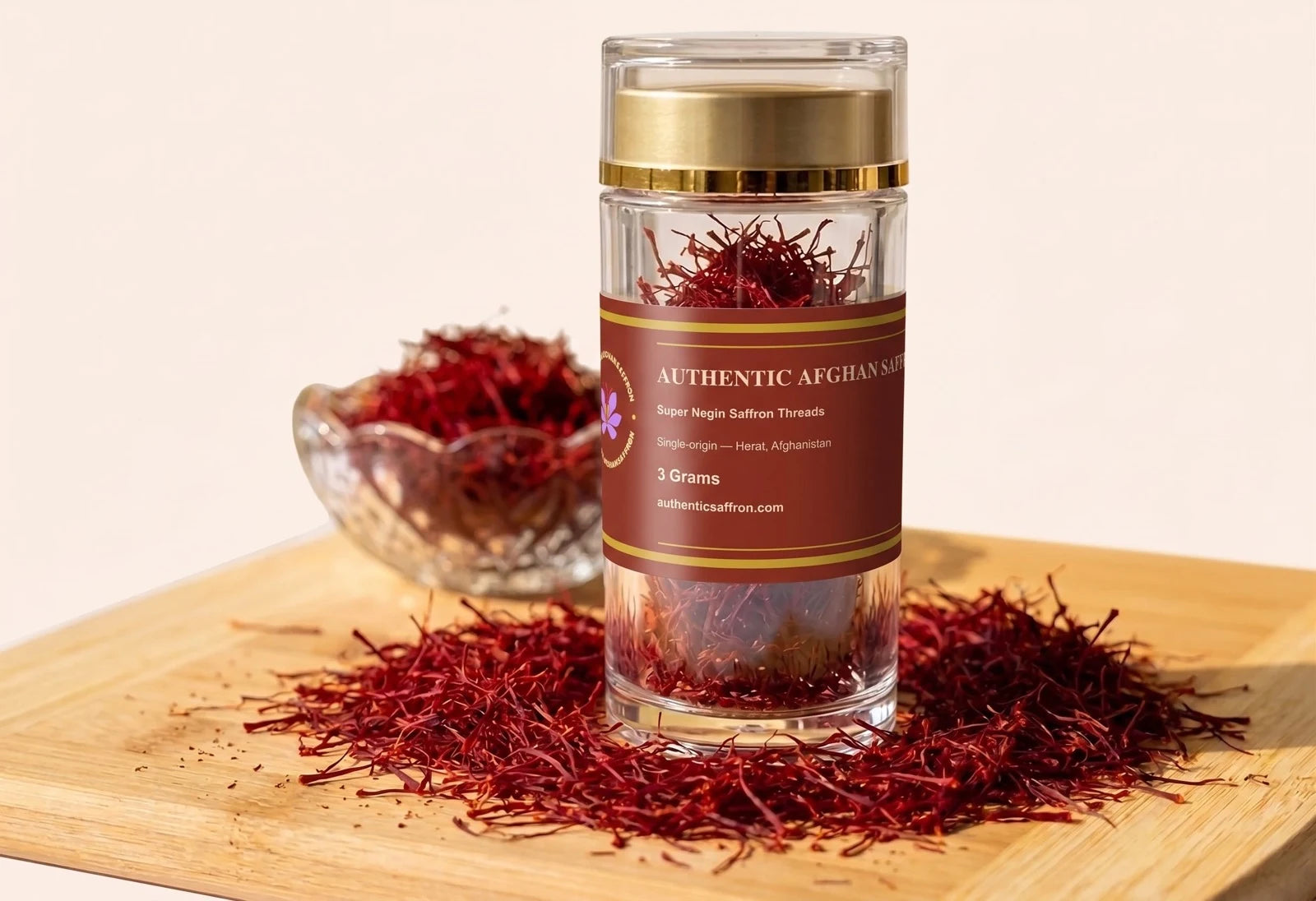
Twenty-five threads, or 0.10 g on a jeweller’s scale, for a batch that serves six. That is a generous hand for a dessert this small, and it is deliberate: ghee and sugar both blunt saffron, so a quantity that would dominate a bowl of rice reads as a clear background note here.
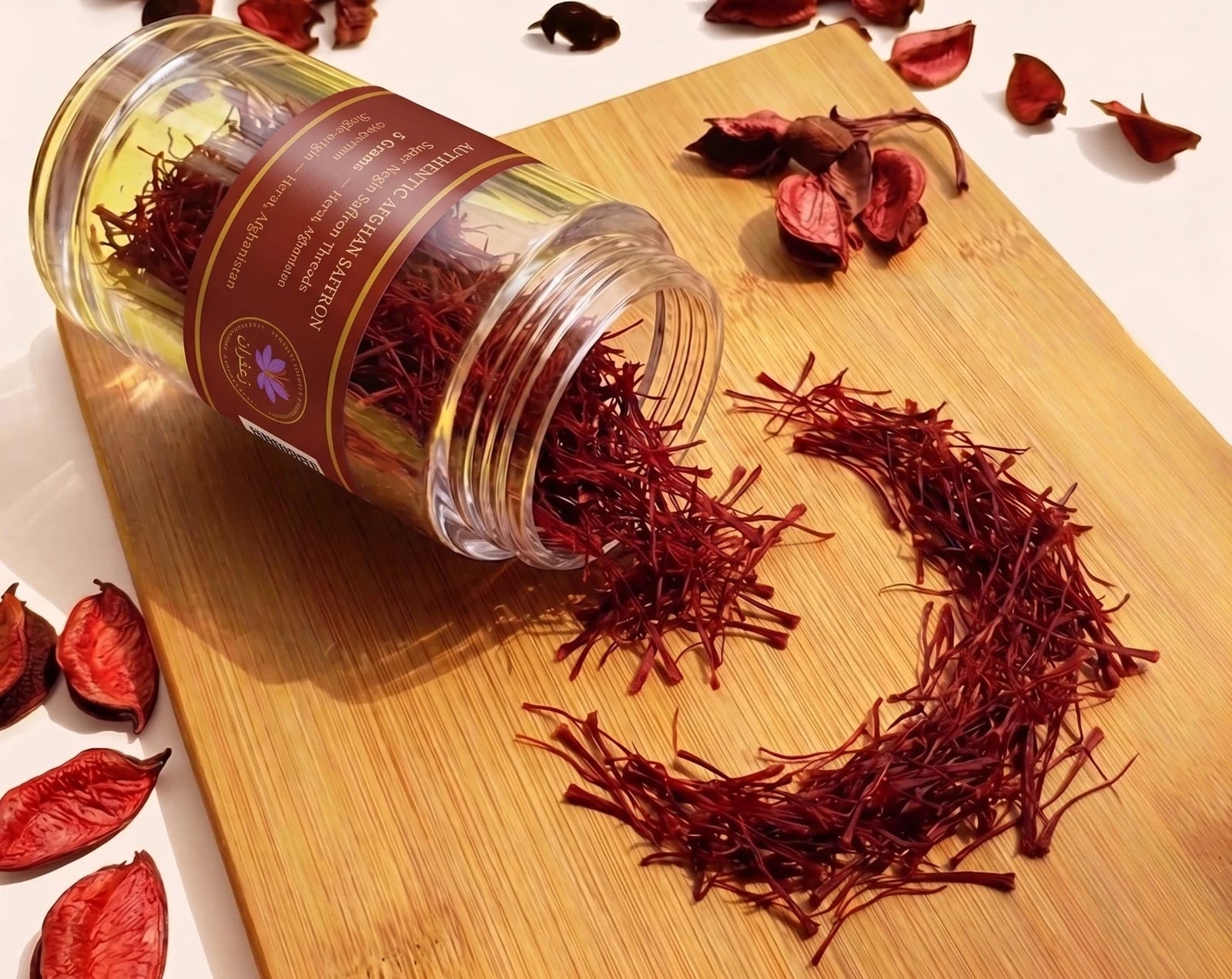
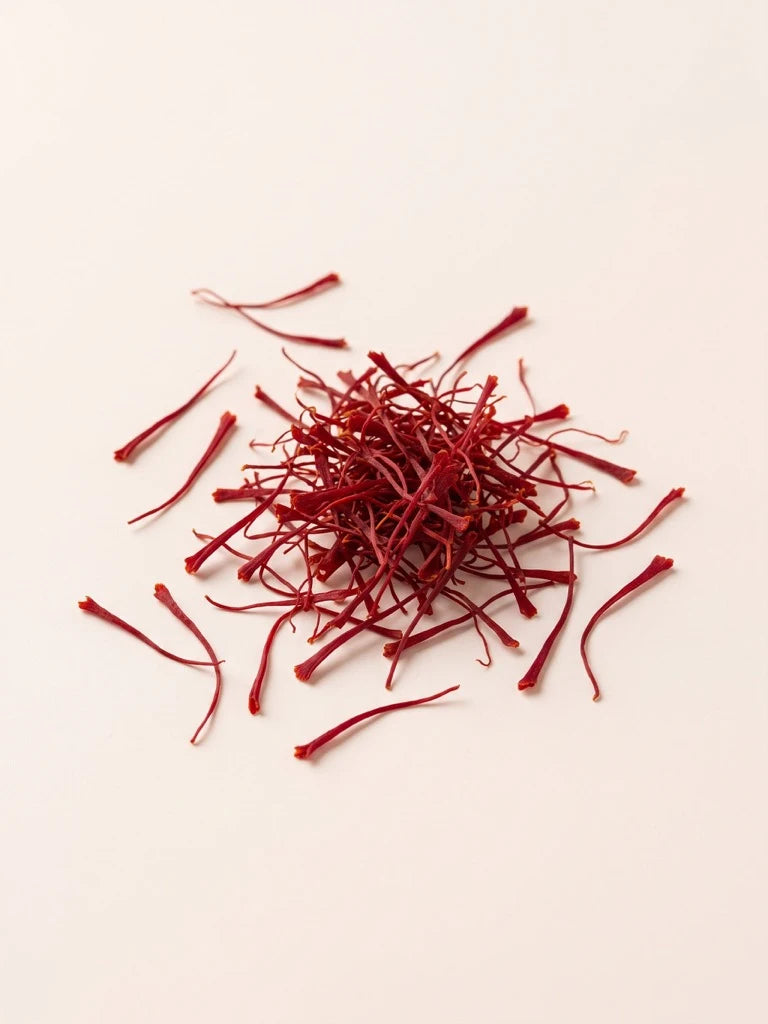
Bloom the threads in a quarter cup of whole milk warmed to about 150°F (65°C). At that temperature the milk steams at the edge and no bubbles break the surface. Crush the threads between dry fingers first, drop them in, cover the cup and leave it for 15 to 20 minutes. It should end up the colour of strong tea.
Do not boil the milk with the saffron in it. Boiling drives off the volatile aroma compounds and leaves you with an expensive yellow dye. If you are unsure how far a gram goes across a week of cooking, our guide to how much saffron you actually need works through it, and the general principles are collected on the cooking with saffron page.
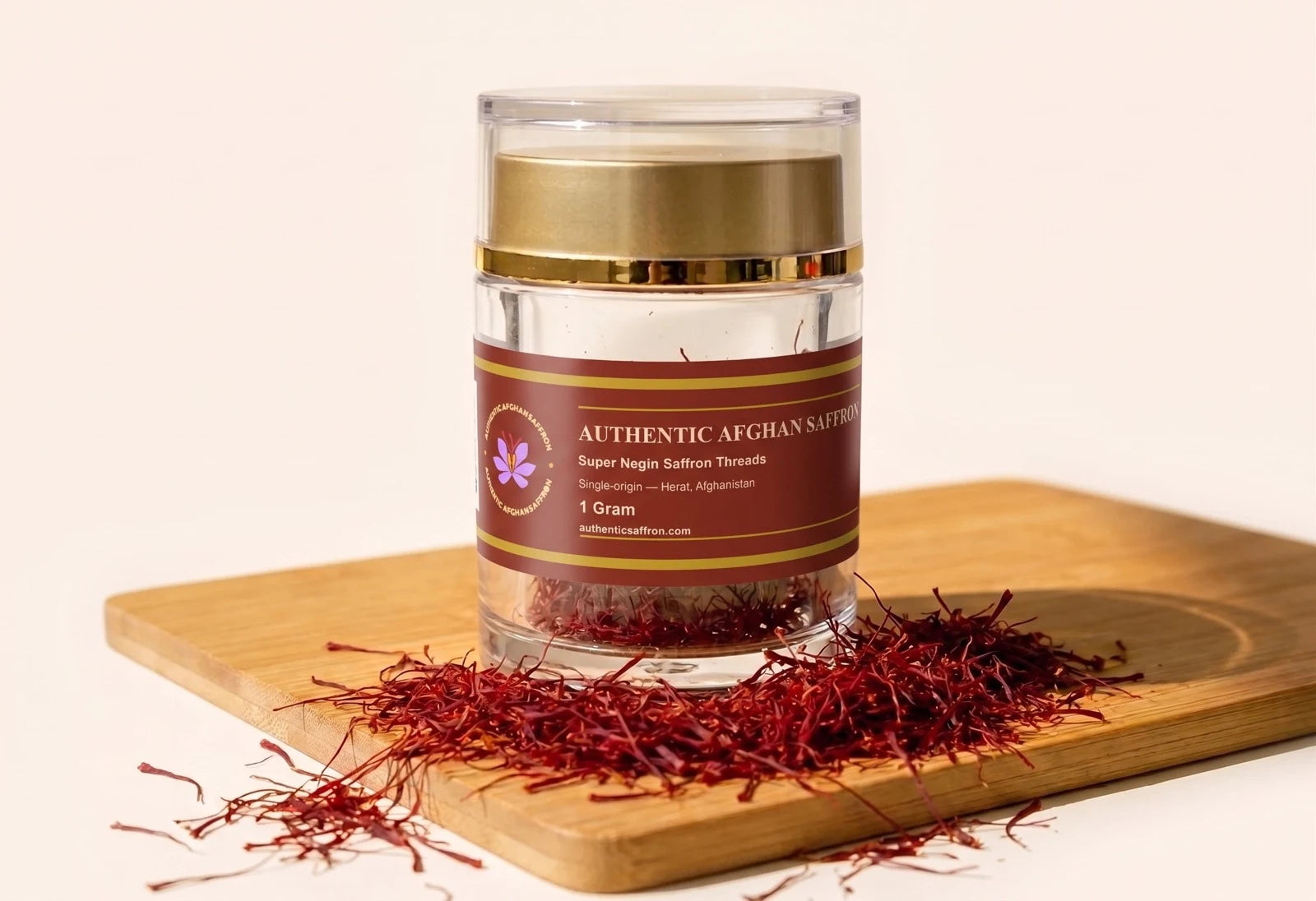
Threads, not powder. In a dish this dark you have no way of checking what powder really is, and a 1 g bottle is about twenty batches of this halwa.
What goes into the pan?
Serves six as a small bowl each. Coarse semolina is worth seeking out; fine semolina makes a paste rather than a grain.
- 1 cup (170 g) coarse semolina, sometimes sold as sooji or farina
- About 25 saffron threads (0.10 g)
- 1/4 cup (60 ml) whole milk, for blooming
- 1/2 cup (110 g) ghee, plus 1 tsp to finish
- 3/4 cup (150 g) granulated sugar
- 2 1/4 cups (530 ml) water
- Seeds from 4 green cardamom pods, crushed
- 2 tbsp golden raisins (optional)
- 1/4 cup (30 g) slivered pistachios
- Pinch of fine salt
How is it made?
- Bloom the saffron. Warm the milk to about 150°F (65°C) — steaming at the edge, no bubbles. Crush the threads between dry fingers, drop them in, cover and leave for 15 minutes. Never boil the milk with the threads in it.
- Start the syrup. Combine the water, sugar, salt and crushed cardamom in a small saucepan. Bring to a simmer, stir until the sugar has dissolved, then hold it on the lowest heat. It has to still be hot when the semolina is ready, so do not let it sit off the flame.
- Toast the semolina. Melt the ghee in a heavy 10-inch sauté pan or a small Dutch oven over medium-low heat. Add the semolina and stir more or less constantly. For the first six minutes nothing seems to happen. Somewhere between minutes eight and twelve the grains loosen, turn the colour of wet sand, and start to smell like toasted almonds. That smell is the signal.
- Add the raisins. If you are using them, stir the raisins in for the last 30 seconds of toasting. They will swell and gloss over in the hot ghee.
- Add the syrup. Take the pan off the heat and stand back. Pour the hot syrup in a steady stream down the side of the pan. It will hiss and throw steam hard for about ten seconds. Once it settles, stir in the saffron milk with its threads and return the pan to low heat.
- Cook it out. Stir steadily for 4 to 6 minutes. The halwa thickens, then pulls away from the sides in one mass, and a thin film of ghee shows at the edge. That film is how you know it is done. Cover, take it off the heat, and let it steam for 5 minutes.
- Finish and serve. Fold in half the pistachios and the last teaspoon of ghee. Spoon into bowls, or press into a shallow tray and cut into diamonds once cool. Scatter the remaining pistachios over. Serve warm.
What are the common mistakes?
Three failures account for almost all bad halwa, and all three happen in the same two minutes.
- Lumps. Cold syrup meeting hot semolina seizes into pellets. Both have to be hot. If it happens anyway, mash the lumps against the side of the pan with the back of a spoon while it is still loose.
- Raw, chalky grain. The semolina was under-toasted. Colour is a poor guide because saffron confuses it later — go by smell. Nothing to toasted almond is the whole journey.
- Bitterness. The semolina went past almond into scorched, or the pan was too thin. A thin skillet gives you about ninety seconds of warning; a heavy pan gives you three minutes.
One more, less obvious: a pan that is too shallow makes the syrup stage genuinely dangerous. You want sides at least three inches high, because the mixture erupts before it settles.
If you want a looser, pourable halwa, add another quarter cup of water to the syrup. If you want it firm enough to slice, hold back a quarter cup. The ghee is not the variable to play with — cut it and the grains stay dry and separate instead of coming together.
Frequently asked questions
Can I use fine semolina instead of coarse?
You can, but expect a smooth paste rather than distinct grains, and cut the toasting time to about seven minutes because fine semolina browns much faster. Reduce the water by a quarter cup as well, since fine grain absorbs less.
Why is my halwa greasy at the bottom of the bowl?
It was cooked slightly too long after the syrup went in, so the emulsion broke and the ghee separated out. Stir a tablespoon of hot water in off the heat and it will usually come back together.
Can I use saffron powder instead of threads?
We would not. Powder is where most saffron adulteration hides, and in a dish this deeply coloured you have no way of judging what you added. Threads also let you see the bloom happening in the milk, which tells you the saffron is alive.
How long does saffron halwa keep?
Three days in a covered container in the fridge. Reheat gently in a pan with a splash of milk, not in the microwave, which dries the edges and leaves the middle cold.
Read next
- Firni, the saffron milk pudding — the cold, set counterpart to this warm one
- Saffron in sweet dishes versus savoury — why desserts need a heavier hand
- Saffron panna cotta — the same aroma in a cleaner setting