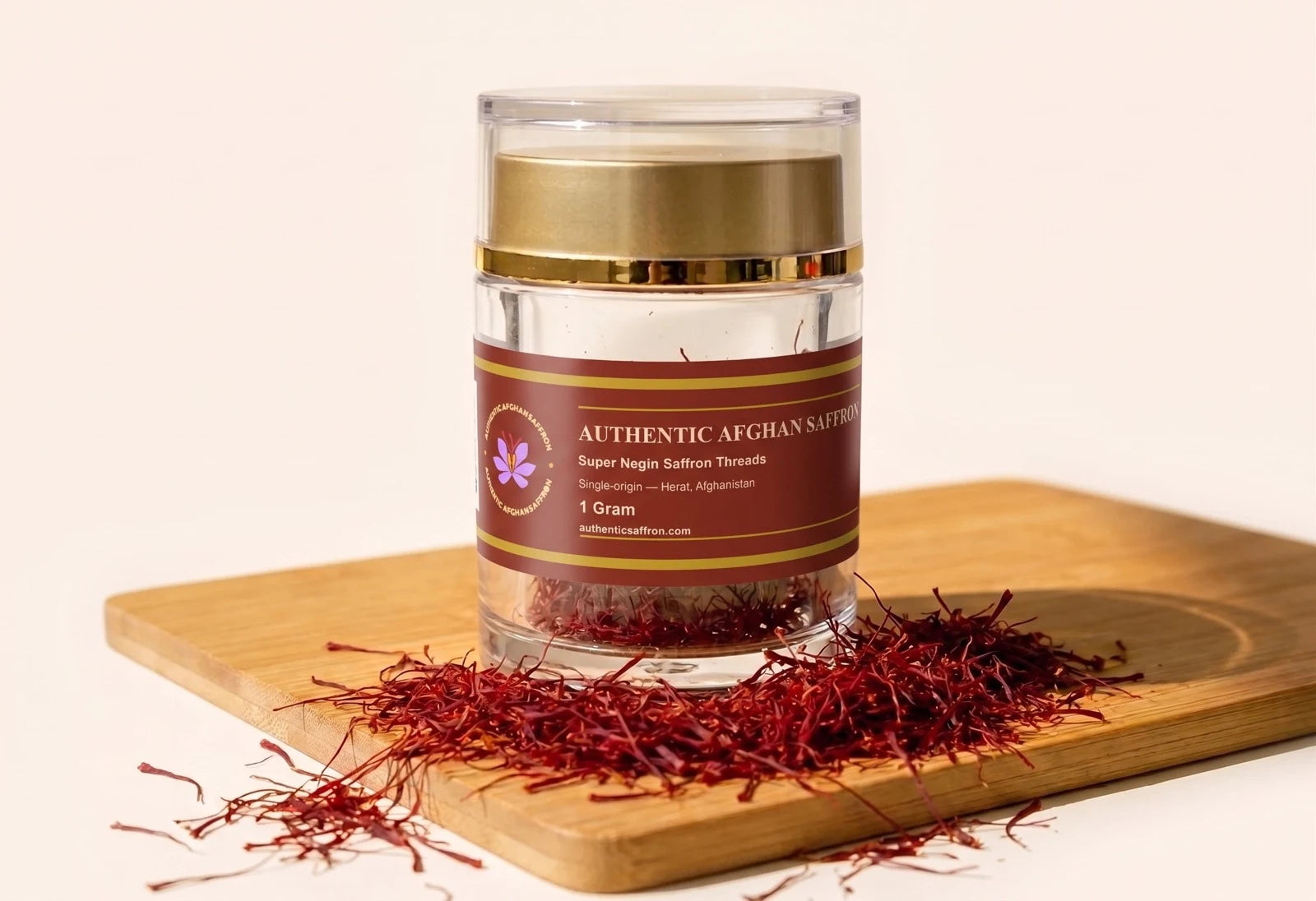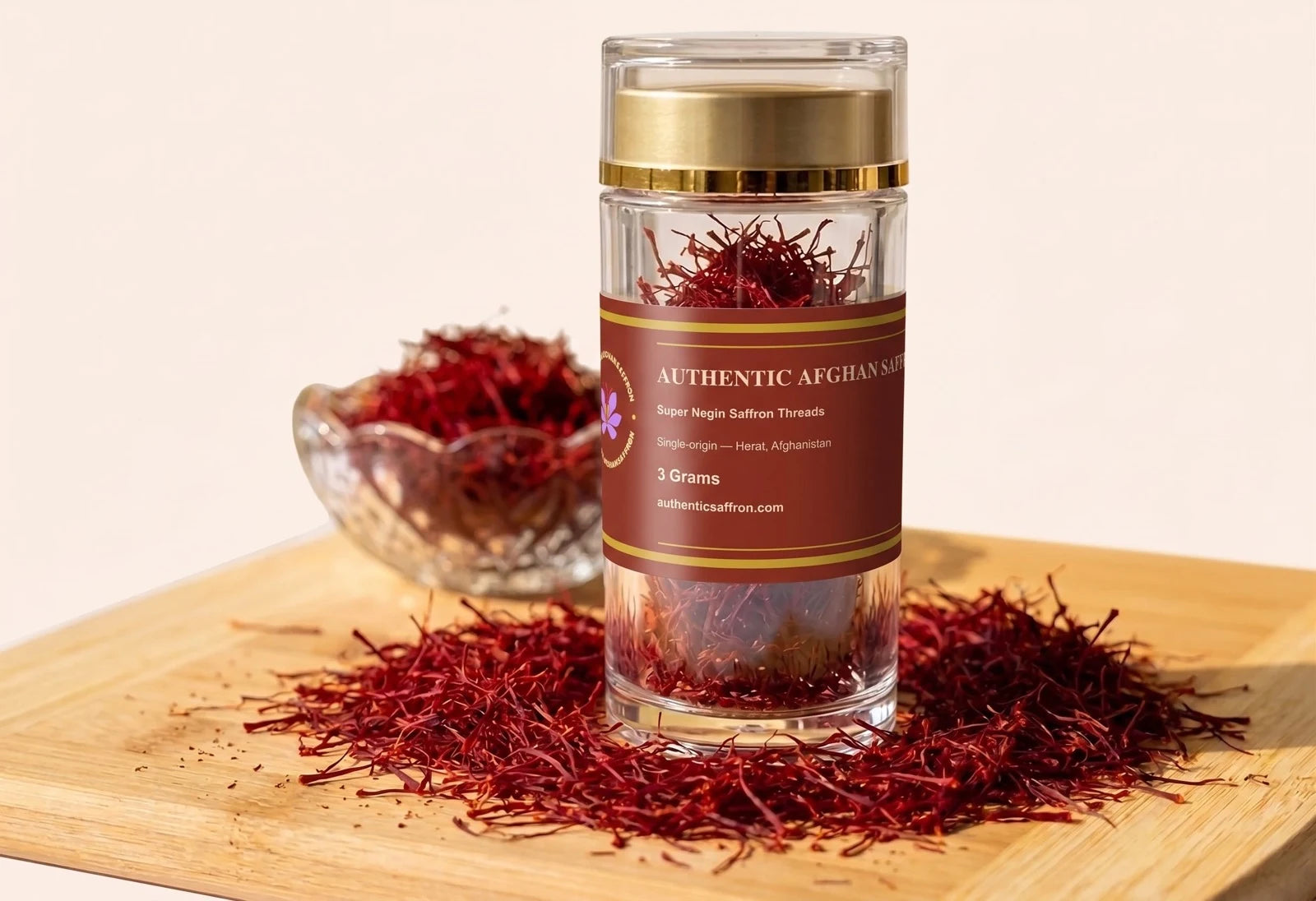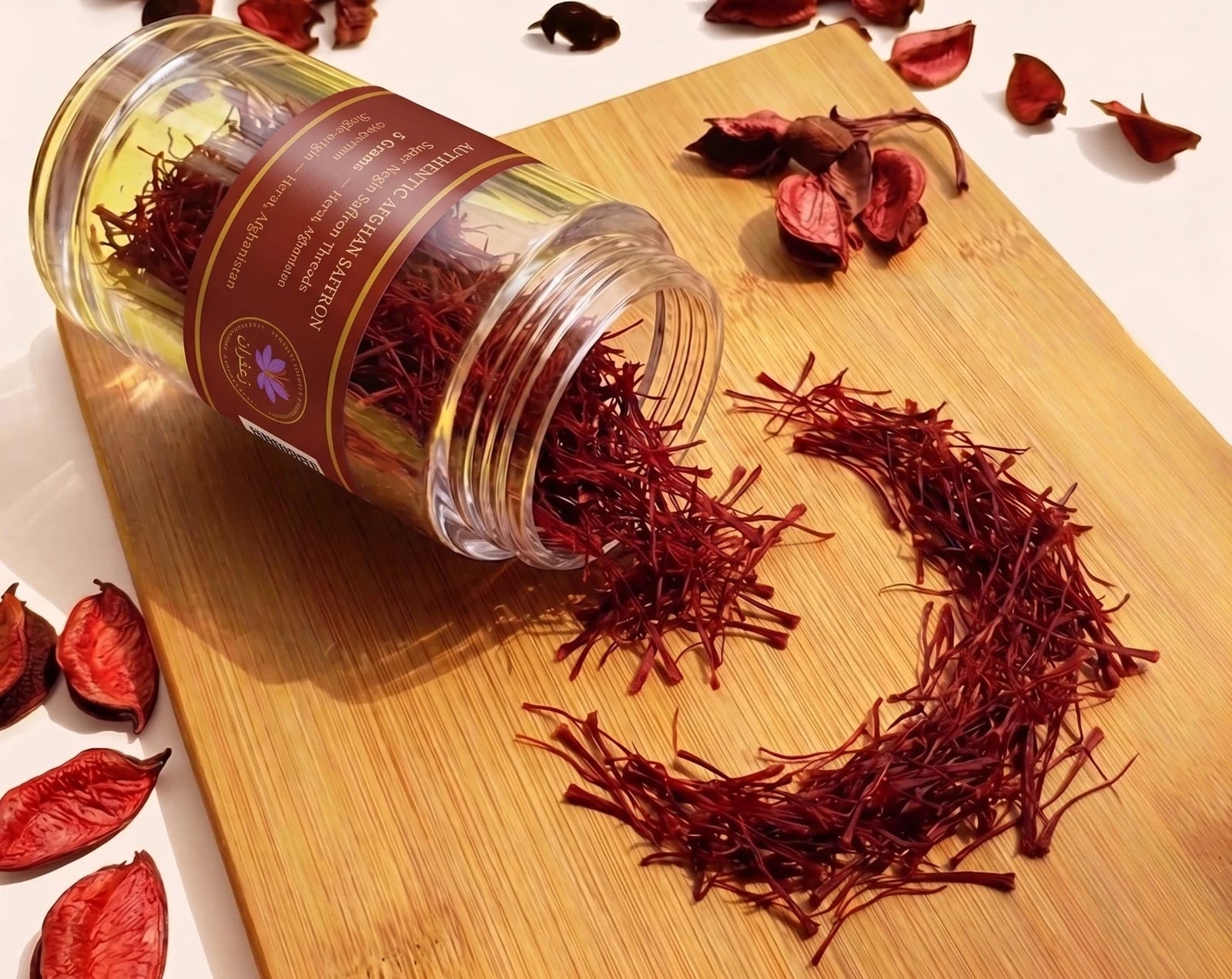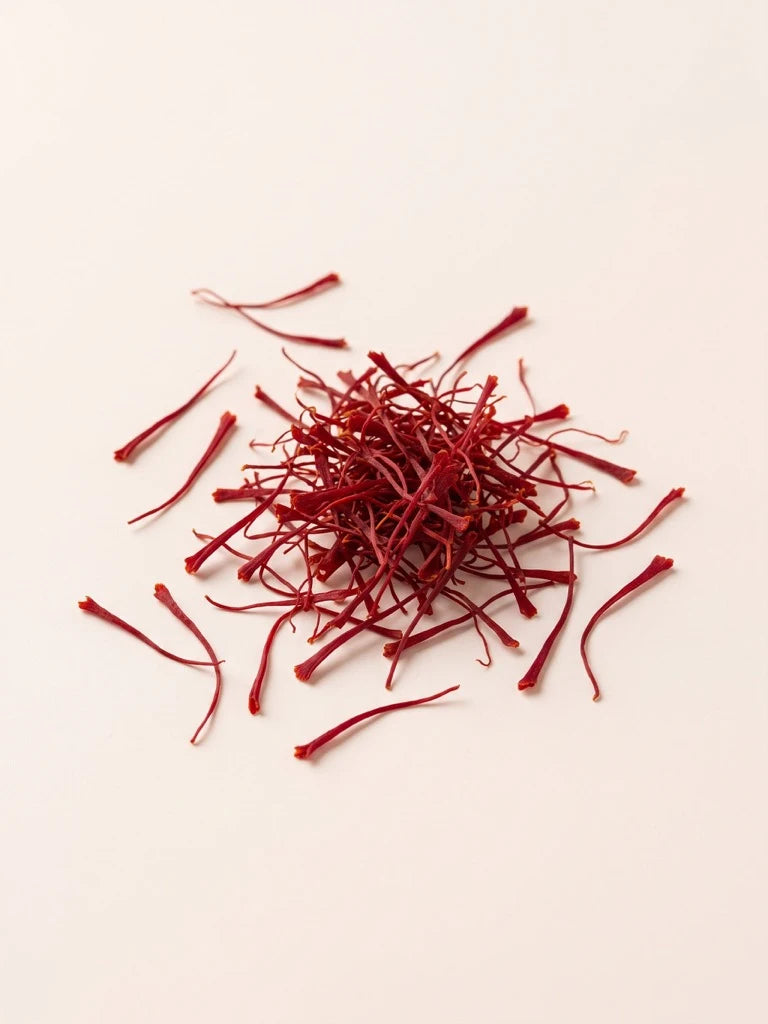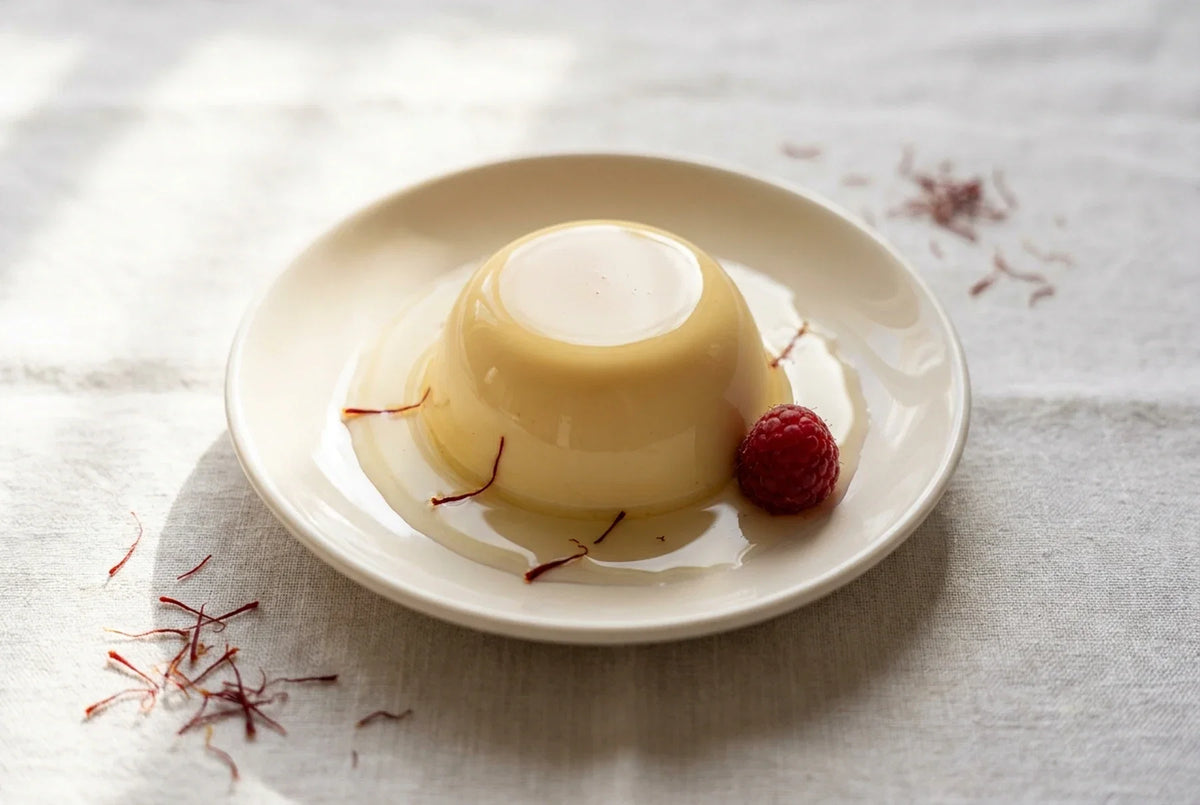
Saffron panna cotta is cream and milk set softly with gelatin and perfumed with 0.16 g of saffron — about 40 threads — bloomed in warm milk first. It takes twenty minutes of actual work and at least four hours in the fridge. Leave the vanilla out. It fights the saffron and wins.
Why does saffron suit panna cotta so well?
Panna cotta is a blank surface. Cream, sugar, a setting agent, and whatever you decide to put into it — there is no crumb, no crust, no browning, nothing to distract from a single flavour. That makes it unforgiving of a weak infusion and generous to a good one.
Saffron is not traditional here. The dish is northern Italian and its usual companions are vanilla, coffee or berries. But the fat in cream is a very good carrier for aromatic compounds, and the cold, slow way you eat a panna cotta — small spoonfuls, no competing textures — gives saffron time to register. You get the honey and hay notes on the first spoon and the faint bitterness underneath on the third.
The colour is worth a word too. This will set the pale gold of clotted cream, not the marigold orange of a rice dish, because you are diluting a small amount of crocin into a lot of white fat. Anything brighter than that in a cream dessert should make you suspicious of the saffron.
How much saffron do six servings need?
0.16 g, which is about 40 threads. That is a fairly generous pinch for 3 cups of dairy, and it needs to be, because sugar and cold both blunt aroma. A dessert that tastes right at room temperature tastes faint at 40°F.
Bloom the threads in 2 tablespoons of whole milk held at about 150°F (65°C) for 20 minutes, covered. Milk rather than water is a deliberate choice here: the emulsion is going into a dairy base anyway, and the milk fat picks up aromatics that plain water leaves behind. Do not let it simmer. Once you see bubbles you are boiling off the volatile part of the flavour and keeping only the dye.
Crumble the threads lightly between dry fingertips before they go in — broken threads give up their colour faster than whole ones. Then add bloom and threads together to the warm base and strain at the end, or leave the threads in if you like the flecks. Both are defensible. For the arithmetic behind pinches like this, see our page on working out saffron doses, and what Super Negin actually means if you are choosing threads for the first time.
What is in it?
- 0.16 g saffron (about 40 threads)
- 2 tbsp whole milk, for blooming
- 2 cups (480 ml) heavy cream
- 1 cup (240 ml) whole milk
- 1/2 cup (100 g) granulated sugar
- 2 1/4 tsp (7 g) powdered gelatin
- 3 tbsp cold water
- 1 wide strip of lemon zest, no white pith
- A pinch of fine sea salt
- Honey and chopped pistachios, to serve (optional)
How do you make it?
- Bloom the saffron. Crumble the threads into a small bowl. Warm the 2 tbsp of milk to about 150°F (65°C) — hot to a fingertip, no bubbles — pour it over the threads, cover, and leave for 20 minutes. The milk should turn a deep orange.
- Soften the gelatin. Sprinkle the gelatin evenly over the 3 tbsp of cold water in a small bowl and leave it undisturbed for 5 minutes. It should swell into a solid, spongy block. Dumping it in as a heap gives you dry pockets that never dissolve.
- Warm the base. Put the cream, the cup of milk, the sugar, the lemon zest and the salt in a 2-quart saucepan over medium-low heat. Bring it to about 170°F (77°C), stirring until the sugar has gone. It should steam and tremble at the edges, never boil.
- Melt in the gelatin. Take the pan off the heat, fish out the lemon zest, and stir in the softened gelatin until it disappears completely. Test it by rubbing a drop between finger and thumb: any grain means it needs another few seconds of stirring in the residual heat.
- Add the saffron. Pour in the saffron milk together with the threads and stir well. Let the pan sit for 10 minutes so the infusion carries on in the warm base, then give it a final stir.
- Fill the glasses. Pour through a fine sieve into six small glasses or ramekins, about 4 ounces each. The sieve catches the threads and any stray skin from the cream. Skim off surface bubbles with a teaspoon so the tops set glassy.
- Chill. Refrigerate for at least 4 hours, and overnight if you can. Leave them uncovered for the first hour so the surface sets, then cover with cling film. They keep three days.
- Serve. Serve cold, straight from the glass, with a thread of honey and a few chopped pistachios if you want texture. Nothing acidic on top — berries will bury the saffron.
What makes panna cotta go wrong?
Rubbery texture comes from too much gelatin, and almost every recipe that expects you to unmould uses too much. At 7 g to 3 cups of liquid this sets soft enough that a spoon leaves a clean edge but the surface still moves when you tilt the glass. That is the texture you want.
The second failure is boiling. Gelatin loses setting power above about 190°F, and saffron loses its aroma well before that. If the base has bubbled hard, expect a looser set and a flatter flavour, and there is no fixing it after the fact.
Undissolved gelatin gives you the opposite problem: a thin layer of jelly at the bottom and liquid cream above. Sprinkle it wide over cold water, leave it alone until it is spongy, and stir it into a base that is still hot but off the heat.
And leave the vanilla in the cupboard. It is the reflexive addition to any cream dessert, and it will flatten the saffron into a generic sweetness. If you want a second note, the lemon zest in the base is enough — it lifts the saffron rather than crowding it. Our notes on saffron flavour pairings go through which partners help and which take over.
Frequently asked questions
Can I use gelatin sheets instead of powder?
Yes. Use 7 g of sheets, which is usually three or four leaves depending on the brand, and soak them in plenty of cold water for 5 minutes. Squeeze them hard before they go into the hot base, or the extra water will loosen the set. Skip the 3 tbsp of cold water entirely.
Should I strain the saffron threads out?
It is a matter of taste. Straining gives you a clean, even gold with no specks, which suits a formal dessert. Leaving them in looks handmade and keeps a little more aroma, but the threads soften and can be slightly chewy in a set cream. We strain, and drop two threads on top at the end.
Can I unmould these onto a plate?
Not at this ratio — they are set too softly and will slump. To unmould, take the gelatin up to 3 tsp (about 9 g), oil the moulds very lightly with a neutral oil, and dip each one in hot water for three seconds before turning it out. The trade-off is a firmer, slightly more resistant texture.
Will this work with a dairy-free base?
Full-fat coconut milk sets well and carries saffron reasonably, but coconut is an assertive flavour and you will taste it first and saffron second. Oat cream is milder and gives a looser set; add another gram of gelatin. Use agar only if you want a firm, sliceable dessert, as it behaves nothing like gelatin.
Read next
- Saffron creme brulee, the baked-custard route to the same flavour.
- Saffron pistachio ice cream, where the dose goes up because cold mutes aroma.
- Saffron in sweet versus savoury cooking, on how the dose changes with sugar.
- How much saffron do you need for a week of ordinary cooking.