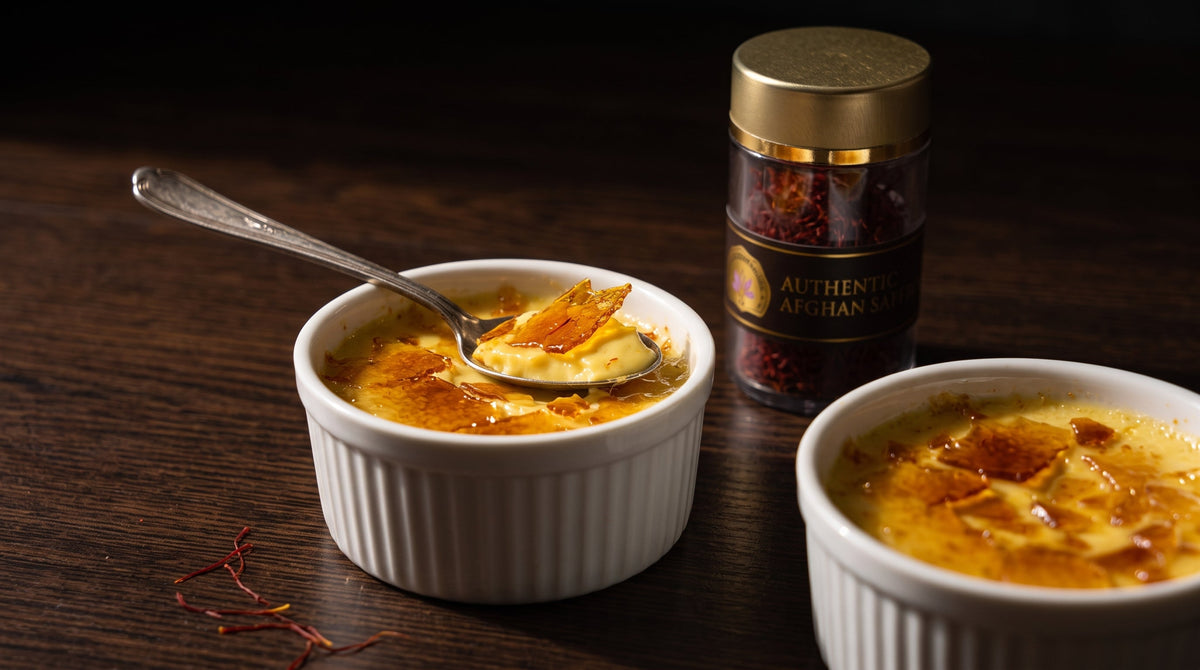
Saffron creme brulee is a baked cream custard scented with 0.16 g of saffron, about 40 threads, bloomed in warm water and then steeped in the cream. Six ramekins, 40 minutes in a low oven in a water bath, four hours chilling, and a sugar lid torched right before it reaches the table.
Why bother adding saffron to a classic custard?
Two reasons, one of them practical. Creme brulee is a French dessert and saffron has no claim on it, so this is an addition rather than a restoration. What it earns its place with is contrast: the burnt sugar lid is bitter and smoky, and saffron carries its own faint bitterness underneath honey and hay. The two meet rather than argue.
The practical reason is that a baked custard is the gentlest possible environment for saffron. Nothing here goes above about 180°F. Compare that to a rice dish that spends twenty minutes near boiling, where a good part of the aroma leaves with the steam. Whatever you extract into this cream stays in the ramekin.
There is a visual payoff as well. A plain custard is the colour of unsalted butter; this one sets somewhere between straw and marigold, and the crack of dark caramel on top reads better against it.
How much saffron goes into six ramekins?
0.16 g, or about 40 threads, for 2 cups of cream. That is enough to be unmistakably saffron without tipping into the medicinal edge that a heavy dose develops in something this rich.
Split the extraction into two stages, because the compounds you want do not behave the same way. Crocin, which supplies the colour, is water-soluble — give it a tablespoon of water at about 150°F (65°C) for 15 minutes and it dissolves out fast. Safranal and the rest of the aroma sit better in fat, so the spent threads and the orange liquid then go into cream warmed to the same 150°F and steep, covered and off the heat, for another 20 minutes.
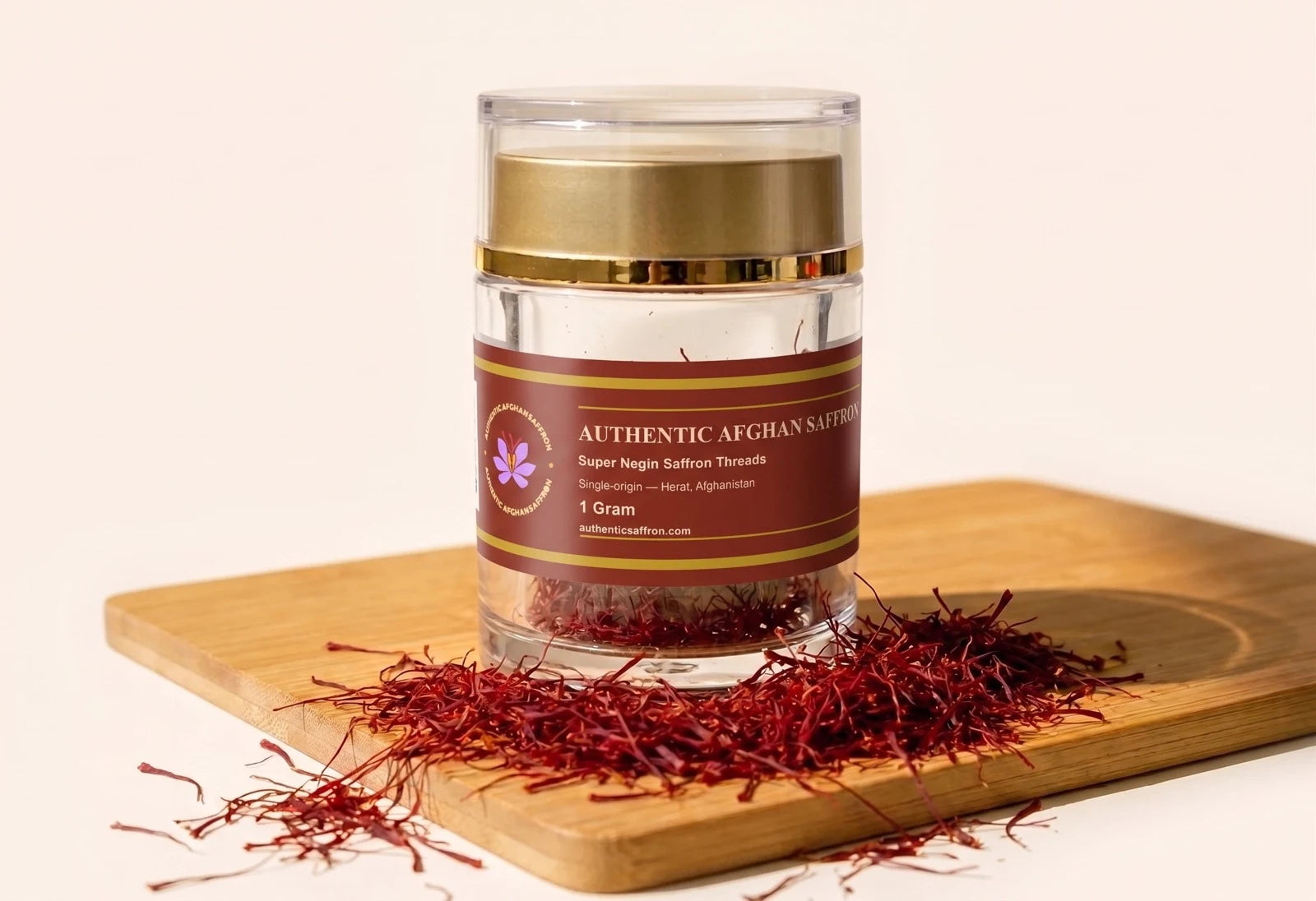
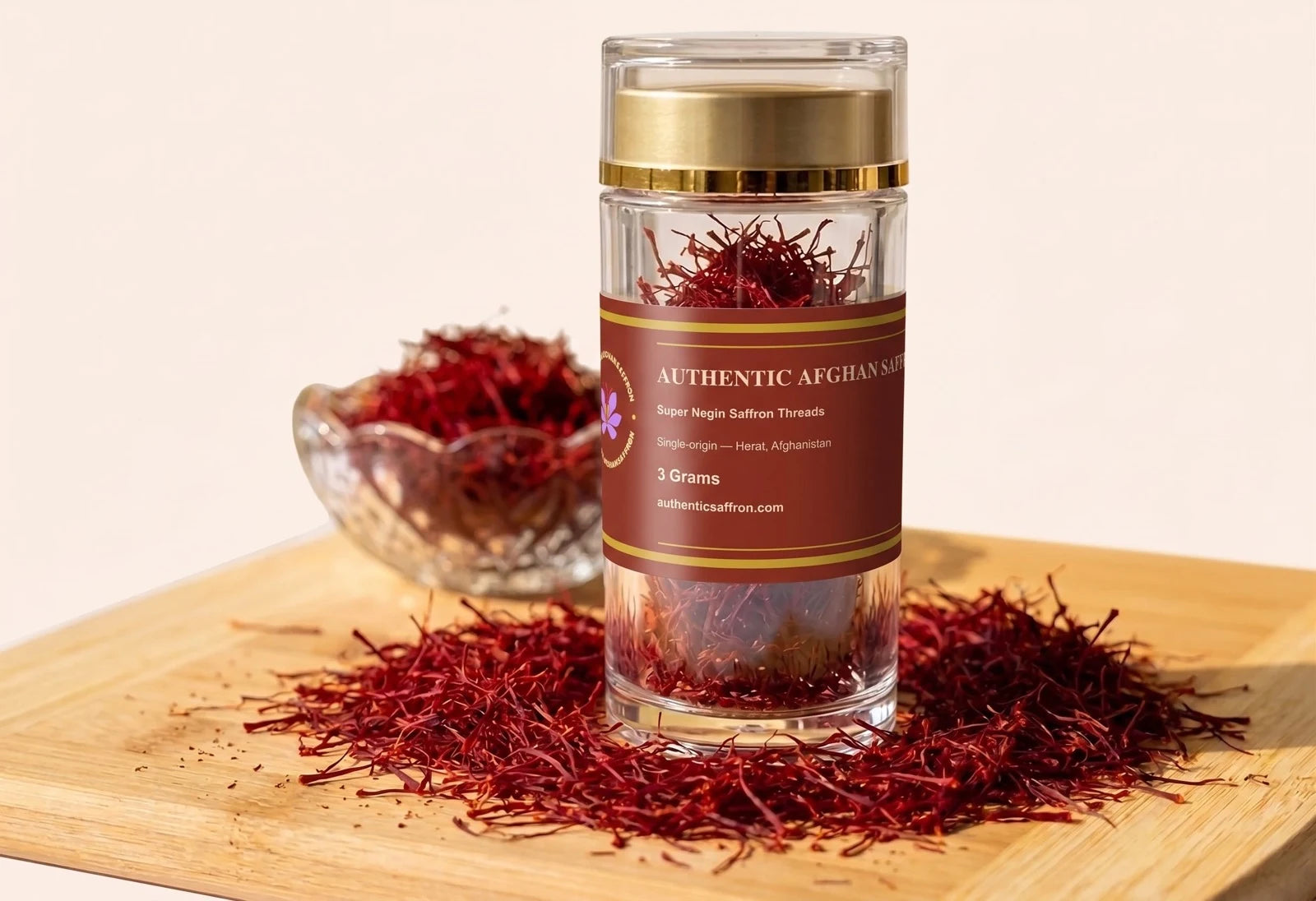
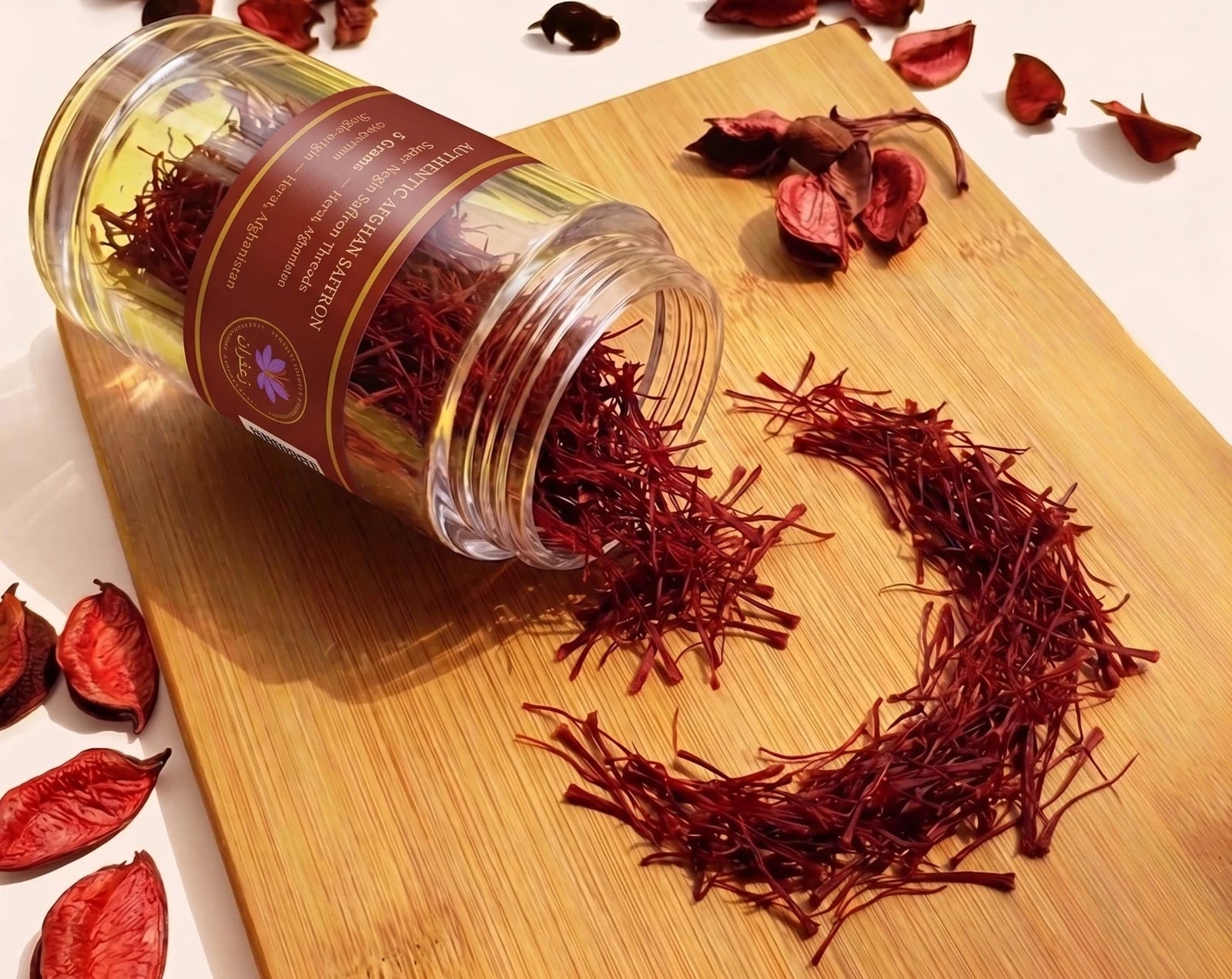
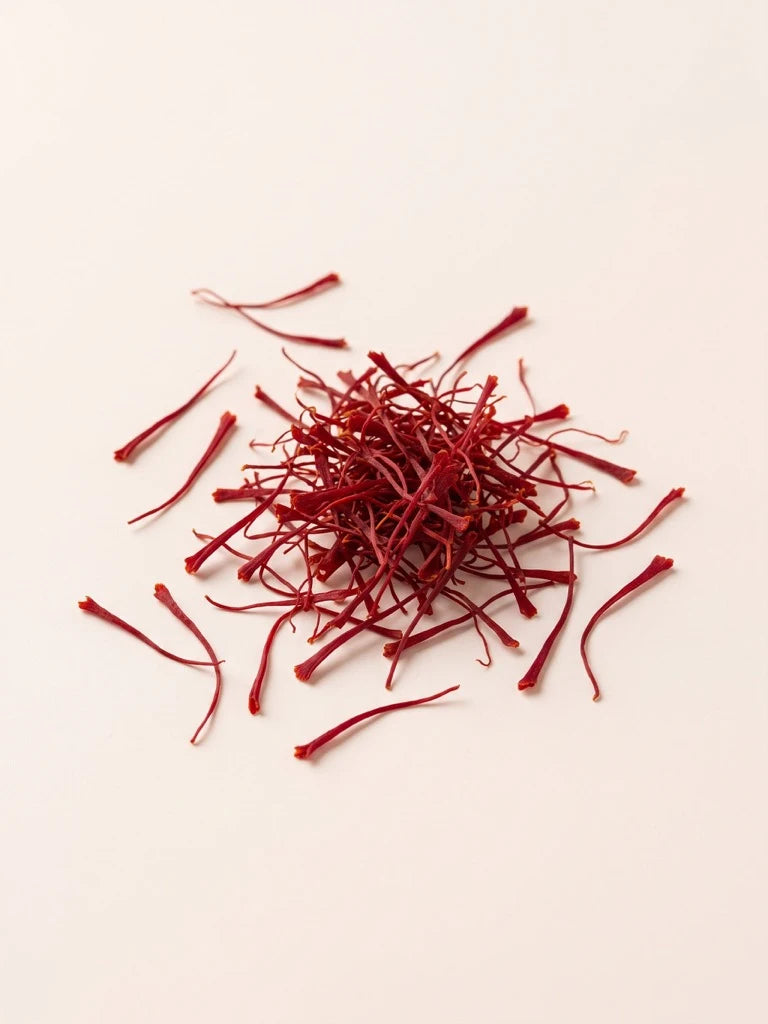
Never take either liquid to a boil. Scalded cream tastes of scalded cream, and boiled saffron gives you a strong colour and a hollow flavour — the classic sign of someone who tipped threads into a bubbling pan and wondered where the perfume went. If you want to see how big the gap is, our page on cooking with saffron sets out the temperature rules by method, and whole Herat threads are the format that lets you judge the bloom by eye.
What is in it?
- 0.16 g saffron (about 40 threads)
- 1 tbsp warm water, about 150°F (65°C)
- 2 cups (480 ml) heavy cream
- 5 large egg yolks
- 1/3 cup (67 g) granulated sugar
- A pinch of fine sea salt
- 6 tsp demerara or caster sugar, for the tops
- Six 4-ounce ramekins, ideally shallow ones
How is it made?
- Bloom for colour. Crumble the threads into a small cup, add the tablespoon of warm water, cover, and leave 15 minutes. The water should go a strong orange — if it is barely tinted, your threads are past their best and no amount of cream will rescue them.
- Steep for aroma. Heat the cream in a small saucepan to about 150°F (65°C), until it steams without a single bubble. Take it off the heat, tip in the saffron water and the threads, cover the pan, and leave it 20 minutes.
- Set up the bath. Heat the oven to 300°F (150°C). Line a roasting pan with a folded tea towel and stand the ramekins on it — the cloth stops the base of each dish cooking faster than the top. Put a kettle on.
- Mix the yolks. Whisk the yolks, the 1/3 cup of sugar and the salt together for about 20 seconds, just until the streaks disappear. Do not beat air into them. Foam on the surface bakes into a pale, bubbled skin.
- Temper and strain. Pour the warm saffron cream into the yolks in a slow stream, whisking steadily. Then strain the custard through a fine sieve into a jug, which removes the threads and any thread of cooked egg, and skim off whatever foam is left with a spoon.
- Bake in the water bath. Divide the custard between the ramekins. Slide the pan into the oven, then pour boiling water in to come halfway up the sides. Bake 30 to 40 minutes. They are done when the outer inch is set and the middle still shivers like a soft jelly — about 175°F (79°C) at the centre.
- Cool and chill. Lift the ramekins out of the water straight away and cool them on a rack for 15 minutes. Chill at least 4 hours, uncovered for the first hour, then covered. They keep three days.
- Torch the tops. Blot each surface dry with a paper towel. Add a level teaspoon of sugar and tilt the ramekin until it coats evenly, tipping out the excess. Torch in small circles until the sugar melts, bubbles, and turns deep amber. Rest two minutes so the caramel sets hard, then serve.
Where do custards usually fail?
Overbaking is the main one, and it is easy to do because a custard looks underdone at the moment you should pull it. If the centre no longer wobbles in the oven, it is already grainy by the time it cools. Judge it by movement, or take the temperature.
Weeping — a puddle of liquid under the caramel — usually means the oven was too hot or the water bath was too shallow. The bath is not decorative. It keeps the outside of the custard near 200°F while the middle catches up, and a pan filled only an inch deep will not do that.
A soggy top comes from sugar hitting a damp surface. Chilled custards sweat, so blot them properly, use a thin and even layer, and torch immediately rather than sugaring all six and coming back. A thick layer of sugar gives you a slab of caramel that shatters into shards instead of the thin sheet you want.
If you find whole threads unpleasant in a smooth custard, the sieve in step five handles it. If your custard has colour but no scent, the fault is almost always heat: boiled cream, or a bloom made with water straight off the kettle. Warm water, not hot water explains what is actually being lost.
Frequently asked questions
Do I need a blowtorch?
A small butane torch is the easiest tool and the cheapest one that works. The broiler is the alternative: sugar the chilled custards, sit them in a pan of ice water so the custard stays cold, and run them under a very hot broiler for two or three minutes, watching constantly. Expect a patchier crust.
Can I use milk or half-and-half instead of cream?
You can go as low as half-and-half, but the custard sets softer and tastes noticeably thinner. Whole milk alone will not set properly at five yolks to two cups — you would need seven or eight. Fat is also what carries the saffron aroma, so cutting it costs you flavour twice over.
Why did the edges turn grainy while the middle stayed loose?
The oven ran hot, or the water bath was too shallow to buffer it. Curdling starts around 185°F, so the edges can pass that point while the centre is still at 160°F. Check your oven with a separate thermometer, fill the bath halfway up the ramekins, and use the tea towel underneath.
Can the custards be baked a day or two ahead?
Yes, and they are better for it — the saffron settles and reads more evenly on the second day. Keep them chilled and covered for up to three days. Sugar and torch only in the last five minutes before serving, because a caramel lid begins to dissolve into the custard within about half an hour.
Read next
- Saffron panna cotta, the set-not-baked version, with no oven involved.
- Saffron custard tart, if you want the same custard in pastry.
- Blooming liquids compared, on water against milk, cream, stock and alcohol.
- How to spot fake saffron, since a weak bloom is often the first clue.