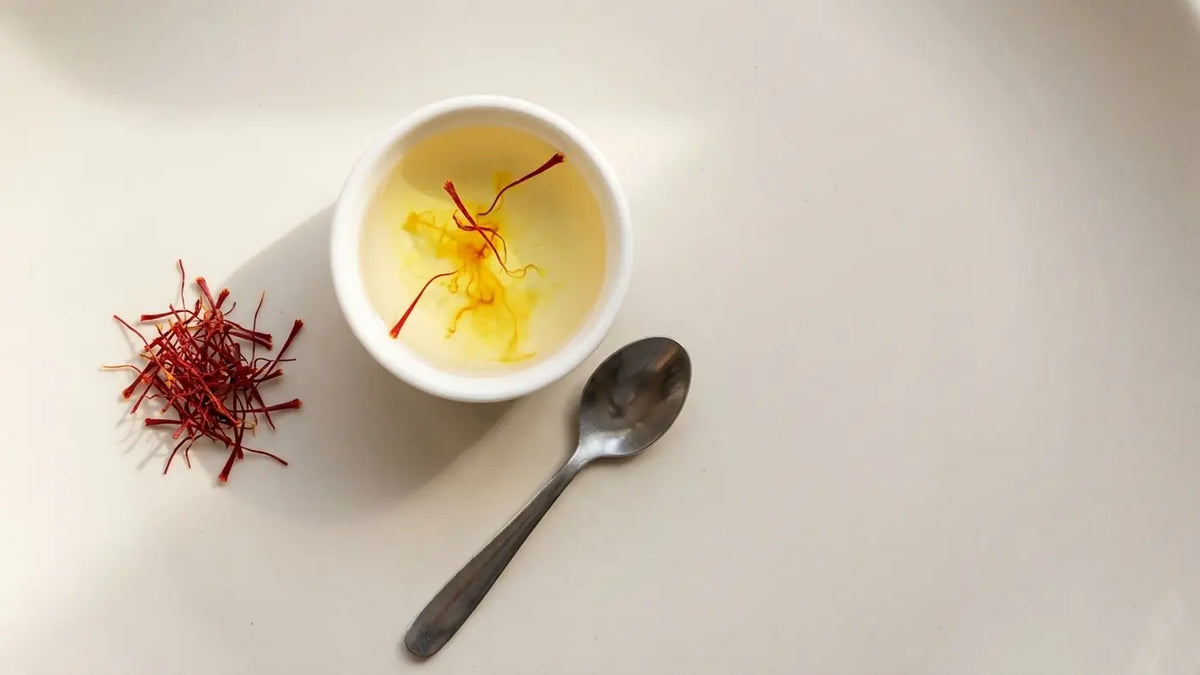
Saffron in desserts needs a lighter hand and a longer soak than saffron in savoury cooking. Sugar and dairy soften its bitterness, so the floral side comes forward; salt, fat and acid in a savoury pot push the other way. Same spice, same pinch, two different results.
Cooks who are comfortable with saffron in a rice pot often go wrong the first time they put it in a custard. Nothing about the technique is harder. The context has simply changed, and the spice responds to context more than most.
Why does saffron behave differently in a dessert?
Start with the three parts of the spice. Crocin gives colour. Picrocrocin gives bitterness. Safranal gives the aroma, and it is the most fragile of the three.
Sugar suppresses the perception of bitterness, which is why the same quantity that tastes balanced in a stew can taste flat and sweetish in a custard. Dairy does something similar: fat coats the palate and rounds off the edges. Between them, a dessert removes the counterweight that saffron leans against in savoury cooking.
What is left is the floral, honeyed part — which is lovely, and also easy to lose. Custards and ice creams are cooked gently and served cold, and cold mutes aroma further. A dessert therefore wants a stronger infusion than a stew of the same size, delivered gently.
How much does each side of the menu need?
The figures below are working quantities for four servings, not rules. Saffron varies by crop and by how finely you grind it, so taste the bloom before it goes in.
| Dish type | Threads for four | Bloom liquid | When to add | Main risk |
|---|---|---|---|---|
| Custard, panna cotta, ice cream | 25–35 (about 0.05–0.07g) | Warm milk or cream | Steep in the base, then strain | Aroma lost to chilling |
| Cake, bun, sweet bread | 20–30 (about 0.04–0.06g) | Warm milk or the recipe liquid | Into the wet ingredients | Oven heat driving off aroma |
| Syrup, poached fruit | 15–25 (about 0.03–0.05g) | The syrup itself, off the boil | After the sugar has dissolved | Boiling too hard |
| Rice, pilaf, couscous | 15–20 (about 0.03–0.04g) | Warm water | With the final cooking liquid | Uneven colour |
| Stew, braise, tagine | 20–30 (about 0.04–0.06g) | Warm stock | Last twenty minutes | Long simmering flattening it |
| Seafood, broth, soup | 15–20 (about 0.03–0.04g) | Warm stock or water | Just before serving | Overdosing a delicate base |
Two patterns are worth noticing. Desserts sit at the top of the range and savoury dishes near the bottom. And cold desserts need the most, because chilling costs you aroma that a hot dish delivers for free.
For a fuller breakdown by dish size, see how much saffron per person.
Which desserts actually suit saffron?
The successful ones have something in common: a dairy or almond base, restrained sweetness and few competing spices.
- Set creams. Panna cotta, custard, crème brûlée. The saffron infuses into the cream and has nowhere to hide.
- Milk puddings. Rice pudding, firni, kheer. Slow, gentle, forgiving.
- Enriched doughs. Sweet buns and brioche, where butter and egg hold the aroma through baking.
- Almond and pistachio sweets. Nut oils behave like dairy and carry saffron well.
- Poached fruit. Pear, quince, apricot. Choose fruit with a mild flavour of its own.
- Ice cream. Effective, but push the quantity up and taste the base warm, before churning.
The desserts that fail are the loud ones. Chocolate, coffee, caramel taken dark, banana and heavily spiced fruit cakes all sit on top of saffron rather than beside it. That is a flavour problem, not a technique problem, and it is covered in more detail in our note on saffron pairings.
What changes on the savoury side?
Savoury cooking gives saffron a job beyond flavour: it colours, and it ties a dish together. Salt sharpens the perception of its bitterness, so a smaller quantity registers more clearly. Acid and fat both pull at the aroma, one flattening it and one carrying it.
The practical differences come down to timing. A dessert steeps for a long time at low heat. A savoury dish usually wants the bloom added late, because a long simmer at a hard boil costs aroma with every minute. Rice is the exception — there the bloom goes in with the cooking liquid so the colour has time to spread evenly, as in a straightforward saffron rice.
Whichever side of the menu you are on, the bloom itself is the same operation. Warm liquid at around 150°F (65°C), ten to twenty minutes, never boiling. Our page on cooking with saffron sets out the method and the common shortcuts that cost you flavour.
Can you use too much in a dessert?
Yes, and it happens more often in sweet cooking than savoury, precisely because sugar hides the early warning. The bitterness stays below the threshold of notice until it suddenly does not, and the dish tips from floral to metallic and faintly medicinal.
The safeguard is simple. Make the bloom, taste it diluted in a spoonful of the base, and add it in two stages if you are unsure. You can always steep more; you cannot take it out.
If you want to read further on what the spice is made of, the published research on saffron volatiles and pigments is searchable at PubMed.
Frequently asked questions
How much saffron goes in a dessert for four people?
Between 25 and 35 threads, roughly 0.05 to 0.07g, for a cream or custard base. Cold desserts sit at the top of that range because chilling mutes aroma. Start lower and taste the bloom before it goes into the base.
Should I bloom saffron in milk or water for a dessert?
Milk or cream, taken from the recipe rather than added on top. Fat carries the aromatic part of saffron well, and using the base liquid means nothing is diluted. Water is better only when you want the cleanest possible colour.
Does saffron survive baking?
Partly. Colour survives the oven easily and aroma does not, which is why baked goods need a slightly larger pinch than a stovetop dish. Enriched doughs with butter and egg hold it best.
Why does my saffron dessert taste bitter?
Almost always too much saffron rather than the wrong kind. Bitterness comes from picrocrocin, and sugar hides it until the quantity crosses a threshold. Halve the amount next time and steep it longer instead.
Where should you go next?
- Saffron panna cotta — the clearest test of a dessert infusion.
- Saffron firni — a slow milk pudding that flatters a modest pinch.
- Blooming liquids compared — water, milk, stock and alcohol side by side.