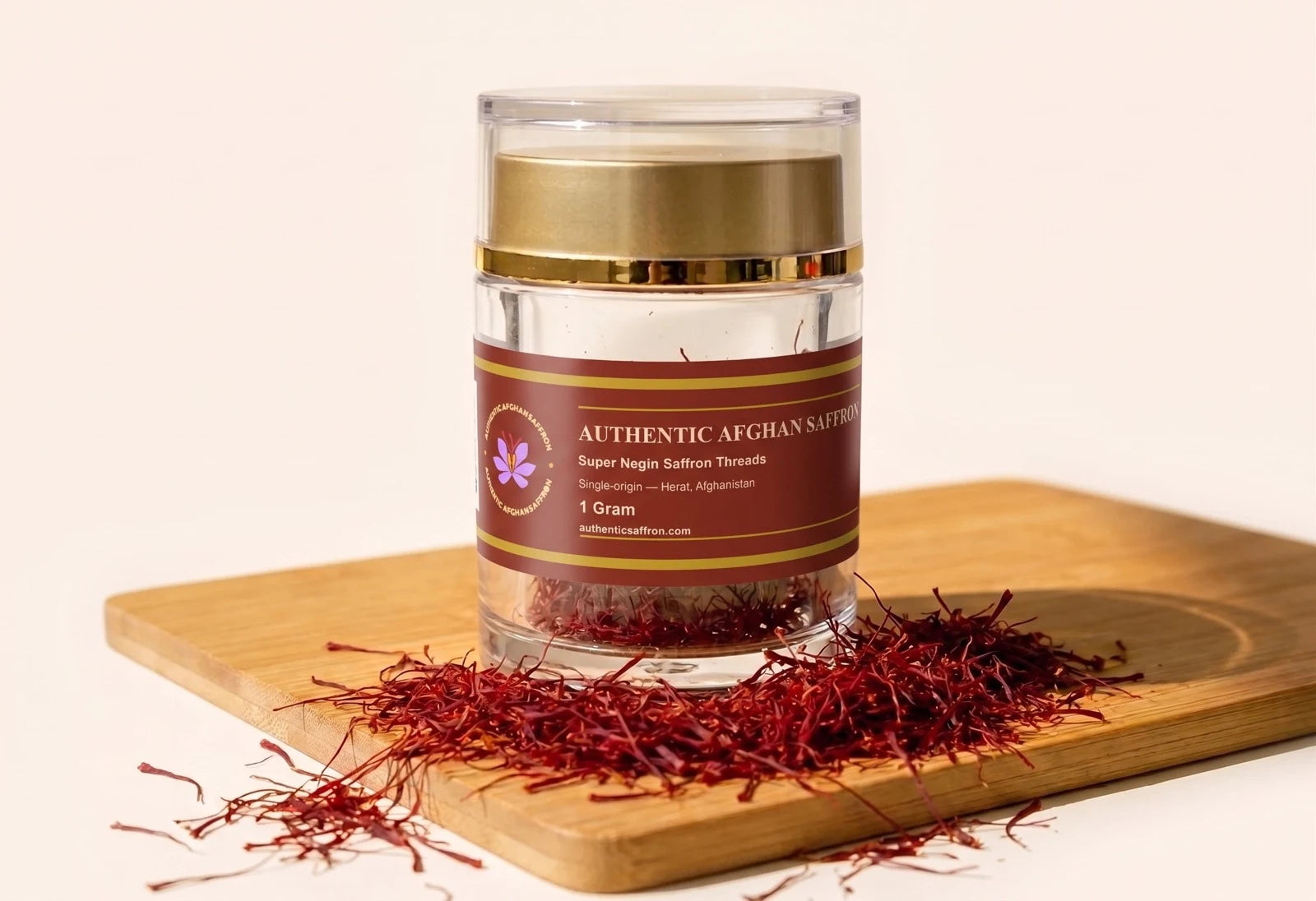
For giving
The Crystal Bottle — 1 g
One gram of Super Negin in a crystal keepsake bottle. About 60 cups of tea.
$12.99About 60 cups of tea
Give the bottle
The Learn library
Grades, origins, fakes, prices, and how to actually use the threads. Written to be useful whether or not you buy anything from us.
Start here
If you read three, read the grade explainer, the fake-saffron tests, and the price guide.
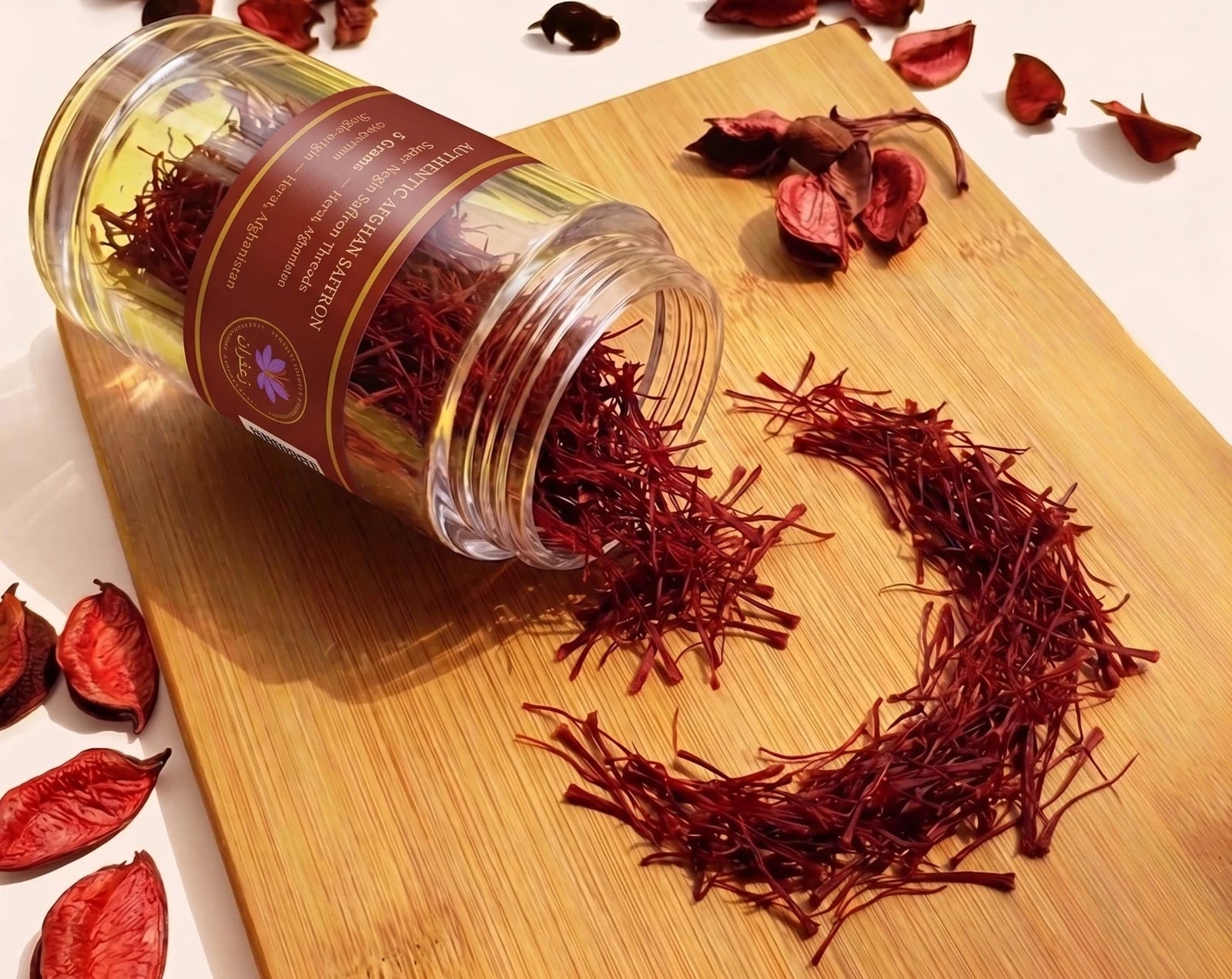
An honest comparison
Four origins, four reputations, and a great deal of marketing.
Read →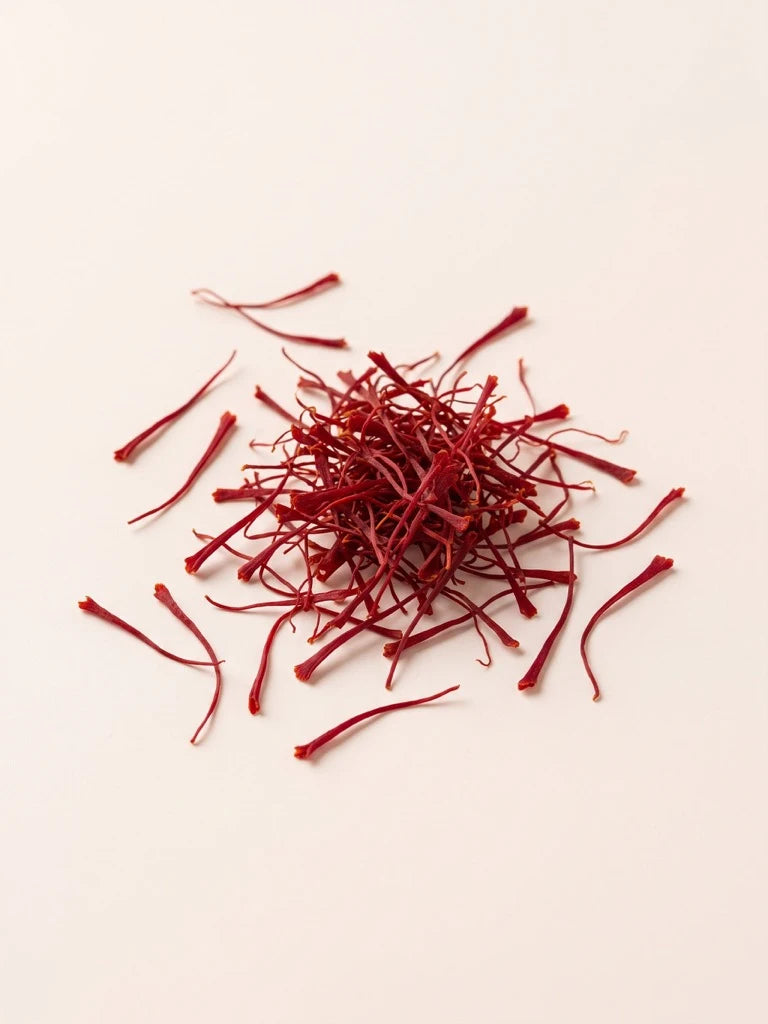
The grade explained
Super Negin is the top of the commercial grading ladder — but almost nobody explains what the rungs below it actually contain.
Read →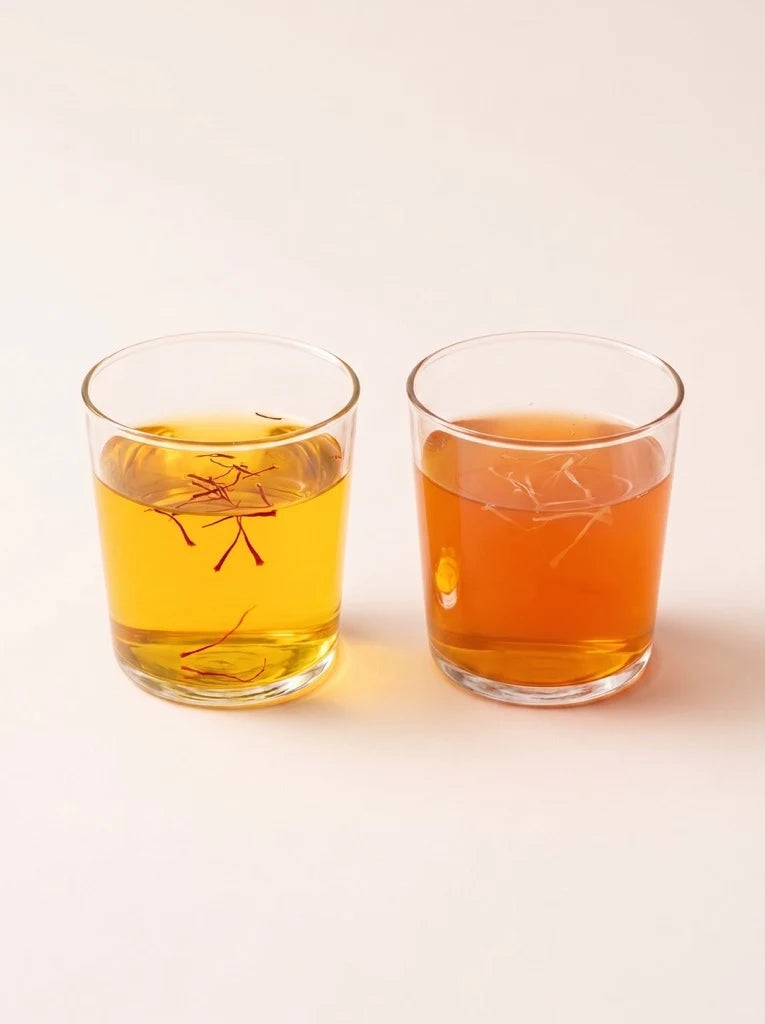
Trust, but verify
Studies of retail saffron have found nearly half of samples adulterated — dyed corn silk, safflower, and old threads re-coloured.
Read →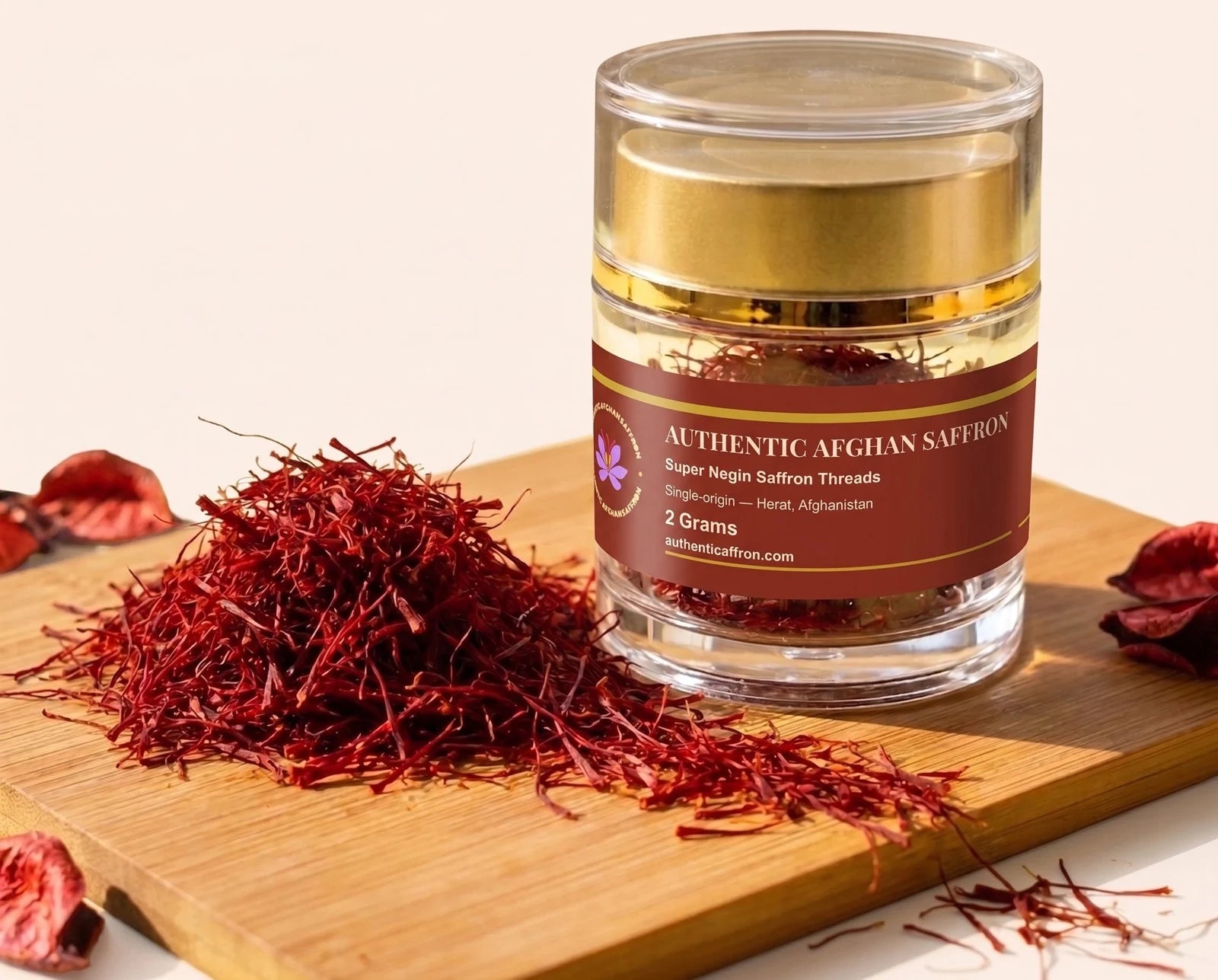
The price guide
Saffron is the most expensive spice in the world by weight and one of the cheapest by serving.
Read →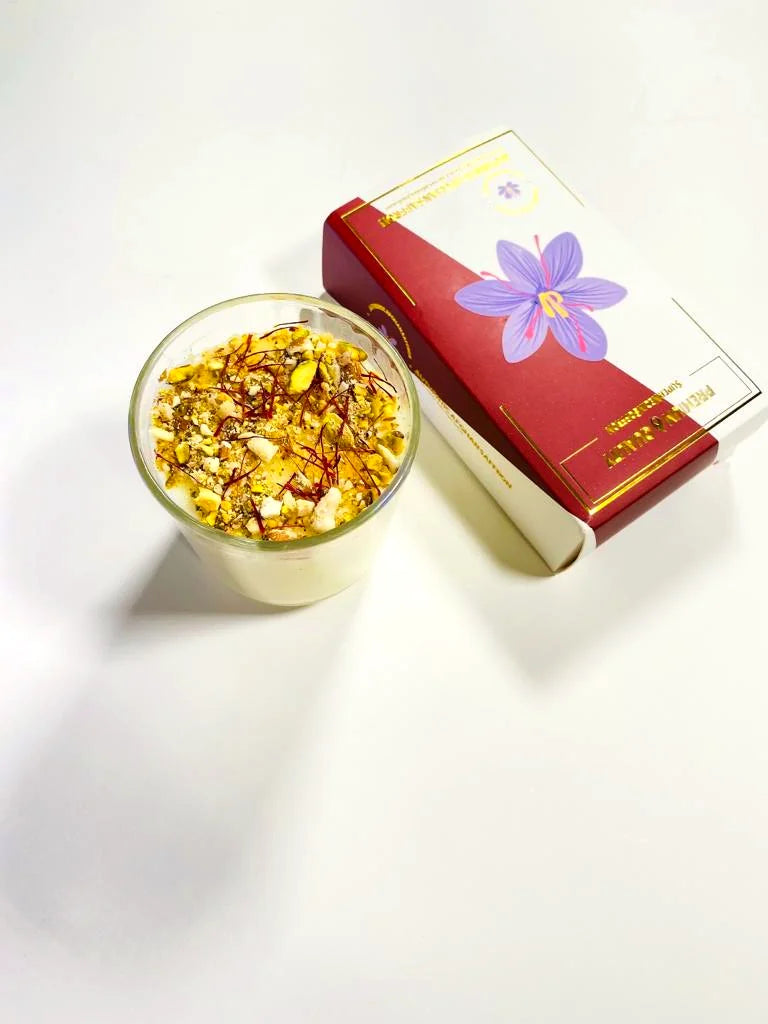
Single origin
A high-desert valley in western Afghanistan has taken Herat's high-desert valleys grow about 95% of Afghanistan's saffron.
Read →ProofThe proof
The grade, the ISO 3632 numbers, the harvest date, and a test you can run tonight.
See the evidence →Practical
The daily habit
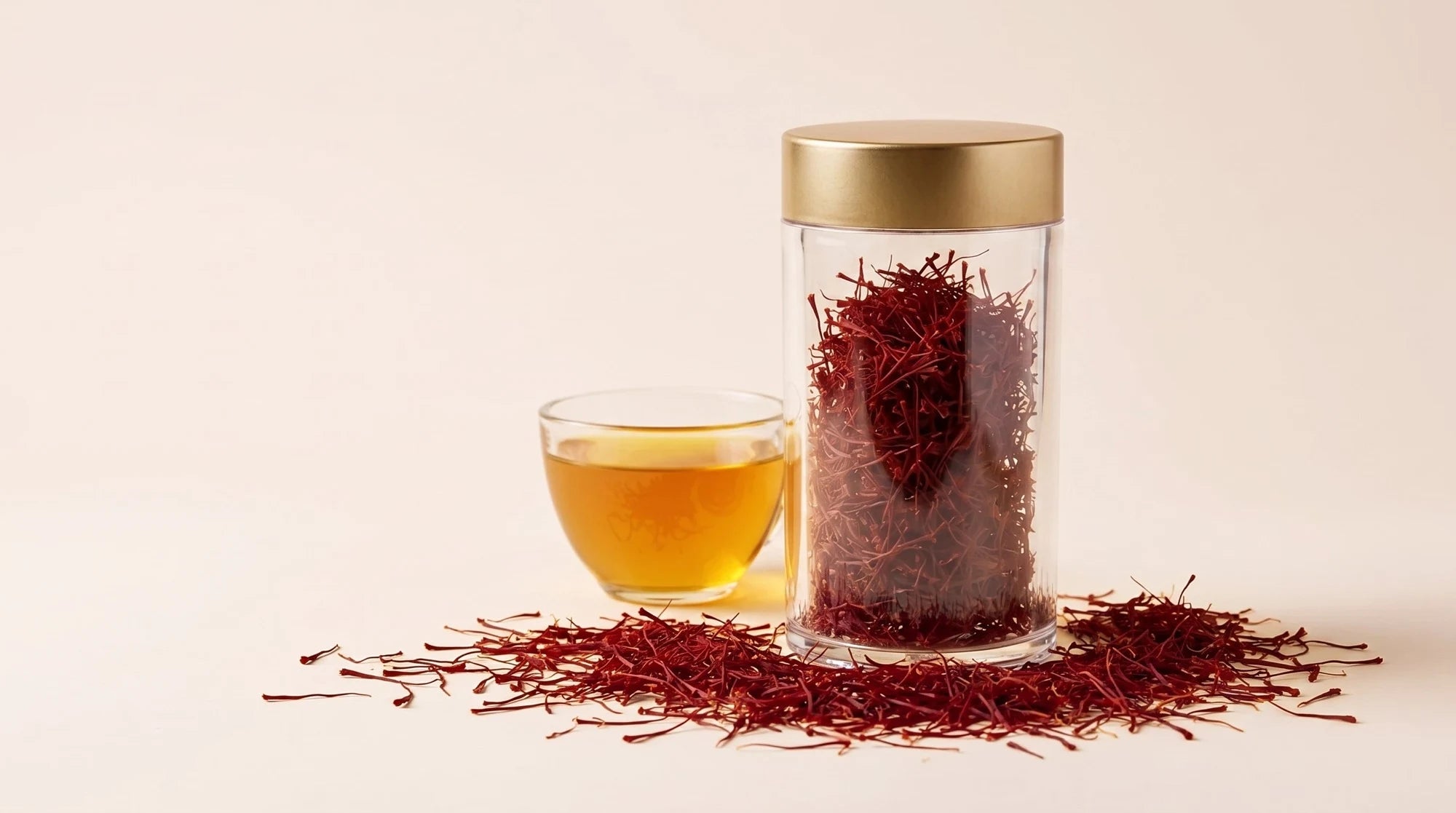
Three threads, hot water, five golden minutes — the Herati tea ritual and two variations.
Learn the ritual →Technique
Blooming, dosage, storage, and the mistakes that waste most of what you paid for.
Read the method →The kitchen
Qabuli pulao, sholeh zard, sheer yakh, kheer, tahdig and the golden latte.
Browse recipes →Quick answers
Three to five for a cup of tea. A generous pinch — 15 to 20 threads — bloomed in 2 tbsp of warm water for a family rice dish. More is not better: past about six threads a cup turns bitter rather than richer.
Yes, if you want what you paid for. Dry threads release a fraction of their colour and aroma. Warm water, ten minutes, then add the liquid and the threads together.
Sealed, cool, dark and dry: two years or more at peak aroma. Never the fridge — humidity is the enemy. Every bottle we ship carries its harvest date.
We do not sell it and would not buy it. Powder is where adulteration hides, because you cannot see what is in it.
When you are ready
Single-origin Herati Super Negin, single-origin and harvest-dated.
For giving
One gram of Super Negin in a crystal keepsake bottle. About 60 cups of tea.
For the ritual
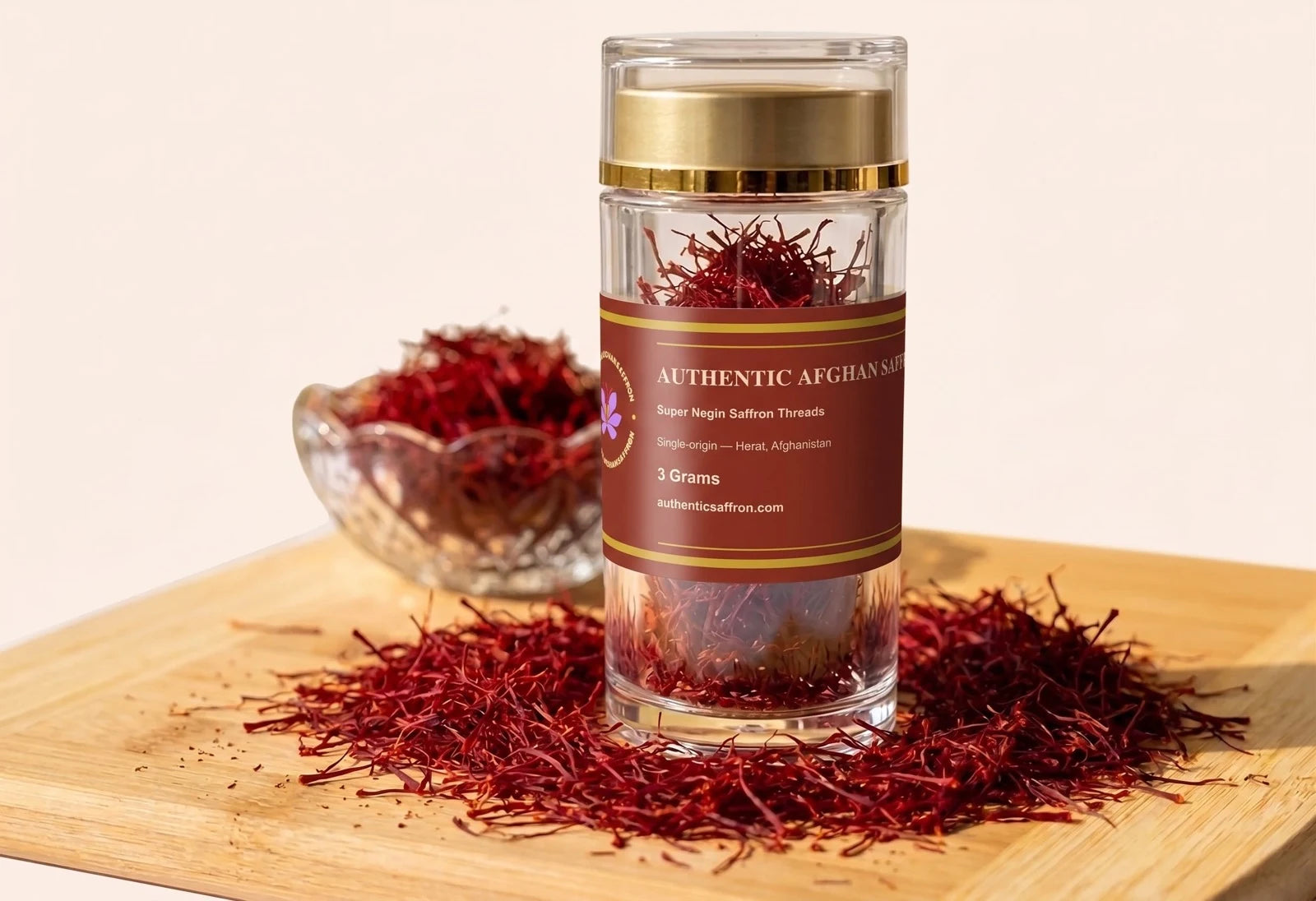
Two crystal bottles in a gold-foiled gift box.
For the kitchen
For the kitchen that cooks with saffron, not around it.
Free U.S. shipping over $50 · Gift wrap and a handwritten card available