Buying saffron questions are worth asking out loud, because the answers separate sellers who know their supply chain from sellers who bought a pallet. Ask where it was grown, when it was harvested, what form it is in, and whether any testing has been published. Vagueness is itself the answer.
Saffron is unusual among groceries in that almost nothing about quality is visible through a screen. Photographs are interchangeable. Grade names are unregulated marketing in most markets. What is left is what a seller will tell you when asked plainly, and how quickly they can tell you.
Why does asking work at all?
Because the answers are cheap for an honest seller and expensive for everyone else. A business that buys direct from growers already knows the valley, the crop year and the lot. A business that bought a repacked box through two intermediaries has to either guess or stall, and both are audible.
You are not trying to catch anyone out. You are testing for specificity. Precision is hard to fake at speed and it is the one signal that survives being read over email.
Which questions should you actually ask?
Seven cover almost everything. Send them in one message; a seller who answers all seven in order has told you a great deal about how they operate.
- Where was this grown — which country, and which region or valley?
- What harvest year is the lot you are shipping now?
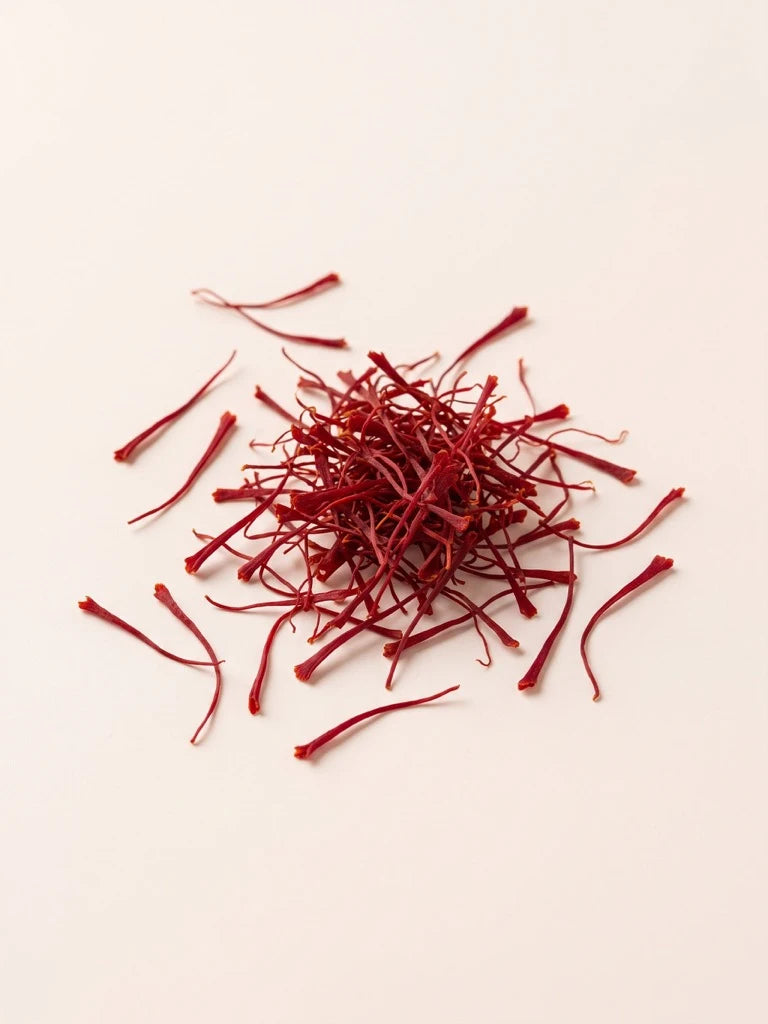
- Is it whole threads or powder, and is it all-red stigma or does it include style?
- Has this lot been tested, and can I see the report rather than a summary of it?
- What does the grade name on your label mean in your own words?
- How is it stored between arrival and dispatch, and how is it packed for shipping?
- Do you buy from growers or co-operatives directly, or through an importer?
None of these require a trade secret to answer. If a seller treats them as intrusive, that is information too.
What does a good answer sound like?
Good answers are short and concrete. Weak answers are long and general. The table below is the pattern we see most often.
| Question | A workable answer | A warning sign |
|---|---|---|
| Where was it grown? | A named region and, often, a named district or co-operative. | “Imported”, “the finest growing regions”, or a country that changes between pages. |
| Which harvest year? | A specific autumn, given without hesitation. | Only a best-before date, or “fresh stock” with no year. |
| Threads or powder? | Whole threads, described as all-red or with the style content stated. | Powder only, or silence on style content. |
| Has it been tested? | A yes with the report attached, or an honest not yet with a date. | A category claim with no document behind it. |
| What does your grade name mean? | A plain description of thread selection and appearance. | Superlatives, invented tiers, or “the highest grade there is”. |
| How is it stored and packed? | Airtight, dark, cool, and sealed for transit. | No answer, or shipped in a clear bag. |
| Direct or through an importer? | Either, stated plainly, with the chain described. | “We work with the best suppliers” and nothing further. |
What should you expect on testing specifically?
ISO 3632 is the international standard that defines how saffron is sampled and measured — colouring strength read at 440nm, picrocrocin at 257nm, safranal at 330nm — and how the results fall into Categories I, II and III. The standard is published by the International Organization for Standardization. It is a measurement framework, not a badge, and that distinction matters when you read a label.
A claim of Category I with no accompanying report is a claim about nothing. So ask for the document: the laboratory name, the date, the lot reference and the three readings. Our walkthrough on how to read a saffron lab report explains what each line means, and why a grade claim without a certificate means nothing covers the shortfall in more detail.
An honest “not yet, here is when” is a better answer than a confident number with no paperwork. That is our own position at the moment: the current lot is with a laboratory, and we will publish the report in full on our lab report page when it comes back, including anything unflattering in it.
Which answers should end the conversation?
Some replies are simply disqualifying, whatever else is on the page.
- A refusal to name an origin. Every real supply chain knows where its saffron came from.
- Certification language with no certificate. Especially where the wording implies a body has endorsed the brand rather than measured a lot.
- A price far below everything comparable, unexplained. Cheapness in saffron is almost always manufactured somewhere in the chain.
- Powder sold as premium. Ground saffron cannot be inspected, which is exactly why adulteration concentrates there.
- Pressure. Countdown timers and last-few-jars banners are not supply chain facts.
If you want the visual checks that go alongside the questions, our authenticity page covers what to look for once the jar arrives, and the origin page explains why region is more informative than country.
Frequently asked questions
Is it rude to interrogate a small seller?
No. Small sellers who buy carefully usually enjoy these questions, because the answers are their advantage. The only sellers inconvenienced by them are the ones who cannot answer.
What if the seller says the lab report is confidential?
Treat that as a no. A certificate of analysis on a food product is not commercially sensitive in any meaningful way, and a seller quoting its results while withholding the document is asking you to take the number on trust.
Does a grade name like Super Negin guarantee anything?
It describes a style of selection, chiefly long all-red threads with the style removed, and it is applied by sellers rather than by a regulator. It is a useful description and not a guarantee. The test results and the harvest year tell you more.
How quickly should a seller reply?
Speed matters less than substance, but a seller who knows their lot can usually answer origin and harvest year immediately. Long delays followed by general answers suggest the information is being assembled rather than recalled.
What else is worth reading?
- Supermarket saffron versus specialist sellers — who can answer these questions at all.
- How to read a saffron price per gram.
- Our own answers to the questions we get asked most.