Supermarket saffron is not automatically fake, and specialist saffron is not automatically good. The real difference is information. A grocery aisle sells you a very small packet with a barcode and little else. A specialist can be asked where it grew, when it was picked, and what testing exists behind the label.
That framing matters, because the argument is usually conducted badly. One side implies every supermarket jar is dyed corn silk. The other implies every online seller with a nice photograph is a farm. Neither holds. What holds is that the two channels are built to answer different questions, and only one of them is built to answer yours.
What is actually in a supermarket saffron packet?
Usually real saffron, in a very small quantity, of unstated age and unstated origin. The large grocery chains buy through spice packers who buy through importers. Every hop in that chain is competent at logistics and indifferent to provenance, because provenance is not what the shelf is selling. The shelf is selling availability.
The consequences are structural rather than sinister.
- Tiny pack sizes. Often a fraction of a gram, chosen to hit a price point rather than a portion.
- Blended lots. Packers combine sources to hit a cost target, so a single region cannot be named.
- Unknown age. A best-before date two years out tells you when the packer stopped guaranteeing it, not when it was harvested.
- Slow turnover. Saffron is a low-velocity line in most stores. A packet may sit under lights for a long time before you pick it up.
Adulteration is the smaller risk here, though it is not zero anywhere in this trade; the US Food and Drug Administration treats economically motivated adulteration of high-value foods as an ongoing concern. The likelier disappointment is simply faded saffron in a packet too small to matter.
How do the two channels compare?
| What you are judging | Supermarket | Specialist seller |
|---|---|---|
| Typical pack size | Fractions of a gram to 1 g | 1 g to 10 g, sometimes larger |
| Price per gram | Often high once converted | Varies widely; usually lower at 2 g and above |
| Origin detail | Country at best, frequently none | Region or valley, sometimes a co-operative |
| Harvest year | Rarely stated | Commonly stated, and answerable on request |
| Form | Threads or powder, both sold | Threads, with style content usually described |
| Test documentation | Almost never available | Sometimes published in full; ask for the report |
| Someone to ask | No | Yes, and the reply is the test |
| Speed | Today, on foot | Days, by post |
| Recourse | Straightforward refund at the till | Depends entirely on the seller |
Read down the specialist column and you will notice the entries are conditional. That is deliberate. The category contains careful importers and it also contains drop-shippers with a stock photograph, and the price alone will not tell you which one you are looking at. Our page on saffron brands sold in the US works through what to compare.
Where does the supermarket genuinely win?
In three situations, and they are not trivial ones.
- You need it this afternoon. A paella tonight is a real constraint and no amount of provenance beats being in the building.
- You are cooking one dish, once. If saffron is not going to become a habit, a small packet is the proportionate purchase.
- You want recourse. Returning something to a grocery chain is easy. Recovering money from an anonymous marketplace listing is not.
If you are buying this way, convert the packet to a price per gram before you assume it is cheap. Our note on pack sizes and the per-gram trick covers how a small weight makes a modest sticker price look reasonable when the unit cost is anything but.
What are you risking with a specialist you have not met?
The honest answer is more, in both directions. A good specialist gives you information a supermarket structurally cannot: a named valley, a crop year, a description of how the threads were selected, and, in the better cases, a laboratory report you can read yourself. A poor one gives you all the same claims with nothing behind them, and the claims cost nothing to make.
So the specialist advantage is only real if you use it. Ask the questions. Read the report rather than the summary of the report. Treat an unexplained low price as a question rather than a win, which is the argument in why cheap saffron is cheap. And when the jar arrives, run the simple checks in how to spot fake saffron before you commit it to a dish.
For our part, the current lot is with a laboratory and the report will be published in full when it returns, unedited. Until then we would rather say that than imply a grade we cannot yet show you.
How should you decide?
Use the constraint that is actually binding. If it is time, buy the packet and cook the dish. If it is quality, buy from someone who can answer questions, and buy enough that the shipping cost does not dominate the per-gram price. The mistake is paying specialist prices for supermarket information, which happens most often on large marketplaces where the listing looks artisanal and the seller is a warehouse.
The buying saffron hub sets out the full decision if you want it in one place.
Frequently asked questions
Is supermarket saffron real saffron?
Usually yes, in the sense that it is Crocus sativus stigma rather than a substitute. What is often missing is freshness and information: the packets are small, the harvest year is unstated and the origin is generic, so colouring strength can be well below what the same money buys elsewhere.
Why is supermarket saffron so expensive per gram?
Because the packets are tiny and every fixed cost, from packaging to shelf space to distribution, is spread across a fraction of a gram. Convert the price to a per-gram figure and the comparison usually looks very different from the one on the shelf edge.
Can I tell anything from the packet itself?
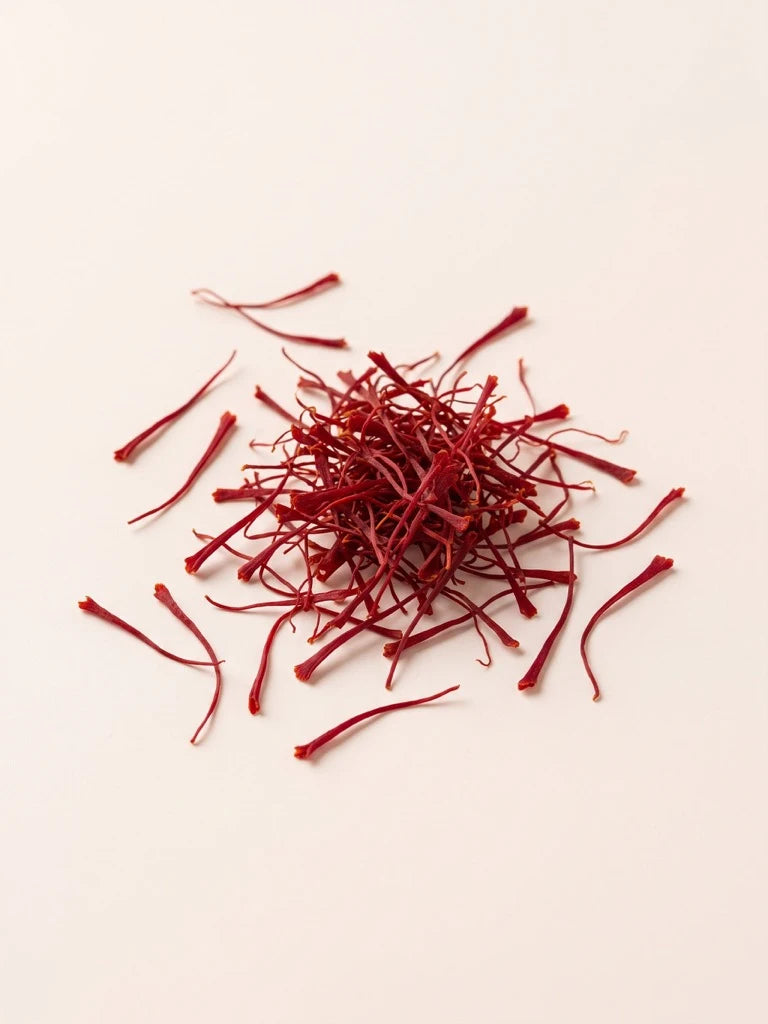
A little. Look for whole threads rather than powder, deep red rather than orange or two-tone, a stated net weight and any mention of origin or crop year. Threads that crumble to dust in the packet have usually been on a shelf a long time.
Is a specialist seller always better value?
No. A specialist is better positioned to be better value, because larger pack sizes lower the unit price and information lowers the risk. Whether a particular seller delivers on that is something you establish by asking, not by assuming.