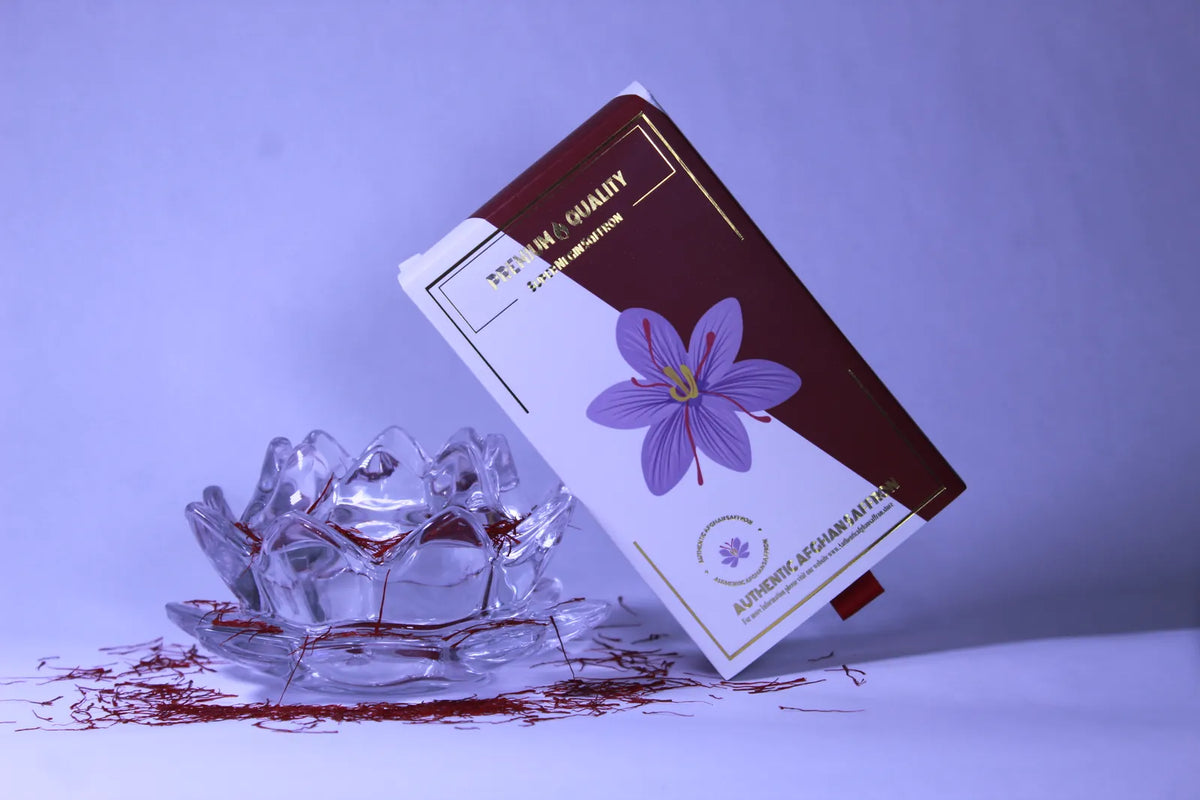
A saffron pack size is a pricing lever as much as a portion. Smaller jars almost always cost more per gram, larger ones almost always cost less, and the gap is wide enough that the same saffron can look cheap or dear depending only on how much of it you agreed to buy.
None of that is dishonest by itself. Filling, weighing and packing a half-gram jar costs nearly as much as filling a five-gram tin, so the small jar carries more of the overhead. The problem starts when the pack size is chosen to make a sticker price land in a comfortable range, and the net weight is left for you to find.
What is the per-gram trick?
It is simply this: quote a price the shopper recognises, and let the weight float. Most people carry a rough sense of what a jar of spice should cost. Very few carry a sense of what a gram of saffron should cost. So the number that gets tuned is the weight in the jar, not the figure on the label.
You see it most clearly in three places.
- Fractional grams. A 0.4 g or 0.5 g pack reads as “a jar of saffron” and prices like one, but you are buying half of what you assumed.
- Imperial fractions. A listing in eighths of an ounce sounds tiny to a US shopper. An eighth of an ounce is 3.54 g, several times a gram.
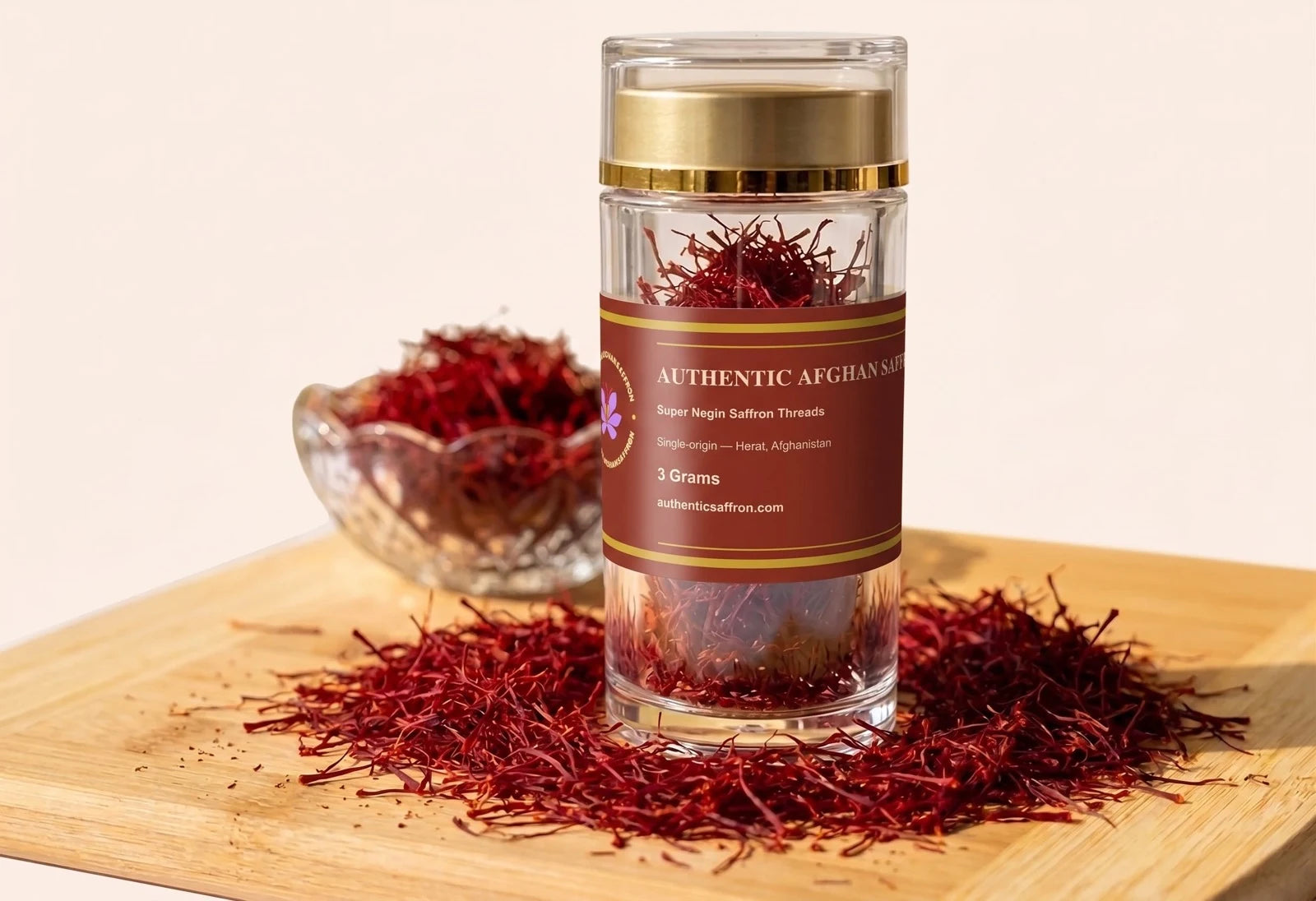
- Oversized containers. A tall glass jar with threads occupying the bottom fifth is not a lie, but it is a suggestion, and it works.
The defence is mechanical. Convert every listing to a price per gram before you form an opinion, as set out in our walkthrough on reading a saffron price per gram. In the United States, packaged foods must declare the net quantity of contents, under labelling rules set by the US Food and Drug Administration, so the figure exists somewhere even when the layout buries it.
Which pack sizes actually exist, and what do they hold?
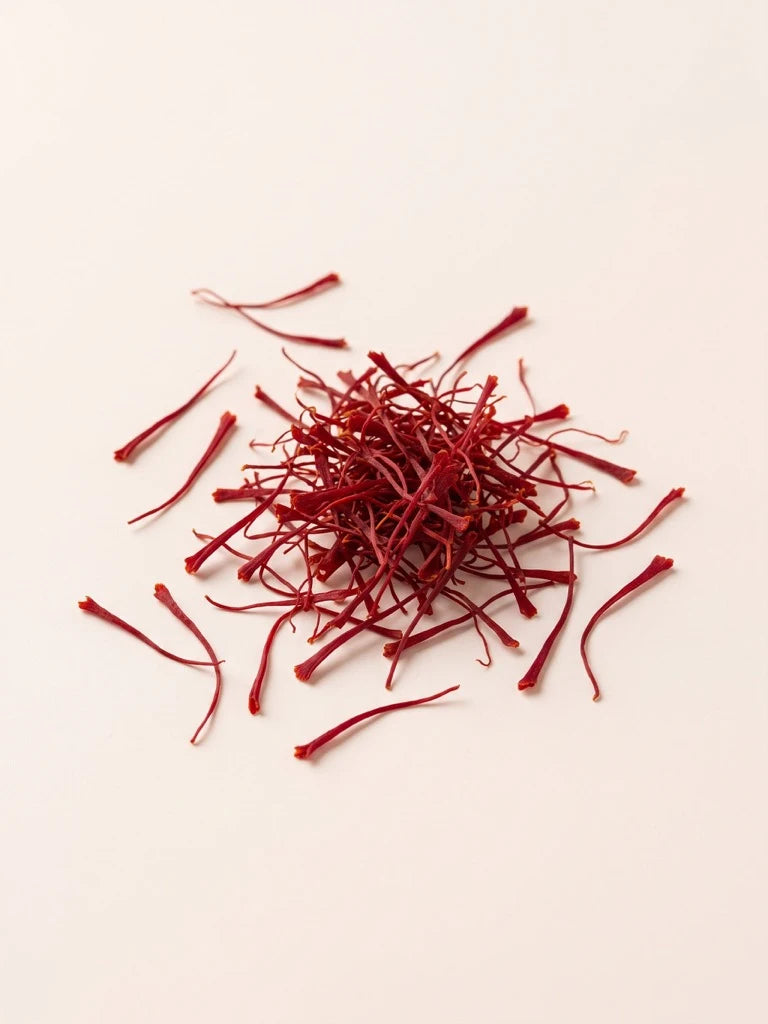
It helps to translate weight into something you can picture. A gram of saffron is roughly 150 flowers’ worth of stigmas, which works out at something like four to five hundred whole threads depending on how large the stigmas are. A dish for four generally takes a pinch — call it fifteen to twenty-five threads — so a gram goes a long way.
| Pack size | Whole threads, roughly | Dishes for four, roughly | Who it suits |
|---|---|---|---|
| 0.5 g | 200–250 | 10–12 | A trial, or one dish a month for a year |
| 1 g | 400–500 | 20–25 | The default for an occasional cook |
| 2 g | 800–1,000 | 40–50 | A household that cooks with saffron monthly |
| 5 g | 2,000–2,500 | 100–125 | Frequent cooks, or splitting with family |
| 10 g | 4,000–5,000 | 200–250 | Small catering, gifting, restaurant trial |
| 1 oz (28.35 g) | 11,000–14,000 | 550–700 | Trade volumes with trade storage |
These are estimates, not measurements. Thread length and dryness both move the count, and cooks disagree about what a pinch is. The point of the table is scale: most homes overestimate how much saffron they will get through, and buy for the price rather than the plate.
Is the bigger pack always better value?
Per gram, usually yes. In practice, only if you finish it. A five-gram tin at a lower unit price is a saving on paper and a loss in the cupboard if two grams of it go stale before you reach them. The honest calculation is cost per gram used, which nobody advertises.
Three questions settle it quickly.
- How many saffron dishes did you cook last year? Not intend to cook — actually cook.
- Multiply by roughly twenty threads a dish, then convert back to grams using the table above.
- Buy that, plus a small margin. If the next size up is genuinely cheaper per gram and you will use it within a year, take it.
If you are weighing a much larger purchase, the trade-offs shift again and are worth reading separately in buying saffron in bulk.
What does a large pack cost you in freshness?
Saffron does not spoil in the way a fresh food spoils. It fades. Colour, and especially aroma, decline with exposure to light, warmth, air and moisture, and every time you open a jar you reset a little of that exposure. A large container opened weekly for two years is subjected to far more of it than a small one finished in three months.
That is an argument for matching pack size to use, and for storage that limits the damage: airtight, opaque or dark glass, cool, away from the stove. Our guide to storing saffron covers the specifics. If you do buy large, decant into a small working jar and leave the bulk sealed.
Packaging tells worth noticing
A few details separate packaging designed to protect saffron from packaging designed to sell it.
- Net weight stated plainly, in grams, on the front — not only in a table three clicks away.
- An airtight closure rather than a shaker top or a friction lid.
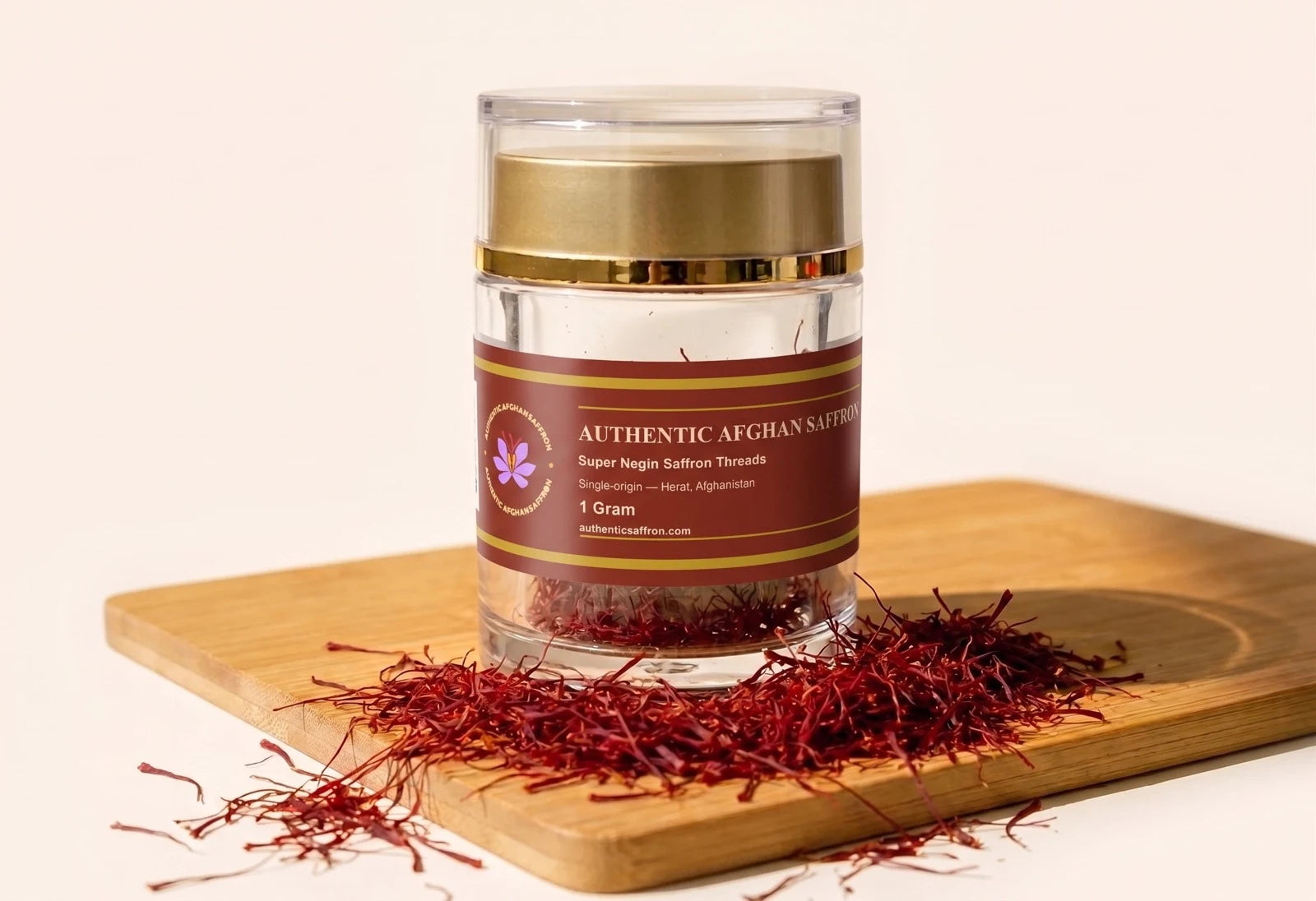
- Light control: opaque tins, or clear glass supplied inside a box. Our own one-gram crystal bottle is sold boxed for that reason.
- A harvest year printed somewhere, not merely a best-before date two years out.
- Headspace that matches the fill. A jar four-fifths empty is telling you something about intent.
For where pack size sits in the wider decision, the saffron price guide puts the bands in context.
Frequently asked questions
What is the best saffron pack size for a home cook?
One or two grams suits most households. That is roughly twenty to fifty dishes for four people, which is a year or more of occasional cooking, and it is small enough to finish while the aroma is still strong.
Why is a half-gram jar so expensive per gram?
Because packing, labelling, sealing and shipping cost roughly the same whatever goes inside. Those fixed costs are spread over half a gram instead of five, so the unit price rises. Some of the premium is real, and some of it is simply what the format allows.
Does a bigger pack mean lower quality saffron?
Not on its own. Pack size and grade are independent decisions. Judge the saffron on origin, harvest year, thread appearance and published testing, then treat pack size purely as a question of how much you will use.
Can I split a large pack with someone else?
Yes, and it is a sensible way to get a lower unit price without holding saffron for years. Divide it straight away into small airtight containers, keep them dark and cool, and label each with the harvest year.
What should you read next?
- Supermarket saffron versus specialist sellers — where the smallest packs live.
- What to ask a saffron seller before you buy.
- Our buying saffron hub, for the whole decision in one place.