Almost every saffron pregnancy question comes down to one distinction: food or supplement. A pinch in a cooked dish is a few milligrams and an ordinary part of many cuisines. Concentrated capsules are a different matter, and pregnant women are usually excluded from the trials, so the evidence simply does not exist.
Why does saffron come up in pregnancy at all?
Two reasons, pulling in opposite directions. The first is cultural. In Afghan and South Asian households saffron milk is a common drink during pregnancy, and in some families it carries a belief that it will lighten the baby’s complexion. That belief has no evidence behind it. Skin tone is inherited.
The second reason is the older herbal literature, which lists saffron among the plants historically used in large quantities to bring on menstruation or end a pregnancy. Those accounts are old, uncontrolled and describe amounts far above any culinary use, but they are why saffron appears on cautionary lists today.
Both threads describe the same spice at wildly different doses. Keeping the doses separate is most of the work.
Is saffron in food a concern?
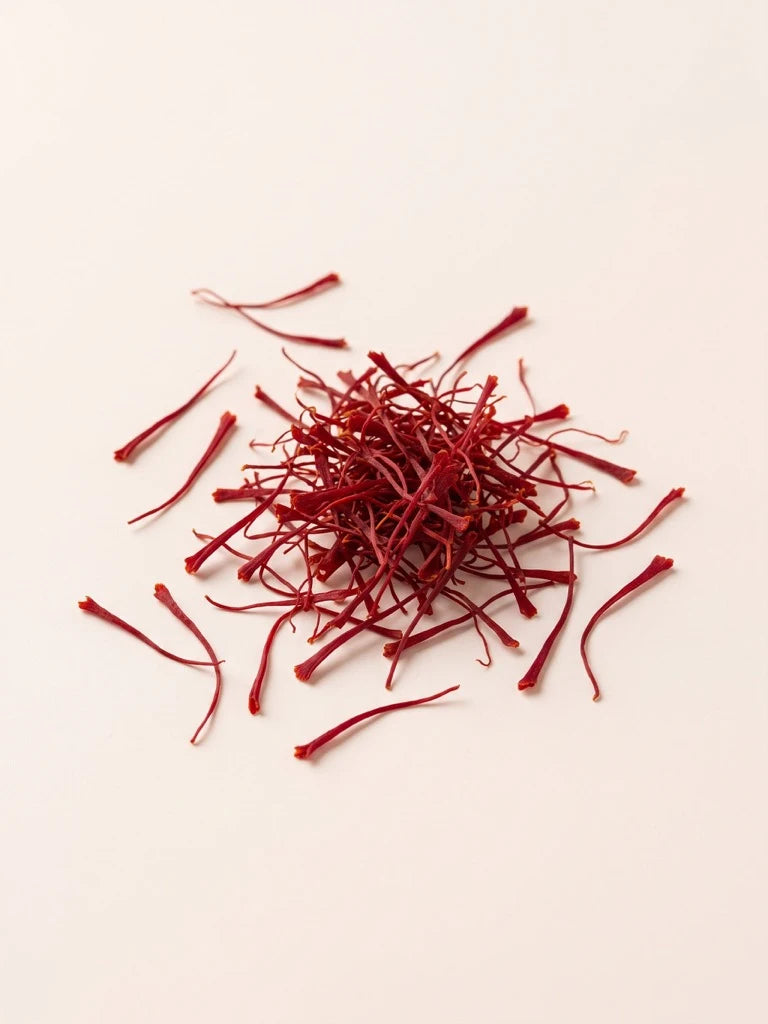
A generous pinch for four people is roughly 20 threads, near 40 milligrams in total, so about ten milligrams a portion. That is the amount that has been eaten in saffron-cooking regions for centuries, including by pregnant women, without a pattern of harm being documented.
What has not happened is a study designed to confirm that. Absence of a recorded problem is not the same as a demonstration of safety, and it would be dishonest to present it as one. If you want to be conservative during pregnancy, using less saffron or none for a few months costs you nothing but flavour.
What has actually been studied?
Less than the volume of online advice suggests. Most human saffron research concerns mood, appetite and vision in non-pregnant adults, and pregnancy is a standard exclusion criterion in those protocols. That is why the mood findings cannot simply be read across.
A small number of studies have looked at saffron in obstetric settings. They are small, mostly single-site, and not the kind of body of evidence that supports a recommendation either way. Treat anything you read that speaks confidently about saffron and pregnancy outcomes with suspicion, and check whether it is describing research or repeating tradition. Most of the underlying literature is indexed on PubMed if you want to look for yourself.
This is research, not medical advice. Speak to a doctor before using saffron therapeutically.
How do the different amounts compare?
Laying the doses side by side is more useful than any general reassurance or general warning.
| Use | Rough amount | What is known | Cautious stance |
|---|---|---|---|
| Saffron in a cooked dish | About 10 mg a portion | Long history of ordinary food use; no dedicated safety study | Generally treated as food; raise it with your clinician if unsure |
| A cup of saffron milk | A few threads, under 10 mg | Traditional, and the folklore attached to it is unsupported | A warm drink, not a treatment |
| Supplement capsules | Around 30 mg a day | Trials excluded pregnant participants | Not without medical advice |
| High-dose self-dosing | Hundreds of milligrams upward | No controlled data; this is the range the historical warnings concern | Avoid |
What does a cautious approach look like?
Practical, rather than fearful:
- Keep saffron in the kitchen and out of the supplement cupboard for the duration.
- Tell your midwife or doctor what you are taking, including anything herbal. This is the step people skip.
- Be certain what is actually in the jar. Adulterated saffron may contain dyes with no place in food, which is a real risk rather than a theoretical one. How to spot fake saffron covers the checks.
- Ignore any seller who makes health claims about saffron and pregnancy. Nobody is in a position to make them.
For background on how much saffron a dish actually needs, see how much saffron you need. For the doses used in research, see saffron dosage used in clinical studies, and for the general picture, saffron safety and sensible limits.
What about after the birth?
The same split applies. Saffron in cooking returns to being an ordinary ingredient. Concentrated supplements while breastfeeding sit in the same evidence gap as during pregnancy, because nursing mothers are excluded from trials for the same reasons.
Saffron does come up in discussions of postpartum mood, on the back of the general mood research. The studies behind that interest were run in other populations, and a handful of small obstetric studies do not close the distance. If low mood after birth is the actual question, it is a question for a clinician, and there are treatments with a far better evidence base behind them.
Frequently asked questions
Is it safe to eat food cooked with saffron while pregnant?
A pinch of saffron shared across a dish is a few milligrams a person, and saffron is an ordinary ingredient in the cuisines that use it. That is a very different thing from a daily capsule. Even so, the decision belongs to you and your clinician, not to a website.
Does saffron milk make a baby fairer?
No. That belief is widespread in South Asian and Afghan households, and there is no evidence behind it. Skin tone is inherited. Saffron milk is a warm drink with a good aroma, and that is the whole of it.
Why do some sources call saffron an abortifacient?
Because large doses were used that way historically, long before controlled research existed. The amounts involved are far above anything used in cooking, and the reports are old and uncontrolled. It is a reason to avoid concentrated doses, not a reason to fear a pinch in rice.
Can I take a saffron supplement for mood during pregnancy?
Not without medical advice. Pregnancy is routinely an exclusion criterion in saffron trials, so the mood research was not carried out in pregnant participants and does not transfer to them. Speak to your doctor or midwife.
Read next
- Saffron safety and sensible limits — the general dose picture.
- Our summary of saffron research — what has been studied, and how well.
- Saffron questions we get asked most.