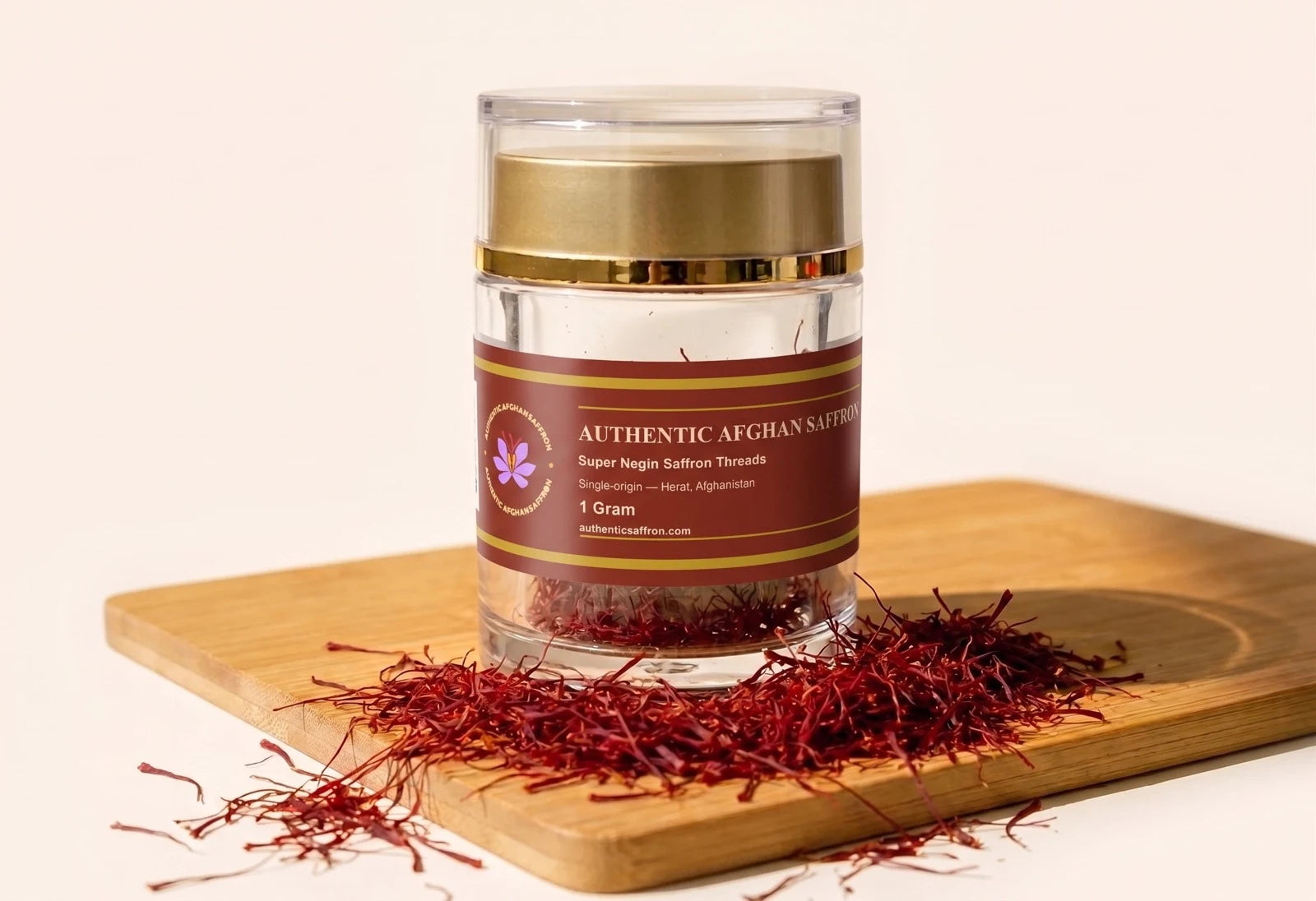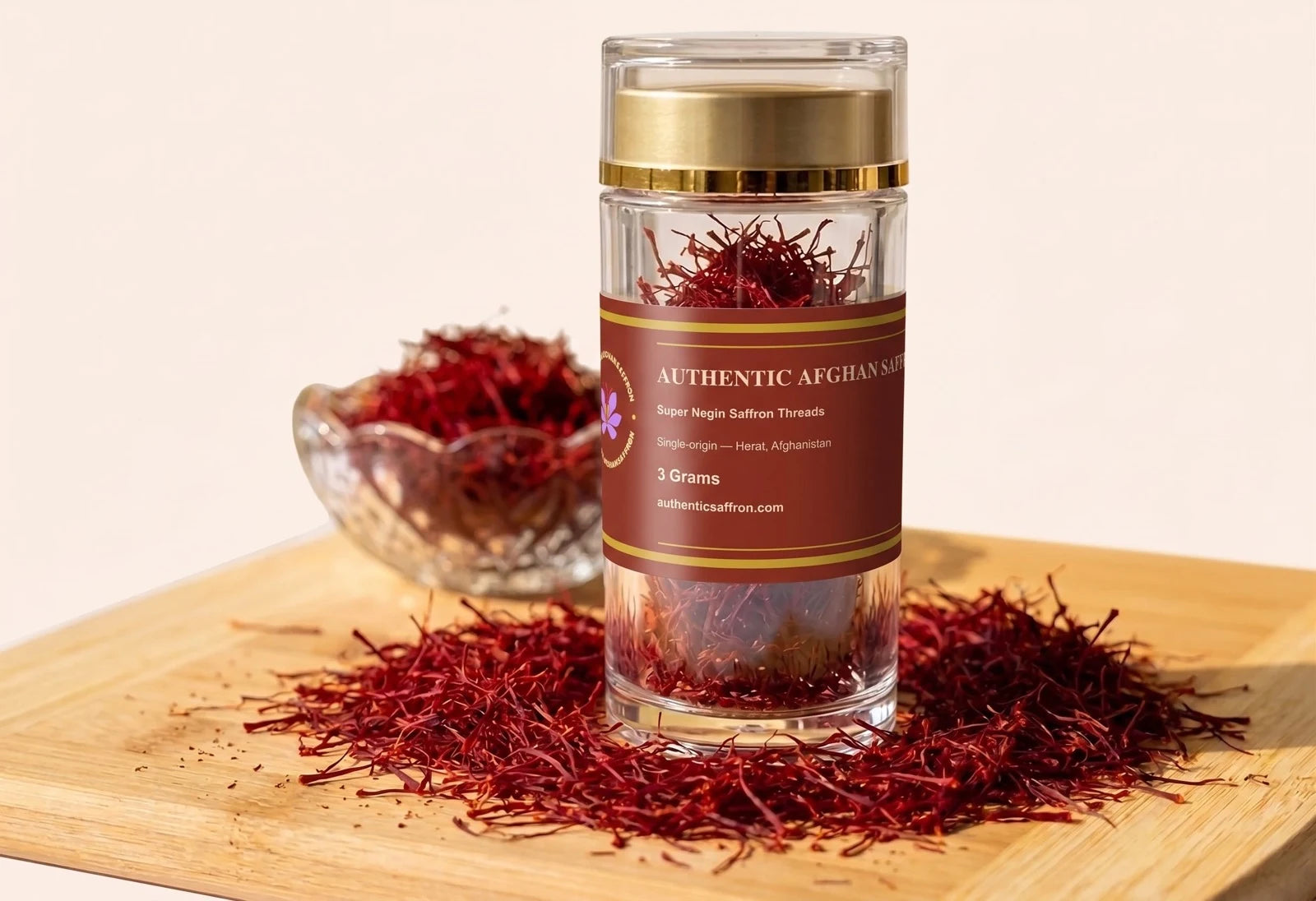
Saffron safety is mostly a question of scale. In cooking you are using a few milligrams a person, which is the amount humans have eaten for centuries. In supplements you are using tens of milligrams a day. The cautionary figures in the literature are measured in grams, thousands of times higher.
Why does scale settle most of this question?
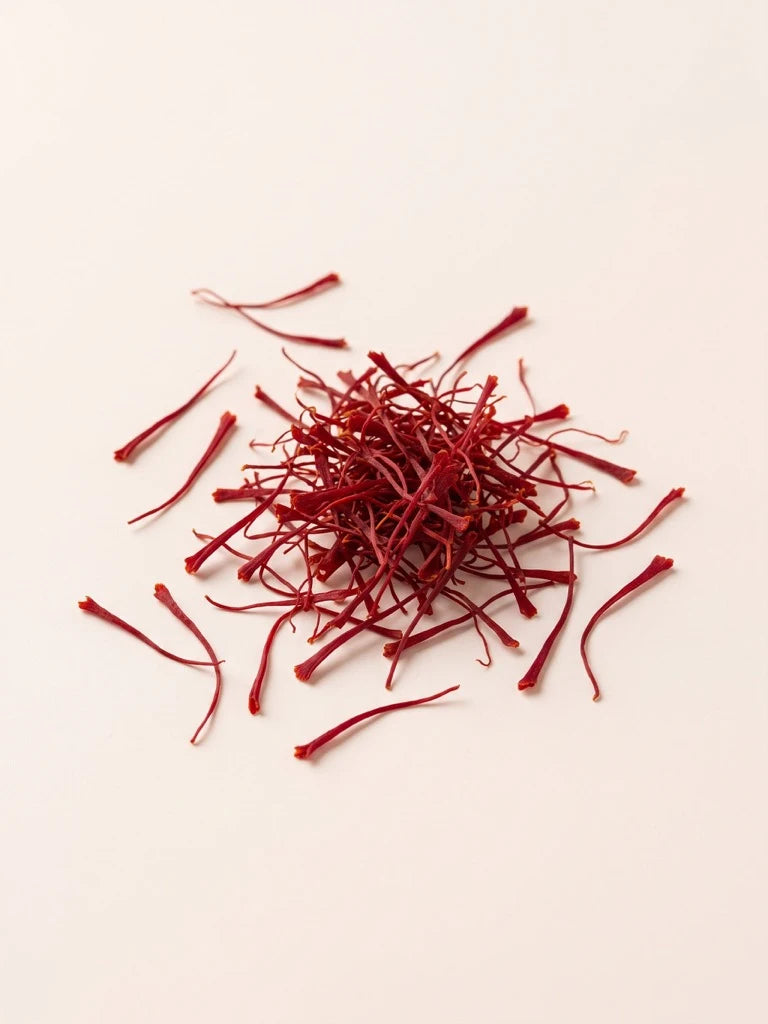
A pinch of saffron for four people is around 20 threads, near 40 milligrams in total. Split across the plates, that is roughly ten milligrams each. You would have to eat that dish every day for months to approach the quantities that appear in any discussion of harm.
Concentrated supplements move you up one rung, into the tens of milligrams a day. Still small. The figures that get quoted as dangerous sit two rungs above that, in whole grams, and nobody arrives there by accident with a spice that costs what saffron costs.
How much is too much?
The honest answer is that the ceiling has never been established in a modern controlled study, because deliberately overdosing volunteers on saffron is not something an ethics committee approves. What exists is a set of reference points at very different scales.
| Daily amount | Context | What is known |
|---|---|---|
| Around 10 mg | One portion of a saffron dish | Ordinary food use, with a long history behind it |
| Around 30 mg | The usual dose in short human trials | Side effects reported are mild and uncommon over four to twelve weeks |
| 100–500 mg | Above trial doses; self-dosing territory | Little to no controlled data. No evidence that more helps |
| 5 g and above | A figure repeated in reference literature as toxic | Traced to historical case reports, not controlled trials. Treat as a warning, not a measurement |
Read the table top to bottom and the point is the distance between the rows. Cooking and the cautionary figure are separated by a factor of several hundred.
What side effects have trials reported?
Across the short human trials, the reported effects are mild and not frequent:
- Nausea or an unsettled stomach, most often in the first days.
- Headache.
- Dry mouth.
- Drowsiness, or the opposite in a few reports.
- A change in appetite, which in some trials was the thing being measured rather than a side effect.
Dropout rates in these trials tend to be low, which is itself a reasonable signal about tolerability at those doses. It is not a signal about anything larger or longer. Our summary of what has and has not been studied lives on the saffron research page, and the dose figures behind it are set out in saffron dosage used in clinical studies.
Who should be more careful?
Some situations call for a conversation with a clinician rather than a blog post:
- Pregnancy, where the traditional caution about larger amounts is worth taking seriously. We cover what is known separately in saffron in pregnancy.
- Anyone taking medication for mood, blood pressure or blood clotting, given where the research interest in saffron has been directed.
- Anyone with a known allergy to saffron or to plants in the iris family.
- Children, for whom no meaningful dosing research exists.
This is research, not medical advice. Speak to a doctor before using saffron therapeutically.
What about taking saffron for months on end?
This is the real gap. Almost every trial stops between four and twelve weeks, so the safety record you can point to is a short one. It says a small daily dose was well tolerated for a couple of months by a few dozen adults. It does not say anything about a year.
Two habits keep people on the sensible side of that gap. The first is taking breaks rather than treating a supplement as permanent. The second is knowing your actual daily intake, which means reading the label rather than the marketing, and checking whether the number refers to extract or to ground stigma. A capsule listing 30 mg of extract and a capsule listing 30 mg of powdered saffron are not the same product.
If you are using saffron in food rather than capsules, none of this applies with any force. A pinch in a pot is food.
Does quality change the safety picture?
This is the part most safety articles skip, and it is the part that actually matters for a shopper. Real saffron at culinary doses is not the risk. Adulterated saffron can be.
The cheap end of the market has a long record of dyed plant fibre, safflower petals, dyed corn silk and synthetic colourants sold as saffron. Some of those colourants are not permitted in food. You are then not eating saffron at all, and the safety literature on saffron no longer applies to what is in your jar.
In the United States saffron itself is a long-established food and colouring ingredient, and the FDA maintains the rules on which colour additives may be used in food. The practical protection is knowing what you bought. Common saffron adulterants covers what turns up, and how to spot fake saffron covers the tests you can run at home.
Frequently asked questions
Is saffron safe to eat every day in food?
Culinary amounts are a few milligrams per serving, and saffron has been eaten that way for centuries in the cuisines that use it. Daily cooking use sits far below any amount discussed in the safety literature. Supplements are a separate question.
What are the reported side effects of saffron?
In short trials the reports are mild and not common: nausea, headache, dry mouth, drowsiness, and changes in appetite. Dropout rates in these trials are generally low. Allergic reactions to saffron are described but rare.
Is 5 grams of saffron really a toxic dose?
That figure is repeated widely in reference books, and it traces back to old case reports rather than controlled research. Treat it as a warning marker, not a measured threshold. It is also about 2,000 times a culinary portion, which is the more useful way to read it.
Can saffron interact with medication?
It is plausible and under-studied. Because saffron has been examined for effects on mood and on blood pressure, the sensible assumption is that a concentrated extract could interact with medicines acting in those areas. Ask a pharmacist or doctor before combining them.
Read next
- Saffron dosage used in clinical studies — the numbers behind the middle row of the table.
- Why cheap saffron is cheap — where the adulteration risk comes from.
- How to buy saffron — what to ask before you pay.