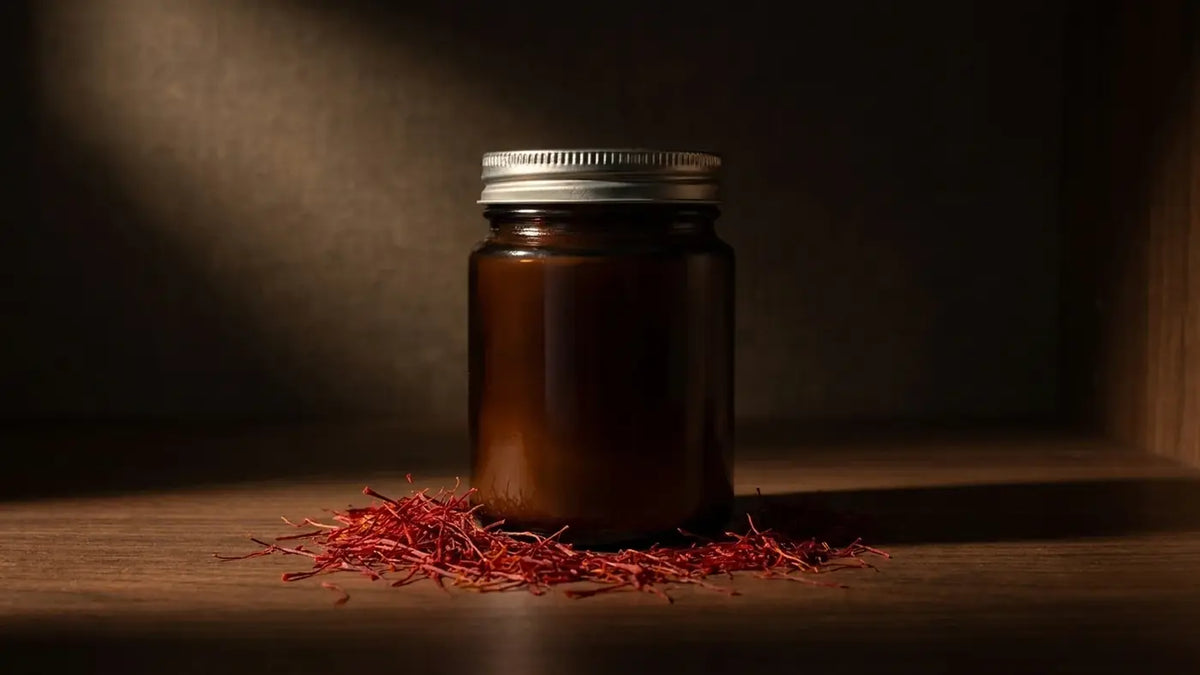
Saffron moisture content is the share of a thread’s weight that is water rather than spice. It matters because saffron is sold by the gram: damp threads mean fewer threads per gram and a weaker pinch. ISO 3632 caps moisture and volatile matter for exactly this reason, alongside the mould risk that comes with it.
It is the least glamorous number on a laboratory report and one of the most useful. Colour, bitterness and aroma tell you how good the crop was. Moisture tells you how much of what you are holding is actually crop.
Why does moisture matter when you buy by the gram?
Fresh stigmas are mostly water. Drying is what turns a pile of wet flower parts into a spice, and it takes a large volume of fresh material down to a small fraction of its original weight — roughly a fifth, on the figures the trade commonly quotes, though it varies with the crop and the drying method.
Once dried, saffron stays hygroscopic. It pulls water back out of humid air through a loose lid, through a paper sachet, through repeated opening in a steamy kitchen. Nothing about the threads looks different. The scale, however, notices.
Two consequences follow, one commercial and one practical:
- You get less spice. A gram at the top of the allowed moisture band contains meaningfully fewer dry threads than a gram at the bottom of it. You paid the same either way.
- It keeps badly. Water is what lets mould grow and what speeds the chemical breakdown of crocin. Damp saffron does not just weigh wrong today, it fades faster tomorrow.
How much moisture does the standard allow?
ISO 3632 sets a ceiling on moisture and volatile matter, and treats filaments and ground saffron differently, because powder takes up water faster and needs a tighter limit. The figures commonly published for the scheme are set out below, but the current text of the standard, available as ISO 3632-1, is the authority rather than any table on a retailer’s site, including ours.
| Form | Ceiling usually cited | Why the limit differs | What exceeding it signals |
|---|---|---|---|
| Filaments (whole threads) | 12% by mass | Intact threads take up water more slowly | Poor drying, humid storage, or weight added on purpose |
| Powder | 10% by mass | Milled surfaces absorb moisture quickly | The same, with a higher spoilage risk |
Note what the limit is not. It is a maximum, not a target. Well-dried saffron sits comfortably below the ceiling, and a report showing a figure just under the line is telling you something even though it technically passes.
How can you tell if saffron is damp?
You can get most of the way there with your hands and your eyes.
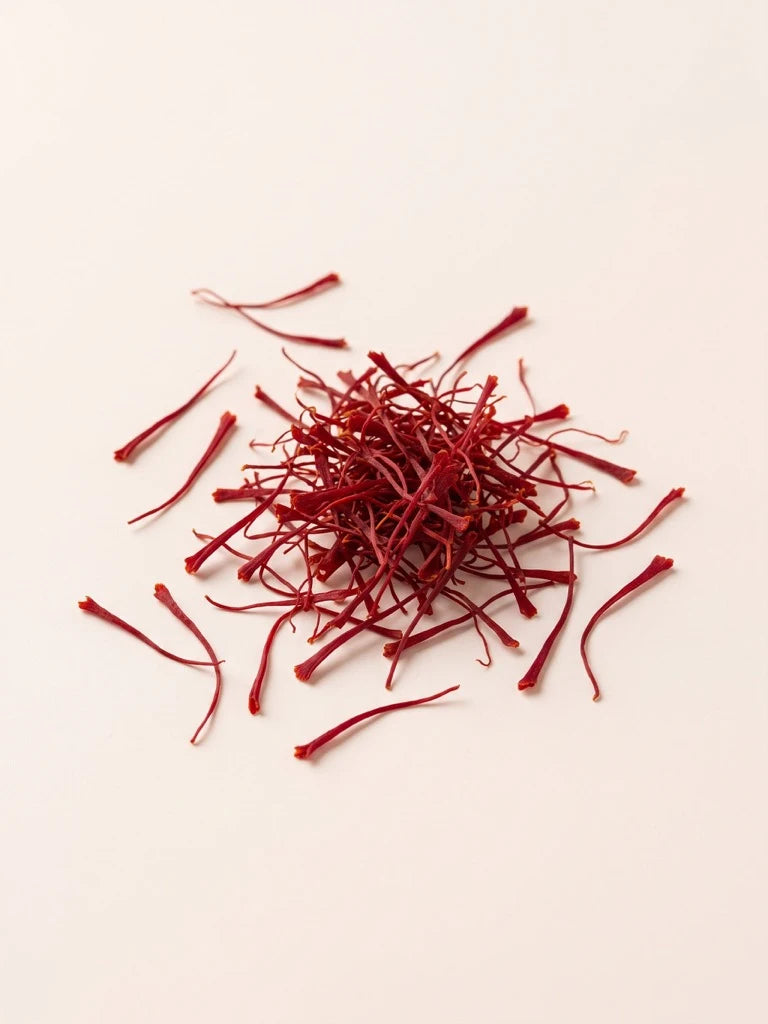
- Snap a thread. Properly dried saffron is brittle. It breaks cleanly with a faint crack. A thread that bends, stretches or flattens between your fingers is holding water.
- Look for clumping. Dry threads sit loose and separate. Damp ones cling to each other and to the sides of the container.
- Check the glass. A faint film or fogging on the inside of a jar after a warm day means there is free moisture in there.
- Smell for must. Saffron should read as hay, honey and something faintly medicinal. Anything cellar-like or sour points to moisture and possibly mould.
- Feel for tackiness. Threads that feel slightly sticky rather than dry have either taken up water or been treated with something to add weight.
That last point deserves its own sentence. Deliberately re-humidifying saffron before sale, or coating threads with a sugar or oil residue, is a known way of gaining weight cheaply. It is adulteration rather than sloppiness, and it belongs in the same family as the tricks covered in how to spot fake saffron.
Can you dry out damp saffron at home?
Partly, and at a cost. Gentle drying will drive off water, but safranal and the other aroma compounds are volatile too, so anything warm enough to work quickly also strips the smell. That is a bad trade for a spice you bought for its aroma.
If threads have gone soft, the practical move is damage control rather than restoration:
- Move them to a small airtight container with as little headspace as possible, kept dark and cool but not in the refrigerator, where condensation forms every time you open it.
- Use them sooner rather than later, and bloom them a little longer to compensate for the strength you have lost.
- Do not put them in a warm oven or under a lamp. The colour will survive and the aroma will not.
Prevention is the whole game here, and the mechanics are in how to store saffron. Threads that stay dry lose strength slowly through the ordinary route described in how saffron degrades over time.
How does moisture change the numbers on a report?
More than most buyers expect. Absorbance readings for colour, bitterness and safranal are normally expressed on a dry basis, meaning the laboratory corrects for the water it measured. That correction is honest and necessary, but it has a quiet consequence: a damp batch can post a respectable colouring strength while the tin in your hand still delivers less colour than the number implies, because you are cooking with the wet gram, not the corrected one.
Which is why the moisture line and the colour line should be read together, never separately. A high reading at 440nm alongside a moisture figure pressed up against the ceiling is a different product from the same reading with a comfortable moisture margin. We take the arithmetic apart in what an E1 1cm figure means.
Frequently asked questions
What is a good moisture level for saffron threads?
Comfortably below the ceiling the standard sets rather than just under it. Threads that snap cleanly and sit loose in the container are the practical sign. A specific figure only means something when it comes from a dated report on that batch.
Does damp saffron go mouldy?
It can. Water is what makes mould possible, so saffron held above the moisture limit in a warm place is at real risk, especially in a poorly sealed container. Visible bloom, clumping or a musty smell means it should be discarded.
Can I weigh saffron to check its moisture?
Not usefully at home. Determining moisture properly means drying a weighed sample under controlled conditions and weighing it again, which needs equipment a kitchen does not have. The snap test is a rough substitute, not a measurement.
Why does saffron feel dry but still weigh more than expected?
Because threads can hold water without feeling wet, and because added residues such as sugar or oil also add weight while leaving the surface almost normal. If a pinch looks small for its stated weight, that is worth questioning.