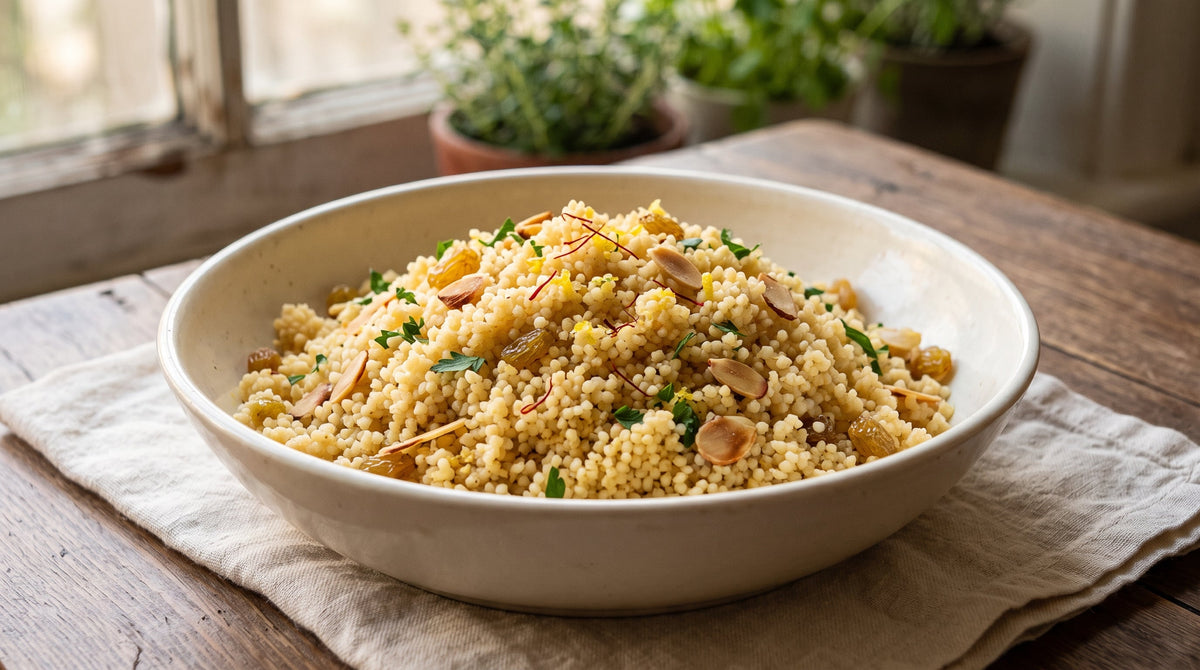
Saffron couscous works because the saffron liquid is also the cooking liquid, so nothing is drained away. Bloom 20 threads — about 0.08 g — in warm water, stir them into 1 1/2 cups of hot stock, pour that over the same volume of couscous, cover tightly and leave it for ten minutes.
Instant couscous is not really cooked. It is semolina that has already been steamed and dried, so all you are doing is putting the water back. That makes it the most efficient carrier for saffron in any grain dish: every drop of the coloured liquid ends up inside the food.
It also means the whole thing hinges on two numbers — how much liquid, and how long under the lid.
Why does couscous carry saffron better than rice?
Rice is boiled or steamed in an excess of water and some of that water goes down the drain, taking colour and aroma with it. Couscous absorbs exactly what you give it. A gram of saffron stretches further here than almost anywhere else in the kitchen.
The grain is also close to flavourless on its own. Semolina is mild and slightly sweet, so there is nothing arguing with the saffron, and the yellow shows clearly against pale wheat. Butter helps carry the aroma; a dish made with water and no fat tastes noticeably thinner.
On provenance, be careful what you claim. Couscous belongs to North Africa, where it is traditionally steamed several times over a simmering stew in a couscoussier, and the everyday seasoning is not usually saffron. Saffron does appear across Moroccan cooking, mostly in tagines and celebratory dishes. This recipe is the quick boxed version of the grain treated to the good spice, and it is worth being honest that the two do not always travel together.
What is the right amount of saffron?
Twenty threads for 1 1/2 cups of dry couscous, which is 0.08 g and serves four to six. Since none of the liquid is thrown away, this reads stronger on the plate than the same dose in a soup would.
Bloom the threads in 2 tablespoons of water held at about 150°F (65°C) for 15 to 20 minutes. Do not bloom them in the stock itself: stock is usually salted and often stored cold, and you want the small, controlled volume you can see the colour developing in. Never use boiling liquid — the aroma leaves as steam.
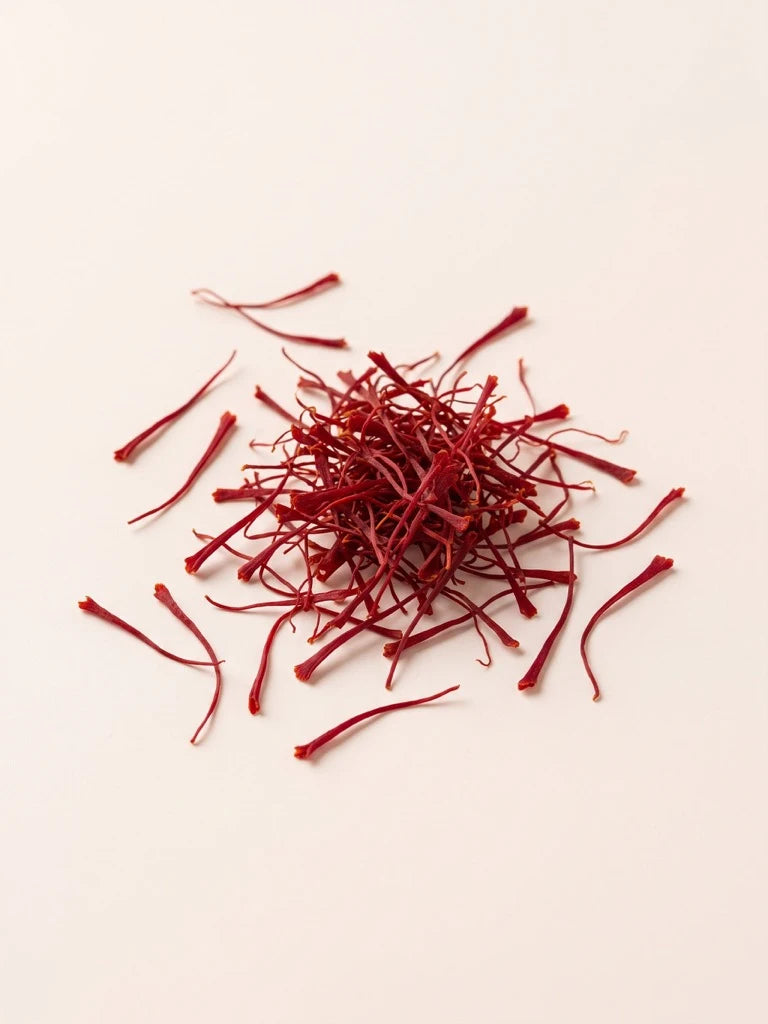
Crushing the threads between finger and thumb before they hit the water gets you a deeper extraction in the same time. Grinding to a fine powder is a different technique with different pitfalls, covered in our note on grinding saffron properly. For the general rules on heat, timing and volume, see cooking with saffron.
The bloomed liquid goes into the hot stock at the last moment, and the bowl is covered immediately. The lid is not fussiness — it keeps the aroma in the grain instead of in your kitchen.
What goes in?
- 1 1/2 cups (270 g) instant couscous
- About 20 saffron threads (0.08 g)
- 2 tbsp (30 ml) water, for blooming
- 1 1/2 cups (360 ml) chicken or vegetable stock
- 2 tbsp (30 g) unsalted butter, or 2 tbsp olive oil
- 1 small shallot, finely chopped
- 1/2 tsp fine sea salt, less if the stock is salty
- 3 tbsp dried currants or golden raisins
- 1/4 cup (30 g) sliced almonds, toasted
- Zest of 1/2 lemon, plus a squeeze of juice
- 3 tbsp chopped flat-leaf parsley or cilantro
- Black pepper
Use instant couscous, the fine boxed kind. Pearl couscous is a different product entirely and needs a different method.
How do you steep it?
Work in a wide, shallow bowl — something like 11 inches across. Depth is the enemy of even hydration.
- Bloom the saffron. Warm the 2 tbsp of water to about 150°F (65°C) — hot to the finger, no bubbles. Crush the threads lightly, drop them in, cover the cup and leave 15 to 20 minutes until the liquid is a deep orange.
- Toast the couscous. Melt the butter in a saucepan over medium heat, add the shallot and cook 2 minutes until soft but not coloured. Add the dry couscous and stir for 2 minutes so every grain is coated. It should smell faintly nutty.
- Tip it into a wide bowl. Scrape the buttered couscous into a wide, shallow bowl and spread it level. A deep pot gives you hydrated grain at the bottom and dry grain at the top.
- Heat the stock. Bring the stock to just below a boil in the same pan, then take it off the heat. Stir in the salt, the currants and the bloomed saffron along with its threads. The colour will go from pale to bright straight away.
- Pour and cover. Pour the hot liquid evenly over the couscous, give it one stir to level the surface, and cover the bowl tightly with a plate or a sheet of foil. Do not lift it to look.
- Steep for ten minutes. Leave it undisturbed for a full 10 minutes. The grains swell and the currants plump in the same heat. Set a timer rather than guessing — five minutes leaves a chalky centre.
- Fork it through. Uncover and rake the couscous with a fork, working from the edges inward. Rub any lumps apart with your fingertips. What was a solid pale-yellow cake becomes loose amber grain.
- Finish and serve. Fold in the almonds, lemon zest, a squeeze of juice and the herbs. Taste for salt, grind over some pepper, and serve warm. It sits happily for 20 minutes under a clean towel.
Why does couscous come out clumpy or wet?
- Too much liquid. Equal volumes of couscous and liquid is the rule. An extra half cup does not make it fluffier, it makes it sticky, and there is no way back.
- You stirred during the steep. Lifting the cover lets steam out and drags the swelling grains against each other. Ten minutes, untouched.
- No fat. Butter or oil coats each grain and stops them fusing. Water-only couscous is reliably claggy.
- A spoon instead of a fork. Rake, do not stir. Break the lumps by rubbing them apart with your fingertips once it is cool enough to touch.
If it does come out wet, spread it on a sheet pan for five minutes. Surface area fixes a surprising number of grain problems.
Frequently asked questions
Can I use pearl couscous instead?
You can, but not with this method. Pearl couscous is boiled like pasta and drains, which means saffron liquid poured into the pot mostly ends up in the sink. Cook it in salted water, drain, then toss it with the bloomed saffron whisked into warm butter or oil off the heat.
Does it have to be stock, or will water do?
Water works and the saffron actually reads more clearly against it, since there is no chicken or vegetable background competing. Stock gives you a rounder, savoury dish. If you go with water, raise the salt to a scant teaspoon and use butter rather than oil.
Can I make it a few hours ahead?
Yes. Steep it, fork it through and leave it uncovered at room temperature, holding back the nuts and herbs. To bring it back, sprinkle over a tablespoon of water, cover, and warm for 6 minutes in a low oven or 60 seconds in a microwave, then add the finishing ingredients.
Will it still taste of saffron the next day?
The colour holds well and the flavour softens. Cold couscous mutes aroma badly, so take it out of the fridge half an hour before eating and add fresh lemon zest. If you are making it specifically to eat cold as a salad, use a few extra threads.
Read next
- Saffron roasted vegetables – the plate this was designed to sit under
- Saffron chickpea stew – a heavier pot for the same grain
- Saffron substitutes – what turmeric and safflower can and cannot do here