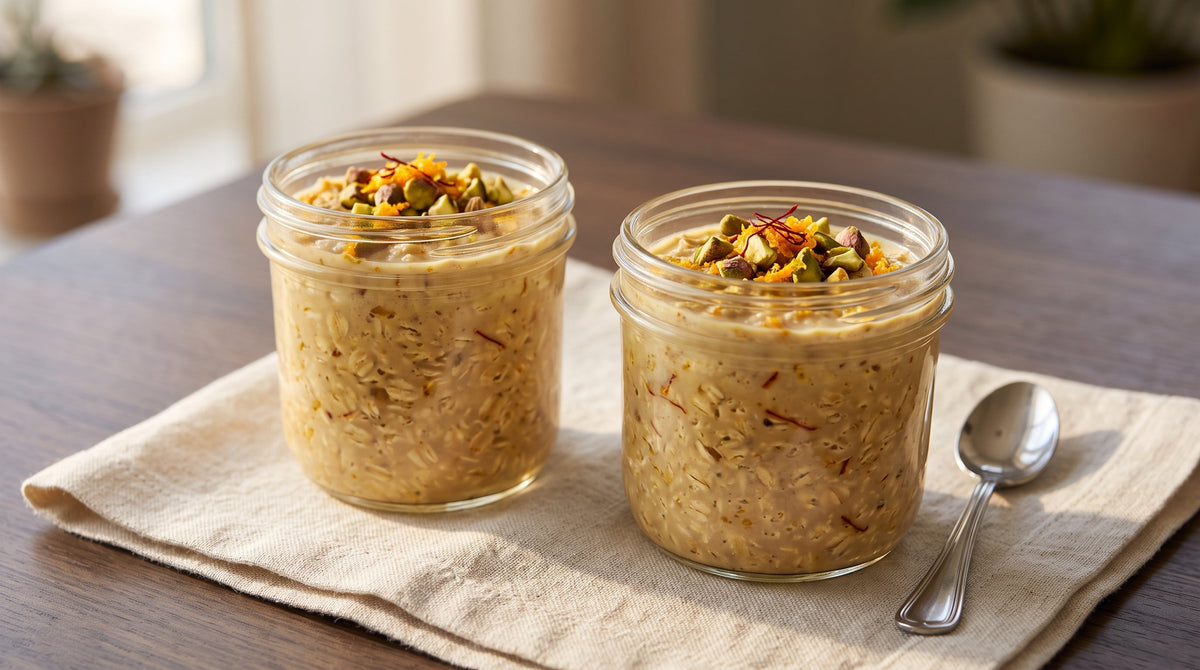
Cold liquid will not pull anything out of a saffron thread, so saffron oats need one warm step first. Bloom 15 threads — roughly 0.06 g — in a quarter cup of hot milk, chill that milk, then use it to soak rolled oats overnight. Ten minutes of work for two jars.
The mistake is obvious once you have made it. Threads dropped straight into a cold jar sit there for eight hours and come out looking the same as they went in, having given up a faint yellow halo and nothing else. Extraction wants heat and time, and a fridge offers neither.
Everything else about the recipe is as lazy as overnight oats are supposed to be.
Why does the milk have to be warmed first?
The colour and flavour compounds in saffron sit inside dried cells that have to soften before anything leaches out. Warm liquid does that in fifteen minutes. Cold liquid gets there eventually — over many hours — but unevenly, and the aroma compounds you actually want are the slowest to move.
Blooming separately also means you control the dose. Once the saffron milk is orange you can see exactly what you have before it disappears into a cup of oats, and you can hold half back if it looks stronger than you want.
As for tradition, there is none to claim here. Sweet saffron milk drinks are old and widespread, and overnight oats are a recent convenience. This is the first idea borrowed into the second. What saffron gives a jar of oats is a honeyed, faintly hay-like perfume that survives refrigeration better than most spices, and a colour that makes plain oats look considered.
How much saffron does this need?
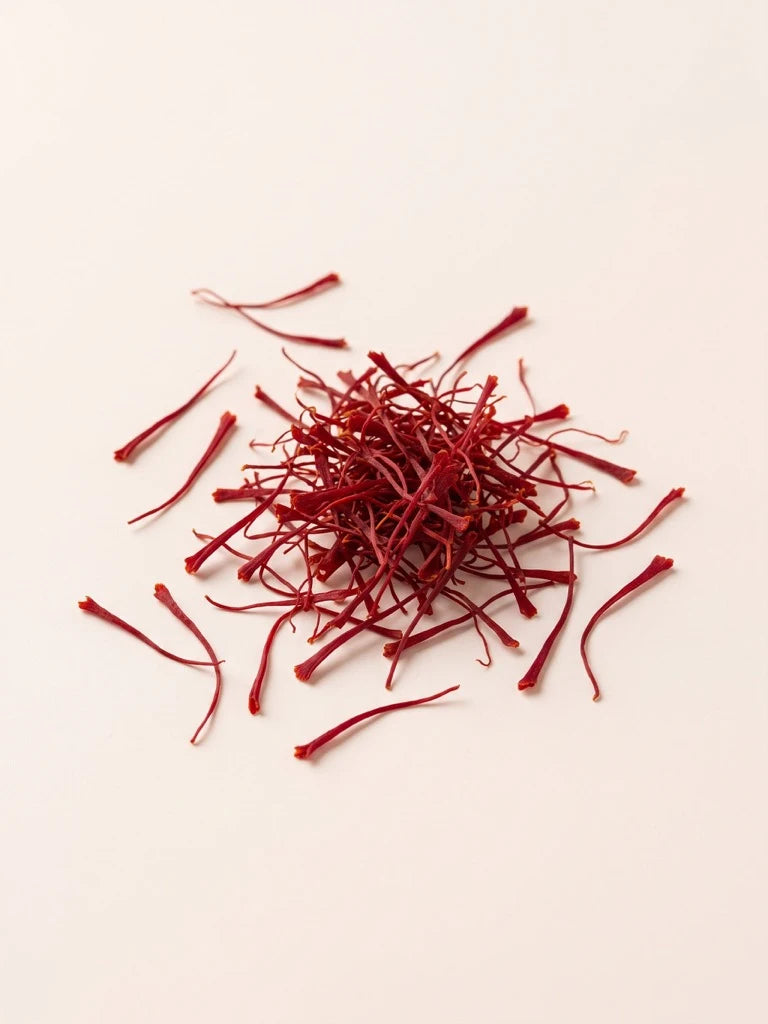
Fifteen threads for two jars, about 0.06 g weighed — call it seven or eight threads per serving. Oats and yogurt are absorbent and mildly sour, which flattens delicate aromatics, so going lower than this leaves you with an expensive bowl of porridge that tastes of cardamom.
Warm 1/4 cup of the milk to around 150°F (65°C). A minute in a small pan over low heat, or thirty seconds in the microwave, then a two-minute rest. It should steam faintly and never bubble; boiling milk scalds the threads and blows the aroma off into the air. Our note on warm water, not hot explains what that temperature is protecting.
Let the bloomed milk cool to fridge temperature before it meets the oats. If you are eyeballing threads rather than weighing them, the counts in our guide to how much saffron you need are a safer starting point than a pinch.
What goes in the jar?
- 1 cup (90 g) old-fashioned rolled oats
- About 15 saffron threads (0.06 g)
- 1 1/4 cups (300 ml) whole milk, or oat milk
- 1/2 cup (120 g) thick plain yogurt
- 2 tbsp (30 ml) honey or maple syrup
- 1 tbsp chia seeds, for a firmer set
- Seeds from 4 green cardamom pods, crushed to a powder
- A good pinch of fine sea salt
- 2 tbsp shelled pistachios, roughly chopped
- Grated zest of half an orange, to finish
Rolled oats, not steel-cut and not instant. Steel-cut stay gritty after a night in milk; instant oats collapse into wallpaper paste by morning.
How do you put it together?
Two jars, roughly 12 oz each, with lids. Anything wider and the oats spread too thin to stay creamy.
- Bloom the saffron. Measure 1/4 cup of the milk into a small pan and warm it to about 150°F (65°C) — steam rising, no bubbles at the edge. Pour it over the threads in a cup, cover, and leave 15 to 20 minutes until the milk is deep orange.
- Chill the saffron milk. Stand the cup in the fridge for 10 minutes, or in a bowl of cold water for 3, until it is no longer warm to the touch. Warm liquid poured onto yogurt makes it grainy.
- Crush the cardamom. Split the pods, tip out the black seeds and grind them to a rough powder in a mortar. Pre-ground cardamom works but has usually lost its top notes, which are the ones that sit beside saffron.
- Mix the dry ingredients. Combine the oats, chia seeds, ground cardamom and salt in a bowl and stir them together properly. Chia clumps if it meets liquid before it has been dispersed through the oats.
- Mix the wet ingredients. In a second bowl or a jug, whisk the remaining 1 cup of milk with the yogurt and honey until smooth, then stir in the cooled saffron milk along with the threads.
- Combine and fill. Pour the wet mixture over the oats and stir for a good 20 seconds so nothing sits dry at the bottom. Divide between two jars, leaving half an inch of headroom, and screw the lids on.
- Chill overnight. Refrigerate at least 6 hours, ideally 8 to 10. The oats swell, the chia sets and the colour deepens from pale yellow to a proper amber while it sits.
- Finish and serve. Stir well, loosen with a splash of cold milk if it has set firmer than you like, and scatter over the pistachios and orange zest. Let the jar sit out for 10 minutes before you eat it.
What makes the difference between good and dull?
- Season a little harder than tastes right. Cold mutes sweetness and aroma. A jar that tastes perfectly balanced while you are mixing it will taste thin at seven the next morning.
- Let the jar stand out of the fridge for ten minutes. Saffron aroma barely registers at 39°F. Ten minutes on the counter and the whole thing opens up.
- Do not skip the salt. A pinch does more for the saffron than an extra teaspoon of honey will.
- Keep the threads in. They go soft and pleasant to eat, and they keep extracting overnight.
If the finished oats are stiffer than you like, that is the chia doing its job. Loosen with a splash of milk and stir hard rather than starting again with less oat.
Frequently asked questions
Can I use oat or almond milk?
Oat milk works well and its natural sweetness suits saffron. Almond milk is thinner and slightly bitter, so the jars come out looser and you may want an extra teaspoon of honey. Whatever you use for the soak, bloom the saffron in the same liquid so the flavour is consistent throughout.
Do I strain the threads out?
No. After a night in cold milk the threads are soft and completely edible, and they carry on releasing colour while the jar sits. Fishing them out means throwing away part of what you paid for.
How long do the jars keep?
Three days in the fridge, and they are best on days one and two. By day three the oats have absorbed everything and gone dense, and the saffron aroma has flattened noticeably. Make two jars, not five.
Is saffron worth using on something this everyday?
That depends on your dose. Fifteen threads is a fraction of a gram, so the cost per jar is small, and oats give the aroma a plain background to sit against. If you only own a little saffron and want to taste it clearly, this is a better test than a rich stew where it competes with everything else.
Read next
- Saffron milk before bed – the warm version, and a slower way to bloom
- Saffron in sweet and savoury dishes – why it swings both ways so easily
- How to store saffron – keeping the threads worth blooming in the first place