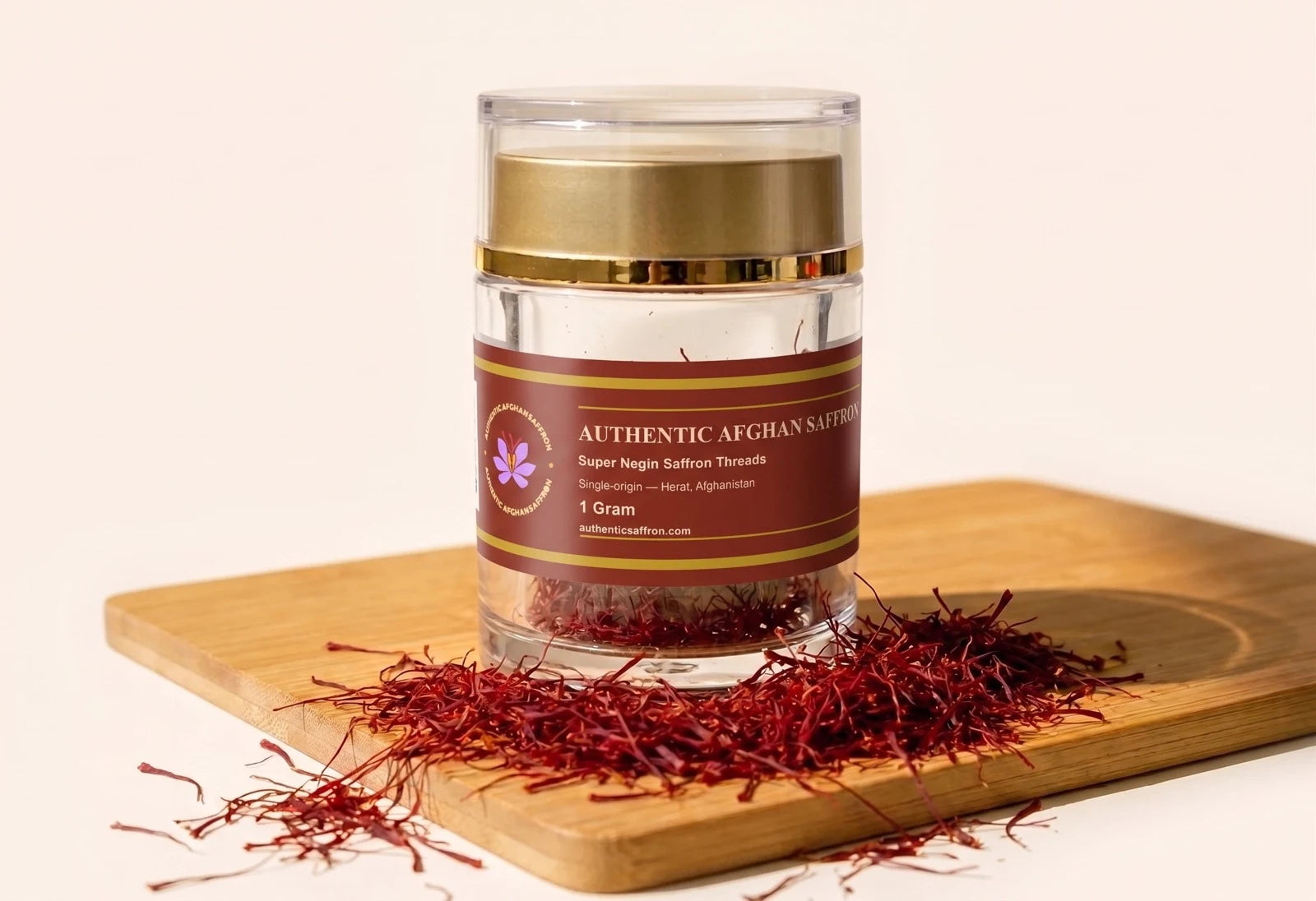
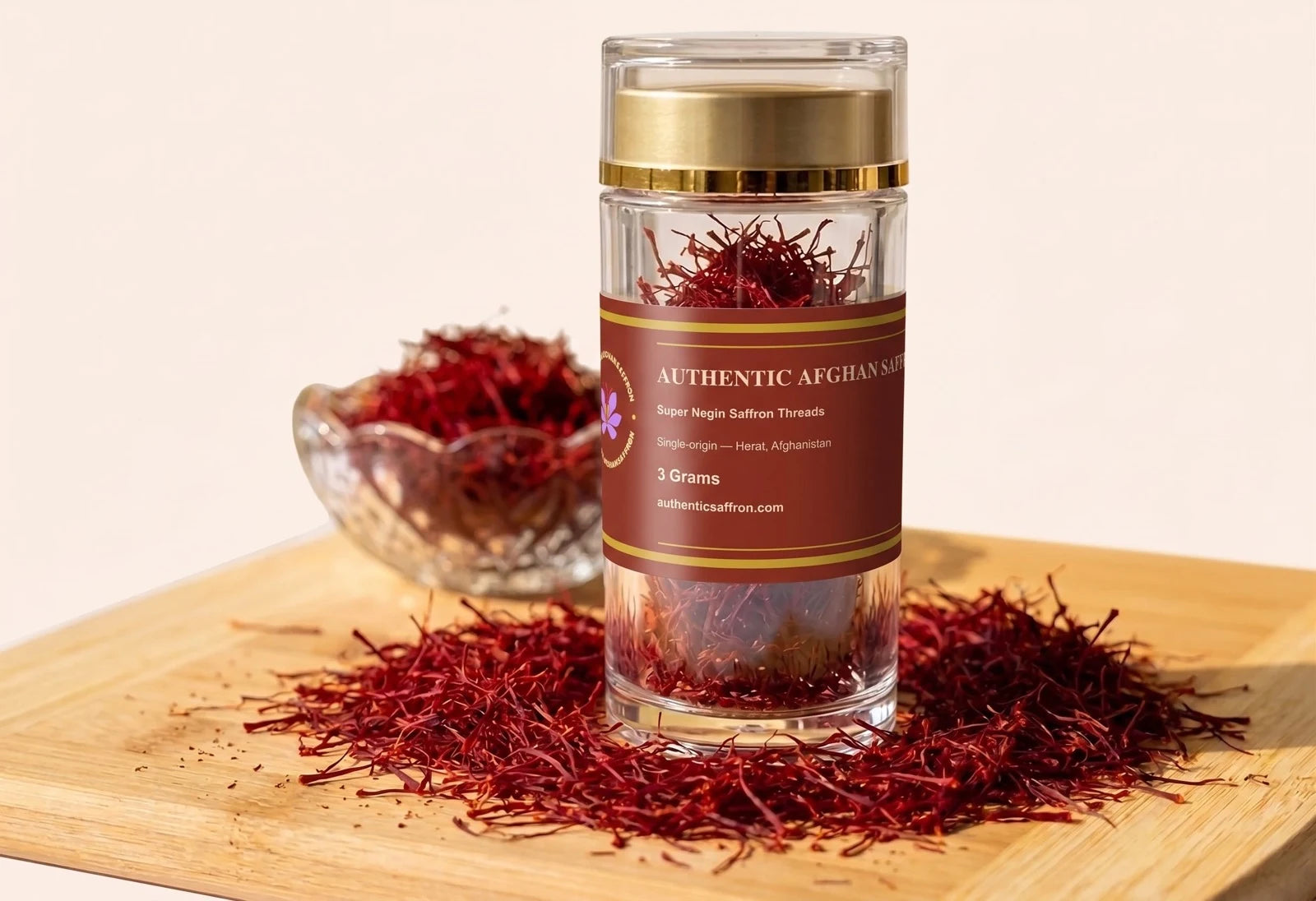
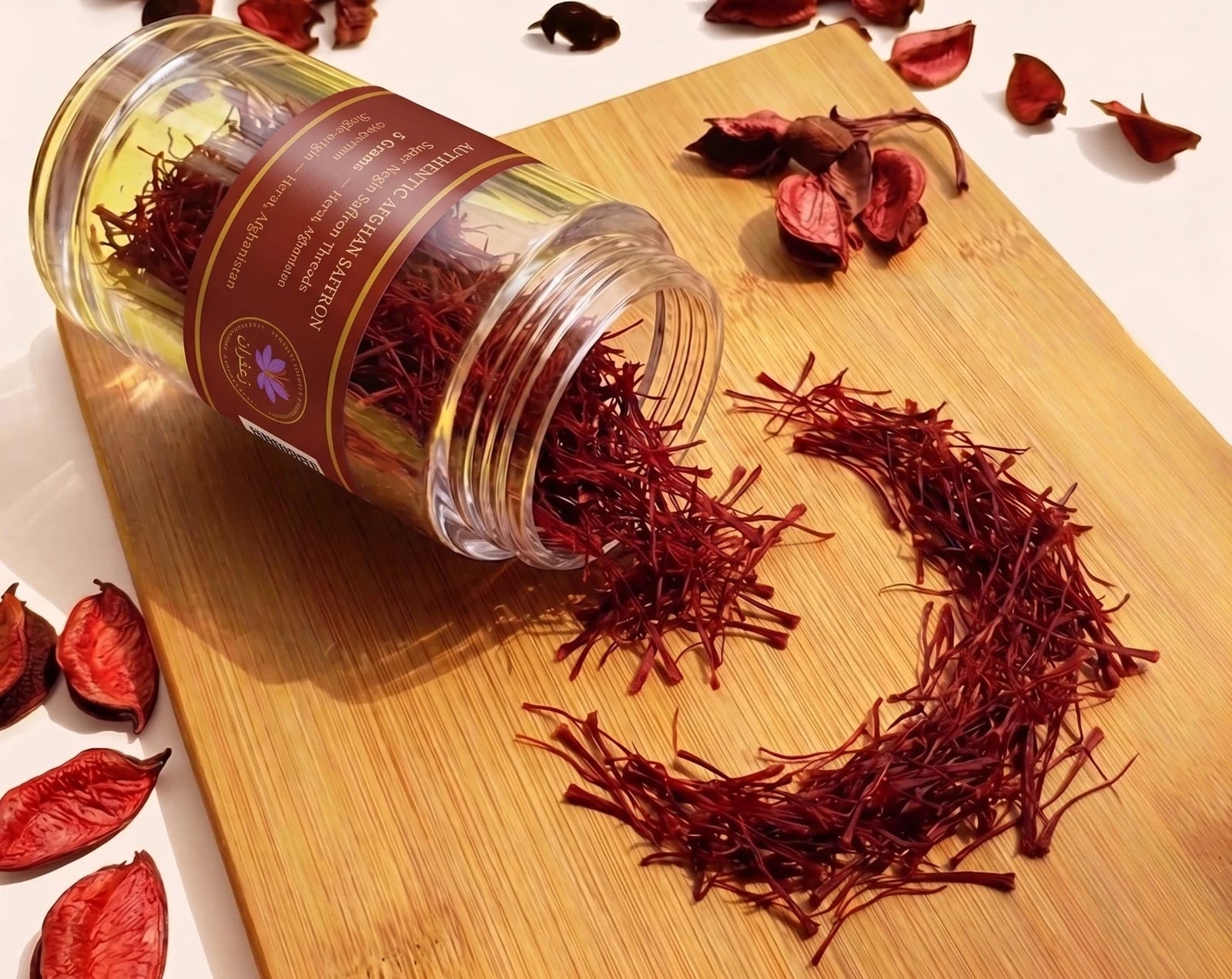
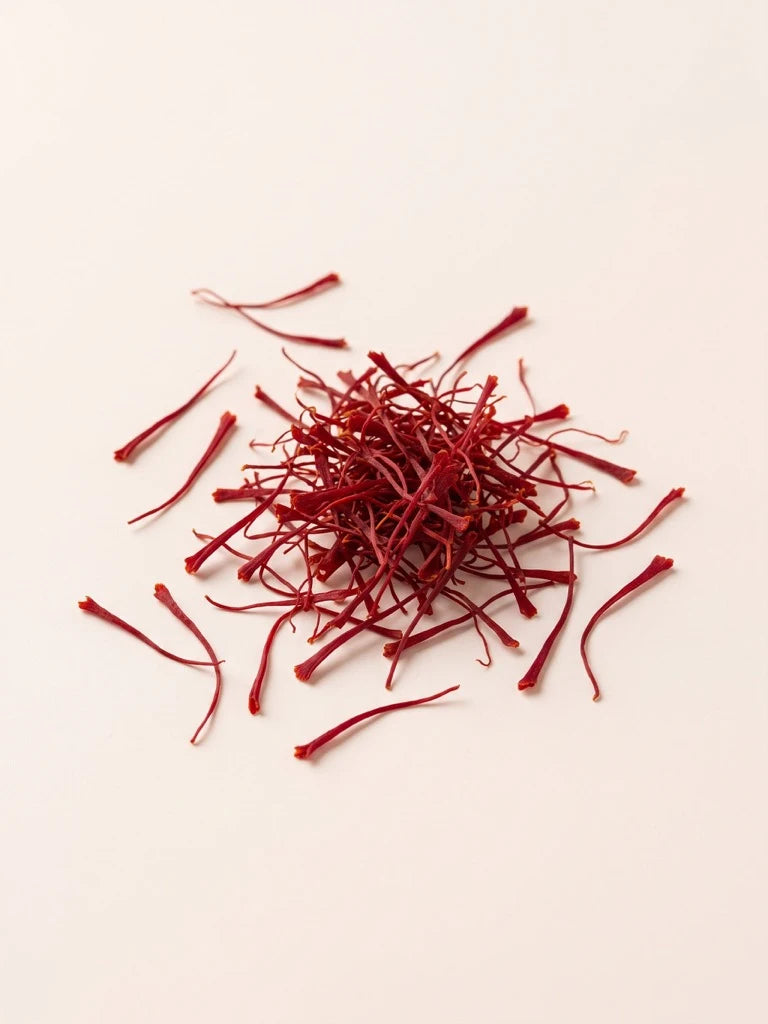
This sharbat recipe makes a concentrate rather than a finished drink. Thirty saffron threads, about 0.12 g, are bloomed and stirred into a light sugar syrup; the rose water goes in off the heat, once the steam has stopped. Three tablespoons to a tall glass of very cold water, over ice.
Why make a concentrate instead of a jug?
Sharbat is built around keeping. A jug of anything diluted lasts two days in a fridge and takes up a shelf; a bottle of concentrate lasts three weeks, takes up a corner of the door, and turns into a cold drink in the twenty seconds it takes to stir. That is the whole logic of the form, and it is why it survives in households that entertain without warning.
Concentration also solves a flavour problem. Saffron and rose are both delicate aromatics that vanish when spread thinly through a large volume of water and then chilled. Holding them in a dense sugar syrup protects them — sugar slows the loss of volatile compounds — and lets you decide the strength glass by glass.
This one is not a modern invention. Saffron and rose together are a long-established pairing in Afghan sweet cooking, and both turn up in sharbat across the region. What follows is a plain household version rather than any single family recipe.
What is the right amount of saffron?
Thirty threads, about 0.12 g, for roughly 2 1/2 cups of concentrate, which comes to twelve glasses. Per glass that is two or three threads’ worth, which is a light dose — but the saffron is competing with rose water and a great deal of sugar, and pushing it higher makes the drink taste bitter rather than more saffron-flavoured.
Bloom the threads in a quarter cup of the recipe water at about 150°F (65°C), covered, for twenty minutes. Never boil them, and never drop dry threads straight into the hot syrup: sugar syrup at 220°F will strip the aroma in seconds and leave you paying for colour alone. The reasoning behind the temperature is in why warm water beats hot, and the technique itself in how to bloom saffron properly.
Leave the threads in the bottle. They keep giving colour for the first few days in the fridge, and a few floating in the glass are part of the look. If you are wondering why Herat threads bloom as deeply as they do, why Herat saffron explains the growing conditions behind it.
What is in it?
Makes about 2 1/2 cups of concentrate, or twelve glasses. Nothing here is unusual except the rose water, which should be a distilled one from a Middle Eastern or South Asian grocer, not a baking-aisle flavouring.
- About 30 saffron threads (0.12 g)
- 1 1/4 cups (300 ml) water, divided
- 2 cups (400 g) granulated sugar
- 1 tbsp lemon juice, strained
- Pinch of fine salt
- 2 tbsp rose water, food grade
- 2 tsp dried edible rose petals, optional
- 2 tsp basil seeds (tukhm-e-balanga), soaked, to serve
- Very cold water and ice, to serve
What are the steps?
- Bloom the saffron. Heat 1/4 cup of the water to about 150°F (65°C) and pour it over the threads in a small heatproof jar. Cover it and leave it 20 minutes while you get on with the syrup. The liquid should end up deep amber and the threads pale.
- Dissolve the sugar before it boils. Put the remaining 1 cup of water, the sugar and the salt in a 2-quart saucepan over medium heat. Stir until you cannot feel any grit against the base of the pan. Sugar that is still undissolved when the syrup reaches a boil is what seeds crystals later.
- Cook it to a light syrup. Let it simmer, without stirring, for six to eight minutes, until it reaches about 220°F (104°C) and falls from a spoon in a thin sheet rather than in drops. Go further and it sets to a solid block in the fridge. There is no colour change to watch for; use the timing and the spoon.
- Add the lemon and the saffron off the heat. Take the pan off the heat, stir in the lemon juice, then the saffron infusion with the threads. The lemon is not there for flavour so much as insurance: a little acid keeps the syrup from crystallising in the bottle over the following weeks.
- Wait for the steam to stop, then add the rose water. Leave the pan for about ten minutes, until no steam is rising and the syrup is below 150°F (65°C). Only then stir in the rose water and the dried petals. Rose water added to hot syrup evaporates almost entirely, which is why so much homemade sharbat smells of nothing.
- Bottle it and let it rest. Pour into a clean bottle or jar, threads and petals included, and refrigerate overnight before you judge it. The colour goes on deepening for two days and the rose settles into the sugar rather than sitting on top of it.
- Dilute to serve. Stir 3 tbsp of concentrate into 1 cup (240 ml) of very cold water and taste before you add ice. Pour over ice and add a teaspoon of soaked basil seeds if you have them. Some households pour it at half that strength.
What usually goes wrong with sharbat?
Three things, in order of frequency: too much rose water, sugar crystallising, and saffron boiled instead of bloomed.
The rose problem is a measurement problem. Because bottles vary so widely in strength, a recipe quantity is only a starting point, and the only reliable method is to add half, dilute a spoonful in water, and taste it at drinking strength rather than as syrup.
- Crystallisation. A layer of sugar grit at the bottom of the bottle after a week means the sugar never fully dissolved, or the lemon was left out. Warm the bottle in a pan of hot water and swirl until it clears.
- Cloudiness. Usually rose petals breaking down, which is harmless. A sour smell is not; that is fermentation, and the bottle goes out.
- Flat colour. If the concentrate is pale yellow rather than orange after two days, the bloom was too short or the water was too hot.
- Serve it colder than you think. Sweet drinks need real cold to stay refreshing. Chill the water, then add ice; do not rely on ice alone to do both jobs.
One addition worth knowing: a squeeze of lime in the glass, not the bottle. It sharpens the rose without affecting how the concentrate keeps.
Frequently asked questions
What is sharbat?
A sweet concentrate, kept in the fridge or the pantry, that is diluted with cold water to order rather than served as it is. Versions of it are made across Afghanistan, India, Turkey and the Levant, flavoured with rose, lemon, mint, tamarind or fruit. The word is the same root as sherbet and syrup. What makes it useful is that one bottle covers a fortnight of guests.
How much rose water is too much?
It depends entirely on the bottle. Distilled rose waters vary enormously in strength, and some supermarket ones are five times weaker than a good Middle Eastern brand. Start with 1 tbsp, taste the diluted drink, and add the second tablespoon only if the rose is hiding. Over-rosed sharbat tastes of soap and there is no way back from it.
Can I use less sugar?
You can go down to 1 1/2 cups, but not much below. The sugar is doing preservation work as well as sweetening, and a thinner syrup will ferment inside a week even in the fridge. If you want a less sweet drink, keep the syrup as written and dilute it harder — 2 tbsp to a full cup of water.
Do I have to use basil seeds?
No, though they are the traditional finish in Afghan homes and they change the drink more than you would expect. Soaked in water for fifteen minutes they swell into soft grey beads that give the glass texture and slow you down as you drink. Chia seeds behave similarly if basil seeds are hard to find.
Read next
- Saffron simple syrup — the unflavoured version, for coffee and cocktails
- Saffron firni — the same saffron and rose pairing, set in a bowl
- Cooking with saffron — dosing, blooming and what saffron does in sweet cooking