

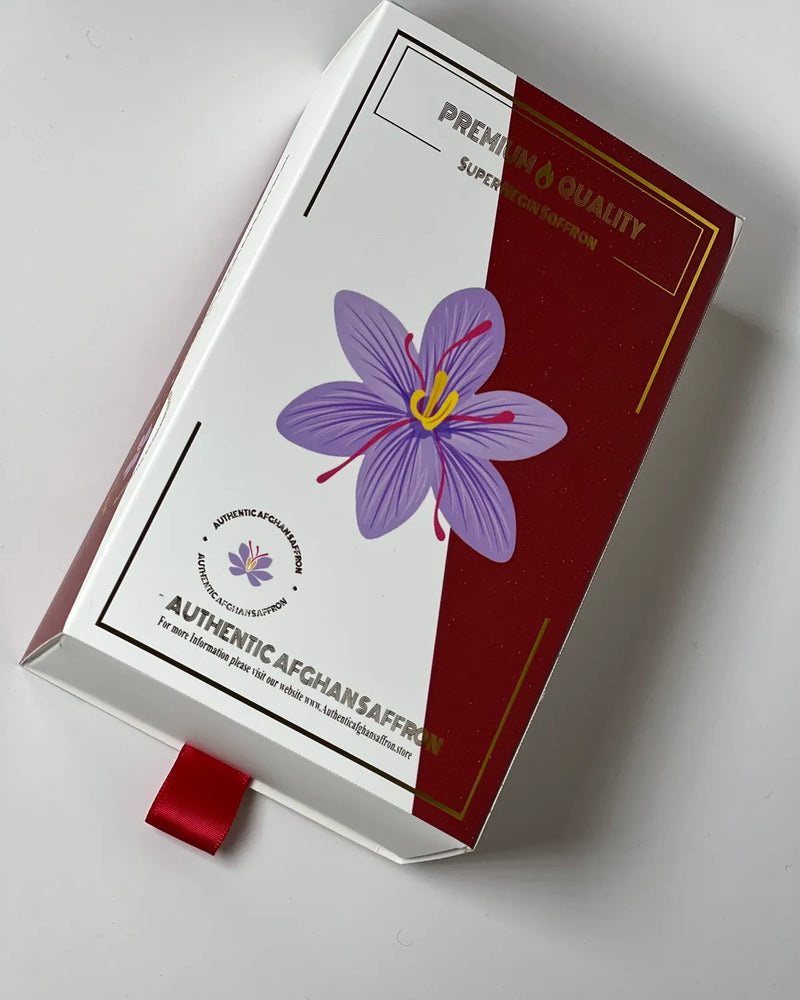
Saffron Gift Box, Two 1 g Bottles of Afghan Saffron
Price
$27.99
 6 of 12
Sourced from Herat by founder Bilal Qutubzad and packed by hand in Lynn, Massachusetts.
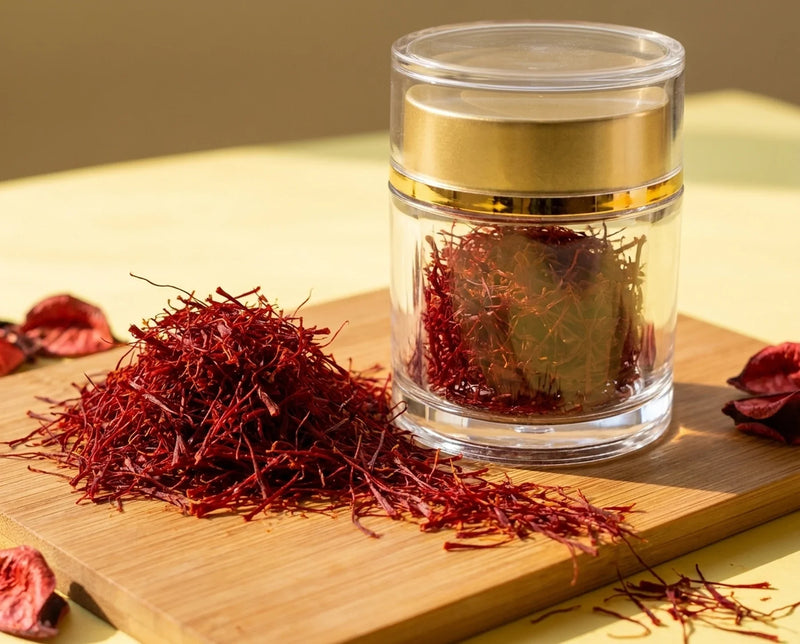
Whole saffron threads from a single Herat harvest. A few threads turn a pot of rice or a cup of tea deep gold.
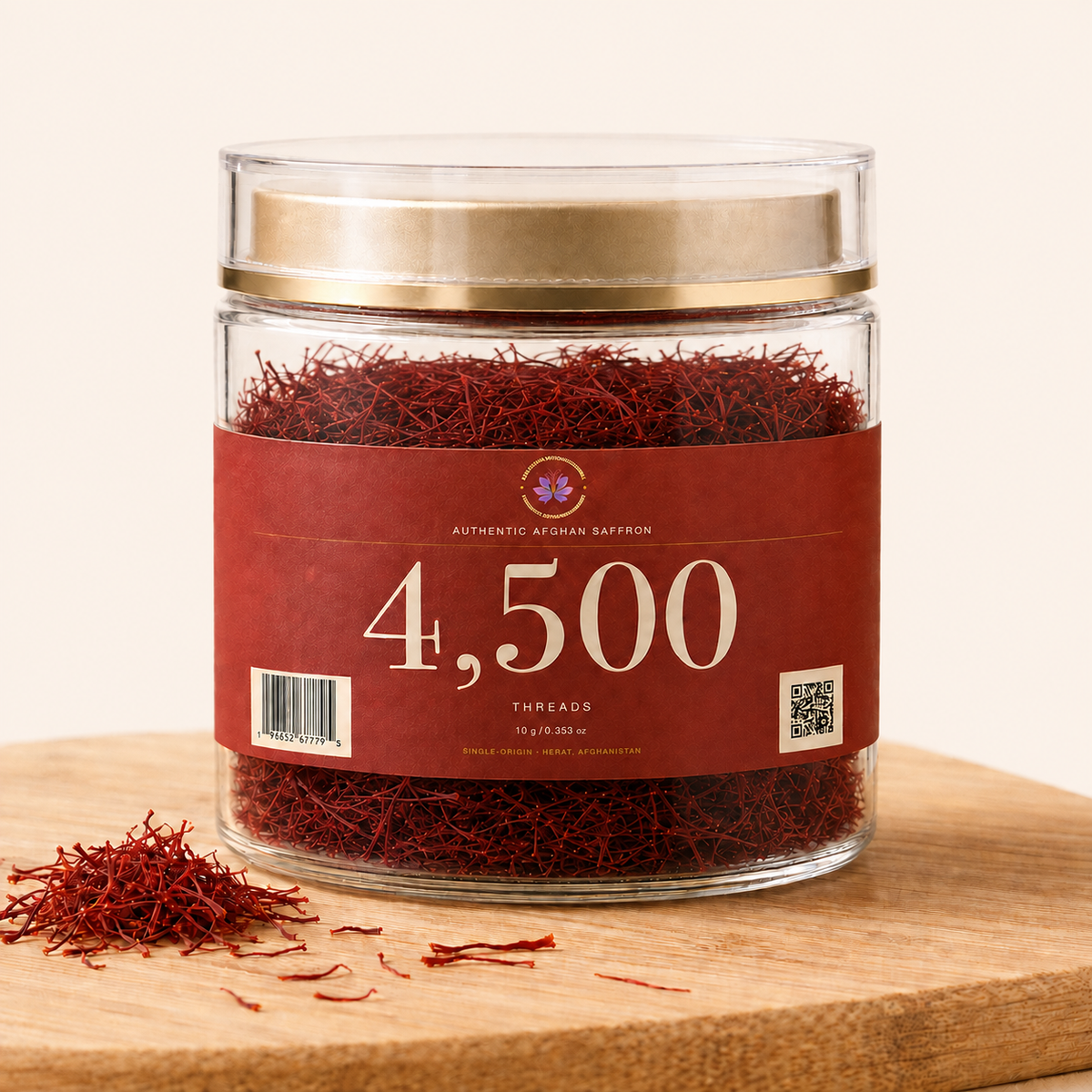
Herat harvest. The season is stamped on every jar.
About 600 cups of tea, 13¢ a cup
Saffron is one of the most faked spices sold. Ours ships as whole threads, so you can test it at home in five minutes. If it fails, email us and we refund you.
How to test saffron at homeGiving it? Choose a set
One province. One harvest. Never blended.
All-red Super Negin-cut threads from a single lot in Herat, Afghanistan — hand-picked, trimmed above the pale yellow style, and harvest-dated on every jar. Every size below — from a 1 gram trial jar to 1 kilogram for restaurants and wholesale buyers — is the same saffron from the same lot. Only the price per gram changes.
Saffron looks expensive because it is sold by the gram. It is used by the thread.
A single gram is around 450 threads — roughly sixty cups of tea, or twenty-five family dinners. Seven or eight threads make a cup. Fifteen to twenty make rice for four.
| Size | Weight | Price | Per gram | Cups of tea | Per cup |
|---|---|---|---|---|---|
| 1 gram | 0.035 oz | $12.99 | $12.99 | ~60 | 22¢ |
| 2 grams | 0.071 oz | $22.99 | $11.49 | ~120 | 19¢ |
| 3 grams | 0.106 oz | $29.99 | $10.00 | ~180 | 17¢ |
| 5 grams | 0.176 oz | $44.99 | $9.00 | ~300 | 15¢ |
| 10 grams | 0.353 oz | $79.99 | $8.00 | ~600 | 13¢ |
| 20 grams | 0.705 oz | $153.99 | $7.70 | ~1,200 | 13¢ |
| 100 grams | 3.527 oz | $739.99 | $7.40 | ~6,000 | 12¢ |
| 1,000 grams (1 kg) | 35.27 oz (2.2 lb) | $7,326.99 | $7.33 | ~60,000 | 12¢ |
A cup of saffron tea costs you between twelve and twenty-two cents. A family rice dish costs between 29¢ and 52¢. That jar will outlast most of what is in your cupboard. Restaurants and resellers: the 20 g, 100 g and 1 kg sizes bring it down to $7.33 a gram — same lot, same harvest date.
Giving as well as cooking? The Household Pair puts the 10 g kitchen jar together with that gift box for $99.99 — $7.99 less than buying them separately.
Around 150 crocus flowers, each giving three crimson stigmas — that is where the 450 threads come from. Every flower opens for a single morning and has to be picked before the sun is properly up, or the heat takes the aroma with it. The stigmas are separated by hand the same day.
That is why saffron has never been mechanised, and why a gram is a gram — not a bargain waiting to be found. When you see it far cheaper, something has usually been added: the pale style left on for weight, dyed corn silk, safflower, or a fine coat of colouring.
Almost everyone uses too much the first time. Saffron is a background note — over-dose it and you get medicinal bitterness instead of honey and hay.
Always bloom it first. Steep the threads in two tablespoons of warm — not boiling — water for 15 minutes, then add the liquid and the threads together. Water above 80°C destroys crocin, the compound carrying the colour. This one step is the difference between saffron that works and saffron you cannot taste.
Open the jar and it should hit you immediately: honey and dried hay, with something faintly medicinal underneath. Not floral perfume. Not nothing.
On the tongue a raw thread is bitter before it is sweet — that is picrocrocin, and it is supposed to be there. Bloomed properly, the bitterness turns round into something closer to honey and warm butter.
If a thread tastes of nothing, or sweet on its own, you are holding dyed filler.
You should not have to take our word for any of this. Three tests, no equipment, five minutes:
Walk through them properly in the cold water test and how saffron fraud works. If yours fails any of them, email us and we will refund you — that is the whole point of telling you how to check.
Saffron does not spoil. It fades. Light and air cost you flavour, not time.
This is the real argument for the larger jar. A 10 g jar kept in a dark cupboard is still excellent two years later. Buying 1 g at a time, four times a year, costs you more and gains you nothing.
Buying 100 g or 1 kg? Keep the bulk sealed in the dark and decant a working jar of two or three grams for the kitchen. Every time a container is opened it gives up a little aroma; the working jar takes that hit so the bulk does not.
About 95% of Afghanistan's saffron grows in Herat's high-desert valleys. Altitude, dry autumns and cold nights produce long, deep-red stigmas — the growing conditions are the reason, not the marketing.
Ours comes from one province and one harvest. Never blended with another origin, and the harvest is stamped on every bottle, so you always know the age of what you are cooking with. Most saffron on a supermarket shelf can tell you neither.
Is it really better than supermarket saffron? Supermarket saffron is usually a blend of unknown origin with no harvest date, often with the pale style left on to make up weight. You cannot check what you cannot trace. Ours names the province and the harvest and invites you to test it.
What if I don't like it? Return any sealed, unopened jar within 14 days of delivery. If an opened jar fails the cold water test, email us — we will make it right.
Is it powder or threads? Whole threads, always. Powder is where adulteration hides, because you cannot see the shape of what you bought.
How long will it last? Two to three years sealed and stored in the dark. See the storage notes above.
Do you have lab results? Independent ISO 3632 testing of the current lot is pending. We will publish the complete certificate on the Lab Report page the day it is issued. We would rather say that than imply a grade we cannot yet evidence — and in the meantime the three tests above are yours to run.
What does “Extra Class” mean? Extra class is the top of the four quality classes in ISO 3632-1:2025, the international saffron standard. Only a laboratory certificate can place a lot in that class, so we do not use the term for this lot. If its certificate says Extra class, you will read it on the Lab Report page first.
Is Super Negin an official grade? No. It describes the cut: long, all-red stigma tips with the pale style trimmed away. The style adds weight but no flavour and no colour, which is exactly why cheaper saffron leaves it on.
Do you sell saffron wholesale or in bulk? Yes. The 20 g, 100 g and 1 kg sizes on this page are the same Super Negin lot as the 1 g jar, at $7.33–$7.70 a gram, and they carry the same harvest date. For more than a kilo, recurring restaurant orders or an invoice, email contact@authenticsaffron.com.
Is the 1 kg the same quality as the 1 g? Yes. Every size is packed from one single-lot Herat harvest. Nothing is blended down for the larger sizes; only the price per gram changes. A kilogram is roughly 450,000 threads — about 60,000 cups of tea or 25,000 family rice dishes.
Hand-packed and shipped with tracking, usually within one business day. Free U.S. shipping over $50. Returns accepted within 14 days of delivery on sealed, unopened items — email contact@authenticsaffron.com before sending anything back and we will confirm the return address.
For tested methods and recipe-specific quantities, browse the saffron recipe collection — Qabuli Pulao, saffron tea, sholeh zard and about fifty more.
Free U.S. shipping on orders over $50. Below that, standard shipping is $8.00; express is $15.00. Orders are packed by hand in Lynn, Massachusetts, usually within one business day, and ship with tracking. Choose "Give as a Gift" at checkout for wrap and a handwritten card.
Returns are accepted within 14 days for sealed, unopened items. Email us before sending anything back so we can provide return instructions.
About 7 to 8 threads for a cup of tea and 15 to 20 for rice for four. Steep the threads in two tablespoons of warm, not boiling, water for 15 minutes first, then add the liquid and the threads together. Our saffron recipes give quantities dish by dish.
Run the cold water test at home: real saffron colours the water slowly and the threads stay red, while dyed threads bleed colour at once and turn pale. If yours fails, email us and we refund you. Independent ISO 3632 testing of the current lot is pending, and the full certificate goes on the Lab Report page when it is issued.
Whole all-red threads, always. Powder is where adulteration hides, because you cannot see what is in it.
About 60. A gram is around 450 threads and a cup takes 7 to 8, so a cup costs 12¢ to 22¢ depending on the size you buy.
Two to three years sealed in its jar in a cool, dark cupboard. Keep it away from the stove and out of the fridge, where condensation gets in every time you open it. The harvest season is printed on every jar.
Orders are packed by hand in Lynn, Massachusetts, usually within one business day, and ship with tracking. U.S. shipping is free over $50; below that it is $8. Choose "Give as a Gift" at checkout for wrap and a handwritten card.
Single origin
95% of Afghanistan's saffron grows in Herat's high-desert valleys — the source of most of Afghanistan's saffron exports. Every bottle is all-red Super Negin, cut above the yellow style, harvest-dated, and with independent current-lot ISO 3632 testing pending. No blending, no vague 'imported', no powder.
What to do with it tonight
Warm the cup. Three to five threads. Water just off the boil. Wait five minutes and watch the gold spread — that slow bloom is the proof of the grade you just bought.
@authenticsaffron1
475 followers · 7,567 likes on TikTok
Videos load from TikTok only when you press play.
Complete the gift
Pick your size above. Add a second bottle in the Gift Box and it becomes one to give, one to keep.
