Saffron iced tea only works if you brew it strong enough to survive dilution. Twenty-five threads, about 0.10 g, bloomed apart from the tea leaves, then a light green tea steeped two minutes at 175°F. Chill it fast, sweeten with loosened honey, and squeeze the lemon in the glass rather than the jug.
Why brew iced tea and saffron separately?
Because they want opposite conditions. Green tea wants water below boiling and a short contact time. Saffron wants a long soak — fifteen to twenty minutes — in liquid that is warm rather than hot. Put the threads in the pot with the leaf and one of them will be wrong.
There is a second reason, which is dilution. Ice is roughly a third of the volume of a finished glass, and as it melts it takes the aroma down with it. A saffron infusion brewed at full strength on its own, then added, gives you a margin. A drink built to taste right in the jug tastes like nothing by the second sip.
No claim of tradition here. Saffron iced tea is a modern drink, not something handed down. What saffron adds is a honeyed, hay-like top note and a warm colour that green tea on its own does not have — and, oddly, a sense of body in a drink that is mostly water.
How much saffron goes in, and how do you bloom it?
Twenty-five threads, about 0.10 g, for one quart. That is a heavier dose than the same volume of hot tea would take, and deliberately so. Cold suppresses volatile aroma: the same infusion that smells generous at 150°F smells faint at 40°F, and then the ice thins it again.
Bloom the threads in a half cup of the recipe water heated to about 150°F (65°C). Twenty minutes, covered, is right for an iced drink — longer than the ten you might give a risotto, because you are extracting for a diluted result. Never pour boiling water on saffron; it takes the aroma off as steam and leaves the colour behind. The method is set out in how to bloom saffron properly, and the temperature reasoning in why warm water beats hot.
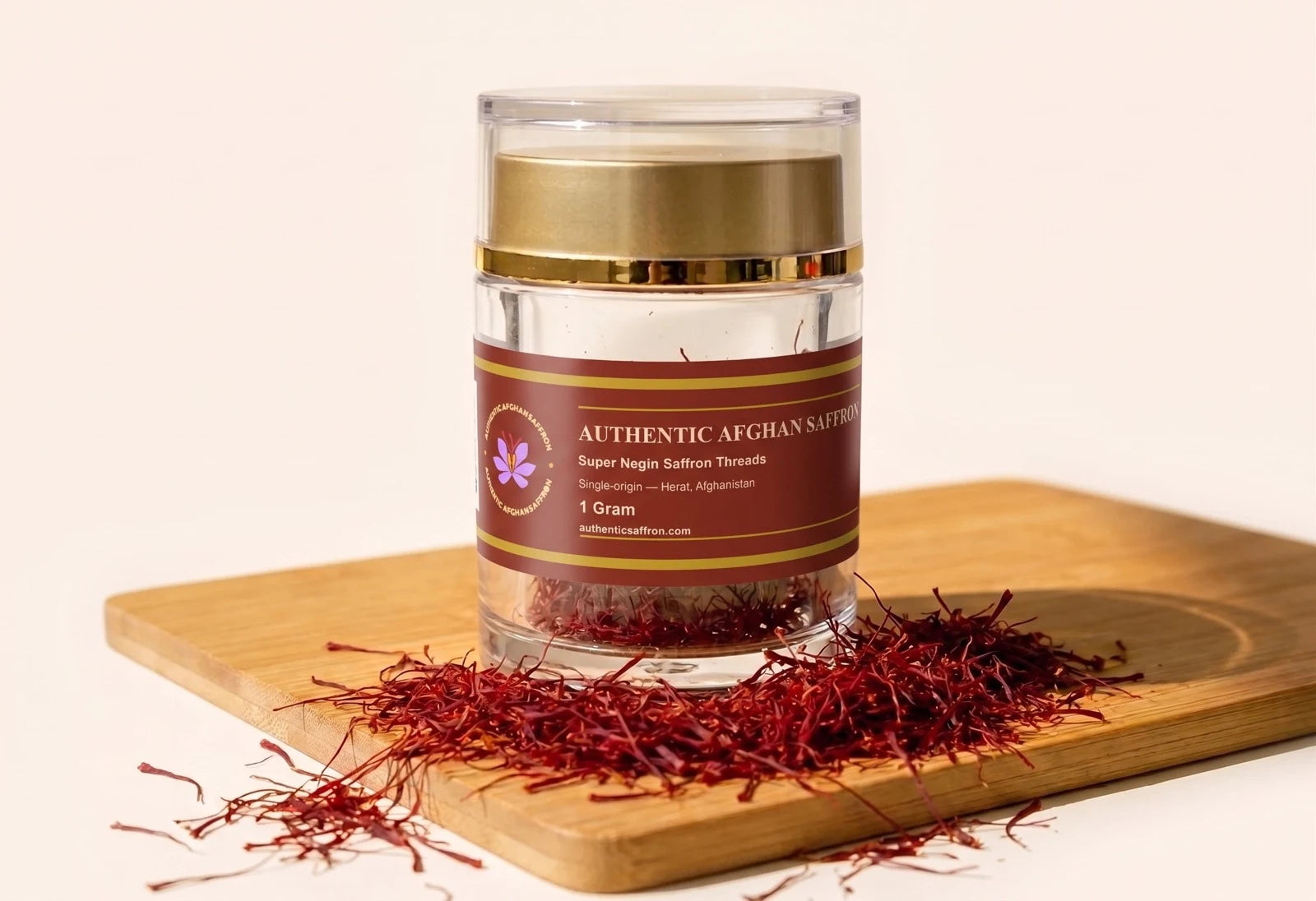
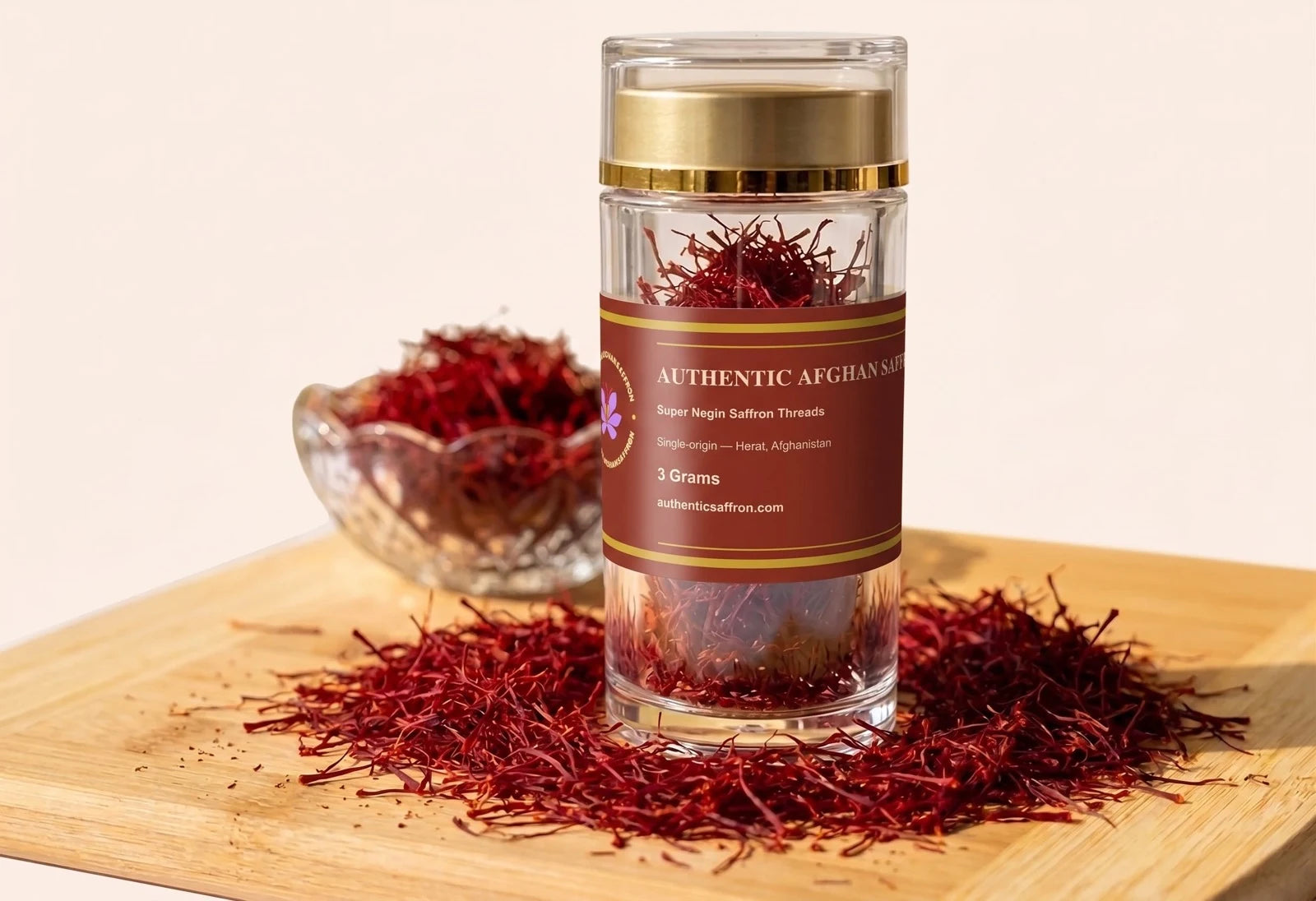
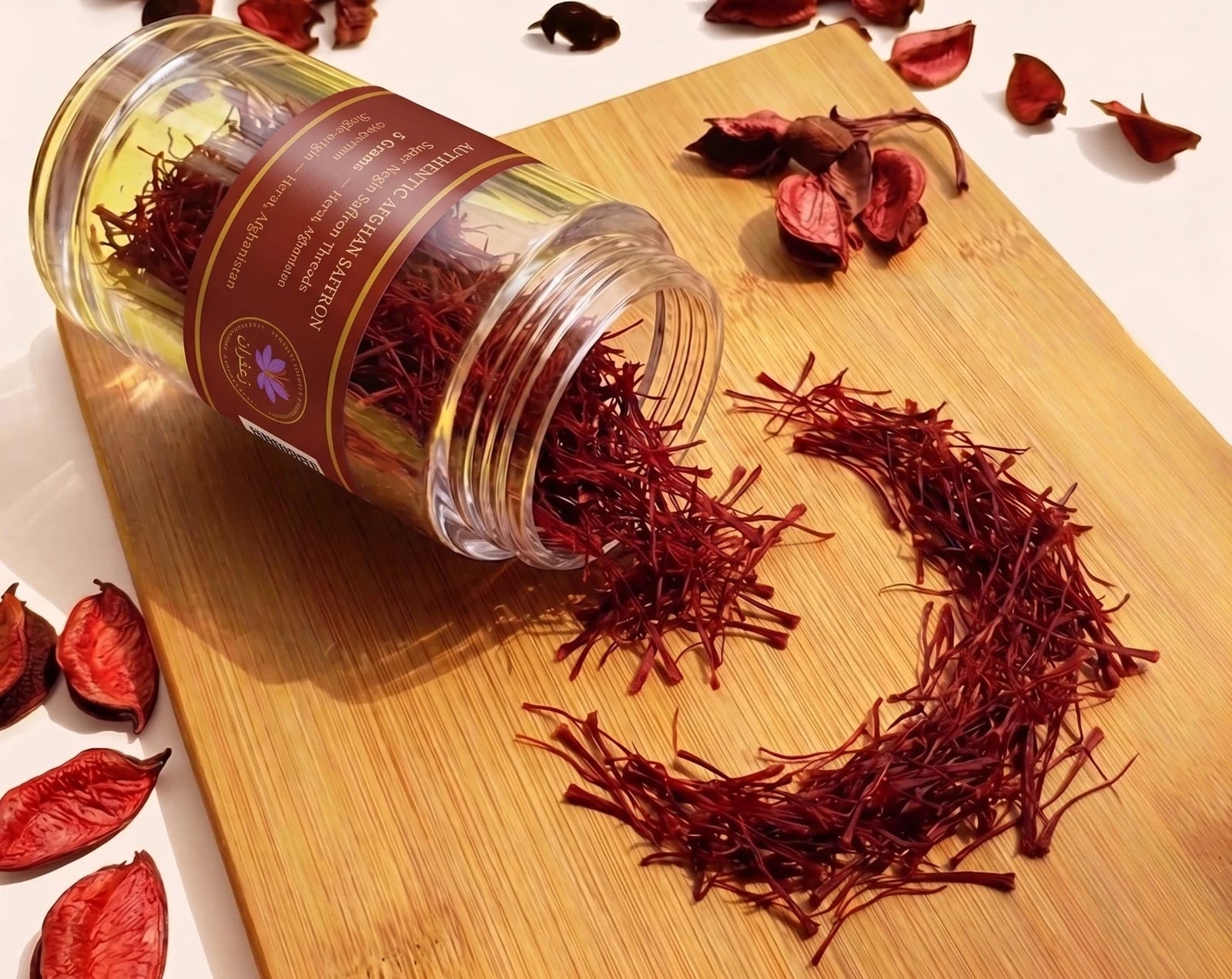
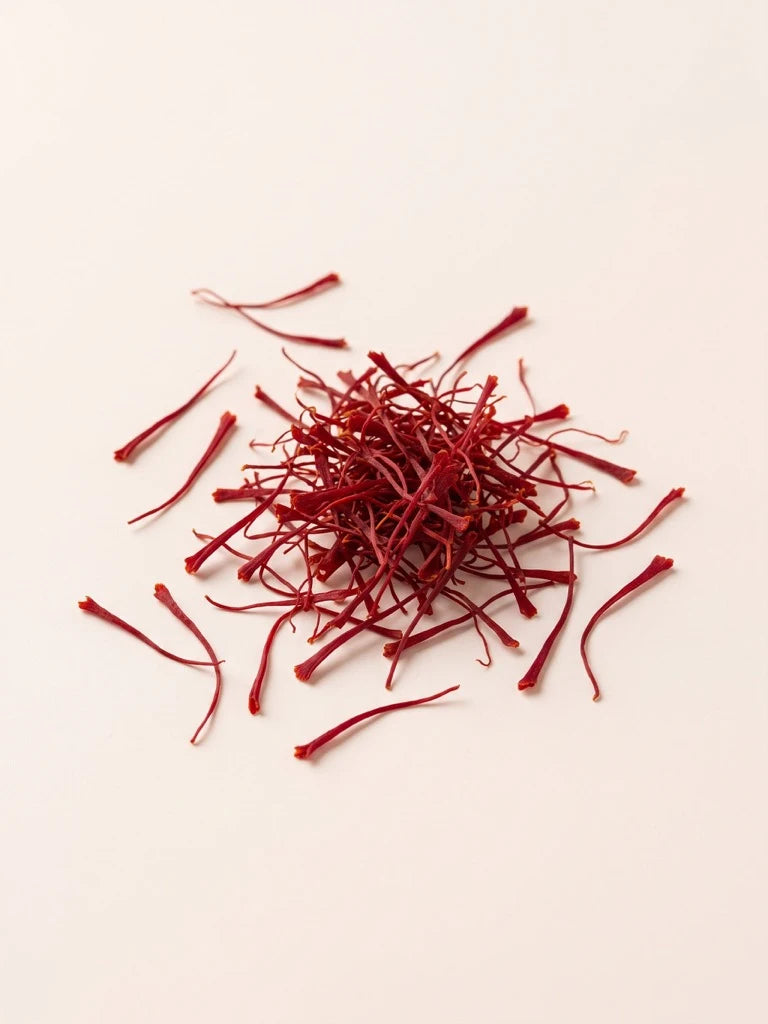
Water is the right medium rather than milk, since the drink is water-based and milk would cloud it. Whole threads, not powder: powder makes an iced tea look silty in a clear glass, and you cannot strain it out. If you want to see what the threads should look like before they go in, our saffron shows them at scale.
What do you need to have ready?
Makes 1 quart, which is four tall glasses once the ice is in. The tea should be something light. A grassy sencha or a nutty dragon well both leave room for the saffron; a smoky or heavily scented tea does not.
- About 25 saffron threads (0.10 g)
- 3 cups (700 ml) filtered water, divided
- 3 tsp loose-leaf green tea, such as sencha or dragon well, or 3 tea bags
- 3 tbsp mild honey, or 3 tbsp caster sugar
- 2 tbsp just-boiled water, to loosen the honey
- 1 lemon, cut into six wedges
- A 1-quart jar or jug with a lid
- Large ice cubes, to serve
- A few mint leaves or two thin slices of cucumber, optional
What are the steps?
- Bloom the saffron. Heat 1/2 cup of the water to about 150°F (65°C) and pour it over the threads in a small heatproof glass. Cover it with a saucer and leave it 20 minutes. You want an infusion the colour of amber glass and threads that have gone from red to pale straw.
- Loosen the honey. Stir the honey into 2 tbsp of just-boiled water until it pours off the spoon in a thread. Cold honey dropped into iced tea sinks and stays there, and you end up with two sweetnesses in the same glass.
- Brew the tea hot and short. Bring the remaining 2 1/2 cups of water to about 175°F (80°C) — small bubbles on the base of the pan, nothing breaking the surface. Pour it over the leaf and steep for exactly two minutes, then strain. Green tea held longer than that turns astringent, and astringency is the one thing saffron cannot cut through.
- Combine while it is still warm. Pour the strained tea into the jar, add the saffron infusion and the threads, and stir in the honey syrup. Doing this warm matters: the honey disperses and the saffron colour spreads evenly instead of settling into a dark layer.
- Chill it quickly. Stand the jar in a bowl of ice and water for 20 minutes, stirring once or twice, or refrigerate it for two hours. Fast cooling keeps green tea tasting green; a jug left to cool slowly on the counter goes dull and vegetal.
- Pour over ice and finish in the glass. Fill tall glasses to the top with large cubes, pour, and squeeze a lemon wedge into each one. Add mint or cucumber now if you are using it. Keep the lemon out of the jar itself — acid dulls green tea to olive within a few hours in the fridge.
What should you watch out for?
Three failures account for nearly all of it, and none of them are about the saffron.
- Brewed too weak. A quart that tastes balanced warm will taste like tinted water over ice. Brew to the point where the warm jug tastes slightly too strong and slightly too sweet.
- Steeped too long. Four minutes instead of two, or water straight off the boil, and the tannin comes forward. Saffron cannot compete with astringency; it just disappears underneath it.
- Small ice. Crushed or hollow machine ice melts in about four minutes and halves the drink. Big cubes from a silicone tray last a glass.
A fourth, less obvious one: hard water. Tea brewed in very hard water goes flat and develops a grey film on top, and saffron colour reads muddier in it. Filtered water is worth the trouble in a drink this plain.
If the finished tea looks pale, do not add more threads to the jug — they will not extract in the cold. Bloom a fresh small batch in a quarter cup of warm water and stir that in.
Frequently asked questions
Can I cold brew this instead?
You can cold brew the tea, but not the saffron. Eight hours in the fridge with 4 tsp of leaf in 3 cups of water gives a sweeter, rounder tea with no astringency at all. The saffron still needs its warm bloom first, then goes into the finished cold brew. Saffron left in cold water gives up colour slowly and aroma barely at all.
Will black tea work?
It works, but it buries the saffron. Black tea has three or four times the tannin of a light green tea, and tannin sits in exactly the same part of the palate as saffron does. If black tea is what you want, use a first-flush Darjeeling or a Ceylon, steep it three minutes at 195°F, and raise the saffron to 35 threads.
How long does it keep in the fridge?
Two days with the lid on, and it is best on the first. The saffron colour holds, but the tea flattens and the honey starts to taste stale against it. Make a quart at a time rather than a gallon on Sunday.
Does it need sweetening at all?
It is better with a little. Saffron carries a genuinely bitter compound, picrocrocin, and without something sweet to sit against, an iced infusion can read as medicinal. Three tablespoons of honey in a quart is not a sweet drink; it is barely detectable as sweetness and it makes the aroma legible.
Read next
- Saffron lemonade — the same problem, solved with citrus instead of tea
- Saffron tea — the hot version, and a lighter dose
- Blooming liquids compared — water, milk, stock and alcohol, side by side