Saffron lemonade goes wrong when the threads land in cold lemon juice. Bloom 40 threads — about 0.16 g — in the warm simple syrup instead, at 150°F (65°C) for twenty minutes, then build a two-quart pitcher around it. Acid and cold both slow extraction, so the syrup step does all the work before either one can interfere.
Why bloom in the syrup rather than the juice?
Getting colour and aroma out of a thread is a function of temperature and time. Cold water manages it eventually, over several hours, and still gives you less than twenty minutes of warm water does. Lemon juice makes it worse: at roughly pH 2.3, and usually straight from the fridge, it is a hostile place to start an extraction.
The syrup solves it without adding a step, because you are heating sugar and water anyway. Sugar syrup at blooming temperature holds volatile aroma slightly better than plain water does, and once the threads are in, the finished syrup is stable and easy to keep. Acid then does something interesting rather than something bad — it pushes the colour from deep marigold toward a brighter, more orange gold, which is the shade you actually want in a glass with ice in it. We go into that chemistry in why saffron turns food yellow.
Cold is the other constraint, and the one people underestimate. Aroma perception falls off sharply below about 50°F, so a drink served over ice needs proportionally more saffron than a hot one just to register.
Provenance, briefly: chilled saffron and citrus drinks are old across Afghanistan and South Asia, in the sharbat family, usually with rose and a lot more sugar. American-style lemonade is a separate lineage. This is a hybrid, and none the worse for it, but it is not a heritage recipe.
How much saffron does a pitcher need?
Forty threads, roughly 0.16 g, for two quarts. Across eight glasses that is five threads each — a third of what a cup of hot saffron tea takes, because in lemonade saffron is a supporting note and the lemon is genuinely loud. Expect a warm floral edge behind the citrus, not a saffron drink with lemon in it.
There is a ceiling, and it is closer than usual. Past about 60 threads in a pitcher, saffron bitterness and lemon acidity stop balancing and start reading metallic, which is a hard flavour to like and impossible to remove. If your first batch feels shy, add ten threads next time rather than twenty.
The blooming method is the standard one: warm liquid at about 150°F (65°C), covered, for 10 to 20 minutes, never boiling. Twenty minutes is right for a syrup because the sugar slows diffusion a little. We compared water, milk, syrup and alcohol side by side in blooming liquids compared if you want the reasoning.
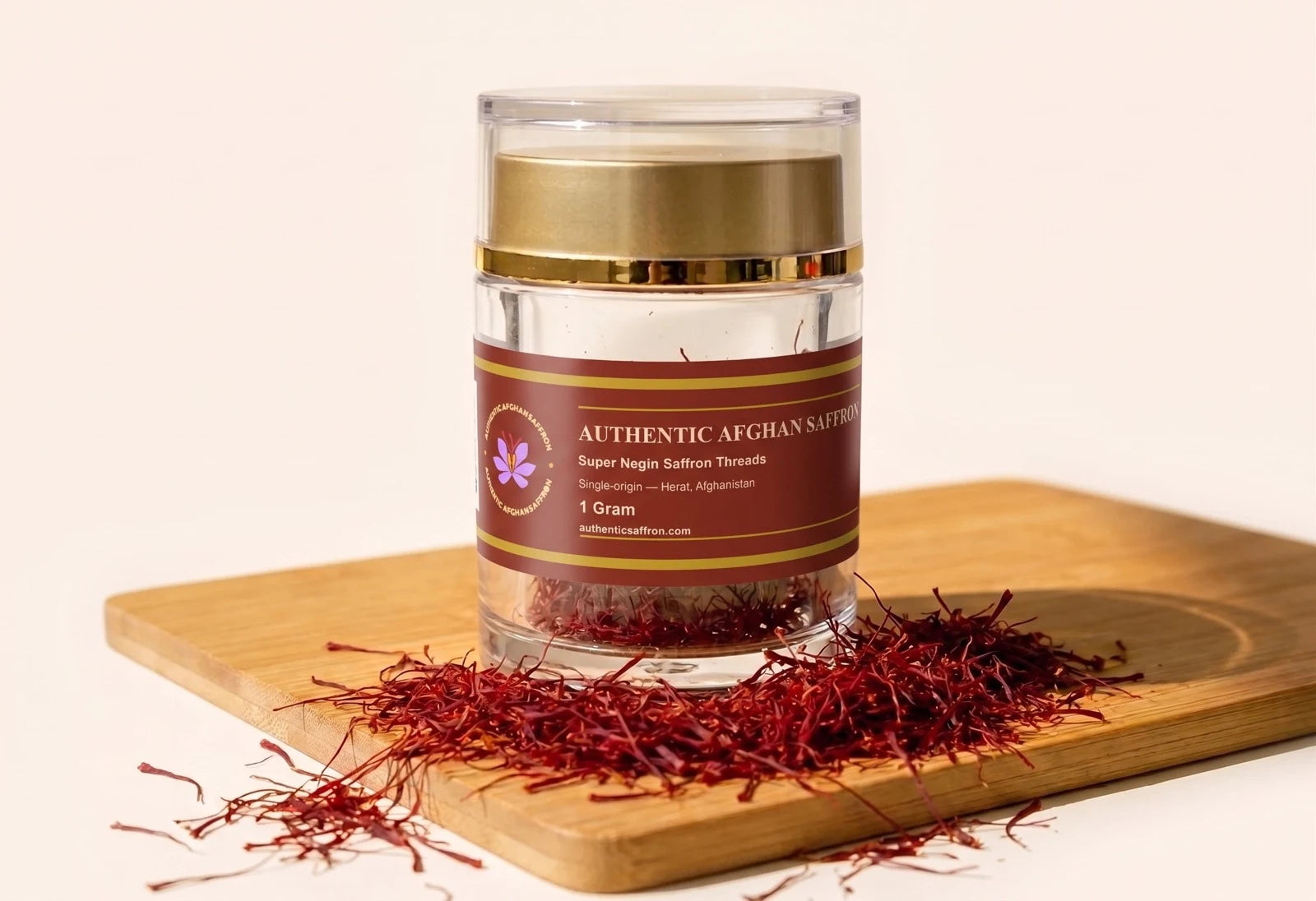
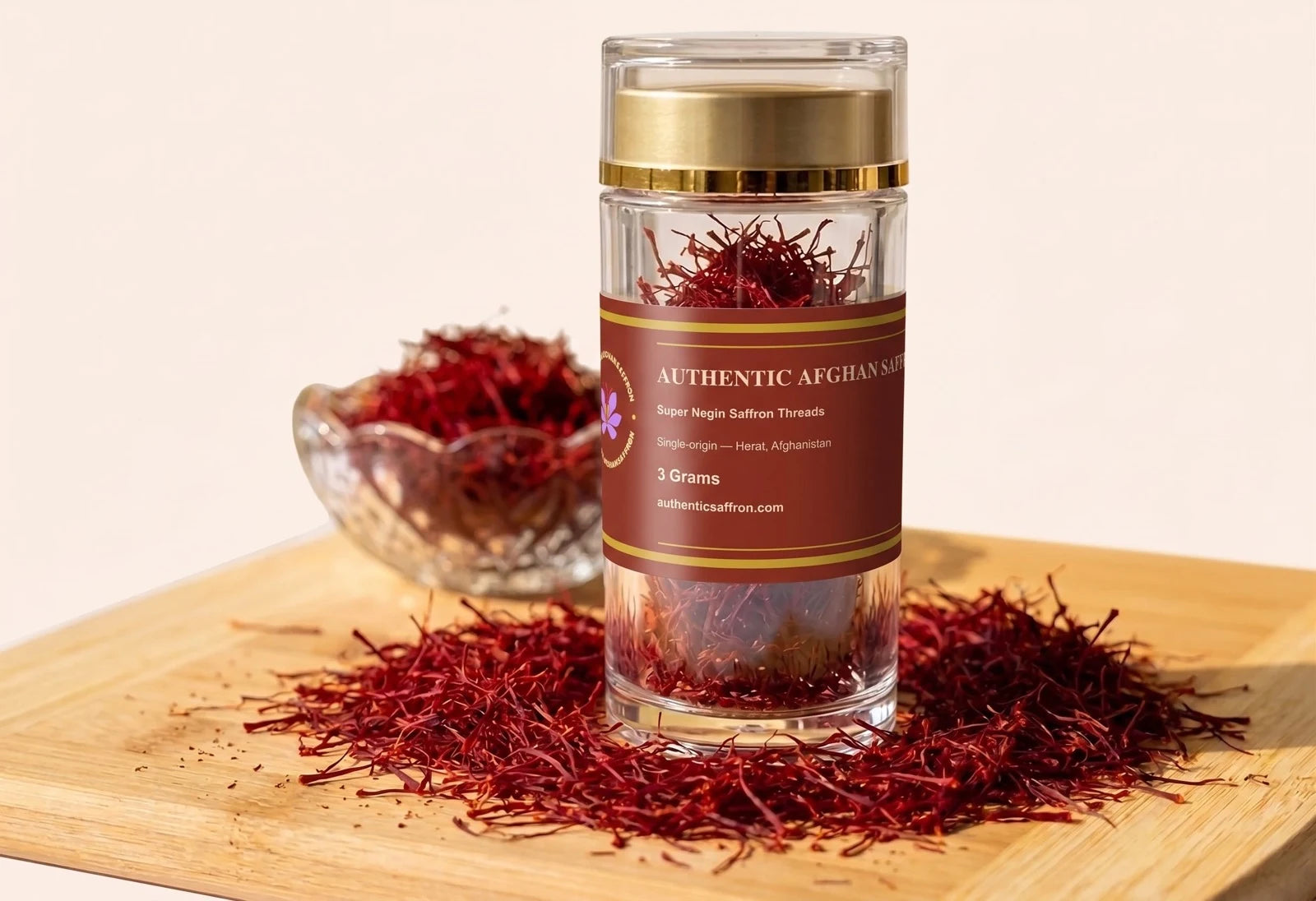
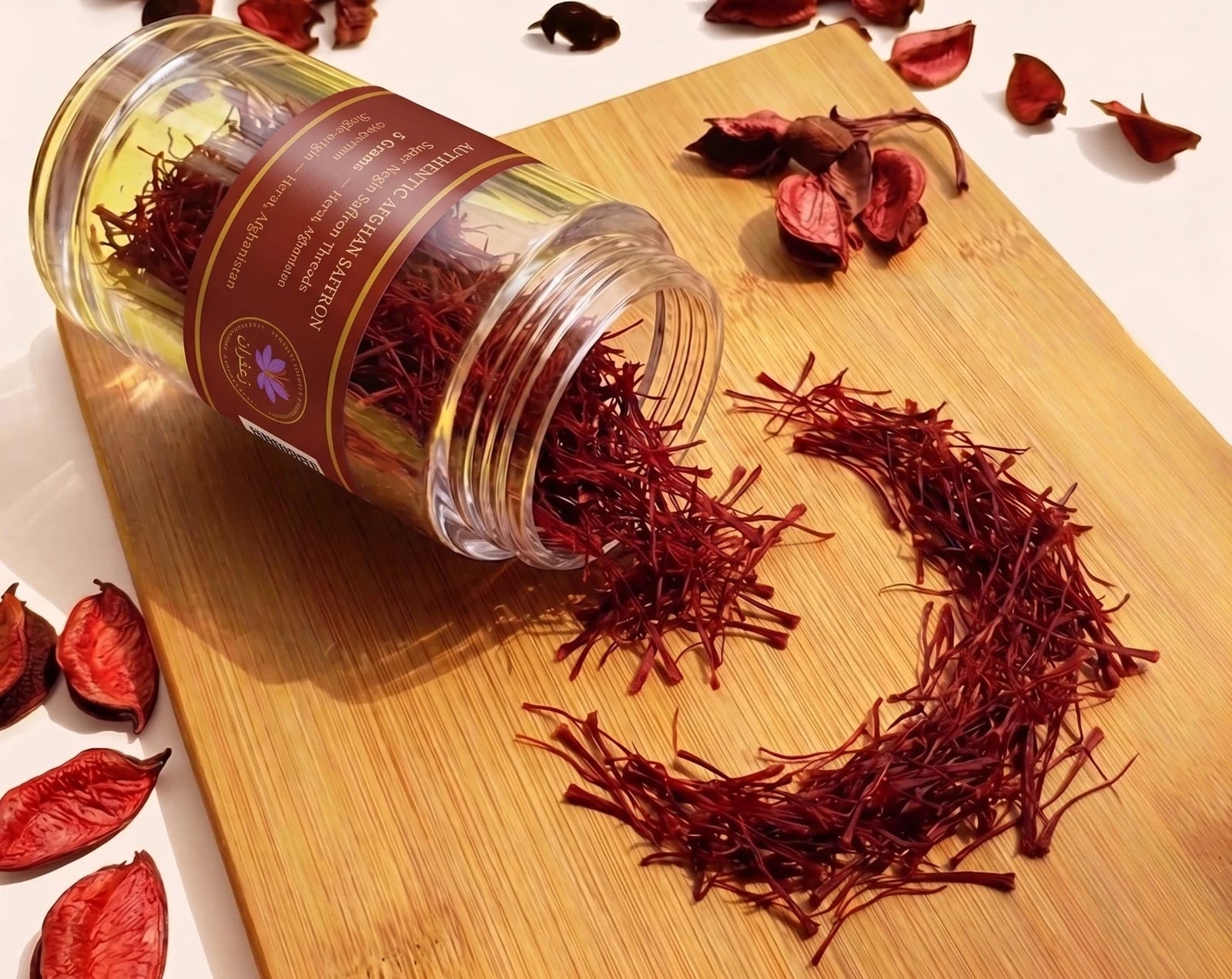
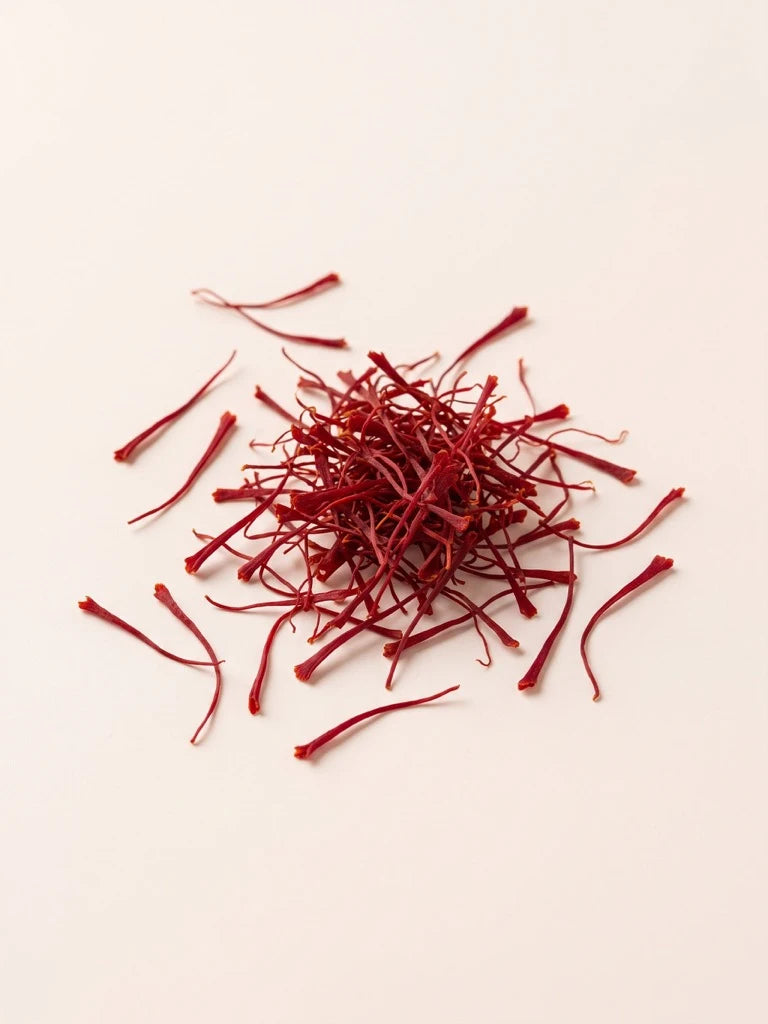
Leave the threads in the pitcher after blooming. They keep giving up colour through the chill, they settle to the bottom rather than into a glass, and they are the simplest proof that what you bought is whole stigma rather than dyed shreds of something cheaper.
What do you need to have ready?
For 2 quarts, about eight glasses. Fresh lemons only. Bottled juice has a cooked, slightly bitter note that sits exactly where the saffron is trying to be.
- 40 saffron threads (0.16 g)
- 200 g (1 cup) granulated sugar
- 240 ml (1 cup) water, for the syrup
- 1 wide strip of lemon peel, no white pith
- 240 ml (1 cup) fresh lemon juice, from about 6 lemons
- 1.2 litres (5 cups) cold water
- A pinch of fine salt
- Ice and thin lemon slices, to serve
How do you build the pitcher?
- Dissolve the syrup. Put the sugar and 240 ml of water in a small saucepan over medium heat and stir until the liquid turns from cloudy to completely clear, about three minutes. It does not need to boil, and boiling it only drives off water you will have to add back.
- Bring it down to blooming temperature. Take the pan off the heat, drop in the strip of lemon peel, and let it stand for about five minutes until it reaches 150°F (65°C). That is hot to the finger but not painful, steaming with no bubbles at all.
- Bloom the saffron in the syrup. Crumble the threads into the warm syrup, cover the pan, and leave it 20 minutes. The syrup should turn visibly marigold within the first three minutes and go deeper from there. Never add the threads while the syrup is still simmering.
- Juice the lemons and strain. Roll the lemons hard under your palm before cutting them. Strain the juice through a mesh sieve to catch pulp and seeds; pulp left in makes the pitcher cloudy on day one and bitter by day two.
- Build the pitcher. Fish out the lemon peel. Pour the syrup and all its threads into a 2-quart pitcher, add the lemon juice and the salt, then the cold water. Stir well. The colour will jump from deep marigold to a brighter, lighter gold the moment the acid goes in, which is normal.
- Chill for four hours. Refrigerate, covered, for at least four hours. Cold suppresses both sweetness and aroma, so anything you taste at room temperature will be misleading. The saffron also keeps extracting during this time.
- Taste, adjust, serve. Taste it cold and adjust with a splash of water if it is sharp or a spoonful of sugar if it is thin. Pour over plenty of ice with a slice of lemon. Leave the threads in the pitcher rather than in the glasses.
Why does the colour fade by day three?
Two things are working against it, and one of them you can control completely.
- Light. Crocin breaks down under UV faster than it does with time alone. A glass pitcher on a sunny table loses visible colour over an afternoon. Keep it in the fridge and pour from there.
- Acid. Over several days the lemon slowly works on the crocin and the gold goes pale. Nothing prevents it; just drink the pitcher inside three days.
- Hard water. Very alkaline tap water pulls the colour brownish rather than gold. Filtered water is a noticeable improvement if yours does that.
- Too much pulp. Unstrained juice clouds the pitcher and turns bitter as it sits, which reads as the saffron having gone wrong when it has not.
- Sweetener swaps. Stevia and erythritol carry aroma differently from sugar and tend to leave the saffron hanging on its own. Sugar is doing more work than you would think.
If you want the colour to hold for a party, make the saffron syrup a day ahead, keep it in a jar in the fridge, and build the pitcher an hour before people arrive. The syrup on its own is stable for a fortnight.
Frequently asked questions
Can I bloom the saffron directly in the lemon juice?
You can, and it will be weaker. Lemon juice is around pH 2.3 and cold, and both slow the extraction badly. After an hour in juice you will have less colour than twenty minutes in warm syrup gives you, and the aroma barely develops.
Why did the colour lighten when I added the lemon?
Acid shifts crocin toward the orange-yellow end and the dilution does the rest. A deep marigold syrup becoming a bright pale gold pitcher is the expected result, not a sign anything went wrong. If it turns brownish instead, your water is very hard.
How long does it keep?
Three days in the fridge, and it is best on the first. By day three the acid has worked on the crocin and the colour is visibly paler, the saffron note flatter. Keep it in an opaque jug or at the back of a shelf, because light does more damage than time here.
Can I make it without sugar?
Not easily, because the syrup is doing two jobs. It is the sweetener and it is the blooming medium. If you want it low in sugar, bloom the threads in 60 ml of plain water at 150°F for 20 minutes, then sweeten the pitcher however you like. Expect slightly less aroma, since sugar helps hold it.
Read next
- Saffron rose sharbat — the older, sweeter cousin of this drink
- Saffron simple syrup — make it once, use it all summer
- Saffron iced tea — cold, but without the acid problem