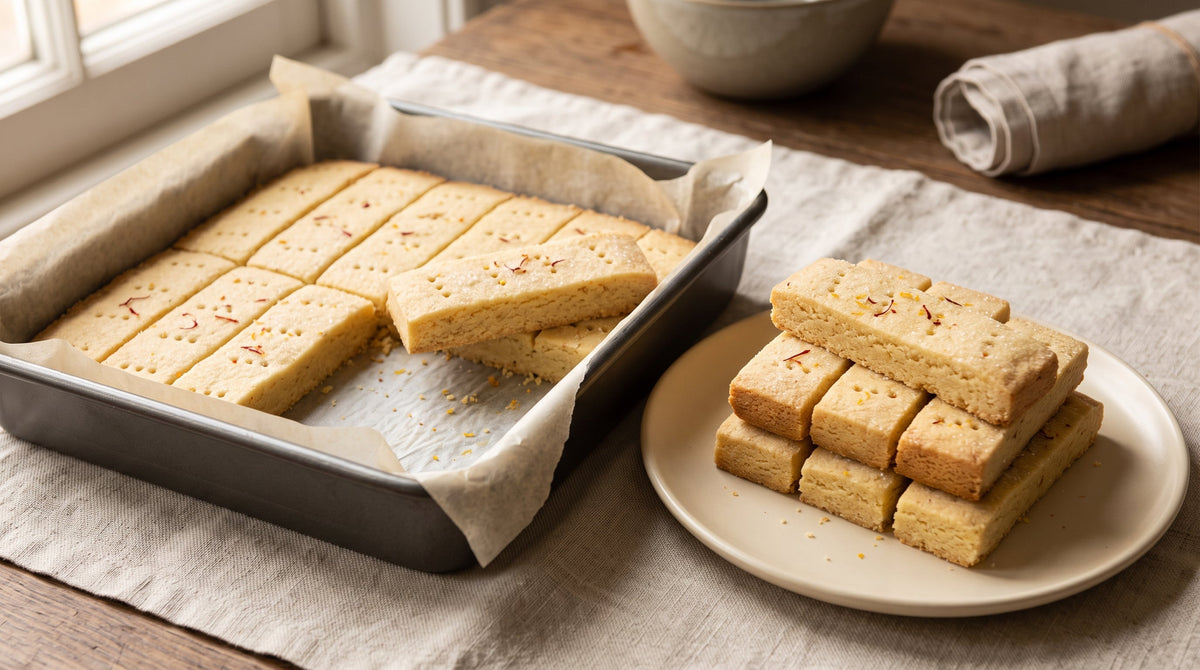
Saffron shortbread is a modern crossing of two old British habits. Twenty-five threads, about 0.10 g, bloomed in a tablespoon of warm cream, tint the dough pale gold and add a dry honey note that plain shortbread lacks. It bakes low and slow at 325°F, and you score it while it is still hot.
There is one real constraint: shortbread has almost no liquid in it, so the saffron has to arrive in about a tablespoon of something.
Why does saffron suit shortbread?
Shortbread is butter, sugar, flour and salt. Nothing else. That leaves very little to hide behind, which is why it takes flavourings so well: a scrap of lemon zest changes the whole biscuit.
Saffron belongs to that group. It gives the crumb a dry, slightly bitter, hay-like note and turns the colour from pale sand to soft yellow-gold. The bitterness is the useful part, since nothing else in the recipe pushes back against the sugar and butter.
On heritage: shortbread is Scottish, while saffron baking in Britain is a West Country habit, strongest in Cornwall, where saffron cake and buns are still ordinary bakery items. England grew its own saffron for centuries — Saffron Walden in Essex is named for the crop. Combining the two is a modern idea, and worth saying so.
How much saffron does this need?
Twenty-five threads, or about 0.10 g, for sixteen fingers. Per biscuit that is small, but the flavour has nowhere to disperse to. Forty threads in this dough tastes medicinal.
The blooming problem is real: adding water to shortbread is how you get a tough, cracker-like biscuit. Bloom in one tablespoon of heavy cream held at about 150°F (65°C) for twenty minutes, covered — steaming, not simmering, and never boiling, which strips the aroma. A single tablespoon will not hurt the texture, and the fat carries aroma better than water.
The alternative, if you would rather add no liquid at all, is to grind the threads to a fine powder in a mortar with a teaspoon of the sugar and beat that into the butter. You lose some of the aroma this way, because grinding does not extract the compounds the way steeping does, but the colour is more even. Our note on grinding saffron covers when this is worth doing.
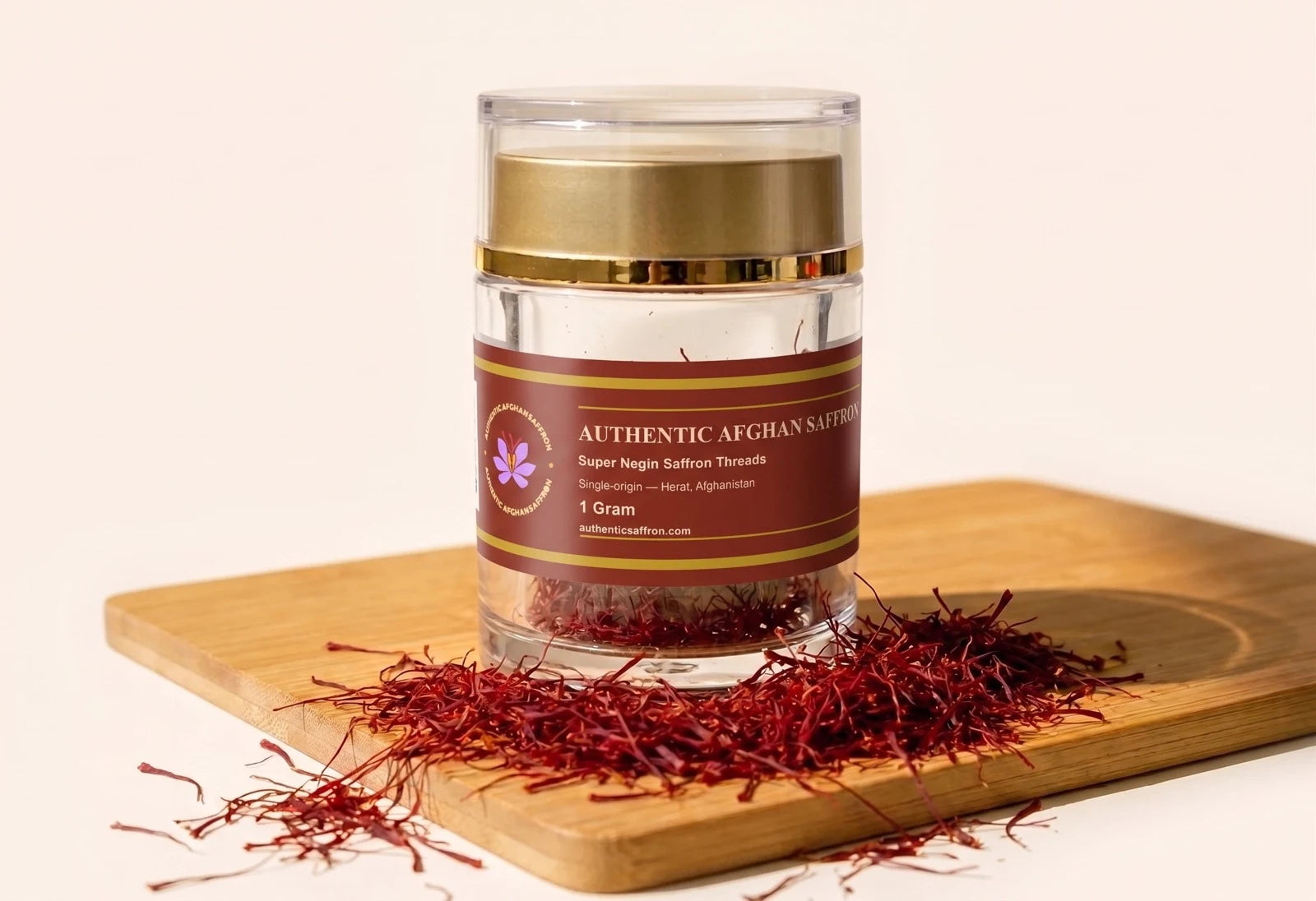
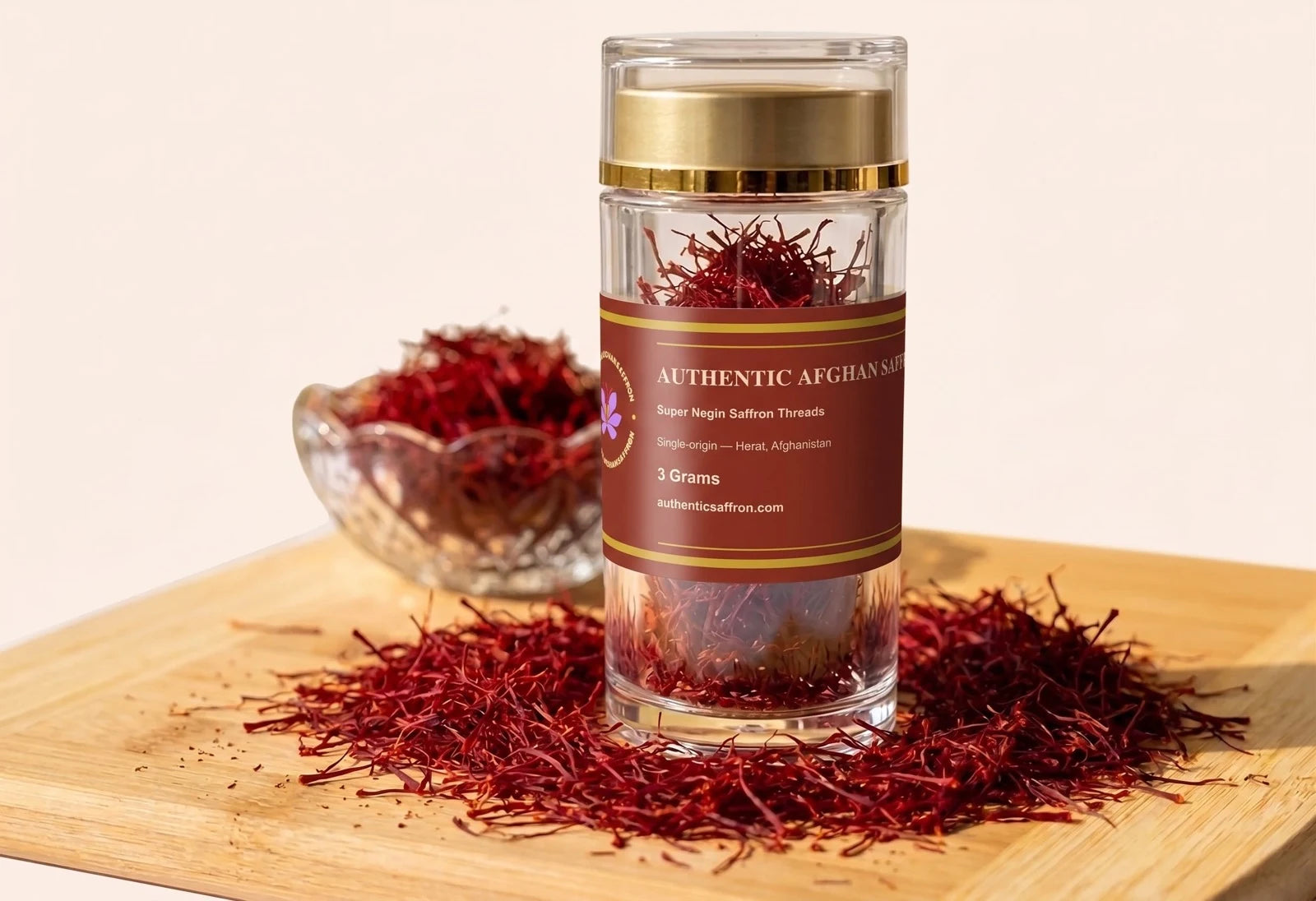
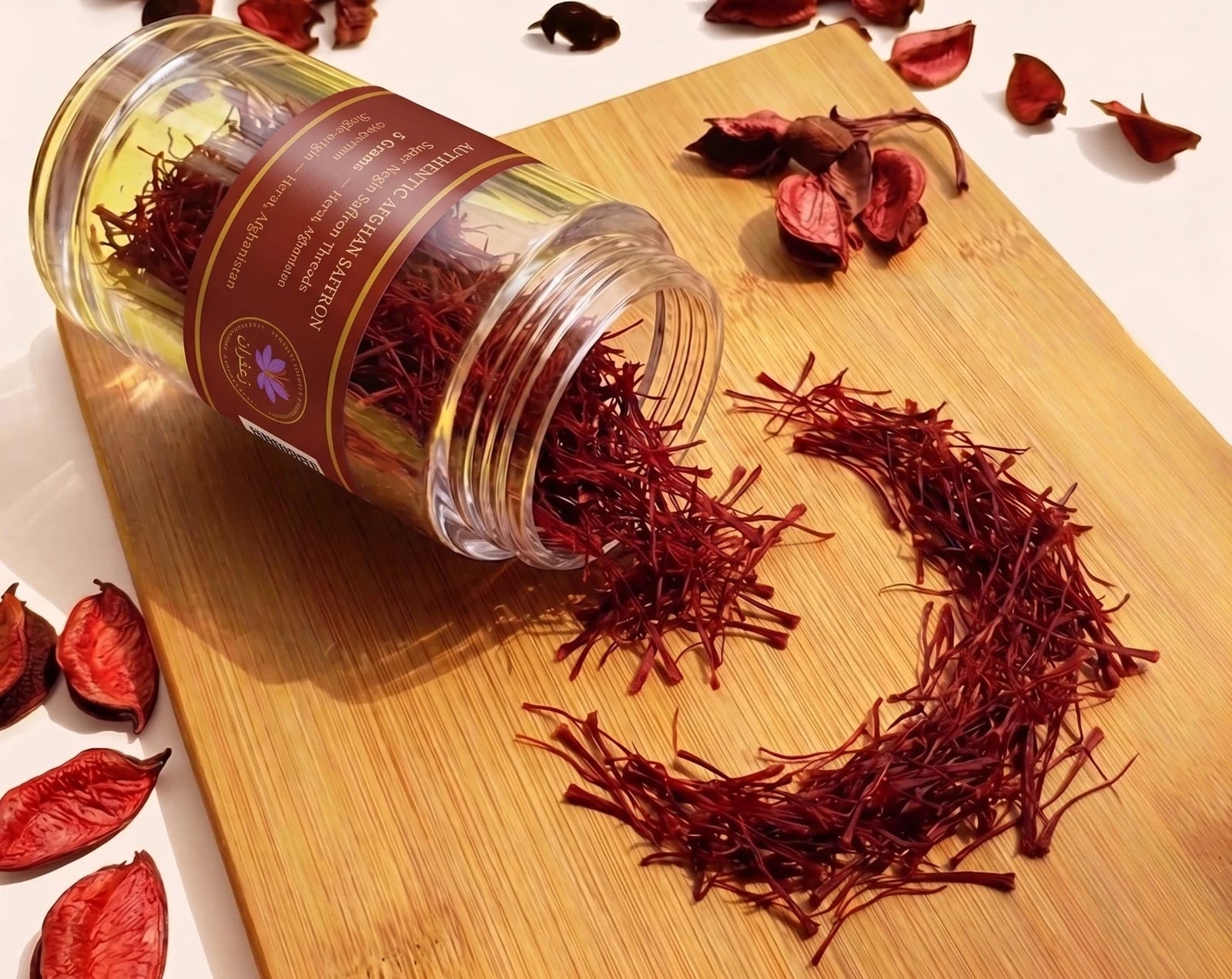
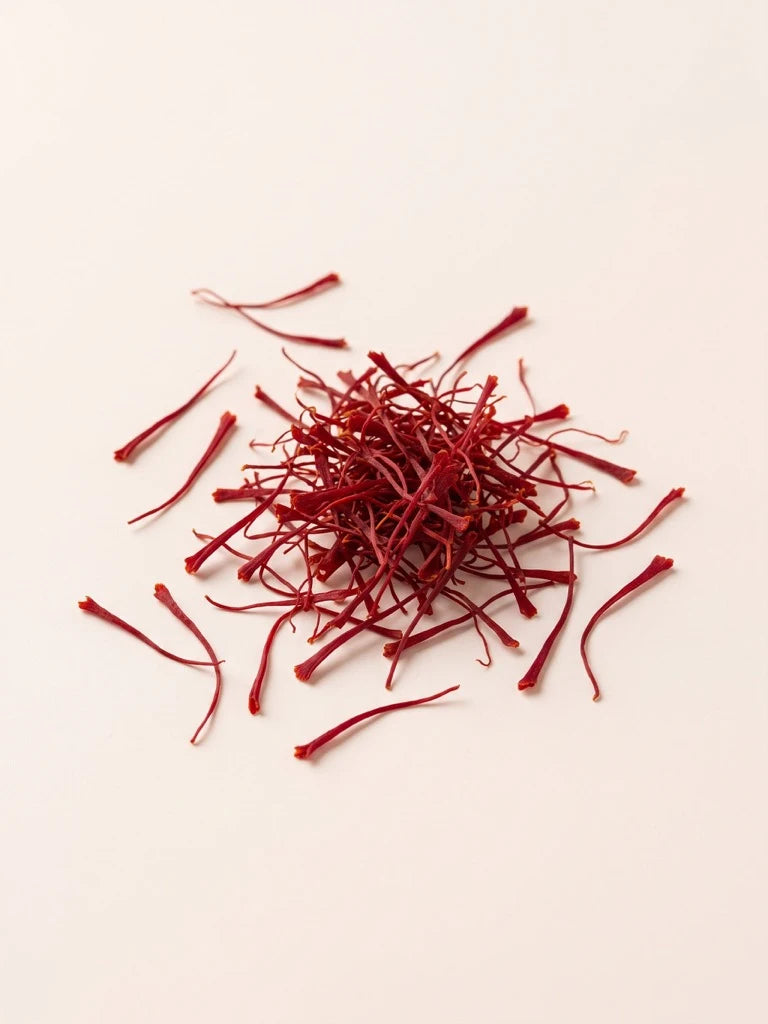
Buy threads for this. Powder is where most adulteration hides, and in a pale dough a cheap dye looks convincing until you taste it — the case is in threads versus powder. Keep the rest of the tin sealed and dark; the storage guide explains why light does more damage than age.
What is in the dough?
Makes 16 fingers in an 8-inch square pan. The butter should be cool and pliable, around 65°F, not soft enough to smear.
- About 25 saffron threads (0.10 g)
- 1 tbsp (15 ml) heavy cream
- 225 g (2 sticks) unsalted butter, cool but pliable
- 110 g (1/2 cup plus 1 tbsp) caster or superfine sugar, plus 1 tbsp for the top
- 1/2 tsp fine sea salt
- 280 g (2 1/4 cups) all-purpose flour
- 60 g (1/2 cup) rice flour
- 1/2 tsp finely grated orange zest (optional)
What are the steps?
- Bloom the saffron. Warm the cream in a small pan until it steams, about 150°F (65°C), then take it off the heat. Crumble in the threads, cover, and leave 20 minutes. It should turn deep orange. Never boil it. Leave it to cool while you get on with the dough.
- Line the pan. Line an 8-inch square pan with parchment, letting it hang over two opposite sides so you can lift the slab out later.
- Cream the butter briefly. Beat the butter, sugar and salt with a paddle on medium-low for about two minutes, until it lightens slightly and looks like thick cake frosting. Stop there. Shortbread beaten to a fluff bakes up cakey and rises unevenly.
- Add the saffron cream. Scrape the bloomed cream and its threads into the bowl, add the orange zest if you are using it, and mix on low for 30 seconds until the colour streaks through evenly.
- Work in the flours. Add the all-purpose flour and rice flour all at once and mix on the lowest speed until the dough forms damp clumps that hold together when pressed in your hand. That is under a minute. Stop before it gathers into a single ball — a fully kneaded shortbread is a tough one.
- Press and chill. Tip the clumps into the pan and press them flat with the base of a measuring cup, working from the middle out until the surface is level and tightly packed. Dock all over with a fork in rows about an inch apart. Chill 30 minutes. Heat the oven to 325°F (165°C).
- Bake slow. Bake 40 to 45 minutes. The edges should be the colour of a digestive biscuit and the centre should look dry and matte rather than glossy. Saffron makes colour a poor guide, so read the edges and trust the smell — toasted butter, not caramel.
- Score while hot, cool in the pan. Scatter the extra tablespoon of sugar over the top. Within three minutes of it leaving the oven, cut straight down into 16 fingers with a long thin knife, one clean press per cut. Then leave it in the pan, undisturbed, until completely cold — at least an hour. Lift out and separate.
Why did my shortbread spread or crumble?
Spreading is a butter temperature problem. Butter soft enough to smear rather than dent goes into the oven half melted, and the edges run before the flour sets. Cool but pliable, then thirty minutes in the fridge.
Crumbling on the way out of the pan is impatience. Shortbread has no egg and little gluten; the structure comes from butter re-solidifying as it cools. Cut it hot, then leave it alone. Lifting warm fingers out gives you a tray of rubble.
- Rice flour is doing real work. It has no gluten and slightly larger particles, which gives shortbread its sandy snap. Cornstarch is the usual substitute and is softer; all-purpose alone gives you a biscuit closer to a sugar cookie.
- Caster sugar, not granulated. Coarse crystals do not dissolve in a dough this dry and leave gritty spots. Pulse granulated sugar in a blender for ten seconds instead.
- Double the batch, lower the oven. A thicker slab needs about 300°F and closer to an hour, or the outside browns before the middle dries.
- Docking is not decorative. The fork holes let steam out; without them the slab domes and cracks.
If the shortbread tastes of very little, the likeliest cause is old saffron rather than too few threads. Threads that snap cleanly and smell of hay are still good; threads that smell of dust are not.
Frequently asked questions
Can I taste the saffron, or is it only colour?
You can taste it clearly, more so than in most saffron desserts, because there is nothing in shortbread to compete with it. It arrives as a dry, faintly bitter, honeyed note in the second half of each bite. Give the biscuits a day in a tin and it becomes more pronounced.
Do I have to use rice flour?
No, but the texture changes. Rice flour gives shortbread its characteristic sandy snap. Cornstarch in the same quantity is the closest substitute and gives a softer, meltier crumb; using all-purpose flour alone makes a firmer biscuit closer to a plain sugar cookie.
Can I roll and cut shapes instead of pressing into a pan?
Yes. Chill the dough as a disc for an hour, roll to about 1/3 inch between two sheets of parchment, cut, and chill the cut shapes for another 20 minutes before baking. They will need 20 to 25 minutes rather than 40, and they should still be pale when they come out.
How should I store it?
In an airtight tin at room temperature, where it keeps two weeks and improves for the first three days. Do not refrigerate it — the fridge makes shortbread damp and dulls the saffron. It also freezes well, baked and cooled, for three months.
Read next
- Saffron buns — the enriched, yeasted end of saffron baking
- Grinding saffron properly — when a mortar beats a steep, and when it does not
- Why Herat saffron — where our threads come from and what that changes