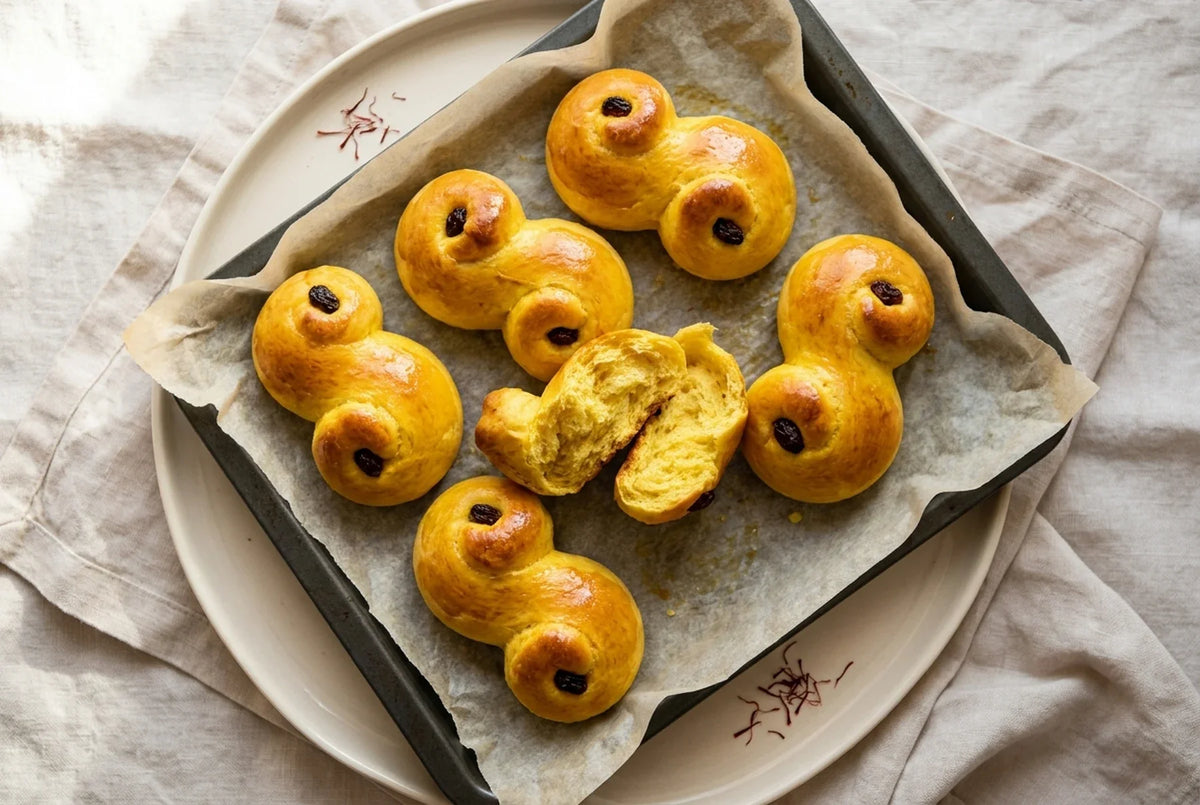
Lussekatter are the one bake where saffron is measured by the gram rather than the thread. This saffron buns recipe uses a full 0.80 g, around 200 threads, ground with sugar and steeped in warm milk. It makes sixteen buns. The dough is enriched, rises slowly, and is far easier to shape cold.
These are the Swedish Advent buns eaten around Saint Lucia’s day in December. They are also, quietly, the best argument for buying decent saffron, because there is nowhere for a weak thread to hide in a bun this pale.
Why do these buns take so much saffron?
Enriched dough is a hostile environment for aroma. Butter coats the palate, sugar softens the edges, and the eggy, milky background of the crumb sits right where saffron wants to be. A pinch that would perfume a risotto disappears entirely.
Volume compounds it. Twenty threads is a dense pinch in a cup of rice; spread across sixteen buns it is barely one thread each.
So the dose goes up by an order of magnitude, and the flavour changes character with it. At this level saffron stops being a subtle background note and becomes the defining taste of the bun — slightly bitter, honeyed, almost medicinal at the edges in a way that makes sense against the sweetness and the raisins.
How much saffron does this take?
0.80 g, which is roughly 200 threads, for a batch of sixteen. Some Swedish bakers go to a full half gram. Below about 0.3 g the buns look yellow but taste only of butter and sugar, which is the outcome most disappointed first attempts describe.
Grind the threads with a teaspoon of granulated sugar before you steep them. Whole threads in an enriched dough release unevenly and leave visible red flecks; ground saffron distributes through the entire crumb. Our guide to grinding saffron properly covers why the sugar matters and why a spice grinder is the wrong tool for this quantity.
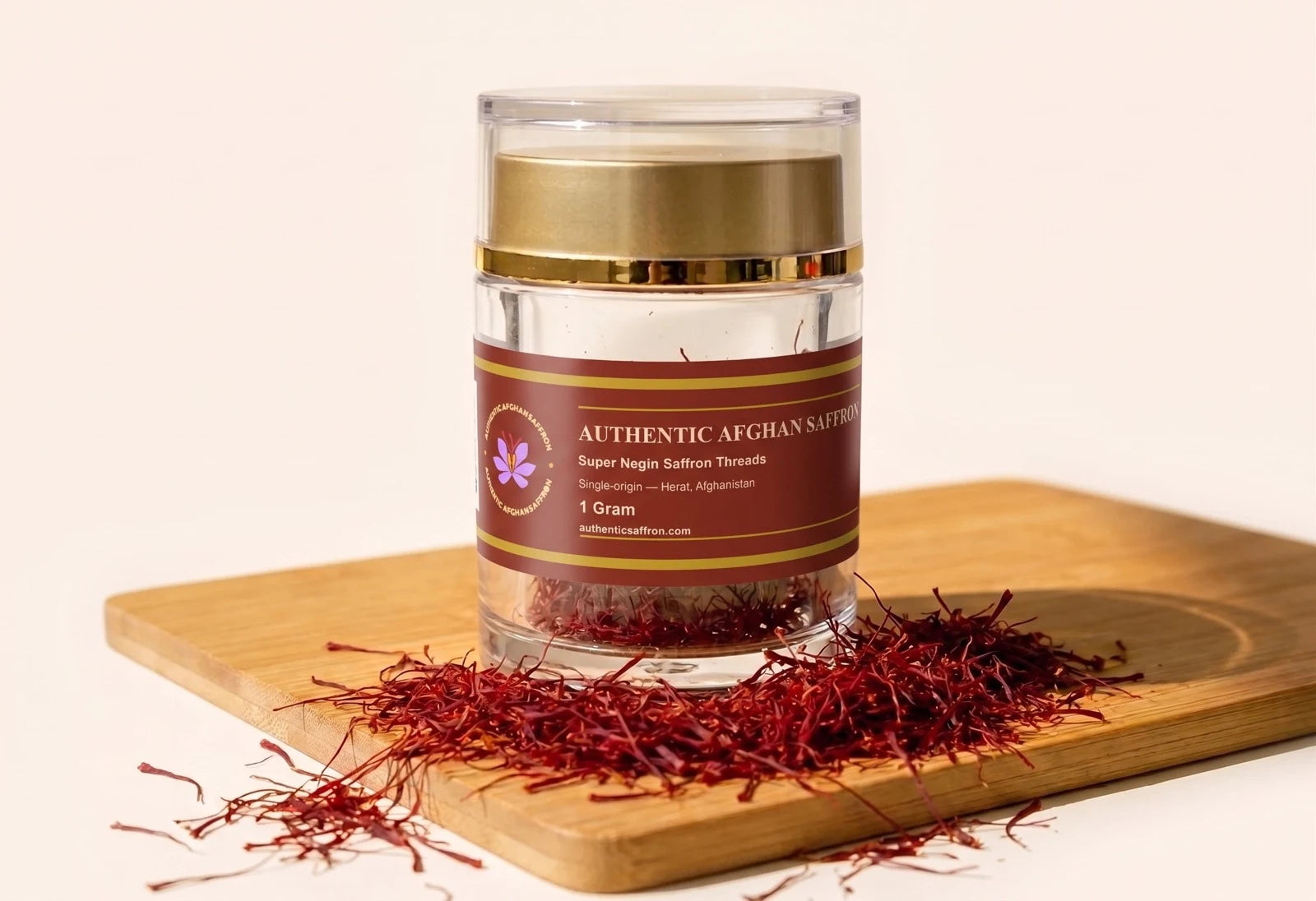
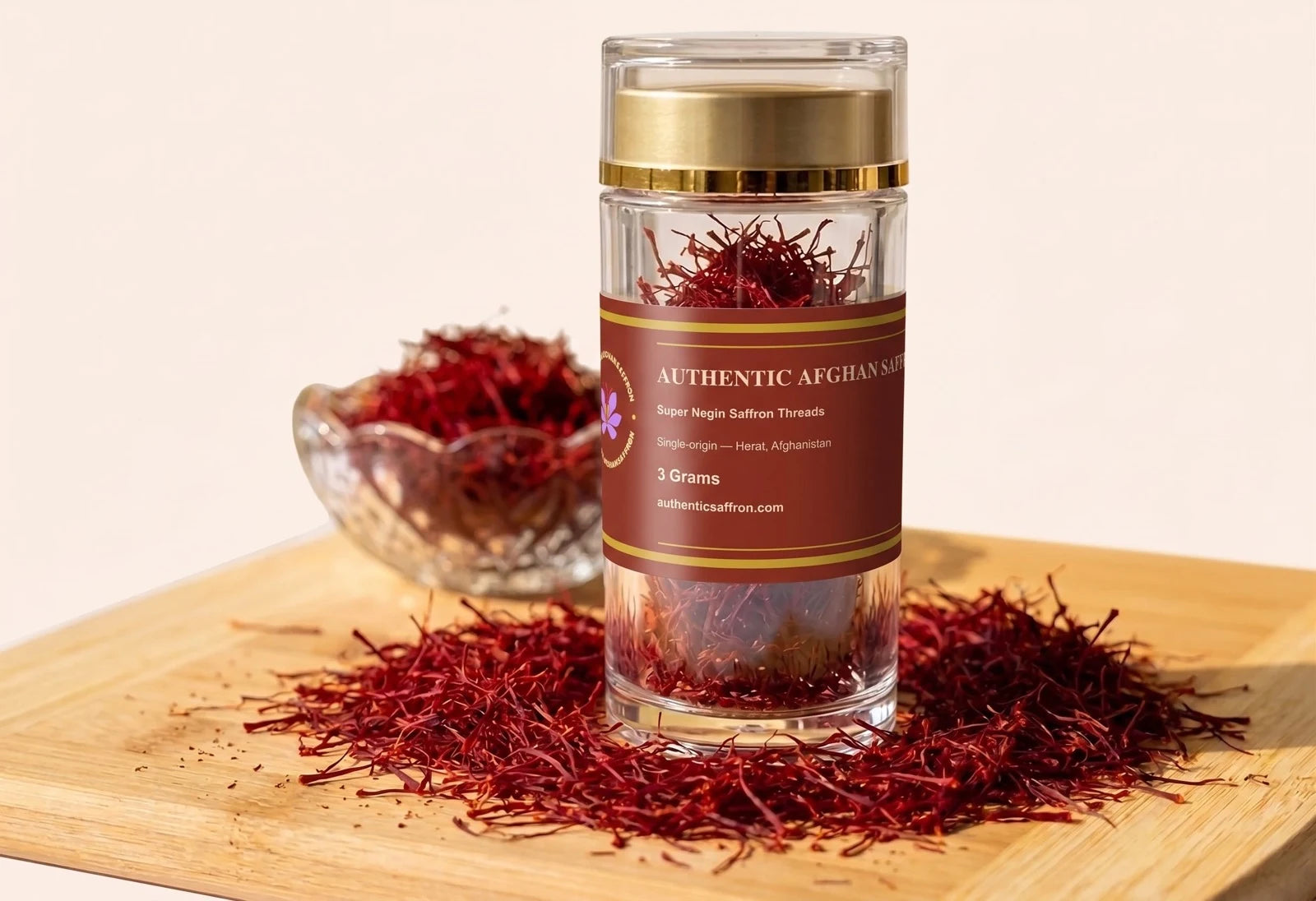
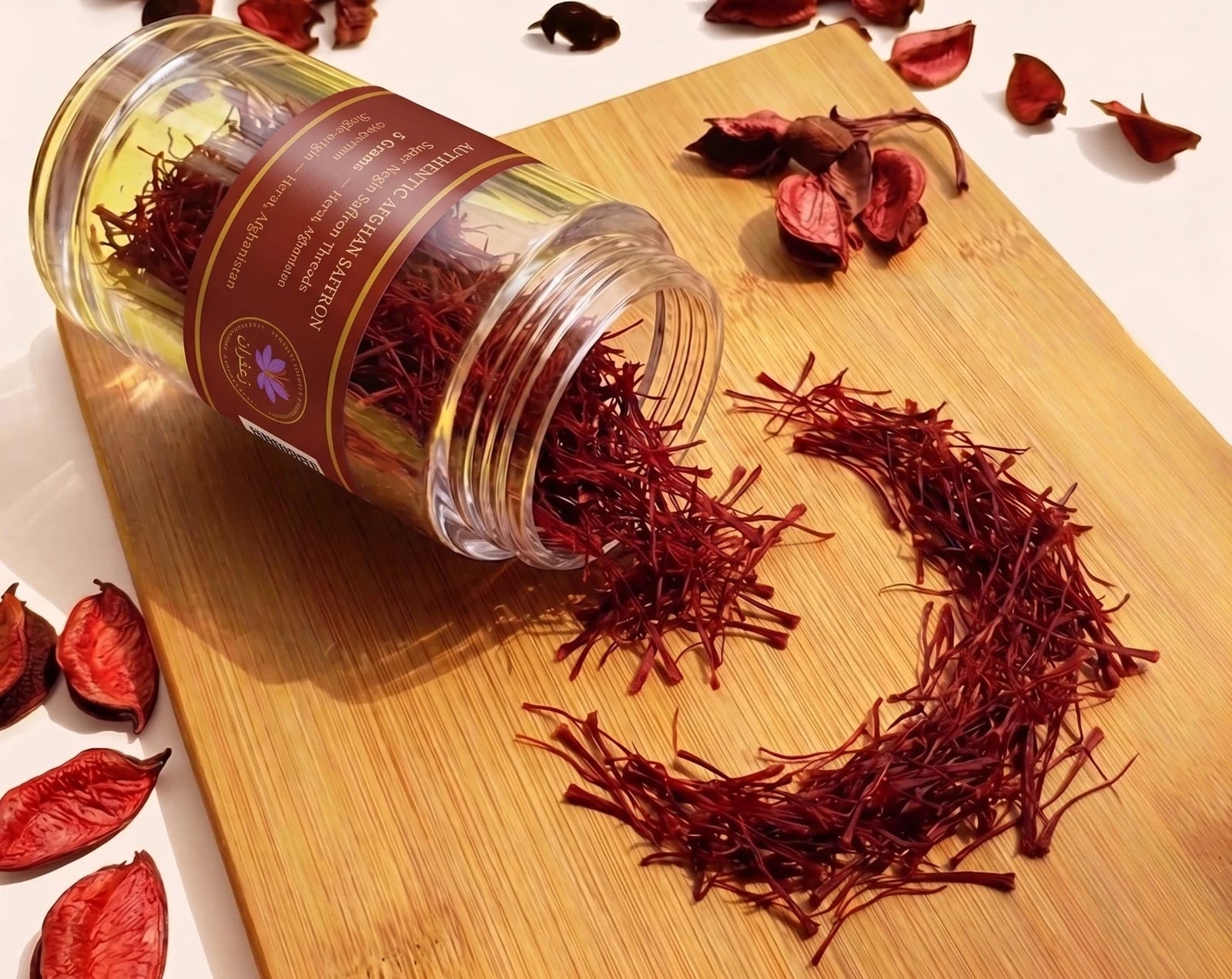
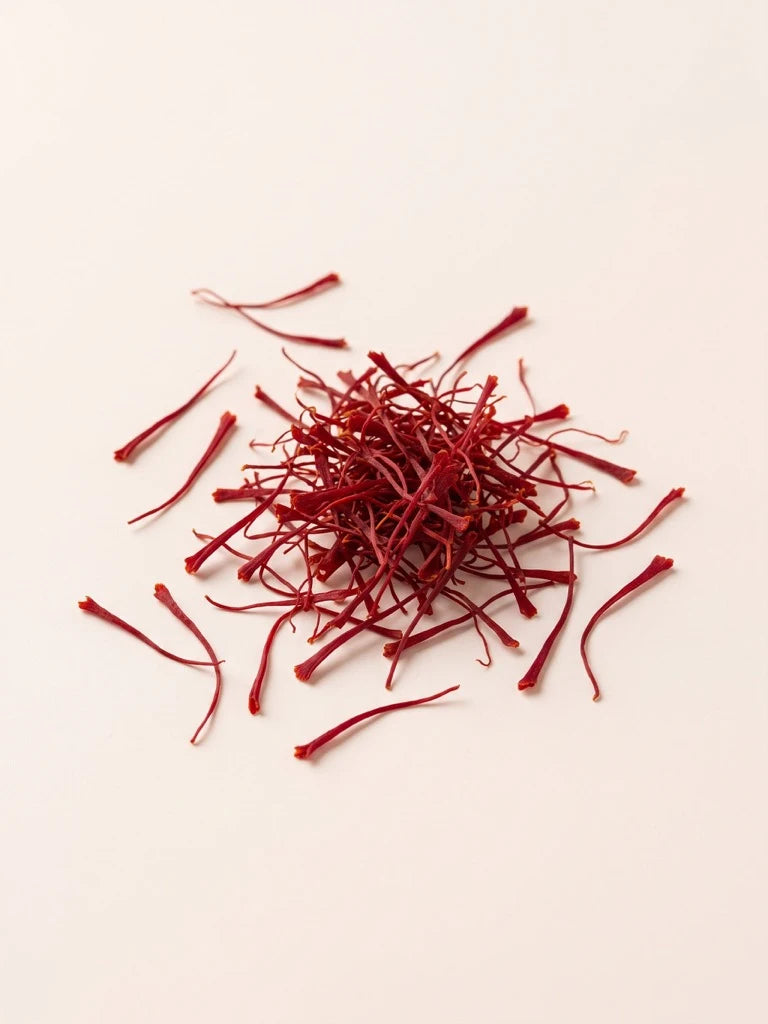
Steep the powder in milk held at about 150°F (65°C) for twenty minutes, then cool it to lukewarm before it touches the yeast. Two rules pull in opposite directions here: saffron wants heat to extract and yeast dies in it, so extract first and cool second. At this dose the difference between good threads and tired ones is unmissable, which is the case for buying whole Herat stigmas rather than a mystery packet.
What do you need for sixteen buns?
- 600 g (about 5 cups) bread flour, plus a little for the bench
- 0.80 g saffron (roughly 200 threads)
- 1 tsp granulated sugar, for grinding
- 250 ml (1 cup) whole milk
- 100 g (1/2 cup) caster sugar
- 7 g (2 1/4 tsp) instant yeast
- 1/2 tsp fine sea salt
- 125 g (9 tbsp) unsalted butter, soft
- 150 g (2/3 cup) quark, skyr or full-fat Greek yogurt
- 1 large egg, plus 1 more beaten with a splash of milk for glazing
- 32 raisins, soaked in warm water for 10 minutes and drained
- Pearl sugar, to finish
How are the buns made?
- Grind the saffron. Tip the threads into a small mortar with the teaspoon of granulated sugar and grind for a minute until you have a fine orange powder. The sugar crystals do the cutting; threads alone just bruise and roll around the bowl.
- Steep it in the milk. Warm the milk to about 150°F (65°C), steaming with no bubbles, stir in the ground saffron and leave it covered for 20 minutes. Then let it fall to lukewarm, around 100°F (38°C), before it meets the yeast. Never bring it to a boil — that drives off the aroma and leaves colour alone.
- Mix the dough. In a stand mixer bowl, combine the flour, caster sugar, yeast and salt. Add the saffron milk, the quark and one egg, and mix on low with a dough hook until it comes together, about 2 minutes.
- Add the butter. With the mixer running on medium-low, add the soft butter a tablespoon at a time, waiting for each piece to disappear. Then knead 8 to 10 minutes more, until the dough is glossy, pulls cleanly from the sides and stretches thin without tearing straight away.
- First rise. Cover and leave somewhere warm for 60 to 75 minutes, until roughly doubled. Enriched dough rises slowly; the butter and sugar both slow the yeast down, so give it the time rather than the heat.
- Chill before shaping. Refrigerate the risen dough for 30 minutes. Cold dough rolls into even ropes instead of springing back, and this single step is the difference between neat curls and lopsided ones.
- Roll and coil. Divide into 16 pieces of about 80 g. Roll each into a rope 12 to 14 inches long on an unfloured bench, then coil both ends inwards in opposite directions to make a flat S. Set them well apart on two lined trays — they spread.
- Second rise. Cover loosely and prove 45 to 60 minutes, until visibly puffed and slow to spring back when pressed. Heat the oven to 425°F (220°C) towards the end of this.
- Glaze and bake. Brush thoroughly with egg wash, press a soaked raisin deep into the centre of each coil so it sits below the surface, and scatter pearl sugar. Bake 8 to 10 minutes, one tray at a time, until deep gold. They are done at an internal 190°F (88°C).
- Cool covered. Move them to a rack and lay a clean tea towel over the top while they cool. The trapped steam keeps the crumb soft. Eat them the day they are baked, or freeze them once cold.
Why do lussekatter come out dry?
Overbaking, nearly always. Eight to ten minutes sounds too short and is not. These are small, sugary and quick to colour, and the two minutes between deep gold and dry is the whole margin. Check for 190°F in the middle if unsure.
The second cause is flour added at the bench. This dough is soft on purpose. Chill it instead: thirty minutes in the fridge does what a handful of flour would, without tightening the crumb.
Raisins burn if they sit proud of the surface. Soak them, then push them down into the coil so the dough closes slightly around them. A dry raisin on top of a 425°F bun turns to charcoal in eight minutes.
And do not substitute turmeric for the saffron. It will give you the colour and a dusty, earthy taste that is wrong in a sweet bun. Our note on saffron substitutes explains where a substitute can pass and where it cannot; this is firmly the second.
Frequently asked questions
Why do these need so much more saffron than a rice dish?
Because there is 600 g of flour, 125 g of butter and 100 g of sugar competing for attention, and fat in particular mutes aroma. Twenty threads would vanish. The Swedish tradition of using a whole half-gram packet per batch is not extravagance; it is the amount required to still taste saffron after the butter has had its say.
Can I use ready-ground saffron powder?
You can, but it is the riskiest form to buy. Powder cannot be inspected, and it is where dyed filler and spent threads end up. If you are committing 0.4 g to one batch of buns, buy whole threads and grind them yourself with sugar in a mortar. It takes a minute.
Is the quark essential?
Not essential, but it is the reason these stay soft. The extra fat and acidity keep the crumb tender for a second day, where a plain milk-and-butter dough is noticeably drier by the next morning. Full-fat Greek yogurt or skyr behave the same way. Do not use a low-fat version.
Can I make the dough the night before?
Yes, and the flavour improves. Do the first rise, then refrigerate the covered dough overnight instead of chilling it for 30 minutes. Shape it straight from the fridge in the morning and expect the second prove to take about 90 minutes rather than an hour.
Read next
- Saffron dinner rolls, the same enriched logic on the savoury side.
- Saffron shortbread, where the dose is small because butter is the point.
- How saffron degrades, which is why last December’s packet may bake pale.
- How to spot fake saffron before you commit half a gram to a batch.